# HBM Related Articles

HTX News Center provides the latest articles and in-depth analysis on "HBM", covering market trends, project updates, tech developments, and regulatory policies in the crypto industry.

27-Year Reign Ends: SK Hynix Market Cap Surpasses Samsung for First Time, an AI-Driven Reshuffle of Korean Chip Power

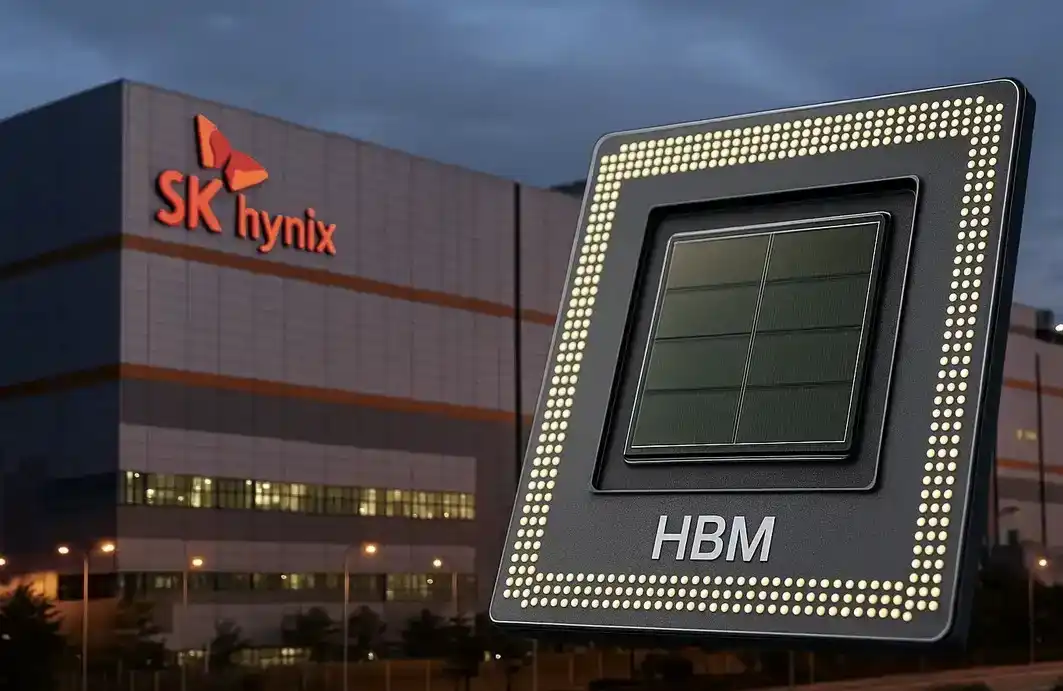
On June 22, 2026, SK Hynix made history by surpassing Samsung Electronics in market capitalization, ending Samsung's 27-year reign as South Korea's most valuable company. This dramatic reversal is powered by the AI boom and SK Hynix's dominant position in High Bandwidth Memory (HBM), a critical component for AI model training. Once a heavily indebted firm on the brink of bankruptcy, SK Hynix bet early on HBM, which has evolved from a niche product to essential AI infrastructure. It now commands a 59% share of the global HBM market. Its financial performance is staggering, with Q1 2026 net profit soaring nearly fourfold year-over-year to KRW 40.35 trillion, translating to over 2 billion RMB in daily net profit. HBM now drives roughly 40% of its revenue with exceptionally high margins. In contrast, Samsung, with its broad portfolio spanning memory chips, smartphones, and foundry services, has lagged in the HBM race while facing headwinds in other divisions. This shift signifies a deeper restructuring of South Korea's economy, moving from consumer electronics to AI-driven growth. However, the future remains competitive. With major capacity expansions planned industry-wide by 2028 and Samsung aiming to catch up in HBM technology, the new market leader cannot afford complacency. This event marks a pivotal moment in the global semiconductor industry's ongoing power realignment.

marsbit2 days ago 12:40

27-Year Reign Ends: SK Hynix Market Cap Surpasses Samsung for First Time, an AI-Driven Reshuffle of Korean Chip Power

marsbit2 days ago 12:40

A Company Once on the Brink of Bankruptcy Just Surpassed Bitcoin in Market Cap

On June 22nd, driven by rising stock prices, SK Hynix’s market capitalization reached $1.35 trillion, surpassing Bitcoin's total market cap of approximately $1.29 trillion. This temporarily made it South Korea's highest-valued company. The core driver of this surge is HBM (High Bandwidth Memory), for which SK Hynix is the primary supplier to NVIDIA, holding over 60% market share. AI's demand for high memory bandwidth has translated into immense profitability, with SK Hynix reporting a 72% operating profit margin in Q1. The company's success follows a 13-year bet on HBM technology, beginning in 2009. It nearly failed after the 2001 dot-com bubble, was acquired by SK Group in 2012, and was subsequently recapitalized to continue its long-term HBM development. The article contrasts this with the Crypto AI narrative. Capital currently favors AI infrastructure players like SK Hynix due to "real orders, physical barriers, and quantifiable profit margins." In comparison, Crypto AI projects, promising decentralized compute and data markets, remain largely conceptual with limited tangible progress. Examples include Bittensor, whose core mechanisms are still under development, and Bitcoin miners transitioning to AI, who face significant funding gaps and execution challenges. The piece cites analysis suggesting the AI sector has absorbed nearly all new market liquidity since 2022, leaving little for crypto. It concludes that the current AI infrastructure红利 is captured by entities with proven technical barriers and supply capabilities, while crypto networks still need to define their concrete role in the value chain.

链捕手2 days ago 11:30

A Company Once on the Brink of Bankruptcy Just Surpassed Bitcoin in Market Cap

链捕手2 days ago 11:30

After Rising 11 Times in a Year, Micron's Earnings Report Becomes a Stress Test for the AI Memory Market

**Micron's Upcoming Earnings: A Crucial Test for the AI Memory Rally** Investors in AI memory stocks face a critical moment on June 24th, when Micron Technology reports quarterly earnings. The stock, having surged approximately 11-fold from $103 to $1,134 over the past year, carries immense market expectations. Wall Street consensus forecasts a staggering ~932% year-over-year jump in EPS to around $19.72 and ~270% revenue growth to ~$345 billion, largely driven by sold-out HBM (High Bandwidth Memory) capacity through 2026. Analysts have aggressively revised estimates upward over the last 90 days, with EPS expectations rising 68%. This creates a high bar: even strong results risk a sell-off if they fail to meet these elevated projections. Notably, price forecasts from institutions like Citi (predicting ~200% DRAM price increases in 2026) are already among the most bullish on Wall Street, not conservative. The key metric to watch is gross margin, guided to a record ~81%. Such peak profitability raises questions about sustainability in the historically cyclical memory sector. While management has signaled continued strength, the stock's direction post-earnings will likely hinge more on forward guidance for the next quarter and details on HBM capacity expansion for 2027, rather than the already-anticipated stellar past results. The report represents a major pressure test for the high-flying AI memory trade.

marsbit2 days ago 07:05

After Rising 11 Times in a Year, Micron's Earnings Report Becomes a Stress Test for the AI Memory Market

marsbit2 days ago 07:05

Soaring Export Data for Memory Chips, Market Is Redefining the Valuation Anchor for Memory Stocks

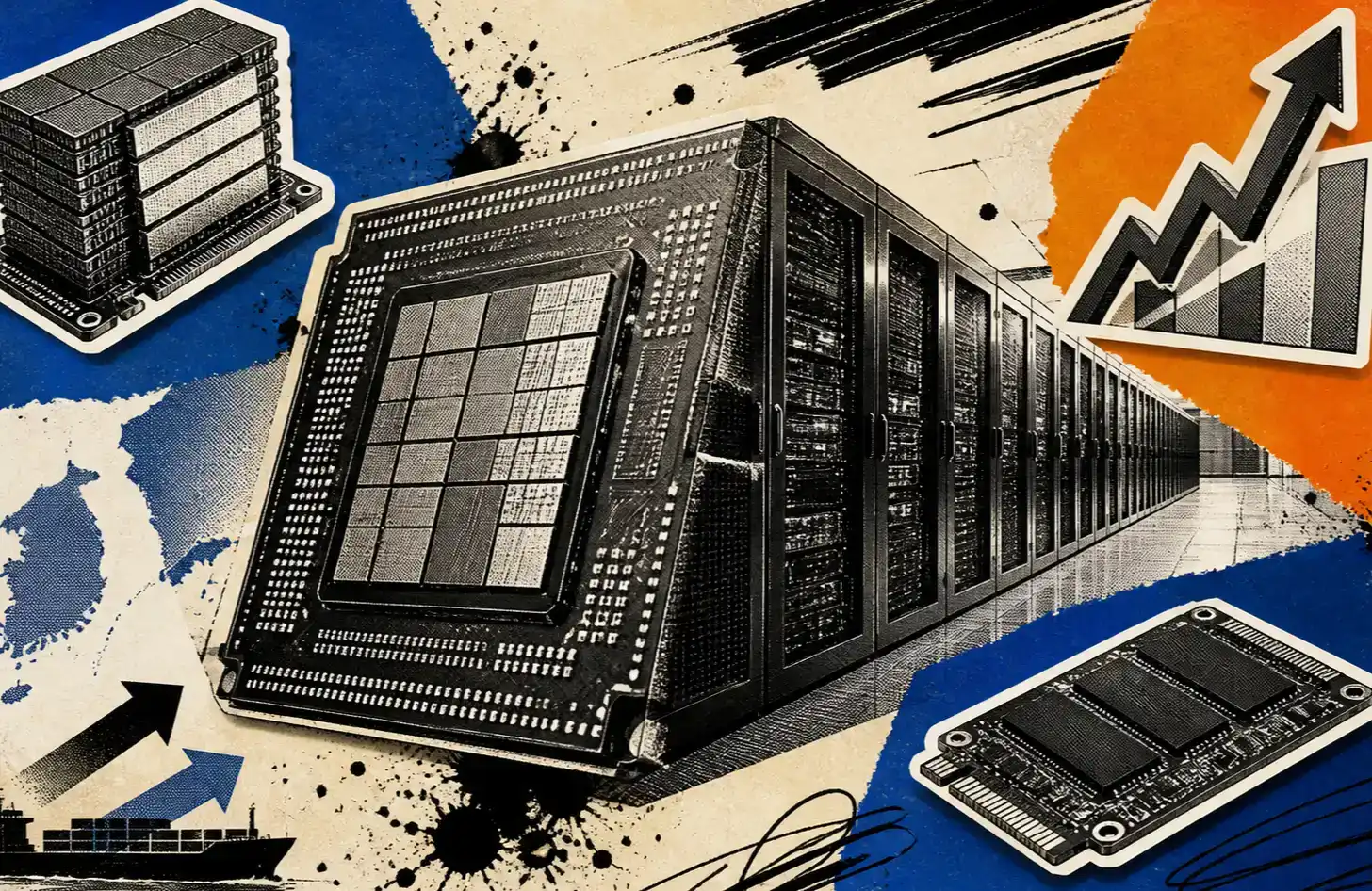
Korean storage export data for the first 20 days of June shows substantial year-on-year increases in both value and price-per-kilogram for categories like DRAM, NAND, and SSDs. This signals a potential shift beyond simple demand recovery, indicating rising prices and a product mix shift towards higher-value items, possibly influenced by AI infrastructure needs. A key point is that the surge in price-per-kilogram is not simply a uniform chip price hike. It reflects a combination of actual price increases and, more importantly, an export structure increasingly dominated by high-value-density products like HBM (High-Bandwidth Memory) and advanced DRAM, which are critical for AI servers. This suggests AI-driven demand may be spilling over from just HBM into broader memory markets. SK Hynix stands to benefit directly due to its leading HBM position. For Samsung and Micron, the implication is potential for greater margin elasticity if the tightness in high-end memory spreads to enterprise SSD and NAND prices. However, the storage sector remains cyclical. Risks include supply expansion, inventory changes, and potential slowdowns in broader AI capital expenditure. Ultimately, while the strong export data supports upward revisions for storage company earnings and fuels discussion of an "AI infrastructure bottleneck premium," a definitive valuation shift from a cyclical to a structural story depends on upcoming quarterly reports. Investors need confirmation from SK Hynix, Samsung, and Micron that improvements in average selling prices, product mix, and, crucially,毛利率 are sustained over multiple quarters.

marsbit2 days ago 04:29

Soaring Export Data for Memory Chips, Market Is Redefining the Valuation Anchor for Memory Stocks

marsbit2 days ago 04:29

The "Iron Rule" of Chip Equipment Is Being Broken

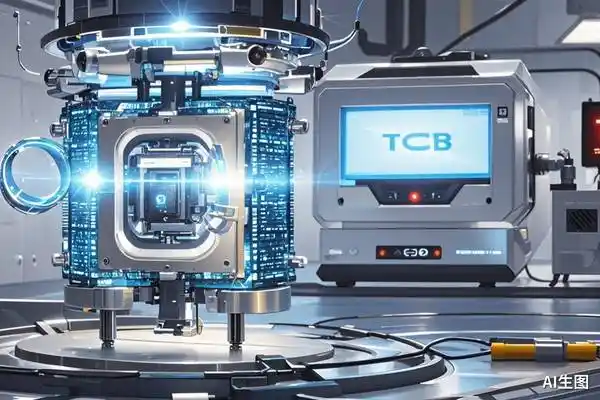
For years, the semiconductor equipment industry followed an unwritten "iron rule": suppliers offered steep discounts for new tool introductions (Design-in) and faced consistent price pressure during repeat orders, especially during market downturns. This long-standing buyer's market dynamic is now being upended. Recently, SK Hynix's primary equipment suppliers have reportedly requested a 3-4% price *increase*, a nearly unprecedented move. This shift is driven by a severe supply-demand imbalance fueled by the AI compute boom. Securing equipment has become an urgent arms race as chipmakers' expansion speed dictates their ability to fulfill massive AI chip orders. Key areas feeling the strain include: **TCB (Thermal Compression Bonding) Equipment:** Demand is exploding, driven by the simultaneous needs of HBM4 memory stacking, AI chip Chip-on-Substrate (C2S), and logic Chiplet Chip-on-Wafer (C2W) packaging. Players like Hanmi Semiconductor, Hanwha Semitech, and ASMPT are receiving major orders. While hybrid bonding is seen as the future, TCB remains the pragmatic choice for HBM4 mass production, with its lifecycle extended by relaxed specifications and ongoing technological upgrades. **Test Equipment Bottlenecks:** Ironically, AI-driven shortages are now crippling test equipment manufacturing. Critical components like FPGAs, Driver ICs, and CPUs face severe shortages and extended lead times (up to 52 weeks for FPGAs), as AI data center and server vendors prioritize supply. This creates a paradoxical cycle: AI chip shortages drive fab expansion, which requires more test equipment, whose production is delayed because its key parts are diverted to make AI chips. The industry is entering a broad, AI-powered upcycle. SEMI forecasts global semiconductor equipment sales to hit a record $156 billion by 2027, fueled by investment in advanced logic/foundry, HBM-driven DRAM, and advanced packaging (like CoWoS). Major players like TSMC, SK Hynix, and Micron are aggressively ramping capital expenditure. In conclusion, leading equipment vendors are no longer just selling tools; they are selling the critical capability to deliver AI-era capacity. Pricing power is shifting decisively to those with indispensable technology in key process nodes like advanced logic, HBM, and advanced packaging, rewriting the industry's traditional power structure.

marsbit06/21 01:57
The "Iron Rule" of Chip Equipment Is Being Broken

marsbit06/21 01:57

AI Reshapes the Semiconductor "Smile Curve": The Rising Logic Behind the Global Distributed Bull Market

The Philadelphia Semiconductor Index (SOX) has hit a historic high above 14,000 points, driven by a concentrated AI-fueled semiconductor rally. Key drivers are extreme scarcity and pricing power in critical bottlenecks of the AI data center supply chain. Unlike traditional models where manufacturing held lower profits, AI has reshaped the "Smile Curve." Highly complex manufacturing and advanced packaging nodes—like TSMC's CoWoS, SK Hynix's HBM, and ASML's EUV lithography—have become exceptionally scarce and high-margin, rivaling design-side profitability. The market rewards those controlling irreplaceable segments: U.S. firms lead in AI chip design and cloud services; Taiwan and Korea dominate advanced foundry/logic and memory/HBM respectively; Japan and the Netherlands supply vital materials and equipment. Storage, particularly HBM, is the tightest bottleneck, with severe shortages predicted through 2027. While bullish analysts project sustained AI infrastructure spending growth, notable bears like Michael Burry warn of bubble-like exuberance reminiscent of the dot-com era, citing overleveraged private financing for data centers. Key near-term catalysts include earnings guidance from Micron and Nvidia, while longer-term risks hinge on the 2027-2028 capacity expansion wave and persistent geopolitical tensions in concentrated supply chains.

marsbit06/17 04:30

AI Reshapes the Semiconductor "Smile Curve": The Rising Logic Behind the Global Distributed Bull Market

marsbit06/17 04:30

活动图片