# Hardware Related Articles

HTX News Center provides the latest articles and in-depth analysis on "Hardware", covering market trends, project updates, tech developments, and regulatory policies in the crypto industry.

The Wind of 'Proactive' AI Blows into Silicon Valley: Hark Secures $700 Million in Funding

Hark, an AI startup founded in late 2025, has raised $700 million in Series A funding at a $6 billion valuation. Led by Parkway Venture Capital with participation from NVIDIA, AMD Ventures, Intel Capital, Qualcomm Ventures, and Salesforce Ventures, the company aims to develop next-generation human-computer interfaces using a combination of proprietary foundational models and custom-built AI-native hardware. Founded by serial entrepreneur Brett Adcock, Hark envisions a system of multimodal devices equipped with agentic capabilities, end-to-end voice models, and personalized memory. This "active" AI approach seeks to move beyond passive chatbots, creating collaborative companions that anticipate needs and interact naturally within the real world. Adcock's experience with Figure, a humanoid robotics company, informs this hardware-focused venture. The article argues that while current AI is powerful, it remains confined to screens and traditional interfaces like chat. The next paradigm shift requires dedicated hardware that is always-on, possesses persistent memory, and enables intuitive interaction, potentially rivaling the impact of the iPhone. Hark is assembling a team with talent from Apple, Meta, Google, and Tesla to tackle this complex engineering challenge across models, hardware, and interaction design. Finally, the piece suggests Chinese startups may have an advantage in this "active" AI hardware space due to strong manufacturing ecosystems, a vast domestic market, and supportive government policies, framing the competition as one that requires integrated progress in models, operating systems, and devices.

marsbit05/28 10:22

The Wind of 'Proactive' AI Blows into Silicon Valley: Hark Secures $700 Million in Funding

marsbit05/28 10:22

Retail Investors' 'Lead Brother' Serenity vs. Newly Minted Stock God Leopold: How Are the Two Top Hunters Mining AI's 'Physical Limits'?

The article profiles two prominent figures, Serenity and Leopold Aschenbrenner, who are gaining attention for their unconventional investment strategies focused on the physical constraints of the AI boom, moving beyond mainstream software narratives. Serenity, an anonymous online trader, advocates a "shiso leaf" theory. He targets small-cap companies with monopolies on critical, overlooked components in the AI hardware supply chain, such as specific semiconductor materials. His deep, technical analysis of bottlenecks in areas like co-packaged optics (CPO) has reportedly yielded massive returns, though his anonymity and focus on illiquid micro-cap stocks pose significant risks for followers. Leopold Aschenbrenner, a former OpenAI researcher, founded a multi-billion dollar hedge fund. His macro thesis argues that physical infrastructure—power grids, land, data centers—is the true bottleneck for AI growth, lagging far behind chip production. Consequently, his fund employs an infrastructure arbitrage strategy: heavily investing in storage and compute infrastructure companies while placing massive bearish bets (put options) against major semiconductor stocks, betting their valuations will correct as physical constraints become apparent. While their methods differ—Serenity drills into microscopic supply chain details, while Leopold takes a macroscopic, infrastructure-focused view—both share a core belief: the real power and investment alpha in the AI era lie in controlling scarce physical resources, not just software. The article concludes by noting the inherent risks in both approaches, such as liquidity issues for micro-caps and timing risks for macro bets, but suggests they signal a broader market re-evaluation of AI's foundational assets.

marsbit05/27 15:10

Retail Investors' 'Lead Brother' Serenity vs. Newly Minted Stock God Leopold: How Are the Two Top Hunters Mining AI's 'Physical Limits'?

marsbit05/27 15:10

Agentized OS: It's Not About AI, It's About the Foundation

The Agentic OS: Beyond AI, It's About the Foundational Stack In 2026, major operating systems like Android, iOS, HarmonyOS, and Windows are entering the "Agentic" era, integrating proactive AI assistants deeply into the system layer. However, the real competition lies not in the flashy AI features showcased at events, but in the three-layer foundational stack that enables them: the system-level AI Runtime, proprietary/controllable chips, and the on-device/cloud model matrix. The AI Runtime acts as the central scheduler, managing model inference, resource allocation, and exposing capabilities to apps. Controllable chips (e.g., Apple Silicon, Google Tensor, Huawei Kirin) are crucial for deep hardware-software co-optimization, determining the efficiency and experience limits of on-device Agents. The on-device/cloud model matrix provides the "intelligence," with proprietary, chip-optimized small models (like Gemini Nano, Apple's ~3B model) handling daily tasks locally for low latency, privacy, and reliability, while cloud models tackle complex requests. Deep synergy between these three layers enables key Agent differentiators: ultra-low latency and power efficiency, genuine "on-device first" privacy, access to system-level personal context across apps, and reliable performance as a system service even offline. OS vendors with strong integration across this stack (like Apple, Google, and Huawei) build a deeper moat. Beyond this core stack, long-term competitiveness depends on variables like structured App integration (e.g., App Intents/AppFunctions) for reliable multi-step workflows, and robust privacy frameworks that build user trust. This shift towards Agentic OS extends beyond phones and PCs to IoT, cars, and XR glasses via existing multi-device ecosystems. The race is won not in a keynote, but through generations of meticulously co-developed chips, models, and system software.

marsbit05/27 10:19

Agentized OS: It's Not About AI, It's About the Foundation

marsbit05/27 10:19

New AMD Paper Overturns Conventional Wisdom: FP4 Training Instability's Cause Is Not Insufficient Randomness

AMD's new research challenges the conventional understanding of FP4 training instability. While reducing precision from FP8 to FP4 promises doubled computational throughput and is supported by new hardware like NVIDIA Blackwell and AMD MI350 series, training large language models natively with FP4 has been notoriously unstable, often attributed to insufficient stochasticity. The paper "Pretraining large language models with MXFP4 on Native FP4 Hardware" demonstrates successful end-to-end FP4 pre-training of Llama 3.1-8B on AMD MI355X GPUs using the MXFP4 format, achieving a 9-10% overall speedup over FP8. Crucially, it identifies the root cause of instability: not randomness, but the accumulation of *structural micro-scaling errors* along the sensitive weight gradient (Wgrad) path. Through controlled experiments, researchers found that quantizing the Wgrad operation to FP4 caused significant convergence degradation. Counterintuitively, common stochasticity-based mitigation techniques like stochastic rounding and randomized Hadamard transforms worsened performance. In contrast, applying a *deterministic* Hadamard transform successfully stabilized training by ensuring consistent error patterns, reducing the extra token cost from 26-27% to just 8-9%. This work has significant implications: 1) It provides a clear diagnostic for low-precision training instability, steering focus towards structural errors. 2) It pushes FP4 from a primarily inference-focused format into the realm of viable training. 3) It leverages the open OCP Microscaling (MX) standard, promoting cross-vendor compatibility. The research marks a critical step towards more economical large model training by further pushing the boundaries of low-precision computation.

marsbit05/27 06:19

New AMD Paper Overturns Conventional Wisdom: FP4 Training Instability's Cause Is Not Insufficient Randomness

marsbit05/27 06:19

We Captured Thousands of Job Postings and Discovered ByteDance is Reviving Smartphone R&D

This article analyzes ByteDance's recent hiring activities, revealing a potential restart of smartphone hardware development. By scraping and analyzing thousands of ByteDance job postings, the authors identify three key categories: roles for the "Doubao Phone Assistant" (an AI agent), for a "Mobile OS" (system-level development), and for hardware/engineering positions in Shenzhen (a manufacturing hub). The piece traces the context to the 2025 launch of the "Doubao Phone," a concept device that integrated an AI agent directly into a smartphone, allowing it to see the screen, operate apps, and perform tasks like shopping or booking tickets. While innovative as an early AI Agent prototype, it faced operational restrictions from major platforms like WeChat and Alipay. The new hiring signals a deeper commitment. "Doubao Phone Assistant" roles focus on core Agent capabilities (task execution, memory, cross-app operation). "Mobile OS" positions involve deep system work (kernel, chip adaptation, power/thermal management) necessary for a responsive, always-on AI. Shenzhen-based hardware roles (structure design, testing, production) suggest preparation for physical device manufacturing. The article concludes that in the AI era, where phones may become an Agent's "body," controlling the operating system and hardware is critical. For a company like ByteDance, being merely an app within others' ecosystems is no longer sustainable if it aims to own the next-generation user interface. Therefore, while a consumer phone brand isn't confirmed, ByteDance is decisively moving beyond app development into the complex domain of system-level and hardware-integrated AI.

marsbit05/25 07:31

We Captured Thousands of Job Postings and Discovered ByteDance is Reviving Smartphone R&D

marsbit05/25 07:31

Who Defines AI Hardware in 2026?

"Who is Defining AI Hardware in 2026?" This article discusses a pivotal shift in the AI hardware industry in 2026, moving from conceptual demonstrations to widespread, cloud-integrated adoption. Key developments include the release of a national standard (the "Artificial Intelligence Terminal Intelligence Grading") by Chinese authorities, which classifies device intelligence from L1 to L4 based on capabilities like perception and cognition. Most current products are at L1 or L2, with L3 representing a significant leap requiring complex intent understanding and proactive service. Simultaneously, tech giants like Alibaba Cloud are accelerating this transition. At its summit, Alibaba Cloud showcased AI hardware applications and launched initiatives like the "Qianwen Smart Hardware X Tmall Cooperation Plan," offering technical support, traffic, and marketing resources. Its powerful Qwen model series, including the newly released Qwen3.7-Max, provides the essential cloud-based "brain" for advanced hardware, enabling sophisticated multimodal interactions and agent-like capabilities. The industry consensus is that "end-cloud collaboration" is now essential. Examples like the Ecovacs "Bajie"管家 robot and Yyanjiwei's "Shen Mou" cameras demonstrate this model: simple tasks and sensing happen on the device, while complex reasoning and memory are handled in the cloud. This approach lowers development barriers and directly boosts commercial metrics like user engagement and conversion rates. Looking ahead, the market's future lies in L4 "collaborative" intelligence, where multiple devices form a seamless, personalized ecosystem around the user. This shift will transform business models from one-time hardware sales to ongoing service subscriptions. The article concludes that national standards provide the destination, end-cloud collaboration offers the path, and cloud providers' standardized capabilities are making that path more accessible for widespread AI hardware adoption.

marsbit05/22 05:58

Who Defines AI Hardware in 2026?

marsbit05/22 05:58

Why Did OpenAI Decide to Make a Phone? ChatGPT Is Taking the Permissions Apple Won't Give

The article discusses OpenAI's surprising move into developing its own AI-powered smartphone, reportedly targeting a 2027 launch. Initially driven by faith that superior AI models alone would secure its dominance—evidenced by ChatGPT's viral success—OpenAI now faces a strategic pivot. Key challenges include slower-than-expected revenue growth and competition from rivals like Anthropic's Claude Code, which successfully monetized a specific, high-value user base (developers) by deeply integrating into workflows. OpenAI recognizes that for ChatGPT to evolve from a conversational tool into a true "AI Agent" that completes tasks (e.g., booking travel, managing files), it needs direct system-level permissions and a default user interface. Currently, as a service integrated into platforms like Apple's iOS and Microsoft's Windows, ChatGPT lacks the necessary access and control ("sovereignty") over hardware, data, and user interactions. Building its own device is seen as a way to give ChatGPT its "first body"—a dedicated terminal where it can operate with full autonomy, bypassing the limitations imposed by partner ecosystems. This shift underscores a broader realization: in the AI Agent era, owning the end-user device and experience is critical to capturing value and maintaining competitive advantage, even if it means directly competing with former allies like Apple.

marsbit05/18 10:19

Why Did OpenAI Decide to Make a Phone? ChatGPT Is Taking the Permissions Apple Won't Give

marsbit05/18 10:19

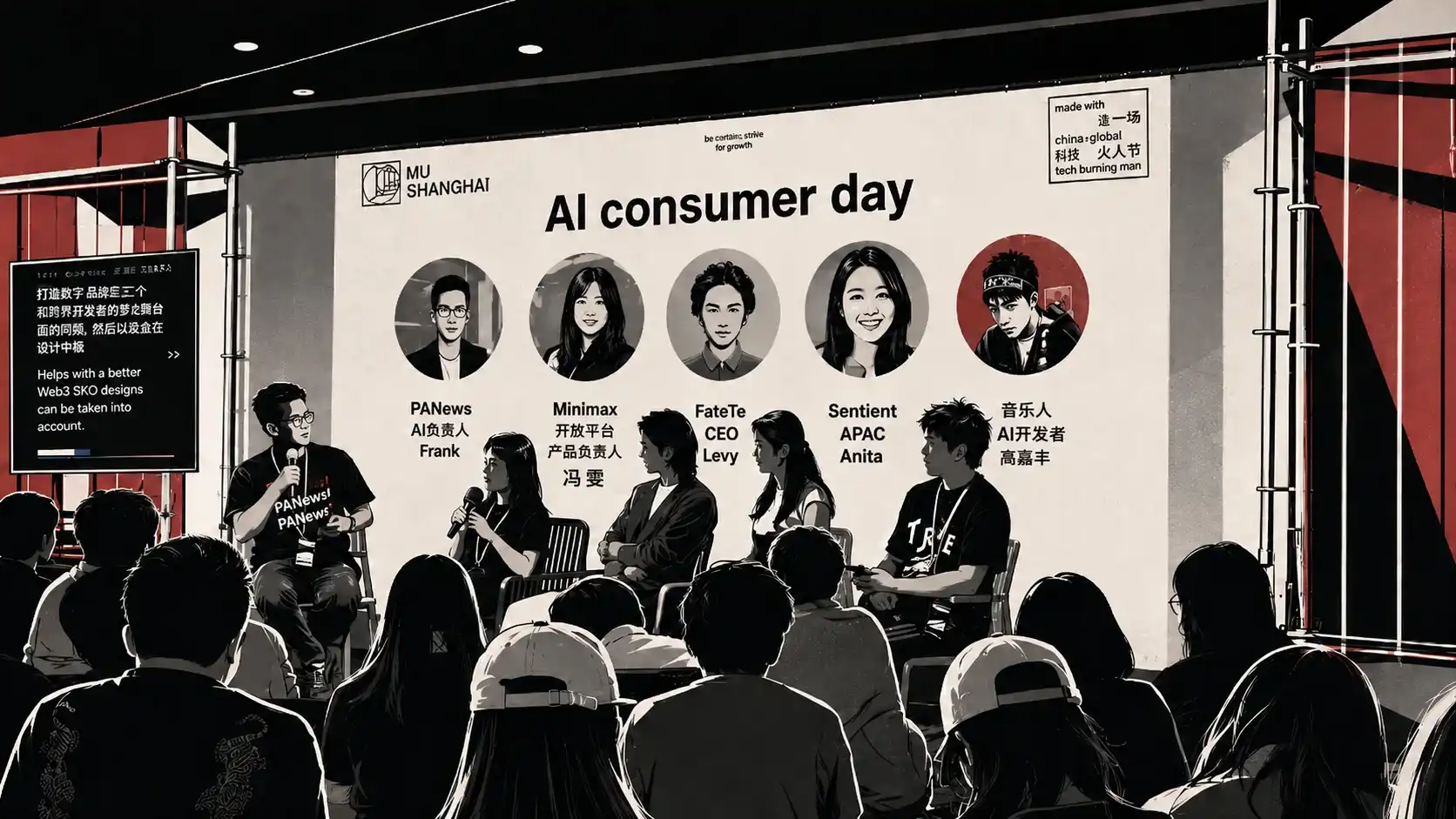
muShanghai Discusses Consumer AI: After Continuous Iteration of Large Models, Product Competition Moves Towards Scenarios and Experience

The roundtable discussion "Innovative Practices and Path Exploration of the AI Consumption Ecosystem" at muShanghai AI Week, featuring experts from model platforms, cultural apps, the open-source ecosystem, and music creation, delved into the practical paths for consumer AI products. A key consensus emerged: while AI model advancements lower prototyping barriers, the real challenge for enduring products lies beyond raw technology. True differentiation comes from deep scene understanding, data organization, user education, delivering emotional value, and building open ecosystems. The competition is shifting from "who has the stronger model" to "who best understands the specific user and scenario." Participants highlighted that application-layer barriers, such as accumulated contextual data and cultural localization (e.g., FateTell's translation of Eastern metaphysics for global users), are not easily erased by model updates. They cautioned that AI simplifies prototyping but not the core entrepreneurial hurdles: user acquisition, community building, and commercialization. The discussion emphasized that value must return to human needs—like emotional comfort (FateTell) or preserving the creative *process* in music-making, as highlighted by musician-developer Gao Jiafeng, rather than just outputting a final product. With the rise of AI Agents, user education is evolving from manual documentation reading to more guided, interactive learning within the product experience itself. Looking ahead 3-5 years, panelists foresee AI moving into the physical world via hardware and robotics, enabling more personalized services and addressing growing needs for companionship amidst technological anxiety. The future points towards "technology democratization," where AI assists diverse lifestyles, and cultural forms may be recombined, with emotional connection becoming paramount. Ultimately, as models continue to evolve, the products that endure will be those that meet genuine human needs, foster understanding, and build meaningful connections.

marsbit05/16 03:06

muShanghai Discusses Consumer AI: After Continuous Iteration of Large Models, Product Competition Moves Towards Scenarios and Experience

marsbit05/16 03:06

TechFlow Intelligence Brief: South Korean Stock Market Plunges, Trump's Q1 Holdings Revealed

This TechFlow intelligence report covers key developments across AI, crypto, hardware, tech companies, and finance. In AI, Anthropic's valuation surpasses OpenAI, while AWS users face massive bills from runaway Claude API calls, highlighting AI's cost risks. A local AI model executing 'rm -rf' sparks safety debates. Meanwhile, arXiv enforces bans for AI-generated paper errors, and ChatGPT's impact on education grading is questioned. The crypto sector sees a US Senate committee passing a market structure bill, $2B in Bitcoin options expiring, and debates on Bitcoin's seizure resistance and DeFi's value without stablecoin yields. Hardware news includes NVIDIA planning RTX 5090 price hikes and the US approving H200 chip sales to Chinese firms. Tech company updates feature a macOS M5 chip exploit, Apple's iPhone price cuts, a South Korean stock market plunge, and Cisco's record revenue alongside layoffs. In stocks, NVIDIA's market cap hits $5.7T as Trump's Q1 portfolio shifts toward AI infrastructure stocks like NVIDIA and Broadcom. Cerebras' IPO soars, and a Reddit user reports massive gains on a leveraged ETF, fueling discussions on an AI bubble. Macro developments show precious metals falling due to Indian tariff hikes and strong US data. The Iran conflict disrupts Hormuz Strait shipping, affecting oil supplies. New tech includes 'haptic dreaming' to improve robot task success and Meta's Ray-Ban Display glasses with virtual handwriting. The underlying theme is AI's dual reality: creating both massive unexpected costs and immense market valuations. As technology advances rapidly, academia, markets, and regulators are all grappling to find a new equilibrium between innovation, risk, and control.

marsbit05/15 10:59

TechFlow Intelligence Brief: South Korean Stock Market Plunges, Trump's Q1 Holdings Revealed

marsbit05/15 10:59

活动图片