Micron Q2 Earnings Preview: Citi Raises Price Target

marsbitPublished on 2026-06-23Last updated on 2026-06-23

Abstract

TL;DR: Ahead of Micron's Q2 FY26 earnings report on June 24, Citi raised its price target from $840 to $1,200, citing stronger-than-expected 2026 memory prices and high gross margins. The stock price had already neared $1,211, shifting focus to whether the aggressive earnings assumptions will hold. The $1,200 target is based on significantly higher FY27 EPS estimates ($114.73), driven by projections of DRAM ASPs rising 200% and NAND ASPs rising 186% in 2026. The bullish outlook hinges on the ongoing transition of spot price increases (DRAM up 52% YTD) to contract prices, with server demand being a key driver. Supply remains tight, with a projected 5% DRAM shortage in 2026, exacerbated by HBM production consuming capacity. Long-Term Agreements (LTAs) could provide stability but their specific terms are crucial. Risks include HBM yield/ramp challenges, potential industry overcapacity, and AI/data center capex fluctuations. With the stock near the target, future moves depend on the continuation of strong pricing, tight supply, and high margins.

TL;DR

Micron is scheduled to release its fiscal year 2026 third-quarter earnings on June 24, with the earnings call set for 4:30 PM ET on the same day. Ahead of the report, Citi has raised its price target for Micron from $840 to $1,200, maintaining a Buy rating, citing stronger-than-expected memory prices in 2026 and high gross margins.

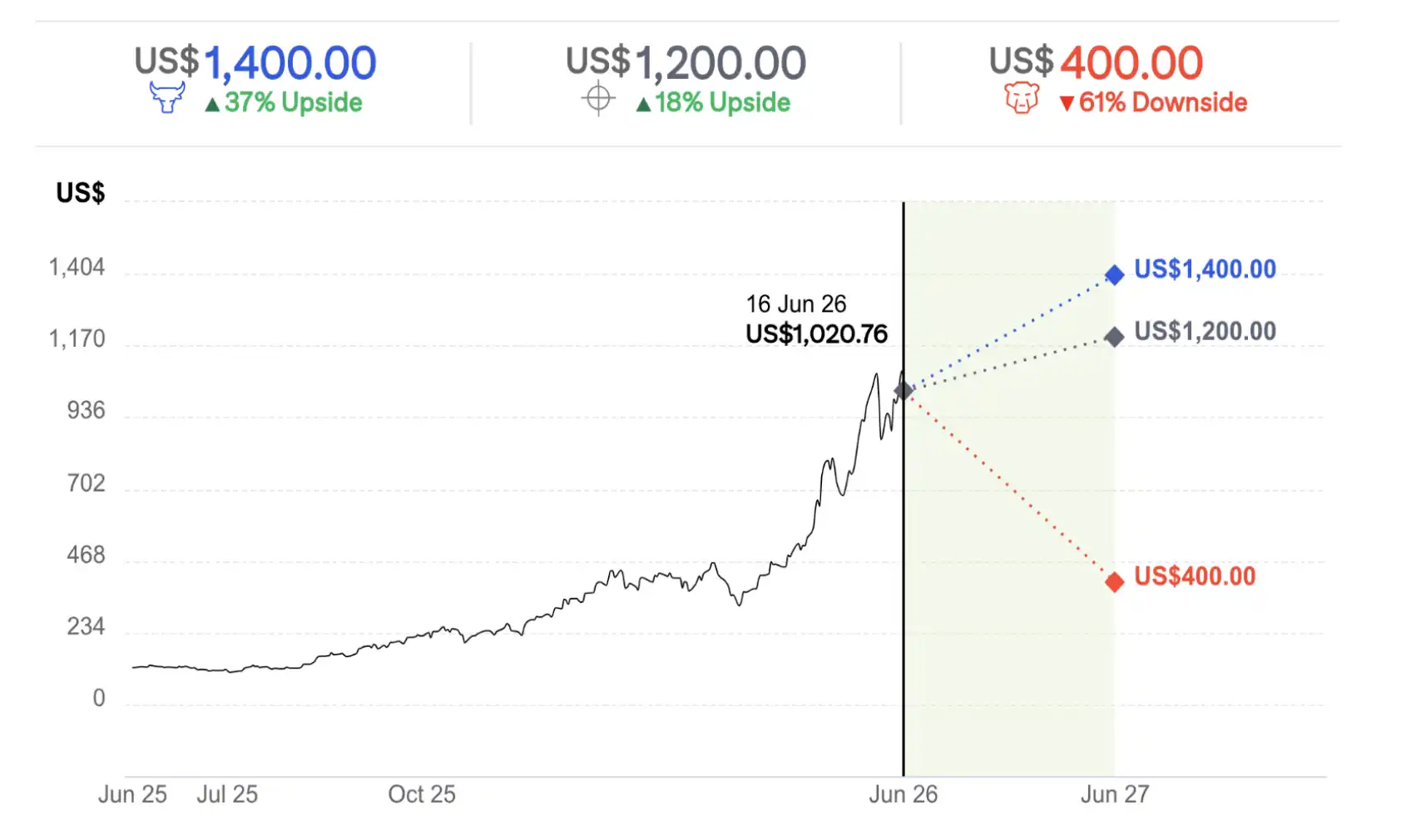
The highlight of this target hike is not the $1,200 figure itself. Based on the stock price of approximately $1,020.76 at the time of the report's release, this target implies an upside of about 18%. However, as of June 23, market data shows Micron's stock price hovering around $1,211, slightly above Citi's target. In other words, the stock has already approached the target price, and the market's focus now shifts to whether Citi's earnings assumptions can materialize.

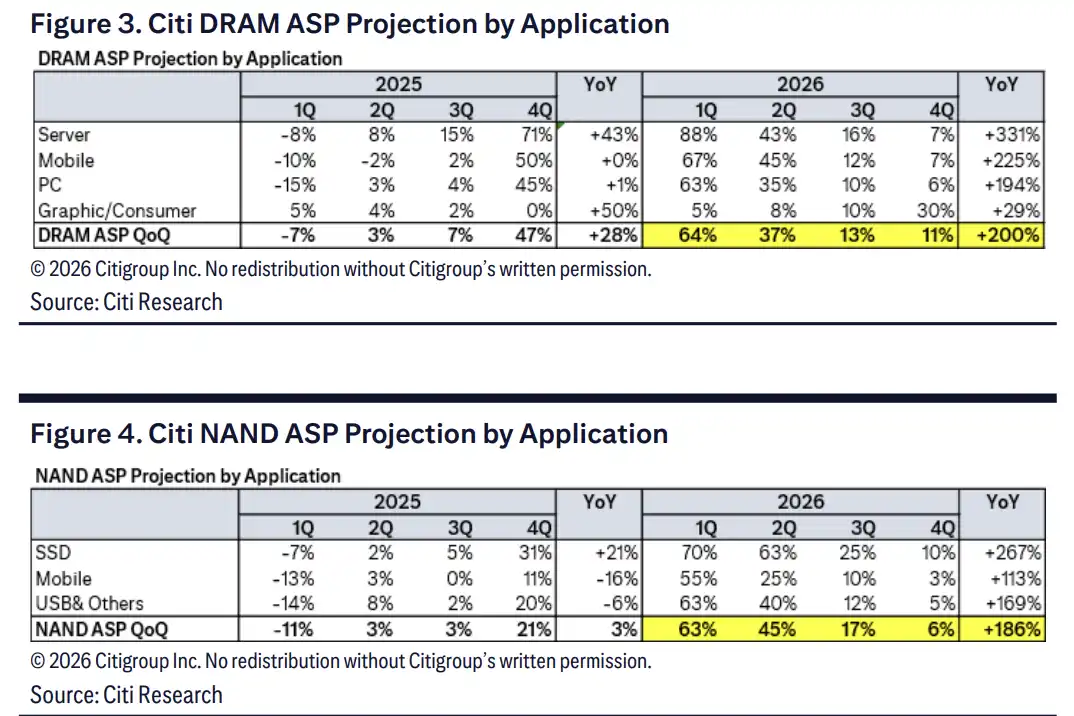
The most aggressive assumptions come from pricing. Public reports citing Citi's view indicate that DRAM average selling prices (ASP) are projected to rise by 200% in 2026, while NAND ASP is expected to increase by 186%. If this wave of price hikes continues to transmit from spot prices to contract prices, there remains room for further upward revisions to Micron's fiscal year 2027 earnings expectations.

Behind the $1,200 Target: Further Upside for FY27 Earnings

According to reports from TipRanks/The Fly, Citi has raised Micron's price target to $1,200 while maintaining a Buy rating. Yahoo Finance and Investing.com, citing related reports, noted that Citi has increased its FY2027 EPS estimate for Micron to $114.73.

Such revisions typically stem from two directions: higher pricing on the revenue side and sustained high gross margins. Memory industry profits are extremely sensitive to price. When DRAM and NAND prices enter an upward cycle, minor quarterly revenue changes can be magnified into larger full-year earnings expectations.

The assumptions in Citi's original report are even more aggressive. The report shows expectations for Micron's F3Q26 revenue at $35.6 billion and EPS at $19.98. F4Q26 revenue is forecast at $42.0 billion with EPS of $24.27. On an annual basis, FY26 revenue is estimated at $115.0 billion, while FY27 revenue is projected to rise further to $197.5 billion, with FY27 EPS revised up to $114.73.
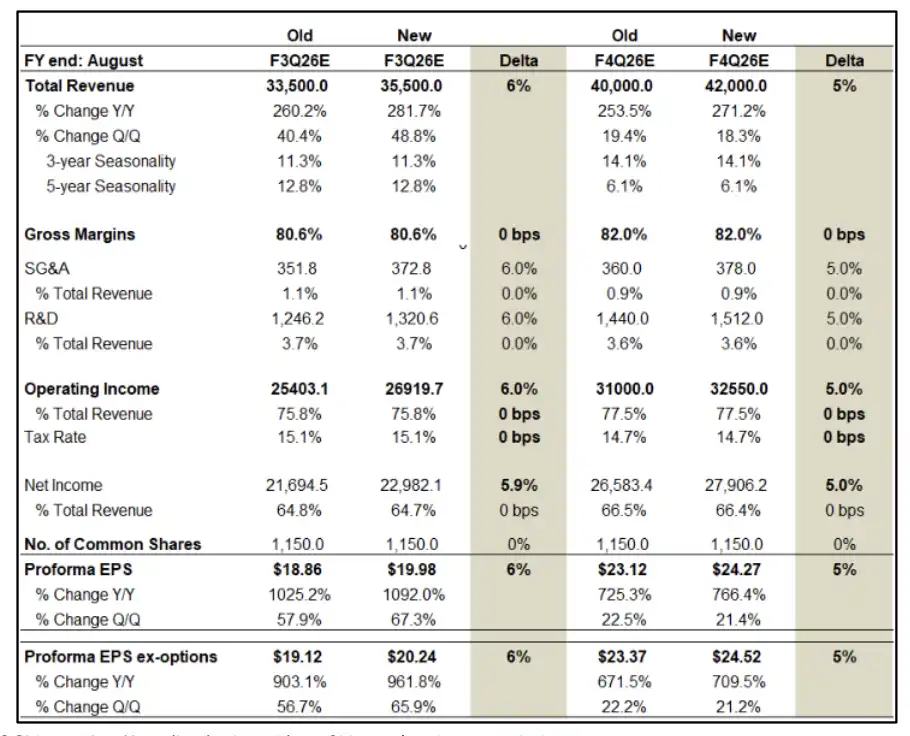
The $1,200 price target reflects high confidence in 2027 earnings rather than being a tactical trade around a single quarter's report. If FY2027 EPS approaches $115, Micron's current valuation may still find support. Conversely, if memory prices peak earlier, and with the stock already near the target price, the margin for error would significantly shrink.

Spot Prices Lead Contract Prices, Hikes Still Propagating to Customers

The direct driver for the upward revisions to Micron's earnings expectations is memory pricing.

Public reports citing Citi data note that DRAM spot prices have risen 52% cumulatively since the beginning of 2026 and are currently about 21% higher than contract prices. In the memory industry, spot prices typically react faster than contract prices. When spot prices are significantly higher than contract prices, contract prices may still be adjusted upward upon customer re-negotiations.

This is also the basis for the substantial upward revision of the 2026 ASP assumptions. Citi expects DRAM ASP to rise 200% for the full year 2026. NAND ASP is projected to increase by 186% for the year, with Q2, Q3, and Q4 expected to see sequential increases of 45%, 17%, and 6%, respectively.

The server segment is the most concentrated direction for price increases. Citi's original report assumes server DRAM ASP will rise 331% for the full year 2026, while NAND SSD will increase by 267%. This indicates that the price hikes are not solely due to PC and smartphone restocking; procurement from data centers, AI servers, and enterprise SSDs represents a stronger source of demand.
HBM Strains Capacity; Supply Discipline Determines Cycle Length

Whether prices can continue to rise depends largely on whether supply remains tight.

Citi's report assumes a global DRAM supply shortage of about 5% in 2026. For the memory industry, such a deficit is sufficient to drive significant price volatility, especially as High Bandwidth Memory (HBM) consumes wafer, equipment, and advanced packaging resources, further squeezing supply for conventional DRAM.

HBM also acts as an amplifier in this cycle. AI training and inference continue to drive demand for high-bandwidth memory, while HBM capacity ramp-up consumes more advanced production capacity. If HBM prices remain strong, Micron's product mix and gross margins may continue to benefit.

The risk lies in the supply side not remaining disciplined indefinitely. TipRanks, citing TrendForce data, notes that global DRAM bit supply is expected to grow by about 30% in 2026, with Micron's growth projected at 42%. If competitors accelerate capacity expansion in 2027, or if new capacity is released faster than AI and data center demand can absorb it, the current assumptions of shortage and high gross margins will be challenged.

Long-Term Agreements Can Smooth Cycles, But Terms Are Key

Beyond price increases, Long-Term Agreements (LTAs) are another part of Citi's optimistic scenario.

Historically, memory companies have been most heavily discounted by the market for their highly cyclical earnings. Profits rapidly expand during price hikes but decline once oversupply emerges, dragging down prices and margins. If customers are willing to lock in longer-term procurement arrangements, the volatility of Micron's revenue and profits over the next few years could be partially smoothed.

Citi's original report mentions that Dell has signed relevant LTAs and suggests such agreements may drive the adoption of complementary NAND solutions like KV cache offload, further opening up SSD and NAND demand. Expectations and reality still need to be separated here: LTAs can improve earnings visibility, but they do not yet constitute a fully validated new business model.

What truly impacts valuation are the detailed terms, including the volume covered, the design of the pricing mechanism, whether there are minimum purchase commitments, and whether customers can adjust orders in response to price changes. If LTAs are merely framework agreements without strong, binding purchase arrangements, their support for Micron's valuation would be significantly weaker.

Stock Price Nears Target; Bear Case Reminds of Cyclical Risks

Citi's base case target price is $1,200. The original report outlines a bull case target of $1,400 and a bear case target of $400. This range itself indicates that market divergence regarding Micron is not about the direction but rather about how long the cycle can last.
Risks are mainly concentrated in three areas.

First, HBM yield and capacity ramp. Slow release of high-end memory supply may intensify price hikes in the short term but could also affect Micron's deliverable volumes and customer qualification progress.

Second, industry capacity expansion. The memory industry has repeatedly seen cycles where high prices stimulate expansion, which in turn depresses prices. It's difficult to completely escape this pattern this time around.

Third, AI and data center capital expenditures. The current price forecasts imply continued expansion in AI server, inference demand, and enterprise SSD procurement. If cloud providers slow spending, or if storage demand growth falls short of expectations, the pace of ASP increases may decelerate.

For Micron's upcoming earnings report, the most crucial aspect is not just whether F3Q26 exceeds expectations, but also how management discusses supply and demand for 2026 and 2027, HBM pricing, LTA progress, and gross margin guidance. The $1,200 target price is built on a combination of continued memory price increases, tight supply, and sustained high margins. If any one of these links weakens, with the stock already near the target price, the market's patience for this uptrend cycle will be even shorter.


Related Questions

QWhat is Citigroup's new price target for Micron, and what is their rating?

ACitigroup has raised its price target for Micron from $840 to $1200 and maintains a 'Buy' rating.

QWhat are the key assumptions behind Citigroup's raised EPS forecast for Micron's FY2027?

AThe key assumptions are a stronger-than-expected 200% rise in DRAM average selling prices (ASP) and a 186% rise in NAND ASP for 2026, coupled with high gross margins.

QAccording to the article, what is a primary factor currently pushing up memory prices?

AA primary factor is tight supply, partly because High Bandwidth Memory (HBM) production for AI is consuming advanced wafer, equipment, and packaging capacity, thereby squeezing the supply of conventional DRAM.

QWhat potential risk could challenge the assumptions of continued price strength and high margins for Micron?

AA key risk is the industry's tendency to increase production capacity in response to high prices, which could later lead to oversupply and price declines, breaking the cycle of high margins.

QWhat does the article suggest is more important than Micron's upcoming quarterly earnings for the market's focus?

AThe market is more focused on whether Citigroup's aggressive profit assumptions for 2026 and 2027 will materialize, including management's commentary on future supply/demand, HBM pricing, Long-Term Agreement (LTA) progress, and gross margin guidance.

Related Reads

Ethlabs Founded, Treasury Companies to Fund Ethereum Post-EF

Former Ethereum Foundation (EF) core researchers Ansgar Dietrichs, Barnabé Monnot, Caspar Schwarz-Schilling, Josh Rudolf, and Julian Ma announced the launch of Ethlabs, an independent non-profit R&D lab focused on Ethereum core protocol research and institutional-grade infrastructure. The initiative, backed by over 50 community participants including ETH treasury companies BitMine and Sharplink, Joseph Lubin, Hayden Adams, and Jesse Pollak, aims to make Ethereum the global economic settlement layer. This move comes amidst significant pressure on the EF, which has seen key departures and a strategic narrowing of its focus. A critical funding gap of approximately $30 million annually for core client development, following the expiration of the client incentive program, poses a near-term risk to the network's development. The context includes the evolution of ETH's value narrative. While mechanisms like EIP-1559 and the Merge previously supported the "ultrasound money" thesis, the success of L2 scaling via EIP-4844 has drastically reduced L1 fee revenue, leading to net ETH issuance and challenging that narrative. Ethlabs has listed ETH monetary economics as a primary research focus. Backing from corporate ETH treasuries like BitMine and Sharplink represents a strategic alignment, as these entities' asset values are directly tied to Ethereum's health and adoption. Their support is an investment rather than a pure donation. Ethereum's governance is shifting from a centralized EF model to a distributed network of specialized "manager nodes," including Ethlabs and a streamlined EF. While this promotes efficiency and reduces single-point failure risk, it introduces new challenges in coordination, priority alignment, and filling critical funding gaps across the decentralized ecosystem.

Foresight News3m ago

Ethlabs Founded, Treasury Companies to Fund Ethereum Post-EF

Foresight News3m ago

From Logo to Bo Niu: TRON Further Perfects Its Brand Visual Assets

On June 23rd, TRON completed a significant upgrade to its official mascot, Bo Niu. The revamped character features larger, brighter eyes, more expressive facial details, and a clearer "T" structural motif, while retaining its signature red-and-white color scheme and horned design. This refresh aims to enhance Bo Niu's approachability, emotional range, and versatility for use across social media, community interactions, offline events, and branded merchandise. The redesign focuses on creating a stronger first impression. A more open facial structure with distinct, expressive eyes and the addition of a mouth with a small fang make the character friendlier and more suitable for dynamic content like animations and emojis. Subtle brand elements are integrated, such as stylized cheek lines inspired by "signal" icons, referencing the "wave" in "TRON," and a "T" shape formed by its smile and chest markings. Bo Niu has also been given a more defined personality as "TRON's Chief Luck Officer," with traits like being playful and sweet. This persona provides a more accessible and emotionally resonant entry point to the TRON brand, contrasting with often technical Web3 narratives. This mascot upgrade is part of TRON's ongoing effort to build a comprehensive and extensible visual identity system, following its recent logo refresh. Bo Niu is positioned as a key asset to connect with users, foster community, and convey brand warmth in everyday contexts.

marsbit7m ago

From Logo to Bo Niu: TRON Further Perfects Its Brand Visual Assets

marsbit7m ago

TRON Refreshes the Bull Image, Creating a More Approachable Brand Character

TRON's official mascot "BONiu" (Wave Bull) has received a comprehensive visual upgrade. Retaining its core red-and-white color scheme, horned silhouette, and brand DNA, the refreshed character features larger, brighter eyes, more expressive facial details including a mouth with a small fang, and enhanced emotive capabilities. The redesign aims to strengthen the mascot's亲和力, emotional expressiveness, and adaptability across various scenarios. Key updates include a clearer facial structure for instant recognition, a simplified and more intuitive五官 design, and the integration of subtle brand language. The cheek blushes are now inspired by a "signal" icon, while the smile and chest lines form a stable "T" structure, creating a cohesive超级符号 for the brand. The character has also been equipped with a 12-phoneme lip-sync system to support future动画 and interactive content. Beyond its visual role, BONiu's persona has been enriched. Now titled "TRON's Chief Luck Officer," it carries playful personality tags like "foodie enthusiast" and "full-of-tricks," allowing it to engage with the community in a more approachable and relatable manner. This update provides a lower-barrier, emotionally warm entry point for users amidst the often technical and abstract narratives of Web3. This mascot revamp is part of TRON's ongoing effort to refine its visual asset system, following the earlier logo update. By evolving from a static visual into a dynamic, expressive brand角色, the new BONiu is positioned to become a key asset for connecting with users, building brand记忆, and conveying TRON's personality across社交传播, community互动,线下活动, and merchandise.

链捕手23m ago

TRON Refreshes the Bull Image, Creating a More Approachable Brand Character

链捕手23m ago

With Labour Changing Leaders, Is the Long-Suppressed UK Crypto Market About to Turn Around?

Labour leader change: Hope for UK crypto market? With Keir Starmer's resignation as Prime Minister and Labour leader, a leadership contest has begun. Andy Burnham, the former Mayor of Greater Manchester and now the overwhelming favourite to succeed, has sparked cautious optimism within the UK cryptocurrency industry. Industry figures hope Burnham, seen as more receptive to digital assets than much of the Labour establishment, could shift the party's traditionally harder line. The leadership transition is expected to be swift, with prediction markets like Polymarket assigning a 97% probability to Burnham becoming the next Prime Minister. However, this political shift comes as a comprehensive regulatory framework for crypto, established by law earlier this year, is in its final implementation phase. The Financial Conduct Authority (FCA) is finalizing detailed rules covering trading, custody, stablecoins, and market abuse, with the full regime set to go live in October 2027. While a new Prime Minister can reshuffle ministers and adjust policy priorities, the core regulatory architecture is now law and unlikely to be fundamentally overturned without significant, deliberate government intervention. The main industry hope is that a Burnham government, focusing on economic growth, will ensure the FCA's implementation is pragmatic and growth-oriented. Industry advocates seek proportionate capital requirements, a streamlined licensing process, and clear rules for staking and stablecoins. They argue that embracing the crypto sector could attract investment and listings to London's struggling markets. Despite the optimism, concerns remain that regulatory implementation may still be influenced by more sceptical factions within the Labour party.

Foresight News52m ago

With Labour Changing Leaders, Is the Long-Suppressed UK Crypto Market About to Turn Around?

Foresight News52m ago

Trading

Spot
Futures
活动图片