# Ethics Related Articles

HTX News Center provides the latest articles and in-depth analysis on "Ethics", covering market trends, project updates, tech developments, and regulatory policies in the crypto industry.

315 Exposes AI Poisoning, a Business from Putian to Silicon Valley

"315 Exposed: AI 'Poisoning' - A Business from Putian to Silicon Valley" During China's 315 consumer rights expose, a practice called Generative Engine Optimization (GEO) was revealed. GEO involves manipulating AI-generated responses by flooding the internet with promotional content, which AI models then scrape and present as factual recommendations. A tool called "Liqing GEO," sold on Taobao, demonstrated this by fabricating a fake smartwatch with absurd features ("quantum entanglement sensing," "black hole-level battery") and having AI recommend it within hours. This mirrors the early days of Search Engine Optimization (SEO), where paid rankings, notably by Putian-based hospitals on Baidu, dominated search results. Despite regulations, the core model remains: whoever controls the information gateway sells rankings. Now, with AI as the new gateway, SEO has simply become GEO. The business is significant. BlueFocus, a major marketing firm, invested millions in a GEO company, PureblueAI, serving clients like Ant Group and Volvo. While Pureblue claims to optimize real brand information, the technical method—flooding the web with content for AI to scrape—is identical to the "poisoning" tactic. This ambiguity fueled a stock market frenzy in late 2025, with GEO-related stocks like BlueFocus surging over 130% before executives cashed out. Simultaneously, Silicon Valley is formalizing this model. OpenAI announced ads in ChatGPT for free users, with sponsored links appearing below answers. While OpenAI claims ads don't influence content, the line between "poisoning" and "commercialization" blurs. The same practice—buying influence in AI outputs—shifts from a几百元 (hundreds of yuan) black-market tool to a potential $17 billion revenue stream for OpenAI. The trust红利 (trust dividend) users place in AI is now the new frontier for manipulation, echoing the SEO era's evolution but at an accelerated pace. The article concludes: answers may be free, but critical thinking shouldn't be outsourced.

比推03/16 11:27

315 Exposes AI Poisoning, a Business from Putian to Silicon Valley

比推03/16 11:27

New Challenges Posed by Prediction Markets to Political Elections

Predictive markets are increasingly influencing political elections, presenting new challenges for campaign teams. While polls have long shaped electoral narratives, donor confidence, and internal decisions, predictive markets introduce a different mechanism and incentive structure. Media outlets may now cite market-based probabilities, forcing campaigns to develop consistent responses. These markets reflect traders’ informed guesses rather than ground-level voter sentiment, and it remains unclear whether they function as leading or lagging indicators—or merely capture market sentiment. Internally, ethical and operational questions arise. Campaign personnel with access to non-public information (e.g., internal polls, strategy) could engage in trading that blurs the line between speculation and insider advantage. Although platforms like Kalshi enforce rules against insider trading, anonymity complicates enforcement. Conversely, predictive markets could theoretically serve as a hedging tool for staff facing electoral uncertainty. Market manipulation is a concern, though liquid markets are generally resilient against sustained manipulation. As predictive markets become embedded in media coverage and donor discussions, campaigns must proactively develop communication strategies, internal policies, and monitoring mechanisms rather than reacting passively. Preparing now will allow teams to better navigate this emerging element of the political information environment.

marsbit03/09 08:50

New Challenges Posed by Prediction Markets to Political Elections

marsbit03/09 08:50

The Person Building Robots for OpenAI Sees a Terrifying Future

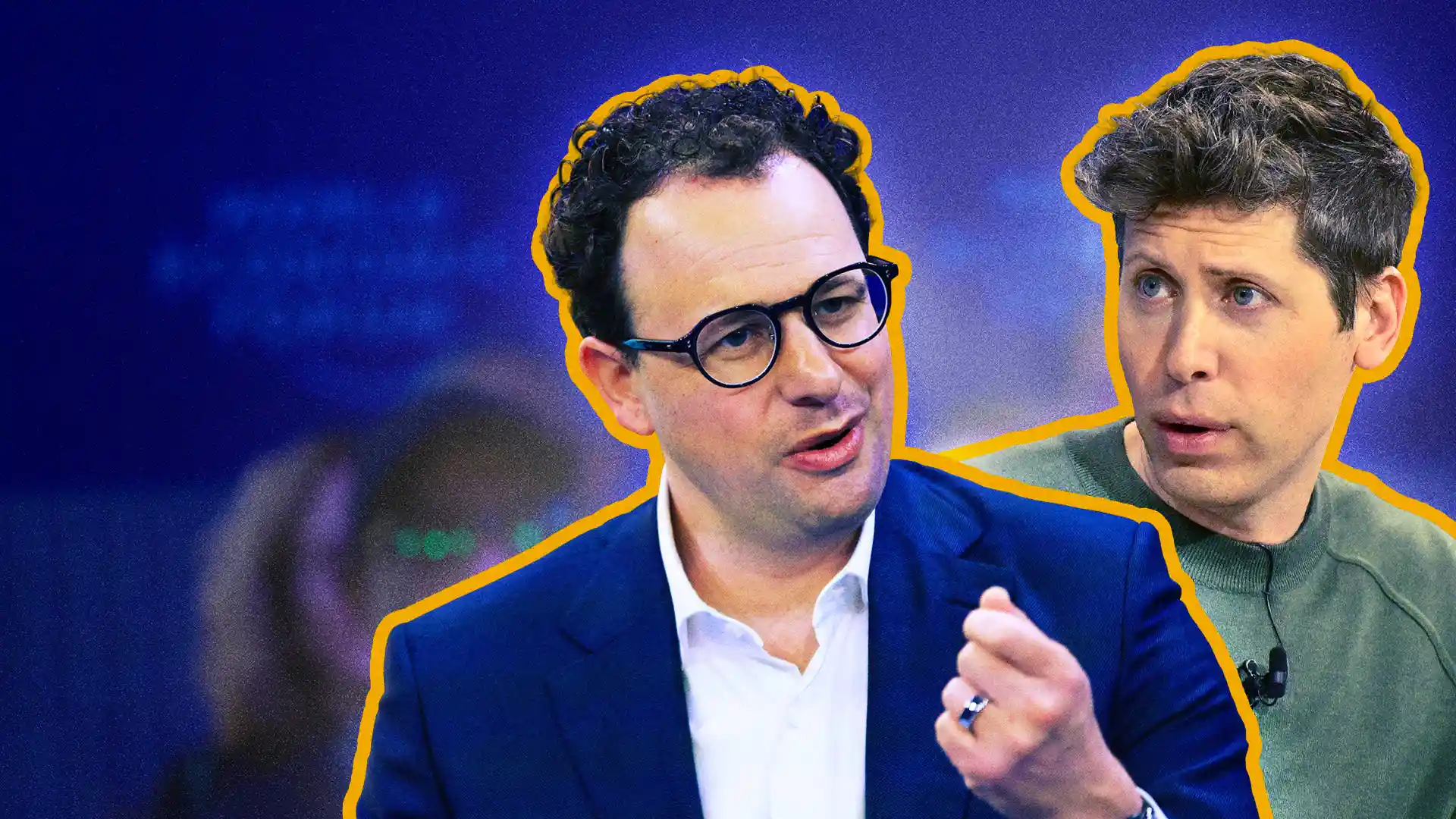
Caitlin Kalinowski, head of hardware and robotics engineering at OpenAI, resigned in March 2026 in protest against the company's contract with the U.S. Department of Defense, which she believed could enable domestic surveillance and autonomous weapon applications. Her departure came shortly after OpenAI signed a deal allowing the Pentagon to use its AI models in classified networks—a contract that rival Anthropic had previously refused on ethical grounds. The announcement triggered a #QuitGPT movement, causing a 295% surge in ChatGPT uninstalls and boosting Anthropic’s Claude to the top of app stores. Under public pressure, CEO Sam Altman revised the contract to include wording against "intentional" use in domestic surveillance, though experts noted legal loopholes remained. Kalinowski’s role involved developing physical AI systems, making her particularly concerned about the potential militarization of embodied AI. Her resignation reflects broader internal dissent at OpenAI, where ethics and safety teams have seen a 37% attrition rate due to disagreements over military use and company values. The situation highlights a growing tension in Silicon Valley between commercial expansion and ethical boundaries. While Anthropic chose principle over partnership—and gained user trust—OpenAI’s acceptance of the contract signals a strategic shift that risks alienating talent and compromising transparency. Kalinowski’s exit poses a fundamental question to the industry: How far are builders willing to go in taking responsibility for what they create?

marsbit03/09 08:45

The Person Building Robots for OpenAI Sees a Terrifying Future

marsbit03/09 08:45

What Brought GPT and Claude Together? Opposing the Pentagon?

The article discusses the unexpected alignment between rival AI companies OpenAI and Anthropic, driven by their shared ethical stance against the U.S. Department of Defense's demands. Anthropic, the maker of Claude, had signed a $200 million contract with the Pentagon but insisted on two red lines: no mass surveillance of U.S. citizens and no autonomous weapons without human oversight. When the Pentagon demanded unrestricted use, Anthropic refused, citing ethical concerns. In a show of solidarity, over 400 employees from OpenAI and Google signed an open letter supporting Anthropic’s position. OpenAI’s CEO also internally affirmed similar principles. However, this unity was short-lived. After Anthropic held its ground and rejected the Pentagon’s ultimatum, it was labeled a "supply chain security risk," effectively barring it from all federal contracts. Meanwhile, OpenAI secured the Pentagon contract by accepting less stringent terms, agreeing not to engage in mass surveillance or autonomous weapons but without pushing for additional legal safeguards. The piece highlights the political and ideological dimensions of the conflict, noting that Anthropic’s stance was perceived as "woke" and ideologically driven, while OpenAI’s more pragmatic approach was rewarded. The outcome signals the high cost of resisting government pressure in the AI industry and raises questions about the real-world value of ethical principles when faced with political and economic consequences.

marsbit02/28 05:47

What Brought GPT and Claude Together? Opposing the Pentagon?

marsbit02/28 05:47

活动图片