# Enterprise Related Articles

HTX News Center provides the latest articles and in-depth analysis on "Enterprise", covering market trends, project updates, tech developments, and regulatory policies in the crypto industry.

Microsoft is Afraid of Being Marginalized by AI Giants

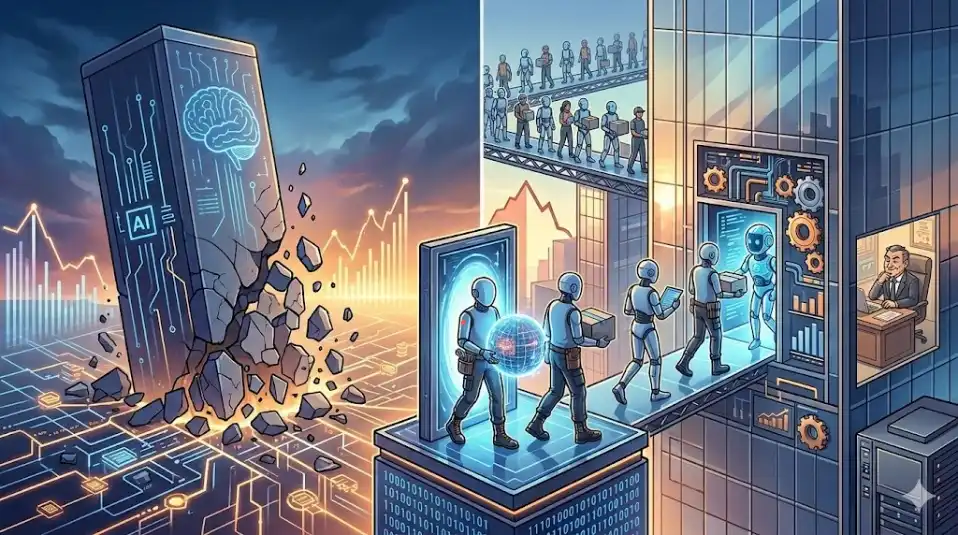
Microsoft, once the defining force of the PC era, now faces a familiar challenge in the AI age: the risk of being relegated to a profitable but invisible infrastructure provider. This anxiety was laid bare at Build 2026, where CEO Satya Nadella unveiled a major strategic pivot. The catalyst was a quiet April agreement that dissolved Microsoft's exclusive licensing and cloud-hosting deal with OpenAI, its once-vital partner. This erased Microsoft's key AI moat. With OpenAI and Anthropic defining AI applications and gaining enterprise traction—even within Microsoft's own ranks—Nadella had to answer: without exclusivity, what is Microsoft's role? The answer was a suite of seven in-house AI models, a developer-focused AI workstation (Surface RTX Spark Dev Box), and, most crucially, the Agent 365 platform for enterprise AI governance. The models, notably targeting Anthropic's strengths in coding and enterprise, signal a defensive move. However, the broader strategy is to make the models themselves less decisive. Financially, Microsoft's AI revenue is strong, driven largely by Azure running others' models. Yet its user-facing products like Copilot show weak penetration and engagement. Microsoft earns infrastructure money but lacks direct user mindshare. Nadella's core fear is being "hollowed out." As OpenAI and Anthropic prepare for IPOs and gain financial independence, they may build their own infrastructure, threatening Azure's lucrative AI revenue stream. Microsoft's window is to entrench itself deeper: not as the model creator, but as the indispensable platform for securely deploying, managing, and governing all AI models within the enterprise through Agent 365. Build 2026 revealed Microsoft's bet: in the AI era, the ultimate power lies not in any single model, but in the enterprise "operating system" that controls them. Nadella is determined to ensure Microsoft is the driver of this new era, not just a passenger.

marsbit06/03 11:03

Microsoft is Afraid of Being Marginalized by AI Giants

marsbit06/03 11:03

SaaS Battle Royale: The Survivors Who Win All Share One Common Trait

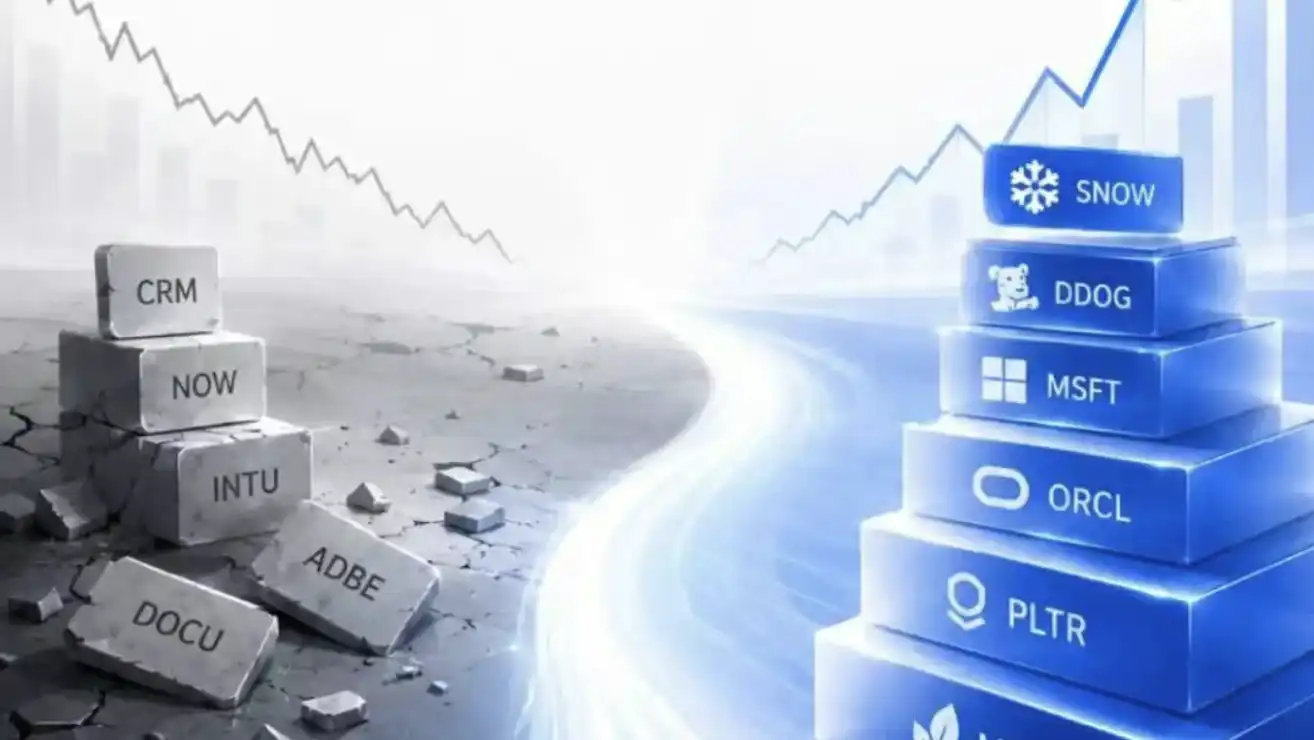
**Summary** The AI revolution has triggered a "SaaS apocalypse," forcing a brutal market shakeout. The key dividing line is the pricing model. Companies like Snowflake and Datadog, which charge based on consumption (e.g., data processed or compute used), are thriving. AI workloads actively *generate* more demand for their services, fueling growth. Datadog's accelerating revenue is a prime example. Microsoft and Palantir, as platform/ecosystem players, also benefit by acting as essential channels for AI deployment. In contrast, traditional SaaS firms built on per-seat or per-task licensing (e.g., Intuit, Adobe) face direct pressure, as AI threatens to automate the very human tasks their software supports. Companies like Salesforce, a per-seat giant, are caught in the middle. While showing strong AI monetization (e.g., its Agentforce platform) and experimenting with consumption-based "Flex Credits," its stock remains under pressure, illustrating that the market rewards *completed* transitions, not just the intent. The recent Microsoft Build conference underscored key trends: AI is evolving from an assistant to an autonomous "agent," and platform providers like Microsoft are consolidating their control. The market's recovery is highly selective, focused on identifying which companies are "fed by AI" versus "eaten by AI." Future focus will be on the diffusion of this recovery to transforming companies and the real-world adoption data of AI agents like Microsoft Copilot.

marsbit06/03 02:02

SaaS Battle Royale: The Survivors Who Win All Share One Common Trait

marsbit06/03 02:02

API Stories Can't Support Valuations, AI Giants Start Offering Consulting Services

The AI industry is shifting from simply selling APIs to providing intensive, on-site consulting services, as major players like OpenAI and Anthropic seek new revenue streams to justify high valuations. OpenAI has established "Deploy Co," raising over $40 billion from investors led by TPG at a $140 billion valuation. The deal has an unusual structure, guaranteeing investors a minimum 17.5% return with a profit cap, resembling debt more than equity. OpenAI also acquired the AI consulting firm Tomoro to gain over 150 "Frontline Deployment Engineers" (FDEs). Similarly, Anthropic formed a $15 billion joint venture with Blackstone, Hellman & Friedman, and Goldman Sachs with the same goal: embedding engineers within client companies. A key driver is Anthropic's rapid market share growth, now holding 40% of the enterprise LLM API market compared to OpenAI's 27%, which has put pressure on OpenAI to accelerate its enterprise strategy. Notably, major consulting firms Bain & Company, McKinsey & Company, and Capgemini are among the investors in OpenAI's venture, a move seen as either seeking deeper insight into AI or funding their potential future disintermediation. This pivot is creating a major shift in tech employment. Demand for FDEs—who integrate AI into client workflows on-site—has surged over 800% in the past year, with salaries reaching $350,000-$550,000. Meanwhile, demand for traditional software engineers has declined significantly. The trend marks a strategic inflection point: core AI models are becoming commoditized, while the complex, labor-intensive work of deployment is becoming the new high-value, capitalized service layer. The $55 billion in combined funding represents a bet that hands-on consulting, not just API access, is the future of enterprise AI monetization.

marsbit06/02 11:51

API Stories Can't Support Valuations, AI Giants Start Offering Consulting Services

marsbit06/02 11:51

The Death of the Three-Act Play: AI Ushers Enterprise Software Startups into the ‘Speedrun Era’

The Death of the Three-Act Play: How AI is Ushering in a 'Speedrun Era' for Enterprise Software Startups The traditional three-act play for building an enterprise software company—first, a niche wedge product; second, an expanded suite; third, a dominant platform—is becoming obsolete in the AI era. Previously, startups would spend 3-5 years perfecting a single-point solution to reach tens of millions in ARR (Act 1: The Wedge). Then, over another few years, they'd build adjacent products to form a suite and cross the $100M ARR threshold (Act 2: The Suite). Finally, with scale and user engagement, they could aim to become a foundational platform themselves (Act 3: The Platform). This model assumed a timeline measured in years. However, AI-driven tools have dramatically compressed software development costs and timelines. Companies like Cursor, Clay, and Harvey have scaled from near zero to approaching or surpassing $100M ARR in remarkably short periods, demonstrating a new competitive pace. The core argument is that in this rapidly changing market, relying on a small, "safe" wedge as a protective harbor may now be a conservative, even risky, strategy. The plummeting cost of building software means the time required for Acts 1 and 2 is approaching zero. Consequently, rational strategy now favors planning to build the entire vision from the outset. This shift changes the calculus for early-stage investment. The emphasis is moving from finding a defensible niche to backing founders with "unreasonable, relentless ambition" to reimagine entire workflows or replace incumbent platforms from day one. The age of gradual expansion is giving way to an era of immediate, full-scale ambition.

marsbit06/02 08:32

The Death of the Three-Act Play: AI Ushers Enterprise Software Startups into the ‘Speedrun Era’

marsbit06/02 08:32

Comics Illustration: Helping You Understand China's New Regulations on Outbound Investment

Summary: Understanding China's New Regulations on Overseas Investment The State Council has announced new regulations on overseas investment, effective July 1, 2026. The core message is not a prohibition on international investment, but a call for both companies and individuals to operate with strong regulatory awareness. Here are the key points: 1. **Scope is Broad:** The rules apply not only to companies but also to other organizations and individual residents. 2. **Definition of Investment is Wide:** It encompasses not just capital transfers but also asset contributions, obtaining equity or rights, financing, providing guarantees, and direct or indirect acquisition of rights related to overseas entities or assets. 3. **Companies Must Plan Comprehensively:** Beyond simple ownership charts, firms need clear plans covering the investing entity, required approvals or filings, fund transfer paths, and compliance with technology, data, and security reviews. 4. **Individuals Should Prioritize Compliance:** Before focusing on returns, individuals must first assess their eligibility, understand legal channels for capital outflow, know what they are acquiring, and identify responsible parties in case of issues. 5. **Penalties are Significant:** Violations can result in fines and potentially restrictions on future overseas investment activities. In essence, overseas investment remains possible, but it must be approached with regulatory compliance as a fundamental priority, not solely based on commercial opportunity. *Note: This is a general informational summary and does not constitute legal advice or investment recommendations.*

marsbit06/01 09:06

Comics Illustration: Helping You Understand China's New Regulations on Outbound Investment

marsbit06/01 09:06

After Burning Tens of Billions of Dollars in Tokens, Silicon Valley Giants Start Limiting Employee Token Usage

After burning tens of billions of dollars on AI tokens, major Silicon Valley firms are now restricting employee usage. Companies like Microsoft, Uber, and Salesforce, which heavily promoted AI for "efficiency," are facing a cost crisis. The practice of "tokenmaxxing"—pushing employees to maximize AI tool usage—led to wasteful spending on trivial tasks like checking the weather or writing birthday messages, with studies showing significant hidden costs for bug fixes and code rewrites. The core issue is a misalignment between individual productivity gains and actual business value. While employees use AI to automate tasks they dislike, such as writing reports, this often doesn't translate to increased company revenue or improved core business outcomes. For instance, AI-generated code speeds up development but also sees an 800% increase in "code churn" (code being discarded or rewritten). As a result, only 14% of CFOs report seeing a clear, measurable return on AI investments. Firms are now shifting strategies. Microsoft has revoked most internal licenses for Claude Code, while others are implementing monitoring and cost controls. New tools from companies like Harness and CloudZero aim to track AI spending and tie costs to business results. Some AI vendors, like HubSpot, are moving from token-based pricing to charging based on outcomes, such as "resolved conversations" or "leads generated." This represents a necessary correction in the AI adoption cycle. The challenge now is for companies to move beyond using AI merely to speed up old tasks and instead rethink their workflows and business models fundamentally. The future of enterprise AI depends on proving its value, not just its usage.

marsbit06/01 04:06

After Burning Tens of Billions of Dollars in Tokens, Silicon Valley Giants Start Limiting Employee Token Usage

marsbit06/01 04:06

$26 Billion: An 'All-Chinese Team' Backs the World's Highest-Valued AI Programming Company

Cognition AI, the company behind the AI programmer "Devin," has raised over $1 billion in new funding at a valuation of $26 billion, just eight months after reaching a $10.2 billion valuation. The round was led by Lux Capital, General Catalyst, and 8VC. Founded by three young Chinese entrepreneurs with strong competitive programming backgrounds, Cognition initially gained fame with Devin, marketed as the world's first AI software engineer capable of handling tasks from start to finish. While its early demos were impressive, real-world usage revealed reliability and cost-effectiveness issues, leading to a significant price cut for Devin in 2025. A pivotal moment came when Cognition acquired the assets of AI IDE company Windsurf after a failed acquisition by OpenAI. This move gave Cognition a crucial developer-facing tool, allowing it to pursue a two-pronged strategy: Devin for autonomous task execution and Windsurf for integrated, collaborative coding within an IDE. This shift helped the company move away from the controversial "AI replacement" narrative towards a model of augmenting human engineers, particularly for repetitive or maintenance tasks. This strategic pivot is backed by strong commercial metrics. The company reports a 10x increase in enterprise usage this year, with an annual revenue run-rate of $492 million and a 50% month-over-month growth in enterprise Devin usage over the past six months. Its client list now includes major corporations like Goldman Sachs and Mercedes-Benz, as well as government agencies like NASA and the U.S. Army. Investors are betting on Cognition becoming a foundational piece of next-generation software engineering infrastructure, positioning it at the center of a hybrid future where AI agents and human developers work in tandem.

marsbit05/31 10:22

$26 Billion: An 'All-Chinese Team' Backs the World's Highest-Valued AI Programming Company

marsbit05/31 10:22

AI Is Not Replicating the Internet; It’s Replicating the Industrial Revolution

AI is not replicating the Internet; it is replicating the Industrial Revolution. The past two decades of the internet were built on monetizing user attention and ad space. In contrast, the current AI commercialization path reveals a clear structural shift: the focus is moving from serving consumers (C端) to replacing human labor costs for businesses (B端). While C端 AI applications like ChatGPT face stagnant subscription growth and low conversion rates (often below 5%), the B端 market is exploding. Anthropic's annualized revenue soared from $90 billion to $450 billion in early 2026, primarily driven by enterprise API and Agent deployments. The core logic is Return on Investment (ROI): companies spend on AI to save significantly more on salary costs. For instance, an AI coding agent can replace hundreds of junior programmers, offering a clear and compelling cost-benefit equation. The fundamental mismatch lies in the underlying business logic. C端 AI struggles due to low user switching costs, lack of network effects, and an inability to capture significant user time like entertainment apps. Conversely, B端 AI thrives because enterprises buy based on measurable ROI, integrate AI deeply into workflows (creating high switching costs), and are willing to pay a premium for stability and performance. AI is evolving from a digital tool into a digital labor force—directly executing tasks rather than just assisting humans. This transformation mirrors the Industrial Revolution, where machinery replaced physical labor. Today, AI is replacing structured cognitive labor. The total global wage bill represents a market vastly larger than internet advertising. Therefore, the true value of AI lies not in capturing traffic, but in capturing the economics of labor cost replacement. The internet monetized attention; AI monetizes wages.

marsbit05/29 10:24

AI Is Not Replicating the Internet; It’s Replicating the Industrial Revolution

marsbit05/29 10:24

活动图片