# Decentralization Related Articles

HTX News Center provides the latest articles and in-depth analysis on "Decentralization", covering market trends, project updates, tech developments, and regulatory policies in the crypto industry.

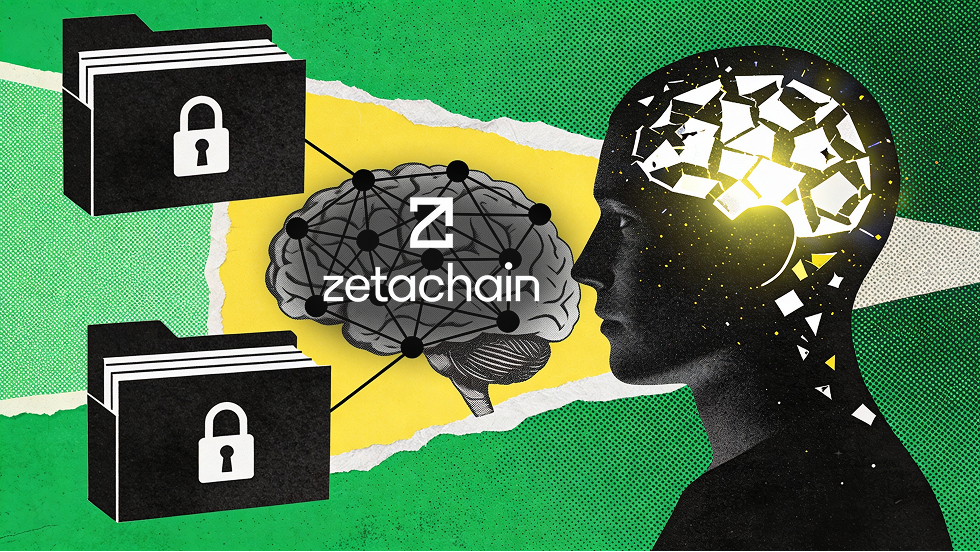
Interview with ZetaChain Lead Jessie Zhang: Reclaiming Humanity's Right to Think Between Decentralization and AI

Interview with Jessie Zhang, Head of Incubation and Investment at ZetaChain, discussing the intersection of decentralization and AI, and the importance of reclaiming human cognitive sovereignty. ZetaChain, initially known for cross-chain interoperability, evolved in 2025 from building foundational infrastructure to focusing on real-world applications, connecting major blockchains like Bitcoin, Ethereum, and Solana. The team began exploring how blockchain could address growing concerns around AI, particularly data privacy and centralized control. Jessie highlights the risks of AI-driven "cognitive centralization," where user data—including intentions, emotions, and preferences—is concentrated in few platforms, threatening individual autonomy. Examples like OpenAI retaining deleted user chats and past incidents of algorithmic manipulation (e.g., Facebook influencing elections) underscore the urgency. ZetaChain’s response is Anuma, a private AI platform built as a "personal memory layer." Anuma acts as a privacy-first AI管家 (butler) that manages user data locally, allowing interaction with models like ChatGPT or Claude without surrendering personal information. It ensures data sovereignty, prevents context fragmentation across AI tools, and safeguards independent thinking. Jessie emphasizes that privacy is an architectural imperative, not just a feature, and that blockchain’s trustless, ownership-based model is critical for AI ethics. Anuma, while built on ZetaChain, targets mainstream users with seamless Web2-like体验, reflecting ZetaChain’s vision: invisible infrastructure delivering tangible value. The core message: AI should enhance human capability without compromising cognitive autonomy. In an era of intelligent systems, preserving the right to think independently is both a technological and moral necessity.

marsbit02/06 05:53

Interview with ZetaChain Lead Jessie Zhang: Reclaiming Humanity's Right to Think Between Decentralization and AI

marsbit02/06 05:53

AI Trust Crisis Escalates, Blockchain Becomes an Indispensable 'Anti-Counterfeiting Layer'

AI systems are disrupting the internet, which was designed for human-scale interactions, by making it difficult to distinguish between human and machine-generated content, identities, and transactions. The core issue is the lack of a native method to differentiate humans from AI while preserving privacy and usability. Blockchain technology offers critical solutions through five key mechanisms: 1. AI can cheaply mimic human behavior at scale, but decentralized proof-of-personhood systems (e.g., World ID) increase the marginal cost of impersonation by enforcing uniqueness and scarcity. 2. Decentralized identity systems shift control from centralized platforms to users, reducing single points of failure and enhancing security and censorship resistance. 3. AI agents require portable, universal "passports" to operate across platforms without being locked into specific ecosystems, enabled by blockchain-based identity layers. 4. Existing payment systems are inadequate for AI agent-scale transactions; blockchain enables micro-payments, smart contracts, and programmable revenue sharing suitable for machine-to-machine commerce. 5. Privacy and security are intertwined: zero-knowledge proofs allow verification of attributes without exposing personal data, denying AI the raw materials needed for imitation. In summary, blockchain restores trust, raises impersonation costs, protects human-scale interactions, decentralizes identity, enforces privacy by default, and provides native economic infrastructure for AI agents—making it an essential layer for an AI-native internet.

比推02/05 15:30

AI Trust Crisis Escalates, Blockchain Becomes an Indispensable 'Anti-Counterfeiting Layer'

比推02/05 15:30

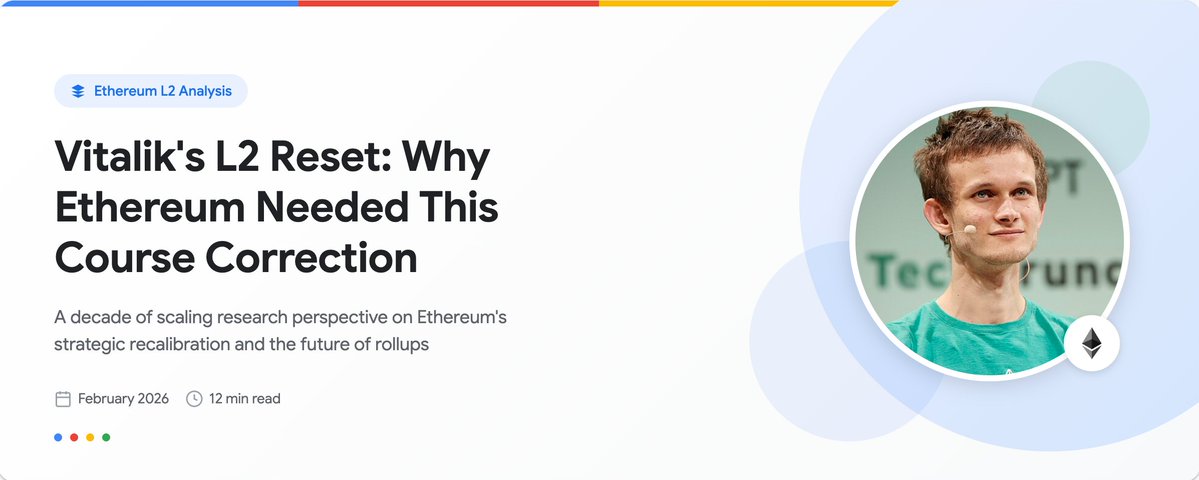
Vitalik's Layer2 Reset: Can It Save Ethereum?

Vitalik Buterin's recent post recalibrates Ethereum's Layer2 (L2) strategy, acknowledging that the original 2020 "rollup-centric" roadmap—based on L2s acting as "branded shards" of Ethereum—no longer aligns with reality. Two key issues are identified: L2 decentralization has progressed slower than expected, with only a few major L2s reaching Stage 1 decentralization, and Ethereum L1 has scaled beyond initial projections, reducing L2s' necessity for scalability. The core conceptual shift introduces a "trust spectrum" framework, recognizing that L2s serve diverse purposes and may legitimately operate at varying decentralization levels (e.g., Stage 0 or 1) without being deemed failures. This allows L2s to pursue different economic and regulatory goals, such as compliant chains with asset-freezing capabilities. Technically, Vitalik proposes a "native rollup precompile" to simplify L2 infrastructure by embedding EVM execution verification directly into Ethereum, reducing audit burdens and improving security. Additionally, a mechanism for "synchronous composability" is outlined, enabling atomic cross-layer transactions between L1 and L2. Responses from L2 teams like Arbitrum, Base, Linea, and Optimism reflect strategic diversity, validating the trust spectrum approach. The post implicitly acknowledges L2s' economic realities, such as sequencer revenue and regulatory constraints, and suggests differentiation strategies for L2s in a cheaper L1 environment. This update demonstrates adaptive leadership, prioritizing realistic evolution over outdated assumptions, and provides a clearer path forward for Ethereum's ecosystem.

marsbit02/05 06:00

Vitalik's Layer2 Reset: Can It Save Ethereum?

marsbit02/05 06:00

活动图片