# Decentralization Related Articles

HTX News Center provides the latest articles and in-depth analysis on "Decentralization", covering market trends, project updates, tech developments, and regulatory policies in the crypto industry.


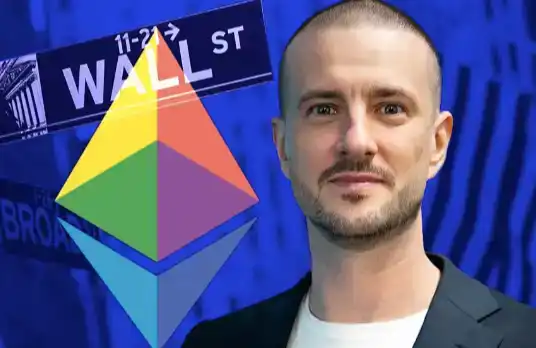
Less Than a Year in Office and Leaving Again: Why Are Core Figures of the Ethereum Foundation Departing Once More?

Tomasz Stańczak, the co-executive director of the Ethereum Foundation (EF), has announced his resignation, just 11 months after taking the role. He was appointed alongside Hsiao-Wei Wang in March 2025, replacing long-time leader Aya Miyaguchi amid community criticism that EF was too slow and disconnected. Stańczak, founder of core Ethereum client Nethermind, was brought in to make EF more decisive and execution-focused. During his tenure, he streamlined operations, refocused strategy on Layer-1 scaling, accelerated upgrade timelines, and pushed new initiatives in AI integration and privacy. His departure hints at internal tension. In his statement, Stańczak suggested his ability to operate independently within EF diminished as the leadership became more self-sufficient. He expressed a desire to return to hands-on product building, specifically in AI/blockchain convergence, echoing Ethereum’s early experimental spirit. He is replaced by Bastian Aue, a low-profile internal figure focused on "principled" decision-making aligned with "cypherpunk values," signaling a potential shift back towards a coordination-focused rather than execution-driven approach. This leadership change comes at a critical time. EF is preparing to release key proposals on "Lean Ethereum" and future roadmaps, while Ethereum faces intense competition, Layer-2 fragmentation, and market pressure—with its price risk falling below inflation-adjusted 2018 levels.

marsbit02/14 03:46

Less Than a Year in Office and Leaving Again: Why Are Core Figures of the Ethereum Foundation Departing Once More?

marsbit02/14 03:46

Tokens, Models, and Bubbles: The Crypto × AI Game in the Primary Market

Based on a two-year retrospective, this article analyzes the convergence of Crypto and AI from a primary market perspective. Initially, the crypto space heavily promoted "Crypto Helps AI" through three main narratives: computation power tokenization, data tokenization, and model tokenization. However, these efforts largely resulted in what the author calls a "tokenization illusion"—projects that issued tokens but lacked real product-market fit or sustainable business models. The piece critiques these approaches: decentralized compute networks often fail to meet enterprise reliability standards; tokenized data struggles with supply-demand alignment due to low user motivation and high professional requirements; and model tokenization is fundamentally flawed since AI models are non-scarce, easily replicable, and depreciate quickly. Additionally, projects focusing on verifiable inference (like ZKML or OPML) are solutions in search of a problem, as real-world AI failures are rarely due to malicious tampering but rather design errors or misconfigurations. The author references Vitalik Buterin’s updated views, which now present a more balanced perspective compared to two years ago. Buterin outlines four quadrants of Crypto × AI integration: two where crypto (especially Ethereum) provides trustless, economic layers for AI agents and private interactions, and two where AI enhances crypto—through local LLMs acting as user shields for security and AI improving market efficiency and DAO governance. The conclusion emphasizes that meaningful progress lies at the intersection of both fields, beyond mere tokenization or speculative narratives, and expresses hope for more substantive developments in the future.

比推02/12 06:16

Tokens, Models, and Bubbles: The Crypto × AI Game in the Primary Market

比推02/12 06:16

活动图片