# Crypto Related Articles

HTX News Center provides the latest articles and in-depth analysis on "Crypto", covering market trends, project updates, tech developments, and regulatory policies in the crypto industry.


Kaito Reboots 'Talk-to-Earn Economy', but Many Are Hesitant to Install the New Plugin

Kaito AI has launched a new browser extension called Kaito Pulse, aiming to revitalize what the community terms the "talk-to-earn" or "social-fi" economy on X (formerly Twitter). The plugin displays users' on-chain trading activity, such as positions from platforms like Polymarket, directly within the X timeline. This aims to create a new "attention + behavior verification" system, shifting focus from who generates the most discussion to whose discussions are backed by credible, verifiable actions. However, the launch quickly sparked significant privacy concerns within the crypto community. Critics, led by an analysis from user "Ultra," allege the extension's code enables deep data collection. This includes potential device fingerprinting (using GPU, hardware, and audio data), tracking of X user behavior (browsing paths, clicks, engagement), and verification processes that could access sensitive data from third-party accounts like ChatGPT, Claude, and trading platforms. The debate centers on whether such extensive verification is necessary to combat fake engagement and AI-generated content, or if it constitutes an unacceptable privacy sacrifice. In response, Kaito founder Yu Hu stated the design follows data minimization principles. He claimed Kaito Pulse does not collect or store users' raw data but instead uses verification techniques, including zkTLS, to generate proofs of identity or behavior without exposing the underlying information. Yu Hu acknowledged that some permission descriptions could be misleading and promised improvements in future versions. The controversy highlights a core dilemma for social-fi projects: platforms need more user data to distinguish real influence from artificial hype, but users must decide how much privacy they are willing to trade for potential rewards and ranking within these new incentive systems.

Odaily星球日报2 days ago 02:10

Kaito Reboots 'Talk-to-Earn Economy', but Many Are Hesitant to Install the New Plugin

Odaily星球日报2 days ago 02:10

Winklevoss Urges Investors to Seize Opportunity to Buy Bitcoin on the Dip

Bitcoin is currently trading almost 50% below its October high of $126,198. Tyler Winklevoss suggested that if investors last year knew Bitcoin would reach $120,000, they would rush to buy it at a discount. In a post on X, he stated that AI-powered trading has given the world a "time machine" to go back and invest in Bitcoin at $65,000 levels, calling the current downturn an unprecedented buying opportunity and questioning when Bitcoin will "return to the future." Over the past 24 hours, Bitcoin rose 12% to $71,980, with its market cap at $1.44 trillion. Daily trading volume surged 292% to $66.2 billion. The Winklevoss twins, Cameron and Tyler, famously sued Mark Zuckerberg over Facebook's origins, later settling for $65 million in cash and stock. They invested part of this in Bitcoin in 2012, becoming early crypto billionaires, and founded the Gemini exchange in 2014. Gemini's recent Q2 report showed a weakened crypto market impacted its business: trading revenue fell 38% year-on-year to $12.5 million, and total trading volume dropped from $11.3 billion to $3.8 billion. However, the exchange's total revenue grew 37% to $45.5 million, with service and interest revenue jumping 117% to $26 million. Previously, Cameron Winklevoss urged world governments to buy Bitcoin to build strategic crypto reserves, arguing that rare earth minerals, gold, and oil are no longer sufficient to preserve geopolitical influence.

cryptonews.ru2 days ago 20:33

Winklevoss Urges Investors to Seize Opportunity to Buy Bitcoin on the Dip

cryptonews.ru2 days ago 20:33

SEC New Regulations Released, Bulls Are Here

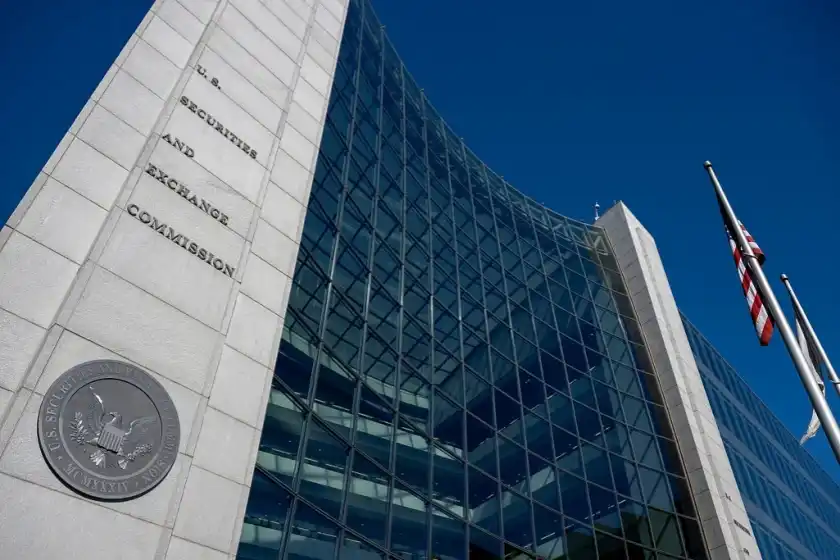
The U.S. Securities and Exchange Commission (SEC), under Chairman Paul Atkins, has released a draft of the "Regulation Crypto Assets." This proposal introduces a new regulatory framework for crypto asset issuance and fundraising. A key feature is the establishment of an "Investment Contract Safe Harbor" mechanism, allowing projects to raise up to $5 million (or higher amounts for larger projects) over four years without full securities registration. To exit this safe harbor and potentially shed securities status, project teams must self-certify via a Form TR, declaring they have completed or permanently ceased their previously stated "essential managerial efforts." The SEC retains the power to challenge this certification after the fact. This shift moves the regulatory focus from pre-approval to a system of issuer self-attestation and SEC post-facto enforcement. It clarifies the process for determining when a token may transition from being an investment contract to a non-securities asset. The rules also specify that airdrops and network rewards may be counted toward fundraising limits, and they incentivize fundraising activities to remain within the U.S. jurisdiction. The draft is seen as a move away from the previous "regulation by enforcement" approach and an effort to provide clearer guidelines while Congressional legislation like the CLARITY法案 faces delays. The proposal is currently open for public comment.

marsbit2 days ago 14:26

SEC New Regulations Released, Bulls Are Here

marsbit2 days ago 14:26

Gold Diggers in Prediction Markets: From Competing for Trading Entrances to Competing for Outcome Definition Rights

The report identifies a shift in prediction market competition from front-end user acquisition to back-end infrastructure, specifically the "outcome layer." This layer encompasses the standardized services for rule comparison, evidence verification, outcome confirmation, and payment triggering. Analysis shows that while a tiny fraction (0.487%) of markets face disputes, they account for a significant share (8.64%) of traded volume. This highlights the financial impact of rule uncertainty, which creates trading alpha but limits strategy capacity due to shallow order books. The larger opportunity lies in productizing these backend functions. Services like automated settlement (e.g., HIP-4), AI-assisted evidence processing, and external data oracles (e.g., Pyth, Chainlink) are becoming reusable, cross-platform infrastructure. This is creating a "second profit pool" separate from trading fees. Current observable revenue for this outcome layer is estimated at $15-37 million annually. If applied to the entire existing market, this could expand to $64-161 million. In a mature state, modeled after existing commercial models like Azuro's, annual revenue potential could reach approximately $456 million. While the industry logic is forming, pure-play investment assets are still early. Platform equities (e.g., Kalshi, Polymarket) price in broad growth, not just the outcome layer. Tokens like HYPE have minimal fee contribution from related products, and ICE's exposure is too small relative to its total business. The key is to track early projects that achieve cross-platform adoption and convert usage into attributable, recurring revenue. The most significant alpha may emerge before the ideal investment target is fully established.

marsbit2 days ago 13:49

Gold Diggers in Prediction Markets: From Competing for Trading Entrances to Competing for Outcome Definition Rights

marsbit2 days ago 13:49

活动图片