# CPO Related Articles

HTX News Center provides the latest articles and in-depth analysis on "CPO", covering market trends, project updates, tech developments, and regulatory policies in the crypto industry.

Report Analysis: What Is Coherent Planning as CPO Booms?

Title: Report Interpretation: What Moves Is Coherent Making Amid the CPO Boom? Summary: JP Morgan analyst Samik Chatterjee reiterates an Overweight rating on Coherent (COHR), citing undervalued growth potential across three core areas: data center optical transceivers, co-packaged optics (CPO) chips, and industrial lasers/thermal management. COHR's 1.6T data center transceivers are in high demand, with pricing remaining firm. The rise of CPO is seen not as a threat but as a catalyst, creating higher demand for sophisticated optical components, an area where COHR holds a competitive edge with its comprehensive portfolio (lasers, isolators, VCSELs, thermoelectric coolers). Each CPO chip offers significantly greater revenue potential than traditional transceivers. Furthermore, its Optical Circuit Switch (OCS) technology targets a potential $4B market with reliability and power advantages. The company is expanding its InP (Indium Phosphide) device capacity fourfold within two years, securing substrate supply and transitioning to more cost-effective 6-inch wafers. As one of only two major suppliers of high-quality pump lasers—currently in severe shortage—COHR can now move up the value chain from components to complete line cards/systems, boosting ASP over tenfold. Gross margin targets (>42%) may be revised upward due to high-end product premiums, cost improvements from the wafer transition, and contributions from new high-margin products like CPO and OCS. Its efficient thermadite thermal material also offers long-term growth. Industrial segment revenue grows at a steady 5-10%, supported by semiconductor equipment orders. Changes in Apple's Face ID protocol present a re-competition opportunity for 3D sensing. Overall, Coherent is positioned as a key infrastructure provider, with AI-driven compute demand fueling the need for high-speed optical interconnectivity. Growth from CPO/OCS, stable industrial performance, and margin improvement support the bullish thesis. *Disclaimer: This summary interprets a third-party analyst report from JP Morgan. It does not constitute investment advice.*

marsbit2 days ago 05:43

Report Analysis: What Is Coherent Planning as CPO Booms?

marsbit2 days ago 05:43

Optical Chips: Collective Capacity Expansion

The global optical chip industry is experiencing a massive wave of expansion driven by surging AI data center demand. Major players across the US, Japan, Europe, and China are aggressively investing to ramp up production capacity. In the US, Coherent is expanding its 6-inch Indium Phosphide (InP) semiconductor fab in Texas, supported by CHIPS Act funding and a $2 billion strategic investment from NVIDIA. Lumentum is building a new factory for InP optical devices, and Nokia is scaling its advanced photonic chip packaging and testing capabilities. NVIDIA's investments aim to secure future supply of critical lasers and optical interconnect products for AI infrastructure. Japan's JX Advanced Metals, a leading InP substrate supplier, plans a multi-billion yen investment to increase its capacity 7-10 times, strengthening its grip on the crucial upstream materials market. In Europe, IQE and Tower Semiconductor settled a patent dispute and signed a multi-year InP epitaxial wafer supply agreement, highlighting that next-generation silicon photonics platforms will integrate high-performance InP components. STMicroelectronics and Sivers Semiconductors are also expanding silicon photonics production and partnerships. China is rapidly building out its domestic supply chain. Dongshan Precision's subsidiary, Source Photonics, announced a $12 billion project to expand optical chip and module production. Companies like Sanan Optoelectronics and Yunnan Germanium are scaling up InP chip manufacturing and substrate production, moving towards vertical integration from materials to modules. While debate continues around the exact future architecture—whether CPO (Co-Packaged Optics), NPO, or pluggables will dominate—analysts like Morgan Stanley argue the underlying driver is unchangeable: the explosive growth in bandwidth demand. This will inevitably increase the volume of optical engines, lasers, and related content per GPU, regardless of the final technical path. The competition for "more light" in the AI era has intensified into a global, full-chain capacity race.

marsbit06/20 10:16

Optical Chips: Collective Capacity Expansion

marsbit06/20 10:16

The Trillion-Yuan Market Cap 'Yi Zhong Tian': Who is the True Value King?

The article analyzes the three leading Chinese optical module companies, collectively nicknamed "Yi Zhong Tian": Xinyisheng, Zhongji Innolight, and TFC Optical Communication. It evaluates their "cost-performance" not by current stock price, but through three lenses: PEG ratio (growth vs. valuation), earnings quality, and premium/discount for certainty. Xinyisheng shows the most attractive PEG ratio and high profitability, but its valuation reflects discounts for risks like high customer concentration and reliance on overseas markets. Zhongji Innolight, the most expensive, commands a premium for its market leadership, dominant share in key products like 800G/1.6T modules, and higher earnings certainty, though it faces geopolitical risks. TFC Optical, as an upstream component supplier ("water seller"), has the highest gross margin and bets on the long-term CPO/NPO architecture trend, but trades at a high valuation with more stable, less explosive growth. The core argument is that while these companies dominate module assembly, the true profit pool and technological moat lie upstream in laser and switch chips, currently controlled by U.S. firms like Lumentum and Coherent. The long-term "cost-performance" for these Chinese leaders hinges on whether the domestic industry, exemplified by companies like Yuanjie Technology, can successfully move up the value chain into high-power laser chips. Otherwise, their high growth may remain confined to the lower-margin assembly segment.

marsbit06/17 05:11

The Trillion-Yuan Market Cap 'Yi Zhong Tian': Who is the True Value King?

marsbit06/17 05:11

SemiAnalysis Report Claims Delay in Two Key Technologies, Triggers Sharp Decline in 'Optoelectronics', Sparking Online Debate Over CPO

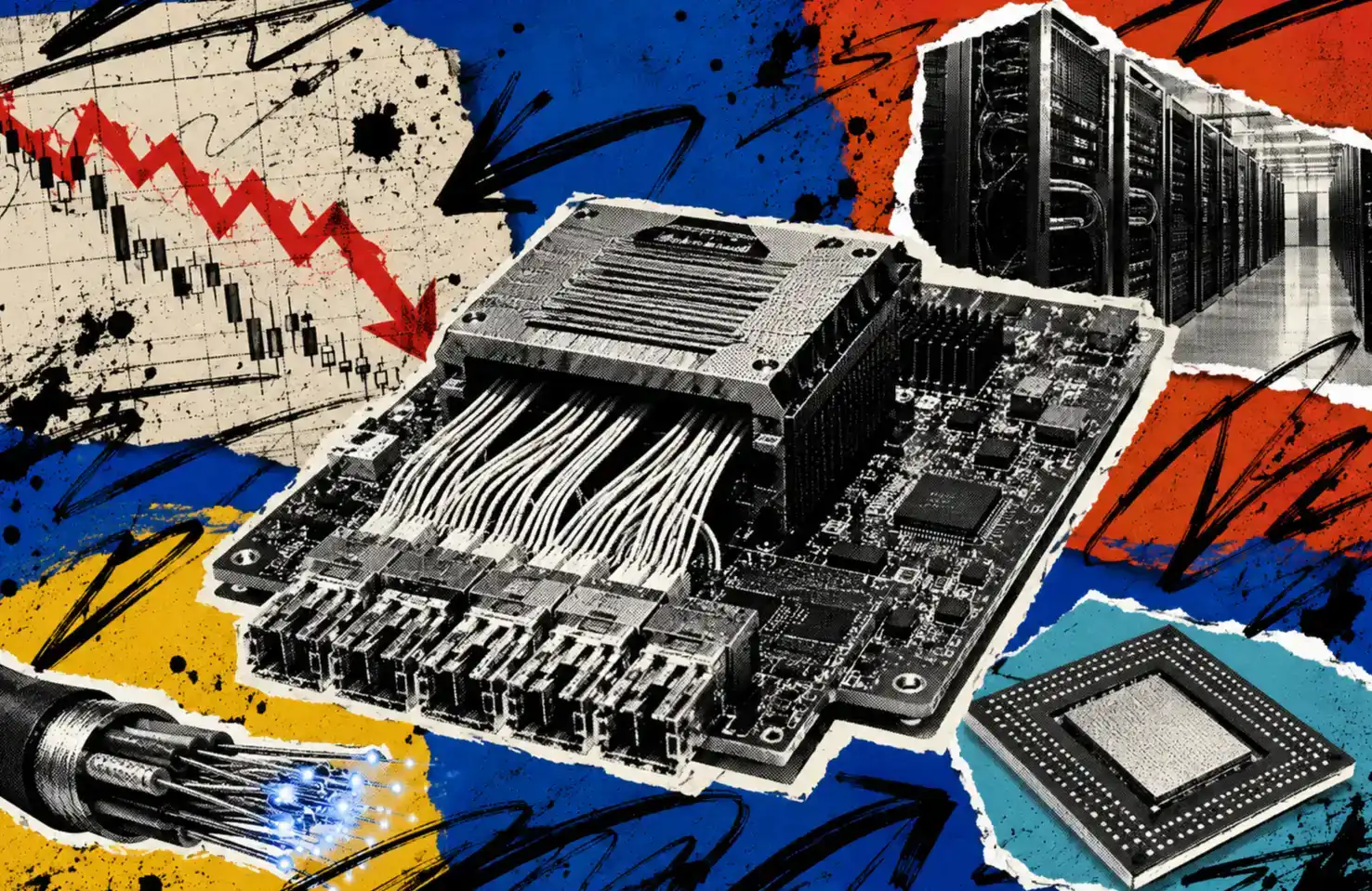
A report from analysis firm SemiAnalysis, claiming significant delays in two key AI data center technologies, triggered a sharp sell-off in the photonics sector and sparked intense online debate. The report, dated June 10, states that NVIDIA's 800VDC power architecture rollout is pushed to 2028 and CPO (Co-Packaged Optics) mass production is likely delayed until 2028 or even 2029. Following the news, U.S. optical communication stocks fell sharply, with AAOI dropping 17% and Lumentum down about 8%. The delays were attributed to engineering challenges like photonic engine yield and cost-effectiveness, not a disappearance of demand. Simultaneously, an interview with NVIDIA's networking SVP Gilad Shainer presented an opposing, optimistic view, stating CPO is "the most exciting thing" and shipments would begin scaling in the second half of the year. This contradiction fueled debate on social media. Bears pointed to unresolved reliability and maintenance hurdles for CPO. Bulls argued the delay simply redirects capital to interim solutions like traditional pluggable optical modules and NPO (Near-Packaged Optics), extending their revenue runway. Some users questioned the report's internal logic and timing, noting similar views had circulated earlier. Analysts highlighted potential beneficiaries, including companies in the 1.6T pluggable modules, NPO, and 400VDC power transition supply chains. The consensus suggests the market reaction reflects a recalibration of the technology adoption timeline rather than a fundamental weakening of AI infrastructure demand, with key bottlenecks like power, storage, and GPUs remaining unchanged.

marsbit06/10 02:08

SemiAnalysis Report Claims Delay in Two Key Technologies, Triggers Sharp Decline in 'Optoelectronics', Sparking Online Debate Over CPO

marsbit06/10 02:08

Standing in the Light: A Comprehensive Guide to the Optical Module and CPO Supply Chain

"Standing in the Light: Understanding the Optical Module and CPO Industry Chain" This article analyzes the critical role of optical communication technology, specifically optical modules and Co-Packaged Optics (CPO), as the "nervous system" for modern AI data centers. With exponential growth in AI computational demands (e.g., NVIDIA's Vera Rubin architecture), traditional electrical interconnects using copper cables face severe bottlenecks in bandwidth, power consumption, and signal integrity over distance. The core function of an optical module is to act as a "translator," converting electrical signals from chips into optical signals for transmission over fiber (and vice-versa). Key internal components include lasers, modulators, photodetectors, drivers, and DSP chips. The industry is currently transitioning from 800G to 1.6T modules. However, the future lies in CPO. This next-generation technology integrates the optical engine directly with the switch ASIC/XPU on the same package substrate, drastically reducing power consumption (by ~3.5x according to NVIDIA), overcoming bandwidth density limits, and minimizing signal attenuation compared to traditional pluggable modules. Key challenges for CPO include advanced packaging capacity (dominated by TSMC), thermal management, repairability, and standardization. The article details the broader technology landscape, including Near-Packaged Optics (NPO, a pragmatic intermediate step), Linear-drive Pluggable Optics (LPO), Optical I/O (OIO for chip-level integration), and Optical Circuit Switches (OCS). A comprehensive CPO industry chain is mapped, highlighting shifting power dynamics: * **Architecture Definers:** NVIDIA, Broadcom, and Marvell now hold greater influence. * **Advanced Packaging & Manufacturing:** TSMC is central; Fabrinet is a key EMS player. * **Lasers ("The Heart"):** A strategic bottleneck. EML lasers are led by Lumentum and Coherent (both receiving major NVIDIA investments). CW lasers, favored for CPO/silicon photonics, see strong Chinese players like Source Photonics and Sicoya. * **Silicon Photonics Chips:** The mainstream path for CPO engines, with key players like Broadcom, Intel, Marvell, and China's Accelink. * **Fiber Connectivity Components:** A major new, high-growth market created by CPO, including Fiber Array Units (FAU), Polarization-Maintaining Fiber (PMF), and MPO connectors. Companies like Tianfu Communication and US Conec are leaders. * **Fiber & Cable:** Experiencing a super-cycle (e.g., Corning, Yangtze Optical Fiber). * **PCB/Substrates:** Requiring advanced materials (e.g., Shengyi Tech). * **DSP & SerDes:** Functions are integrated into switch ASICs in the CPO era (e.g., Broadcom, Astera Labs). * **Optical Module Makers:** Transitioning from standalone module suppliers to providers of optical engines and NPO/LPO solutions while riding the current pluggable boom (e.g., Zhongji Innolight, Eoptolink). The investment timeline is segmented: Short-term (2026-2027) features the "last feast" for pluggable modules and CPO's initial rollout. Medium-term (2027-2029) will see CPO expand and NPO peak. Long-term (2029-2032+) involves CPO/OIO penetration into intra-rack scaling. In conclusion, optical interconnects are fundamental to AI infrastructure. The competitive landscape sees US firms leading in architecture and high-end chips, TSMC in advanced packaging, and Chinese firms holding strong positions in modules, connectivity components, CW lasers, and fiber/cable. The future belongs to companies that can navigate the technological shift from "selling shovels" (modules) to "building highways" (CPO/OIO infrastructure).

marsbit06/04 10:10
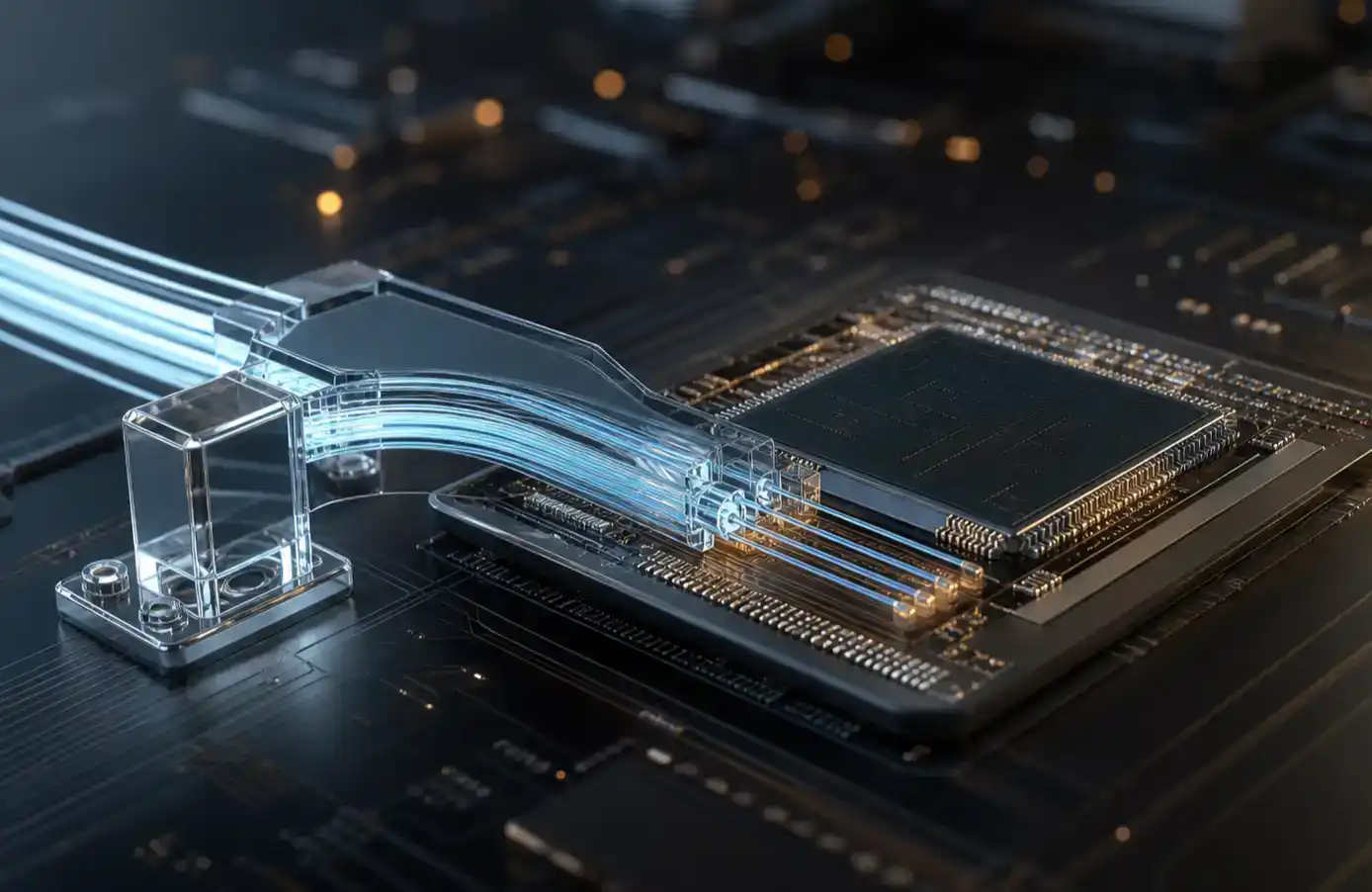
Standing in the Light: A Comprehensive Guide to the Optical Module and CPO Supply Chain

marsbit06/04 10:10

Huang Renxun and Marvell CEO Discuss on Stage: The Future of AI Competition is Not Computing Power but Connectivity, 'Use Copper Where You Can, Use Optics Only Where You Must'

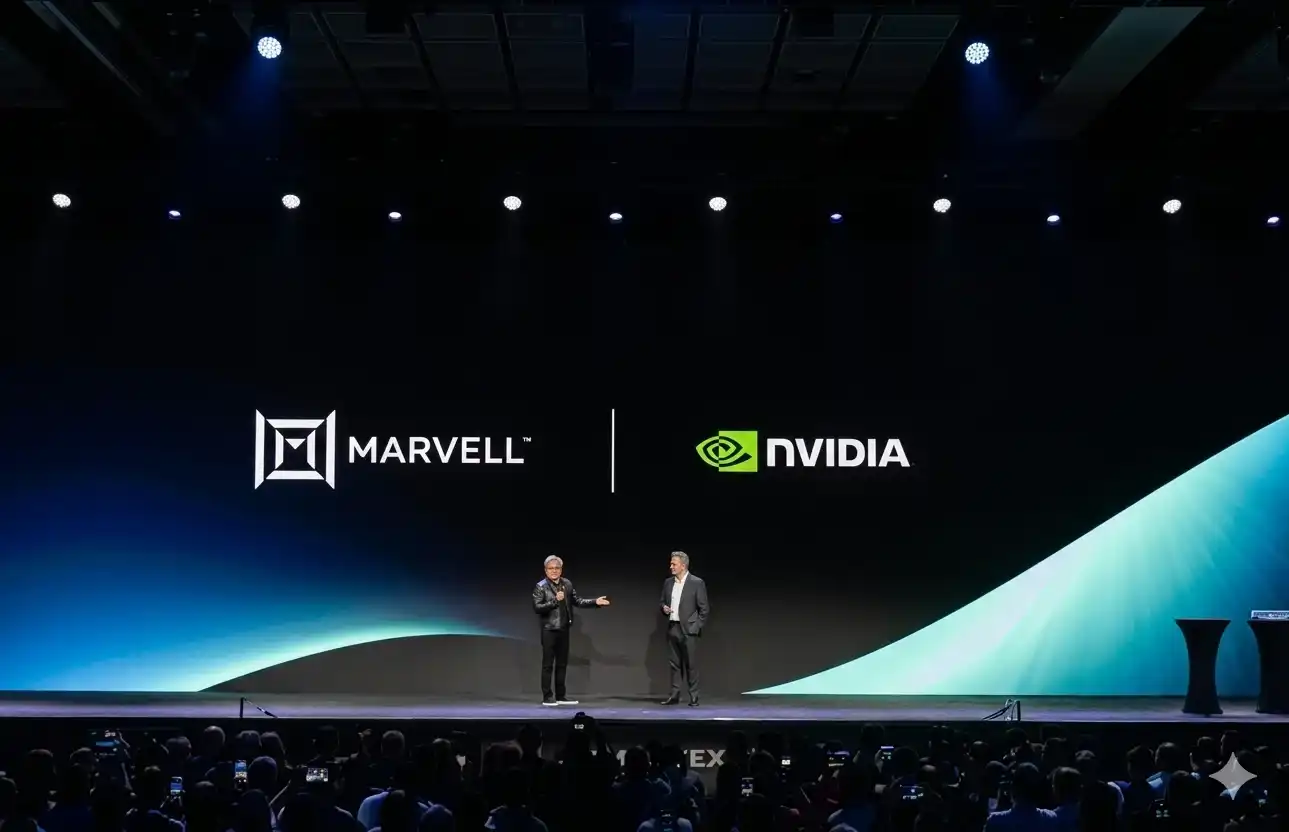
Summary: At Computex 2024, NVIDIA CEO Jensen Huang joined Marvell CEO Matt Murphy on stage, highlighting the strategic partnership between their companies. The core theme was that the next decisive battleground for AI infrastructure is not compute or memory, but connectivity. As AI models evolve into vast agent-based systems, the ability to connect millions of processors efficiently is becoming the critical bottleneck. Huang announced NVIDIA's strategic $20 billion investment in Marvell, reflecting the deep integration between their technologies for AI data centers. A key discussion point was the transition from copper to optical interconnects within racks. The guiding principle, articulated by Huang, is: "You use optics wherever you must, you use copper wherever you can." While copper remains cost-effective for short distances, its physical limits are being reached as bandwidth demands double. When moving to 400Gbps, copper can no longer fully connect an entire rack. This shift necessitates innovations like Co-Packaged Optics (CPO), which integrates optical engines directly into the chip package to solve density and power challenges. Marvell demonstrated its 51.2T CPO-based switch, eliminating copper traces on the PCB. The future vision is a "distance-free data center," where optical connectivity removes physical constraints. This allows for fully disaggregated, dynamic architectures where compute, memory, and storage pools can be combined on-demand based on workload requirements, rather than being limited by connection boundaries. Marvell, positioned as a neutral "Switzerland" in the ecosystem with a comprehensive portfolio across all connectivity distances, is central to enabling this next era of AI infrastructure.

marsbit06/02 09:41

Huang Renxun and Marvell CEO Discuss on Stage: The Future of AI Competition is Not Computing Power but Connectivity, 'Use Copper Where You Can, Use Optics Only Where You Must'

marsbit06/02 09:41

A 10,000-Word Interpretation of the "Optical Interconnect" Industry Chain: The AI Infrastructure Bottleneck Obscured by GPU Glare

**Summary: The Rise of Optical Interconnect in AI Infrastructure** This analysis explores the critical, yet often overlooked, role of optical interconnects in large-scale AI data centers. While GPUs provide raw computational power, the efficiency of AI clusters depends heavily on high-speed data transfer between thousands of cooperating GPUs during both training and inference tasks. Copper-based electrical connections are hitting physical limits in bandwidth, distance, and power consumption. Fiber optics, using light signals, offer a superior solution with exponentially higher bandwidth and lower energy use over longer distances. This shift is driving rapid growth in the optical interconnect market. The core translation device is the pluggable optical transceiver (or module), which converts electrical signals from GPUs into optical signals for fiber transmission and vice versa. Its manufacturing involves two distinct semiconductor domains: indium phosphide (InP) for optical chips (lasers, modulators, detectors) and silicon for digital signal processing (DSP) chips. A transformative next-generation technology is Co-Packaged Optics (CPO). CPO moves the optical engine (a silicon photonic integrated circuit, or PIC) much closer to the GPU or switch inside the same chip package, drastically reducing power loss and latency. CPO necessitates an external laser source and relies on silicon photonics (using Silicon-on-Insulator/SOI wafers) for integration with silicon chips. The optical interconnect ecosystem is highly fragmented, unlike the concentrated GPU market. Key bottlenecks and players span the entire supply chain: InP substrates (e.g., AXT), epitaxial wafers (e.g., IQE), laser chips (e.g., Sivers, Lumentum, Coherent), silicon photonics foundries (e.g., Tower Semiconductor), SOI wafers (e.g., Soitec), DSP/switch chips (e.g., Broadcom, Marvell), and underlying fiber (e.g., Corning). The article posits that AI infrastructure competition is extending from "who has more GPUs" to "who can secure the scarce optical interconnect supply chain." CPO represents the largest potential growth variable, with projections suggesting it could become a market worth tens of billions of dollars by 2028. Investment opportunities vary from conservative (large, diversified players) to aggressive (small, high-beta companies focused on specific bottleneck technologies), but the sector carries significant volatility and execution risks.

marsbit05/28 11:03

A 10,000-Word Interpretation of the "Optical Interconnect" Industry Chain: The AI Infrastructure Bottleneck Obscured by GPU Glare

marsbit05/28 11:03

活动图片