# Cloud Related Articles

HTX News Center provides the latest articles and in-depth analysis on "Cloud", covering market trends, project updates, tech developments, and regulatory policies in the crypto industry.

Cursor 3 Released: The IDE Becomes Irrelevant, Agent Console Takes Over, The VS Code Era Begins to Fade

Cursor 3, codenamed Glass, represents a fundamental shift in AI-assisted development by replacing the traditional code editor with an agent management console as the primary interface. While engineers can still write code, the core design philosophy now centers on users spending most of their time directing AI agents, reviewing their outputs, and deciding which tasks to deploy. Key features include multi-repository support, a unified sidebar for all agents (local and cloud), and Cloud Handoff, which allows seamless movement of agent sessions between local and cloud environments. This release is part of Cursor's accelerated response to competitive pressure from tools like Anthropic's Claude Code. The company also recently launched Automations for triggering agents automatically, Composer 2 (its proprietary model claiming superior performance to Claude Opus), and self-hosted cloud agents for enterprise customers. The transition signals a broader industry paradigm shift where agent orchestration becomes the new control plane, similar to how cloud consoles replaced SSH for infrastructure management. This challenges the decades-long dominance of IDEs like VS Code, suggesting that software engineering roles are evolving toward overseeing AI agents rather than directly editing code. The architectural debate now centers on whether this orchestration layer should exist inside the IDE (Cursor, Google), as a separate tool (Anthropic, OpenAI), or be omnipresent.

marsbit04/08 10:16

Cursor 3 Released: The IDE Becomes Irrelevant, Agent Console Takes Over, The VS Code Era Begins to Fade

marsbit04/08 10:16

After Laying Off 30,000 Employees, Oracle Hires a CFO Who Managed Power Plants

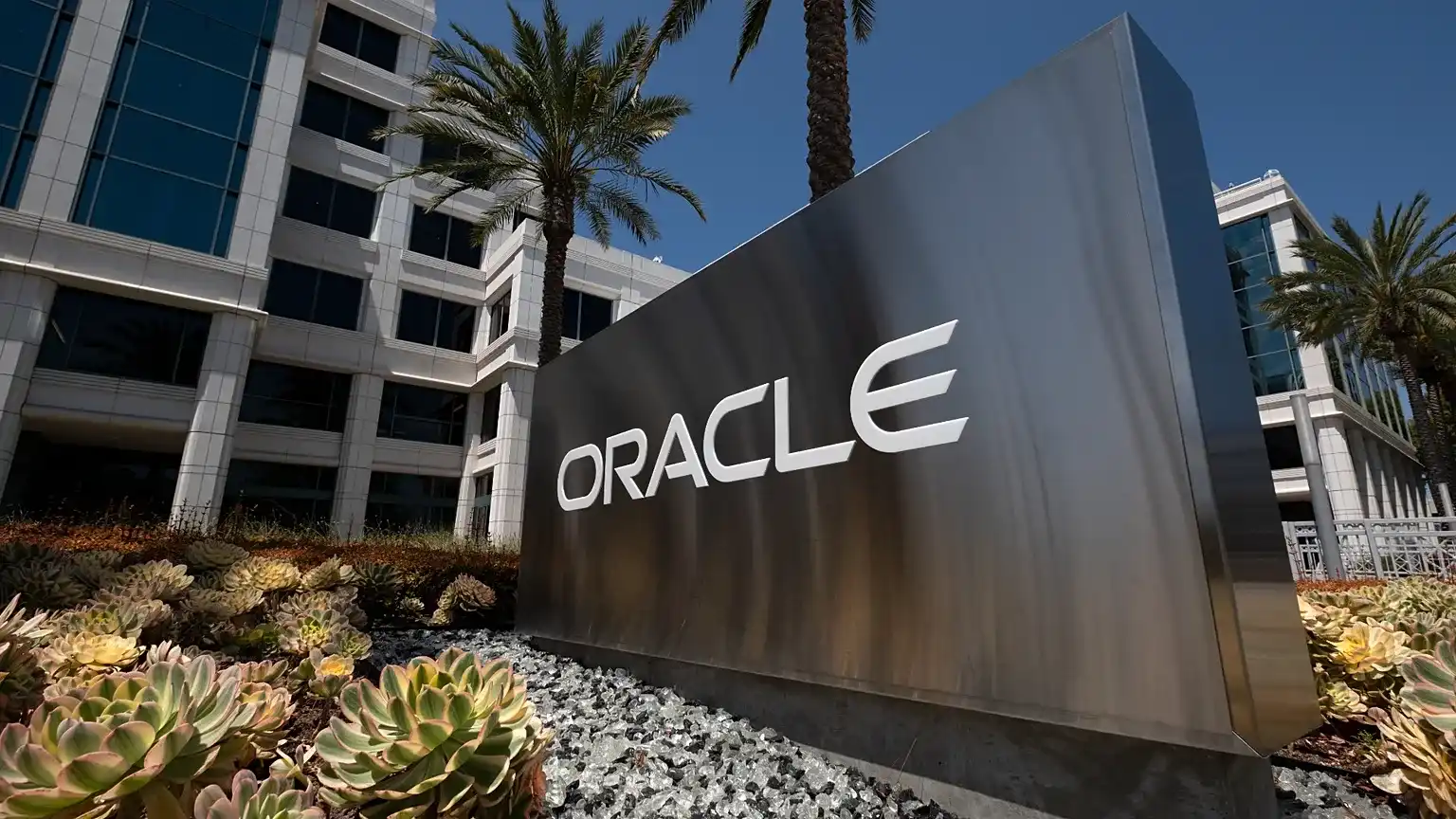
Oracle, the global enterprise database giant, laid off approximately 30,000 employees, sparking widespread discussion. Shortly after, the company appointed Hilary Maxson as its new CFO with a compensation package of $297 million. Maxson’s background is notable: she spent nearly a decade as group CFO at Schneider Electric, a major energy management firm, and previously worked for 12 years at AES Corporation, a U.S. power company. Her entire career has revolved around the energy sector—managing power plants, grids, and data center energy solutions. This appointment signals a strategic shift for Oracle. After 12 without a dedicated CFO, the company is pivoting from its traditional software business toward cloud and AI infrastructure. Oracle’s cloud infrastructure revenue surged 84% year-over-year, with a capital expenditure budget of around $50 billion this year—almost entirely allocated to AI data center construction. The company has secured massive contracts, including one with OpenAI exceeding $300 billion, contributing to a total backlog of $553 billion. Data centers, especially at the gigawatt scale, require enormous power—equivalent to a nuclear power plant’s output—making energy management critical. Oracle is no longer just a software company; it’s transforming into an energy-intensive infrastructure provider. While Wall Street remains optimistic, the stock has fallen about 24% this year, reflecting investor concerns over this high-cost, capital-intensive transition. The hiring of an energy-focused CFO underscores Oracle’s new direction.

marsbit04/08 05:23

After Laying Off 30,000 Employees, Oracle Hires a CFO Who Managed Power Plants

marsbit04/08 05:23

Mine Owners' New Business: Sitting on Land and Collecting Rent, Earning Billions Annually

The article "Mine Owners' New Business: Collecting Rent, Earning Billions Annually" explores the strategic pivot of Bitcoin mining companies towards AI infrastructure and high-performance computing (HPC) as Bitcoin approaches its supply limit. By 2026, with only 1 million Bitcoin left to mine and rising operational costs squeezing profitability, major mining firms are capitalizing on their existing assets—large-scale power capacity, data centers, and cooling systems—to serve the exploding demand for AI compute. Companies like IREN, Core Scientific, Cipher Digital, and Hut 8 have secured long-term contracts worth tens of billions of dollars with tech giants (Microsoft, Amazon, Google) and AI firms (Anthropic, CoreWeave) to provide GPU cloud services and HPC hosting. Financial reports highlight a stark contrast: while Bitcoin毛利率 have plummeted post-halving, AI-related services boast margins as high as 86%. Firms are rebranding, exiting mining, and leveraging their power infrastructure advantages—deploying AI data centers in months versus years for traditional builders. However, this转型 comes with risks: high debt from infrastructure upgrades, strict contract deadlines, regulatory hurdles, and operational challenges. The shift positions these companies as key "digital power stations" in the AI era, where control over electricity and grid access becomes a critical competitive edge. The period from 2026 to 2028 will be crucial for determining which players succeed in this high-stakes transition.

比推03/16 11:10

Mine Owners' New Business: Sitting on Land and Collecting Rent, Earning Billions Annually

比推03/16 11:10

活动图片