# Automation Related Articles

HTX News Center provides the latest articles and in-depth analysis on "Automation", covering market trends, project updates, tech developments, and regulatory policies in the crypto industry.

HashKey Accelerates AI Strategy Implementation: From Organizational Efficiency to New-Generation Digital Financial Infrastructure

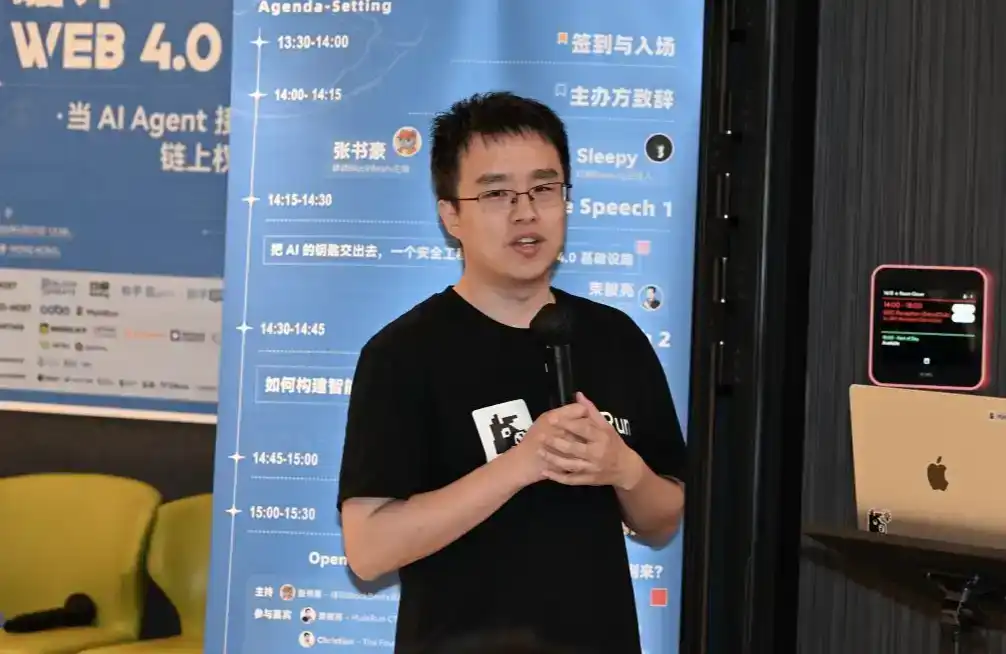
HashKey Group is accelerating its AI strategy, transitioning from organizational efficiency to building next-generation digital financial infrastructure. The company has established a "Group Technology Steering Committee" to oversee the overall planning and implementation of AI and cutting-edge technologies. According to CTO Devin Zhang, the move marks a shift from fragmented, individual use of AI to a group-level systematic adoption aimed at upgrading organizational capabilities. Key priorities include improving internal operational efficiency—particularly in R&D and non-R&D functions like compliance and finance—and enhancing user experience through intent-driven interactions. Initial AI applications focus on high-repetition, measurable scenarios such as automated development pipelines, threat detection, risk management, and anti-money laundering analysis. Devin emphasized that a robust security framework is essential for financial institutions adopting AI, as agent-based systems require careful management of permissions, resource access, and accountability. HashKey is taking a compliant, risk-aware approach: prioritizing back-end and internal use cases first, while cautiously evaluating customer-facing innovations like automated trading. In the long term, HashKey envisions AI and blockchain converging, with AI agents gaining digital identities and payment capabilities, potentially making blockchain a key infrastructure for managing AI-driven economies. The company aims to boost efficiency near-term, strengthen mid-term technical foundations, and ultimately contribute to the evolution of digital financial infrastructure.

marsbit03/18 06:07

HashKey Accelerates AI Strategy Implementation: From Organizational Efficiency to New-Generation Digital Financial Infrastructure

marsbit03/18 06:07

Earning $100,000 in 10 Days: An Interview with OpenClaw's Practical Experience in Prediction Markets

In an interview with Odaily Planet Daily, Kevin, a former ERP architect and Web3 investor, shares how he used OpenClaw to generate a profit of approximately $100,000 in just 10 days, turning a $30,000 investment into over $130,000 at its peak (currently around $112,000). Kevin began his crypto journey during the "inscription summer" of 2023, earning his first significant returns from ORDI. He later transitioned to prediction markets, specifically Polymarket, in mid-2025, attracted by its improved liquidity and user experience. Initially, he used self-developed algorithmic strategies for arbitrage, primarily in sports betting markets, doubling a $100,000 investment over several months. Since integrating OpenClaw in late February, Kevin adopted a hybrid approach: 60% of his strategy remains automated arbitrage, while 40% uses OpenClaw for predictive betting. OpenClaw helps gather and analyze factors like smart money movements, public sentiment, team lineups, and player conditions—even identifying new influencing variables. It also automates backtesting, strategy discovery, and execution, making it effective in Polymarket due to its AI-friendly API. While currently focused on sports markets with limited automated capital ($1,000 per test account), Kevin plans to expand into other domains and may later offer paid OpenClaw "Skills" based on his methodology.

Odaily星球日报03/16 06:25

Earning $100,000 in 10 Days: An Interview with OpenClaw's Practical Experience in Prediction Markets

Odaily星球日报03/16 06:25

Why Is OpenAI Playing Catch-Up with Claude Code?

In the rapidly evolving field of AI coding assistants, OpenAI, which once led the generative AI wave with ChatGPT, has found itself in the unexpected position of playing catch-up against Anthropic’s Claude Code. Through interviews with OpenAI executives, engineers, and developers, the article reveals that OpenAI’s early lead in AI programming—via its Codex project—was deprioritized as the company shifted resources toward ChatGPT and multimodal models. This strategic shift allowed Anthropic, founded by former OpenAI members, to focus intensely on coding capabilities, leading to the successful launch of Claude Code. OpenAI later reorganized internal teams and accelerated development of its AI programming products, such as the reasoning-based model o1 and later o3. Despite these efforts, Claude Code gained significant traction, especially after integration with tools like Cursor, which OpenAI attempted to acquire unsuccessfully. A proposed acquisition of Windsurf also failed due to tensions with Microsoft, OpenAI’s major partner. By late 2025 and early 2026, OpenAI’s Codex began narrowing the gap, with user growth rising to about 40% of Claude Code’s usage. The competition reflects broader industry trends where AI agents are increasingly automating cognitive work, raising questions about the future of software development and white-collar jobs. Despite progress, concerns around safety and societal impact remain as AI coding tools become more powerful and pervasive.

marsbit03/13 07:39

Why Is OpenAI Playing Catch-Up with Claude Code?

marsbit03/13 07:39

AI Agents Are Starting to Register Email Accounts Themselves: This YC-Backed Company Raised $6 Million to Do Just One Thing

AI agents are now autonomously registering email accounts through AgentMail, a San Francisco-based startup that recently secured $6 million in seed funding. The company, backed by General Catalyst, Y Combinator, and prominent angels, is building email infrastructure specifically designed for AI agents—not humans. Unlike traditional email services, AgentMail provides API-first access, allowing AI agents to programmatically create accounts, send/receive emails, manage threads, and handle authentication without human intervention. This addresses a critical gap: while AI agents can perform complex tasks, they lack the identity layer (email) required to interact with most internet services. Key capabilities enabled by AgentMail include third-party authentication, bidirectional communication, automated audit trails, and multi-threaded conversations. The platform already serves thousands of human users and hundreds of thousands of AI agents, with use cases spanning supply chain coordination, customer support, loan collection, and procurement negotiations. Notably, AI agents are proactively seeking out and registering for AgentMail themselves—a sign of growing autonomy. This shift underscores a broader trend: AI agents are evolving from tools into active internet participants, necessitating new infrastructure tailored to their needs. As Box CEO Aaron Levie predicts, AI agents will soon become the primary users of software, vastly outnumbering human users in enterprises. AgentMail’s vision positions email as the foundational identity layer for this agent-centric future.

marsbit03/13 07:06

AI Agents Are Starting to Register Email Accounts Themselves: This YC-Backed Company Raised $6 Million to Do Just One Thing

marsbit03/13 07:06

活动图片