# Acquisition Related Articles

HTX News Center provides the latest articles and in-depth analysis on "Acquisition", covering market trends, project updates, tech developments, and regulatory policies in the crypto industry.

Bitcoin Bear Market Triggers Crypto Layoffs, Yet Fuels Industry's Most Aggressive M&A Wave Ever

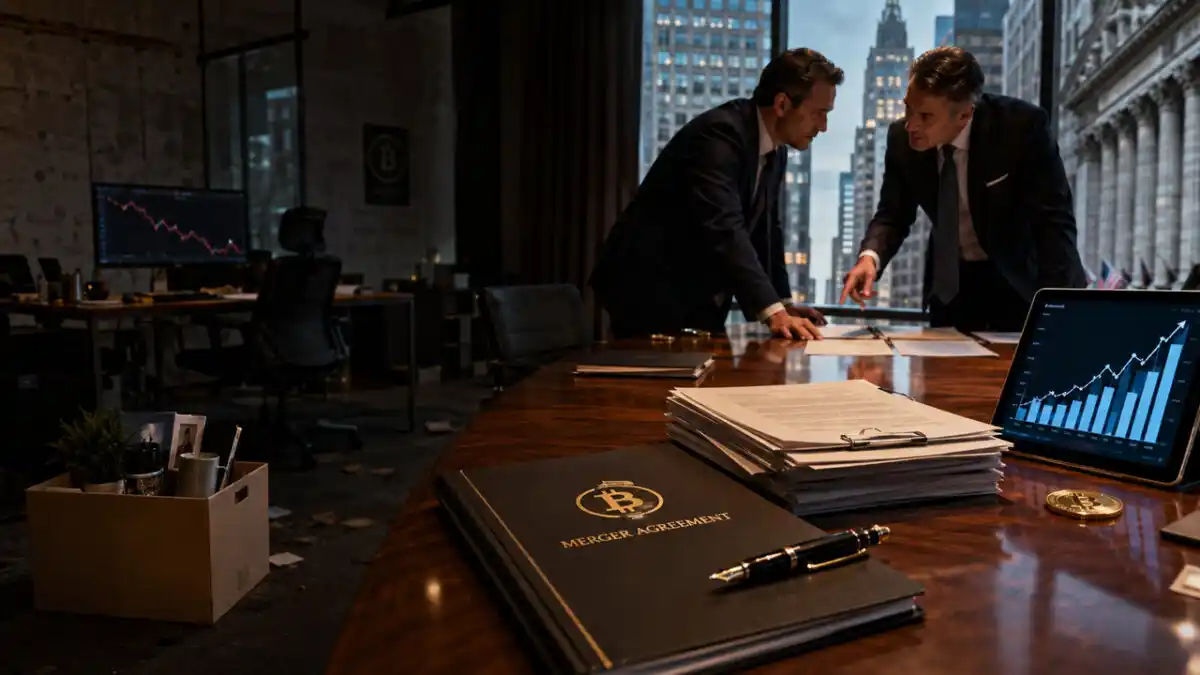
A prolonged Bitcoin downturn is forcing crypto companies to lay off employees and automate operations, but has simultaneously triggered the industry's most aggressive wave of mergers and acquisitions (M&A). In the first half of 2026, crypto M&A deal value reached $93.7 billion, 26 times higher than the same period last year. This activity is primarily driven by traditional financial institutions—banks, payment processors, and asset managers—who are acquiring compliant crypto infrastructure like custody solutions, payment rails, and regulatory licenses instead of building them internally. Examples include Mastercard's acquisition of stablecoin firm BVNK and Franklin Templeton's launch of a dedicated crypto division via acquisition. This consolidation contrasts sharply with a shrinking crypto labor market, where active job openings have plummeted. Companies like Coinbase are restructuring to become "AI-native," leading to a sharp increase in roles requiring AI skills, while engineering and compliance positions now dominate hiring. Financially pressured crypto firms, such as Messari which was acquired at a fraction of its prior valuation, are becoming prime targets. Capital remains available but is highly selective, flowing overwhelmingly into businesses that bridge digital assets with traditional finance, such as tokenization platforms and regulated trading venues. The trend indicates a market where capital is rewarding compliant, utility-focused infrastructure while weaker models consolidate or downsize.

marsbit06/26 03:49

Bitcoin Bear Market Triggers Crypto Layoffs, Yet Fuels Industry's Most Aggressive M&A Wave Ever

marsbit06/26 03:49

The Final Piece of Franklin Templeton's Crypto Ambition

Franklin Templeton Completes Crypto Ambition with Acquisition of 250 Digital On June 22, Franklin Templeton announced the acquisition of 250 Digital and established Franklin Crypto, a new division focused on actively managed cryptocurrency strategies for institutional investors. The unit is led by Christopher Perkins and Seth Ginns. This acquisition marks a key piece in Franklin Templeton's multi-year crypto strategy, which began in 2018 with a digital assets team. The firm's crypto product suite now spans three layers: tokenized funds like the blockchain-based money market fund BENJI (~$831M AUM); a series of passive ETFs including Bitcoin (EZBC, ~$368M), Ethereum (EZET), XRP (XRPZ, ~$252M), Solana (SOEZ), and a multi-crypto index fund (EZPZ); and the newly added active management strategies from Franklin Crypto. The company has also expanded its crypto ecosystem through investments in projects like Ethena and Crossmint, and collaborations with blockchains such as Aptos and Sui. With approximately $18B in digital asset AUM and a total firm AUM of ~$1.78T, Franklin Templeton is positioning itself as a comprehensive crypto asset manager for pensions and sovereign wealth funds. In contrast, competitor Fidelity Investments has taken a different path, focusing early on building its own custody and trading infrastructure. Fidelity's Bitcoin ETF (FBTC) holds over $11B, significantly larger than Franklin Templeton's equivalent offering. Both giants' moves underscore the deepening trend of traditional finance entering the crypto space.

Foresight News06/23 10:13

The Final Piece of Franklin Templeton's Crypto Ambition

Foresight News06/23 10:13

Manus Buyback Plan Emerges: Chinese Investors Plan to Repurchase Equity with $2 Billion, Path to Hong Kong IPO Becomes Clearer

According to a report by The Information, early Chinese investors of Manus, including Tencent, Sequoia Capital China, and ZhenFund, are planning to repurchase the company from Meta for $2 billion—the same price Meta paid in its acquisition last December. This move is a direct response to the Chinese government's prohibition of the foreign acquisition in April. As part of the repurchase plan, Manus is considering establishing a Sino-foreign joint venture within China. This structure is seen as a way to ensure regulatory compliance for its Chinese investors and to pave the way for a future IPO in Hong Kong. Notably, U.S. investor Benchmark will not participate in the buyback, which will concentrate ownership even more among Chinese capital. Since its acquisition by Meta, Manus's business has grown rapidly, with its annualized revenue run rate reportedly increasing four-to-fivefold to $400-$500 million in roughly six months. This strong growth underpins the investors' willingness to repurchase at the original price. Financially, the forced unwinding of the deal may benefit the early investors, allowing them to regain equity at a cost far below the company's current implied valuation, with the added prospect of an independent future listing. However, specific terms of the repurchase, including funding proportions and the joint venture's equity structure, are still under negotiation. This "repurchase-joint venture-Hong Kong IPO" approach could serve as a reference model for other Chinese AI startups navigating cross-border M&A regulations.

marsbit06/19 10:28

Manus Buyback Plan Emerges: Chinese Investors Plan to Repurchase Equity with $2 Billion, Path to Hong Kong IPO Becomes Clearer

marsbit06/19 10:28

Cursor: Why Did It Board Elon Musk's Rocket?

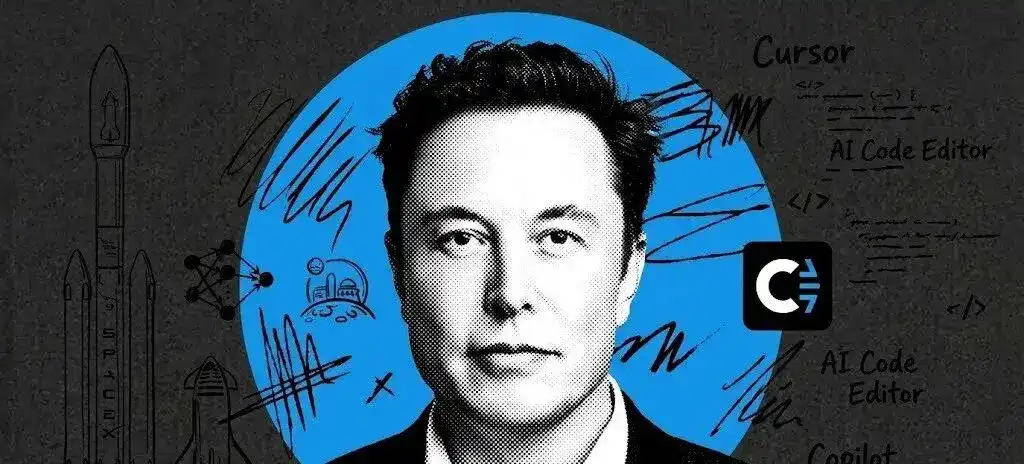
SpaceX announced its first major acquisition after its historic IPO: a $60 billion all-stock deal to acquire AI programming startup Cursor (parent company Anysphere). Cursor is a popular AI coding assistant that allows developers to switch between models from OpenAI, Anthropic, Google, and others. Founded in 2022 by MIT graduates including CEO Michael Truell, Cursor saw explosive revenue growth, reaching a $4 billion annualized run rate by early 2026. However, its market share had declined as key supplier Anthropic launched its own competing product, Claude Code. Facing dependency risks, Cursor decided to build its own AI model, Composer, but lacked the necessary computing power. In April 2026, Cursor and SpaceX revealed a partnership and an option agreement: SpaceX could acquire Cursor for $60 billion post-IPO, or pay a breakup fee and provide substantial computing resources. After SpaceX's successful IPO, it exercised the option. The deal gives Cursor access to SpaceX's massive "Colossus" supercomputer, while SpaceX gains Cursor's strong foothold among elite software engineers to boost its AI capabilities, as Musk's xAI model Grok lags in programming. The acquisition aligns with SpaceX's broader AI and orbital data center ambitions, as Musk targets $1 trillion in revenue by 2030. For Truell, who once aimed to build an enduring independent company, joining SpaceX represents a monumental bet on an unprecedented scale.

marsbit06/17 04:14

Cursor: Why Did It Board Elon Musk's Rocket?

marsbit06/17 04:14

活动图片