Channel Dividends Are Dwindling, What Can DeFi Protocols Rely on to Resist Giants' Harvesting?

Foresight News2026-06-22 tarihinde yayınlandı2026-06-22 tarihinde güncellendi

Özet

As the era of channel-driven growth ends, major tech giants like Coinbase, Stripe, and Kraken are vertically integrating by acquiring or building core infrastructure, capturing profits from underlying protocols. For instance, Coinbase leverages its Base blockchain to earn sequencing fees from protocols like Morpho, while Stripe acquired Bridge to internalize stablecoin yields, and Kraken bought NinjaTrader for derivatives licenses. This trend creates a power imbalance: entities controlling distribution channels can extract value from open-source DeFi protocols. However, protocols are developing a defense through multi-chain expansion. Examples like Morpho (with significant TVL on Ethereum and Base) and Uniswap (dominant across many chains) show that by deploying across multiple blockchains, protocols reduce dependency on any single chain operator, making them costly and risky to replace. The article argues that the future landscape will be shaped by the race between institutional vertical integration and protocol horizontal, multi-chain scaling. Protocols that embed themselves deeply across ecosystems and become indispensable due to high switching costs are most likely to survive and thrive amidst this consolidation.


Author: Thejaswini M A

Compiled by: Saoirse, Foresight News


In Goodfellas, Ray Liotta has a line: 'Fuck you, pay me.' This line shreds the romanticized filter of mafia honor found in works like The Godfather, starkly revealing the cold, parasitic, and purely profit-driven essence of organized crime. Following a similar logic, let's talk about big tech companies.


You control value by controlling profits. To achieve this, you don't even need to build a public blockchain protocol or a project. It's a profit grab with no rules. But we can't blame Coinbase, Stripe, or Kraken for making such choices.


From the most fundamental business logic, their maneuvers are akin to a shrewd real estate play: be the first to secure the traffic distribution channels. Now holding the power of these channels, they look down and ask: 'Who exactly holds the bargaining power?'


Coinbase built its own blockchain; Stripe spent $1.1 billion acquiring infrastructure it could have rented; Kraken spent $1.5 billion acquiring a derivatives trading platform; Apple built the App Store. The logic of this playbook is: let others develop the market and bear the early risks, then acquire the underlying infrastructure when the profit potential in the sector becomes sufficiently attractive. The core question this article explores: Where will the industry head when traffic distribution channels are no longer the core value?


Coinbase has 110 million verified users. For years, its lending products for users were built on top of the open-source protocol Morpho, with all protocol fees going to Morpho. Later, Coinbase launched its own L2 blockchain, Base. Morpho chose to deploy on Base because Coinbase's massive user base could bring transaction volume. Now, the sequencer fee generated by every transaction on Base flows entirely into Coinbase's pockets, not Morpho's.


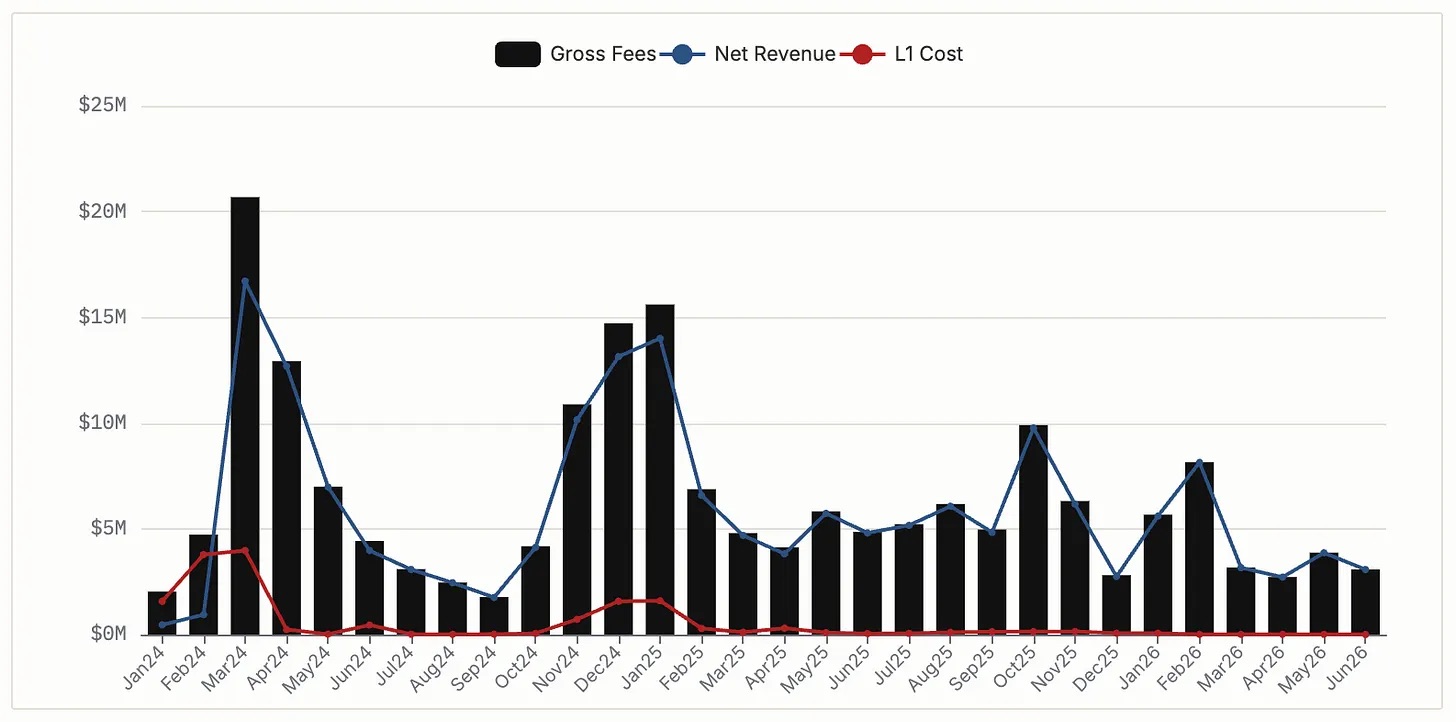
Base generated $76 million in net sequencer fee revenue in 2024 and $74 million in 2025. Until February 2026, per the licensing agreement, Coinbase had to share a portion of the revenue with Optimism. But eventually, Coinbase severed the partnership, switched to a self-developed underlying architecture, and now keeps the entire $64 million revenue. Meanwhile, Morpho remains rooted on Base, developing robustly with a Total Value Locked (TVL) of $2.5 billion. However, every transaction processed by Morpho now has to share profits with Coinbase.


Base Monthly Sequencer Fee Revenue, source: DeFiLlama


Coinbase launched a $300 million Bitcoin-collateralized lending product, relying on Morpho's underlying architecture. Its wrapped Bitcoin, cbBTC, is the largest collateral asset within Morpho, accounting for 38% of the protocol's total TVL. This creates a mutually restraining dynamic: Morpho holds the core underlying capability for Coinbase's credit product, while Coinbase can extract a revenue share from all of Morpho's business, making it difficult for either to easily sever the partnership.


Look at Stripe's case: In early 2025, it spent $1.1 billion to acquire Bridge. Before this, Stripe's stablecoin business relied on Circle's infrastructure. Circle held the stablecoin issuance rights and earned the floating interest generated by the reserve collateral assets. At that time, all revenue from Stripe's trillion-level stablecoin transactions flowed to Circle. Acquiring Bridge completely reversed this situation. Bridge issues its own stablecoin, USDB, collateralized by a BlackRock money market fund. After switching to USDB, the massive interest income from these reserves stays entirely within the Stripe ecosystem. With annual payment processing volume of $1.4 trillion, Stripe was losing hundreds of millions in profit annually by long-term renting its competitor's profit-generating infrastructure.


Patrick Collison once called stablecoins 'the room-temperature superconductors of finance.' Spending $1.1 billion to own this underlying tool outright is far more economical than continuously paying tolls to a competitor.


A pure spot exchange has a natural growth ceiling, with users trading only hundreds of tokens. But Kraken wanted to attract institutional investors and professional retail traders, groups that primarily engage in trading via futures and clearing derivatives. Operating a derivatives business requires registration with the CFTC, NFA membership, and broker-dealer licenses—a compliance system that takes years to build. Even if built from scratch, regulators could reject the application for various uncontrollable reasons.


This is why Kraken set its sights on NinjaTrader. The $1.5 billion acquisition in January 2025 brought not just 1.7 million funded trading accounts, but more crucially, the full suite of broker-dealer licenses that Kraken would have found difficult to quickly develop and obtain on its own.


By acquiring ready-made compliant qualifications, Kraken completely shed its dependence on external partners. It now wholly owns the entire technology stack and licenses, needing neither to rely on others nor spend years waiting for regulatory approval.


Some might say: Large enterprises swallowing small protocols, isn't that just business as usual? What's new here?


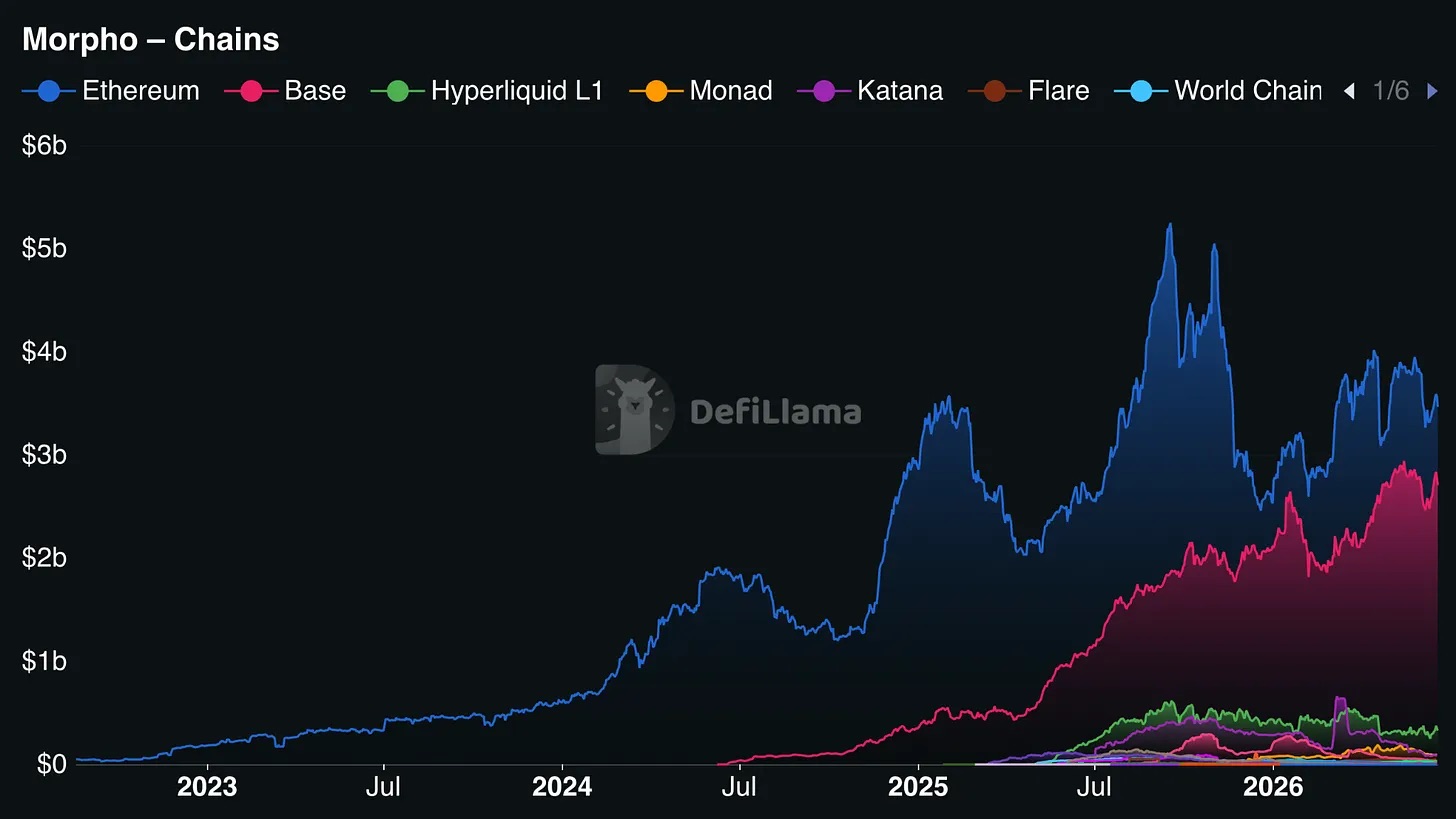
Morpho's total TVL is $6.4 billion, with $3.308 billion deployed on Ethereum and $2.488 billion on Base. If Coinbase decided to delist Morpho and switch to a self-developed lending protocol, Morpho would immediately lose 39% of its TVL. However, it would still retain 52% on Ethereum, while continuously expanding to multiple chains like Hyperliquid L1, Monad, and Arbitrum, allowing its overall business to continue operating stably.


Morpho TVL Distribution Across Chains, source: DeFiLlama


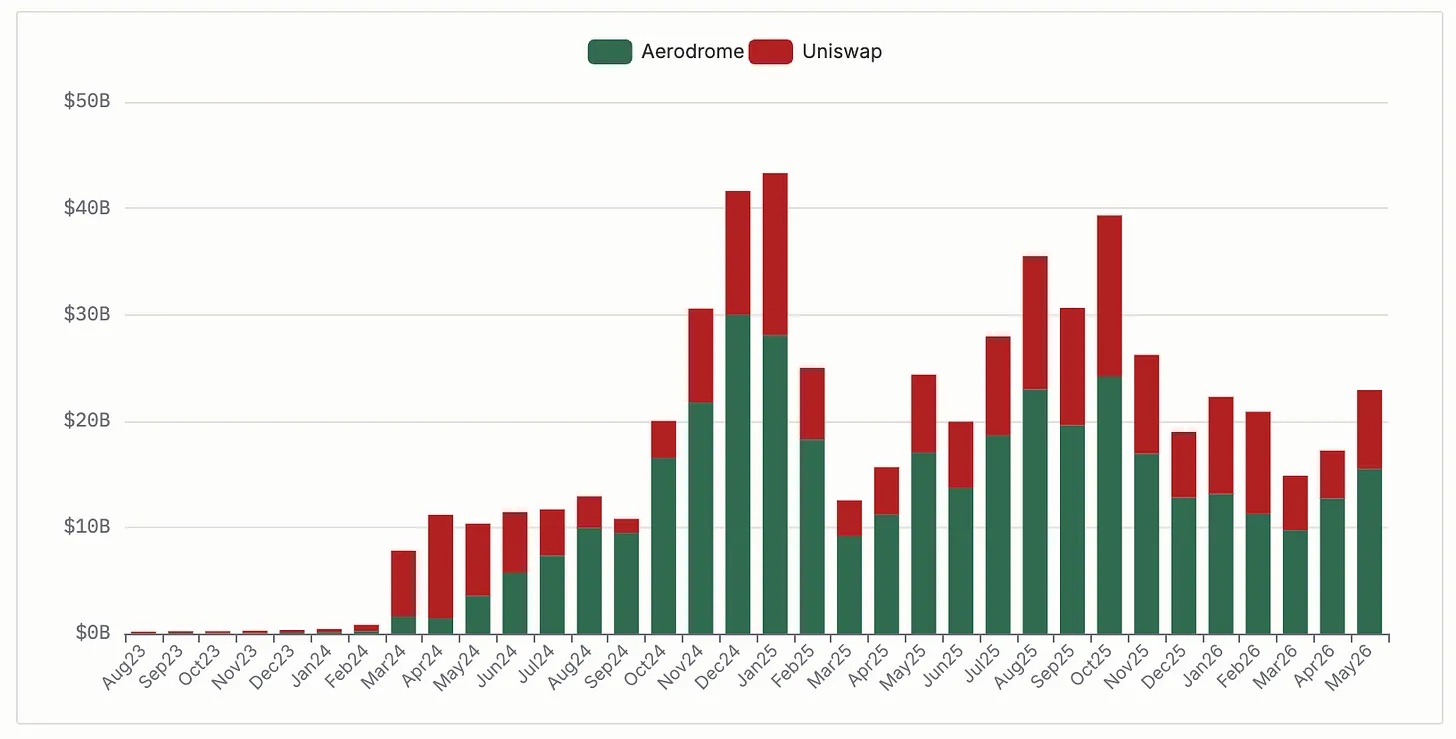
The case of Aerodrome on the Base blockchain vividly demonstrates the impact when a chain operator promotes its own competitor. Aerodrome is Base's native decentralized exchange, optimized for Base's architecture. Coinbase Ventures holds approximately $20 million worth of AERO tokens, its largest liquidity token investment. Meanwhile, the project guides liquidity towards Coinbase's products, including the cbBTC pool, through AERO token lock-up voting. Aerodrome handles about 51% of Base's DEX volume, peaking at 77% in September 2024. Uniswap, deployed across 44 chains, is Base's second-largest DEX, holding 30% volume. Even after losing its leading position on a single chain, Uniswap hasn't perished: in 2025 it processed $212 billion in volume on Base, with estimated cross-chain monthly volume around $73 billion.


Base DEX Volume Share, source: DeFiLlama


This case confirms: Multi-chain deployment is a protocol's natural moat. A project deployed on a single chain is entirely at the mercy of the chain operator—they can always promote a competitor to squeeze your survival space. Conversely, a multi-chain protocol can continue normal operations in other sectors even after losing a particular chain's market. After witnessing Uniswap's traffic being diverted by Aerodrome on Base, Morpho rapidly expanded its multi-chain deployment. Large traffic platforms can vertically integrate into the underlying layer, while open-source protocols can horizontally expand across multiple chains to diversify risk.


If you rely on underlying infrastructure you don't own, you don't truly control your business. The party controlling the underlying layer holds overwhelming bargaining power over you, can define your product experience, and ultimately influence your operational stability. For enterprises of this scale, this dependency relationship translates into tangible profit losses every single day. This business logic isn't unique to crypto: Amazon built its moat relying on AWS; Apple, constrained by Intel's chip roadmap for years, spent many years developing custom chips to break free.


Everyone can check in real-time how much revenue Coinbase earns from Base sequencer fees, and clearly see Morpho's TVL across various chains. This value extraction process is fully transparent—something internal infrastructure profits at companies like Amazon, in the traditional internet space, cannot achieve.


There is a potential direction for the industry: the future market could be entirely controlled by giants like Coinbase, Stripe, Kraken, and a few banks. They control the entire industry chain from underlying protocols to payment cards, with open-source protocols only used to fill niche gaps the giants haven't yet covered. This is a fully plausible development path for fintech. Open-source technology would no longer be a free and vast fertile ground for innovation, but merely become patches of adhesive tape for the tiny crevices giant corporations haven't yet figured out how to monetize. Like a quip: 'Look at this high-quality little open-source protocol. Let's just build a commercial system on top of it to harvest the traffic.'


However, I lean towards an optimistic assessment: Considering the current wave of acquisitions, the probability of such a complete monopoly isn't as high as it seems. Underlying protocols are difficult to be monopolized by giants in the same way traffic channels can be. Morpho can deploy on a new chain in just weeks; replacing a battle-tested lending protocol deeply embedded in institutional operations carries an extremely high cost, not easily perceivable by outsiders. Coinbase's $300 million Bitcoin lending product still relies on Morpho because replicating Morpho's security system from scratch would take years and introduce security risks Coinbase is unwilling to bear.


Protocols that can survive this wave of giant consolidation all meet one core condition: they completed full multi-chain deployment before the traffic giants built their own ecosystems, deeply embedding themselves into the backend systems of major enterprises, making the economic cost of replacing them prohibitively high. Even Robinhood, a traffic giant with a massive user base, chose to integrate Lighter, a third-party zk-proof perpetuals exchange, as its trading backend. Robinhood Ventures participated in Lighter's $68 million funding round, and founder Vlad Tenev maintains close communication with the project.


If only traffic channels could build moats, Robinhood could have built its own underlying tech like Coinbase did. But it didn't: achieving a system that combines CEX-like trading speed with verifiable zk-proof matching logic is an extremely difficult, niche technical problem; the Lighter team spent over a year cracking it. After calculation, Robinhood concluded that purchasing the right to use mature technology is far more economical than building from scratch.


Currently, Morpho occupies this advantageous position of mutual restraint, while Uniswap was the pioneer of this path. The speed of institutional expansion and the speed of open-source protocol horizontal multi-chain expansion are in a game of chess; the final outcome will determine the direction of the industry landscape.


The underlying businesses of giants like Stripe and Coinbase still rely on open-source technology at this stage. In the short term, open-source protocols can still stand firm. We'll re-examine the industry landscape in two years.

Trend Kriptolar

İlgili Sorular

QWhat is the main business strategy employed by large tech companies like Coinbase and Stripe in the crypto industry according to the article?

AThe article describes a strategy where large tech companies like Coinbase, Stripe, and Kraken act as distribution channels, capturing and controlling user traffic. They let smaller protocols bear the early risk and development costs, and then acquire or build competing infrastructure once the market becomes profitable. This allows them to capture the value and profits generated by the underlying protocols, exemplified by Coinbase capturing sequencer fees from protocols like Morpho on Base.

QHow does the acquisition of Bridge by Stripe change its business model in the stablecoin sector?

APrior to acquiring Bridge for $1.1 billion, Stripe's stablecoin business relied on Circle's infrastructure, meaning all interest from the reserve assets backing the stablecoins flowed to Circle. By acquiring Bridge, which issues its own stablecoin USDB backed by BlackRock money market funds, Stripe now keeps the substantial interest revenue generated by the massive reserves within its own ecosystem, rather than paying it to a competitor.

QWhy does the article argue that multi-chain deployment is a crucial defense for DeFi protocols against large platforms?

AMulti-chain deployment acts as a natural moat for protocols. If a protocol is only deployed on a single chain, its fate is tied to that chain's operator, who could favor or build a competing protocol. A multi-chain protocol, like Uniswap or Morpho, can survive the loss of dominance on one chain because its business on other chains continues to operate. This diversification reduces dependency and risk from any single entity.

QWhat example does the article use to show that even large platforms sometimes choose to rely on third-party protocols instead of building everything in-house?

AThe article cites Robinhood as an example. Instead of building its own perpetual futures exchange from scratch like Coinbase did with Base, Robinhood integrated with Lighter, a third-party zero-knowledge proof perpetual exchange. Robinhood determined that licensing this specialized, proven technology was more economical and efficient than developing it internally, despite having a massive user base.

QWhat is the "two-way checkmate" position that Morpho currently holds in its relationship with Coinbase, according to the article?

AMorpho is in a "two-way checkmate" with Coinbase. On one hand, Coinbase's $300 million Bitcoin-backed lending product is built on Morpho's infrastructure, making Morpho's security and technology core to that offering. Replacing it would be risky and costly for Coinbase. On the other hand, Morpho's significant deployment on Coinbase's Base chain means a large portion of its activity generates sequencer fees for Coinbase. This mutual dependency makes it difficult for either party to easily sever the relationship.

İlgili Okumalar

AC Exits Sonic Board, 'DeFi Godfather' Pulls Off Another Strategic Retreat

Andre Cronje, known as the "DeFi Godfather," and two other founding directors have stepped down from the Sonic Labs board. The S token, once valued at $1.03, has plummeted 97% to $0.028, and the chain's TVL has evaporated 98% from its peak. In his exit statement, Cronje clarified he was a technical architect, not a founder, and distanced himself from token economics and migration decisions behind the token's crash. Cronje revealed his focus for the past 18 months has been his new project, Flying Tulip. This project raised $200 million privately last year at a $10 billion valuation. Its token design includes a perpetual put option (ftPUT NFT) for early investors, allowing them to redeem their initial investment at any time—a protection not extended to public market buyers. This pattern mirrors Cronje's past exits from projects like Yearn Finance and Fantom, where he departed near peak hype, leaving later holders to bear significant losses. Sonic itself has seen a complete management overhaul in recent months. The article frames this as a microcosm of the broader crypto bear market, where Layer-1 chains are bleeding value. It highlights a harsh reality: a project's valuation is often tied to a founder's reputation rather than fundamentals. Ironically, Flying Tulip is set to launch first on the Sonic chain Cronje just left, underscoring a disconnect between the person and the platform.

marsbit7 dk önce

AC Exits Sonic Board, 'DeFi Godfather' Pulls Off Another Strategic Retreat

marsbit7 dk önce

Dialogue with KK, Founder of Hash Global: Do VCs Still Invest in Blockchain Games Now? What Kind of Projects Can Still Get Funding?

**Title: Dialogue with KK, Founder of Hash Global: Do VCs Still Invest in Blockchain Games? What Kind of Projects Can Still Get Funding?** **Summary:** KK, partner at Hash Global, discussed the evolving landscape of Web3 investment and blockchain games in a recent interview. He noted that the industry has moved past its initial hype phase into a more sober "second half," where VCs now prioritize core questions: Is the game actually fun? Does it have real users? Can it generate revenue? Key insights include: * **Web3 Investment Evolution:** The sector is increasingly adopting traditional investment logic, focusing on business models, value capture, and tangible worth over pure narrative. * **Blockchain Game Fundamentals:** The paramount criterion for any game is being genuinely fun and engaging. Web3 elements (like asset issuance and value distribution) should enhance an already solid product, not be a substitute for poor gameplay. Play-to-Earn is seen as a potential final stage, not a starting point. * **Current Investment Thesis:** Hash Global remains active in gaming, favoring projects with low barriers to entry, strong social/competitive elements, and the ability to generate real revenue (e.g., through ads, skins) like traditional Web2 games before scaling. Essential criteria are: 1) A fun core loop understandable without Web3 knowledge, 2) Web3 mechanisms that genuinely improve asset distribution and community participation, and 3) A capable, long-term-focused team with proven product-building experience. * **Team Focus:** The firm concentrates on investing in Chinese teams, leveraging cultural familiarity and judgment. * **Web3 Application Outlook:** Large-scale adoption may be accelerated by AI in areas with significant pain points in distribution (e.g., creator economy) or in "Non-Financial RWA" sectors like entertainment/culture. * **BNB Ecosystem:** Hash Global is bullish on BNB, viewing its ecosystem as significantly undervalued, with real users and global capital access. * **Investor Advice:** In the current bear market, KK expresses respect for new institutional investors entering Web3, as it indicates deep research rather than hype-chasing. A key lesson is managing pace—maintaining optimism tempered with realism to ensure longevity.

marsbit39 dk önce

Dialogue with KK, Founder of Hash Global: Do VCs Still Invest in Blockchain Games Now? What Kind of Projects Can Still Get Funding?

marsbit39 dk önce

A New Player Enters at Third Place, Rothera Disrupts the Prediction Market Landscape

"Rothera Skyrockets to Third in Prediction Market Rankings, Disrupting Industry Landscape" Rothera, Robinhood's newly launched prediction market platform, has rapidly climbed to become the third-largest player in the sector by trading volume, trailing only giants Kalshi and Polymarket. Its growth is attributed not to attracting new users, but to migrating existing Robinhood user orders away from partner Kalshi. Previously, Robinhood served as a major distribution channel for Kalshi, accounting for an estimated 25%-35% of its volume. With the launch of Rothera, Robinhood now internally executes events like World Cup contracts, capturing revenue that was previously shared with Kalshi. Data shows Rothera's weekly trading volume surged from $21.9 million to $559 million within weeks, reaching nearly one-fifth of Polymarket's volume. Analysts estimate Robinhood's prediction market business could generate around $10 billion in annual revenue at this pace, potentially surpassing its historical crypto revenue peak. In response, Kalshi is reportedly exploring new distribution channels by engaging with investment banks for a potential IPO, requiring them to integrate their systems with Kalshi to access institutional clients. This shift highlights a new competitive focus in prediction markets: controlling user access and distribution channels rather than just product offerings.

marsbit48 dk önce

A New Player Enters at Third Place, Rothera Disrupts the Prediction Market Landscape

marsbit48 dk önce

İşlemler

Spot
Futures

Popüler Makaleler

DOGE M Nedir

Doge Matrix ($doge m): Topluluk Destekli Kripto Paranın Yeni Türü Giriş Kripto para dünyası sürekli evrilen bir manzaraya sahipken, yeni projeler sürekli olarak ortaya çıkmakta ve her biri yatırımcıların ve meraklıların ilgisini çekmeyi hedeflemektedir. Bu alandaki en son katılımcılardan biri, $doge m sembolü ile temsil edilen Doge Matrix'tir. Bu proje, Dogecoin etrafındaki popüler meme kültürüne dayanan kökleri sayesinde dikkat çekmiş ve web3 alanında kendine bir yer edinmiştir. Bu makale, Doge Matrix'in genel bir analizini sunmayı amaçlamakta; genel bakış, yaratıcı, yatırımcılar, işlevsellik, zaman çizelgesi ve dikkat çekici yönleri kapsayacaktır. Doge Matrix ($doge m) Nedir? Doge Matrix, görünüşte Dogecoin'in geniş çekiciliği üzerine inşa edilen, topluluk destekli bir kripto para projesidir. Dogecoin, Shiba Inu maskotu ve meme kökenleri ile bilinen bir dijital para birimidir. Doge Matrix'in genel hedefleri geniş bir şekilde tanımlanmamış olsa da, topluluk katılımı ve desteğini kullanma taahhüdü ile karakterize edilmektedir. Geleneksel kripto paralardan farklı olarak, genellikle altyapı teknolojileri aracılığıyla fayda veya içsel değer vurgulayan Doge Matrix, kripto paraların kültürel fenomenini benimseyen bir alanda kendini konumlandırmaktadır; özellikle meme tabanlı varlıkların ethos'u ile özdeşleşenlere hitap etmektedir. Dogeoin topluluğunun güçlü yönlerinden yararlanan Doge Matrix, daha geniş bir ekosistemin parçası olarak faaliyet göstermekte ve kripto para ve dijital alanla ilgilenen kullanıcıların katılımını ve etkileşimini davet etmektedir. Doge Matrix'in ($doge m) Yaratıcısı Kimdir? Doge Matrix'in yaratıcısının kimliği bilinmemektedir. Bu şeffaflık eksikliği, bazı projelerin kurucularının kimliklerini açıklamadan başlatıldığı kripto para alanında yaygın bir durumdur. Kurucu ekip hakkında bilgi eksikliği, potansiyel yatırımcılar arasında projenin hesap verebilirliği ve yönü hakkında sorular doğurabilir. Doge Matrix'in ($doge m) Yatırımcıları Kimlerdir? Şu anda, Doge Matrix'i destekleyen yatırımcılar veya yatırım fonları hakkında kamuya açık bir bilgi bulunmamaktadır. Proje, esasen topluluk desteğine dayanmakta ve kurumsal yatırım yerine bu desteği kullanmaktadır. Bu model, girişimin topluluk destekli doğası ile uyumlu olup, projenin yönünün katılımcılar tarafından şekillendirildiği bir ortam yaratmaktadır. Doge Matrix ($doge m) Nasıl Çalışır? Doge Matrix'in operasyonel mekanizmaları ile ilgili ayrıntılar biraz belirsizdir ve bu durum, meme coin alanındaki projelerin genel bir eğilimini yansıtmaktadır; burada yenilikçi işlevsellikler her zaman net bir şekilde ifade edilmemektedir. Bununla birlikte, Doge Matrix'in mevcut kripto para ekosisteminden yararlanmayı ve kullanıcı katılımını teşvik etmeyi amaçladığı görünmektedir; ayrıca Dogecoin ile ilişkilendirilen tanıdık kültürel referansları kullanmaktadır. Potansiyel olarak benzersiz özellikleri, teknolojik ilerlemelerden ziyade topluluk etkileşimlerinden kaynaklanmakta ve token sahipleri arasında paylaşılan deneyimleri ve işbirliğini vurgulamaktadır. Kesin yenilikler açıkça belirtilmemiş olsa da, proje, topluluk üyelerinin katılabileceği, fikir paylaşabileceği ve projenin potansiyelini ileriye taşıyabileceği bir alan yaratmaktadır. Doge Matrix'in ($doge m) Zaman Çizelgesi Projenin zaman çizelgesine bakmak, şimdiye kadar tanımlayıcı olayları ortaya koymaktadır: 25 Kasım 2024: Doge Matrix, erken tarihindeki önemli bir dönüm noktası olarak tüm zamanların en yüksek değerine ulaştı. 1 Ocak 2025: Aksine, Doge Matrix tüm zamanların en düşük değerine ulaştı ve bu durum, kripto paralarla sıkça ilişkilendirilen dalgalanmayı göstermektedir; özellikle bir projenin yaşam döngüsünün erken aşamalarında. Devam Ediyor: Proje, topluluğu tarafından aktif bir şekilde işlem görmeye ve desteklenmeye devam etmekte, ancak belirli gelecekteki dönüm noktaları veya hedefler henüz açıklanmamıştır. Doge Matrix ($doge m) Hakkında Ana Noktalar Topluluk Odaklılık Doge Matrix'in merkezinde topluluk katılımına olan taahhüt bulunmaktadır. Proje, üyeleri arasında işbirliği ve ortak hedefler üzerine inşa edilmiştir ve kolektif çabanın önemini vurgulamaktadır. Genellikle tanımlı bir liderlik yapısına sahip merkezi projelerin aksine, Doge Matrix şu anda her topluluk üyesinin sesinin önemli olduğu daha akışkan bir yönetişim yaklaşımını sergilemektedir. Dalgalanma Kripto para piyasası, dalgalanması ile ünlüdür ve Doge Matrix de bu durumdan muaf değildir. Fiyat geçmişi, yüksek ve düşük değerler arasında önemli dalgalanmaları yansıtmaktadır; bu durum birçok yeni kripto para için tipik olmakla birlikte, yeni token'lara yapılan yatırımlarla ilişkili riskleri vurgulamaktadır. Ayrıntılı Bilgi Eksikliği Doge Matrix hakkında en çarpıcı özelliklerden biri, teknolojik altyapısı ve operasyonel mekanizmaları ile ilgili ayrıntılı bilginin kıtlığıdır. Bu belirsizlik, potansiyel yatırımcıların projeye katılmadan önce kapsamlı bir araştırma yapmalarını gerektirmektedir. Sonuç Özetle, Doge Matrix ($doge m), topluluk katılımı ve kültürel anlamda önem taşıyan projelerin yeni bir dalgasını temsil etmektedir. Belirli ayrıntılardan yoksun olsa da—örneğin, net bir liderlik, tanımlı hedefler ve ayrıntılı işlevsellik—proje, meme kültürünün yerleşik çekiciliğinden yararlanarak kripto topluluğunda ilgi uyandırmayı başarmıştır. Kripto para alanındaki herhangi bir yatırımda olduğu gibi, doğasında var olan riskleri anlamak ve kapsamlı bir araştırma yapmak, potansiyel katılımcılar için esastır. Doge Matrix, kripto endüstrisinin dinamik, bazen öngörülemez doğasının bir hatırlatıcısı olarak durmakta; sürekli evrim ve topluluk destekli girişimlere olan heyecan ile işaretlenmektedir.

388 Toplam GörüntülenmeYayınlanma 2025.02.03Güncellenme 2025.02.03

DOGE M Nedir

$M Nedir

Mantis'i Anlamak ($M): Zincirler Arası İşlemde Yeni Bir Dönem Web3 ve kripto para dünyasının sürekli gelişen manzarasında, yeni projeler kullanıcı deneyimini artırmayı ve merkeziyetsiz finans ekosistemindeki işlevsel olanakları genişletmeyi amaçlayan yenilikçi çözümler sunmaya çalışıyor. Dikkat çeken projelerden biri, zincirler arası etkileşim ve niyet tabanlı uzlaşma ilkeleri üzerine kurulu öncü bir protokol olan Mantis ($M). Bu makale, Mantis'in temel işlevselliği, yaratıcıları, yatırım destekleri, yenilikçi özellikleri ve kritik dönüm noktaları dahil olmak üzere temel yönlerini inceliyor. Mantis ($M) Nedir? Mantis, çok alanlı niyet uzlaşma protokolü olarak tanımlanır ve kullanıcıların çeşitli blockchain platformları arasında karmaşık finansal işlemleri sorunsuz bir şekilde gerçekleştirmelerini sağlar. Protokol, üç ana katman üzerinden çalışır: Niyet İfadesi: Kullanıcılar, DISE LLM adlı gelişmiş bir AI dil modeli aracılığıyla doğal dil kullanarak işlem hedeflerini ifade edebilirler. Örneğin, bir kullanıcı belirli bir kayma toleransı ile Ethereum (ETH) ile Solana (SOL) takası yapmak istediğini ifade edebilir. İcra: Bu katman, kullanıcı niyetlerini yerine getirmek için rekabet eden bir çözücü ağı kullanır. İşlemler, kullanıcı taleplerinin en iyi şekilde karşılanmasını sağlayan İsteklerin Tesadüfü (CoWs) ve Emir Akışı İhaleleri (OFAs) gibi mekanizmalarla gerçekleştirilir. Uzlaşma: Mantis, Inter-Blockchain Communication (IBC) protokolünü kullanarak atomik zincirler arası işlemleri mümkün kılar ve kullanıcıların Ethereum, Solana ve Cosmos dahil olmak üzere çeşitli desteklenen zincirler arasında işlem yapmalarını sağlar. Mantis, tüm süreç boyunca işlemlerin bütünlüğünü korumak için kriptografik kanıtlar kullanarak yerel getiri üretimi sunmak üzere tasarlanmıştır. Yaratıcılar ve Geliştirme Ekibi Mantis, blockchain etkileşim çözümlerine vurgu yapan araştırma odaklı bir kuruluş olan Composable Foundation tarafından tasarlanmıştır. Bu vakıf, Mantis'in mimarisi ve işlevselliğini bilgilendiren kapsamlı araştırma ve geliştirme çabalarına katkıda bulunan Harvard Üniversitesi ve Lizbon Üniversitesi gibi saygın akademik kurumlarla işbirliği yapmaktadır. Composable Foundation'ın blockchain alanında yeniliği teşvik etme konusundaki kararlılığı, Mantis'i çoklu blockchain ağları arasında artan etkileşim talebine yönelik sağlam bir çözüm olarak konumlandırmaktadır. Yatırımcılar ve Destek Bireysel yatırımcılarla ilgili belirli detaylar kamuya açıklanmamış olsa da, Mantis çeşitli kuruluşlardan önemli destek almaktadır: IBC destekli zincirlerden ekosistem hibeleri, protokolün büyümesini ve merkeziyetsiz finans ekosistemleri içindeki entegrasyonunu destekler. Altyapı sağlayıcılarıyla stratejik ortaklıklar, Mantis'in ağ yeteneklerini ve dağıtım stratejilerini geliştirmektedir. Composable Foundation'ın hazinesi aracılığıyla finansman, sürekli gelişim ve operasyonel maliyetler için sürdürülebilir finansal destek sağlamaktadır. Bu işbirlikçi çabalar, paydaşlar arasında zincirler arası işlevselliği artırmanın önemine ve Mantis'in altyapısal yeniliklerinin potansiyel faydasına dair bir uzlaşmayı yansıtmaktadır. Ana Yenilikler Mantis, işlevselliğini ve faydasını artıran birkaç öncü yenilikle kendini farklı kılar: Zincir Bağımsız Niyetler: Kullanıcılar, herhangi bir desteklenen zincirden işlem başlatabilirken, başka bir zincirde uzlaşma yapabilirler. Bu esneklik, kullanıcıları güçlendirir ve farklı platformlar arasında etkileşimi artırır. AI Destekli Arayüz: DISE LLM entegrasyonu, kullanıcıların doğal dil kullanarak karmaşık DeFi işlemleri gerçekleştirmelerini sağlar, böylece etkileşimleri basitleştirir ve blockchain teknolojisini daha geniş bir kitleye erişilebilir hale getirir. Zincirler Arası MEV Yakalama: Mantis, çözücüler arasında rekabet yoluyla maksimum çıkarılabilir değer (MEV) için iç bir pazar oluşturur. Bu yenilikçi yaklaşım, karmaşık işlemlerde daha büyük verimlilik ve değer çıkarımı sağlar. Modüler Uzlaşma Katmanı: Protokol, sıfır bilgi kanıtları ve iyimser rolluplar gibi çeşitli doğrulama yöntemlerini destekleyerek, ortaya çıkan blockchain teknolojilerine uyum sağlayabilen çok yönlü bir çerçeve sunar. Tarihsel Zaman Çizelgesi Mantis'in gelişimi, yolculuğunu ve büyümesini belirleyen birkaç kritik dönüm noktası ile işaretlenmiştir: | Yıl | Dönüm Noktası | |———–|————————————————————————–| | 2022 | Composable Foundation'ın araştırma bölümünde ilk konsept geliştirilmesi. | | Q3 2024 | Solana ve Ethereum arasında köprüleme yetenekleri ile testnet'in başlatılması. | | Q1 2025 | Ana ağ lansmanı ile birlikte beklenen Token Üretim Etkinliği (TGE). | | Q2 2025 | DISE LLM entegrasyonu ve zincirler arası yeteneklerin genişletilmesi bekleniyor. | | 2025 H2 | Daha fazla IBC güncellemeleri ile 15'ten fazla zincir için planlanan destek. | Bu zaman çizelgesi, Mantis'in evrimini, kavramsal tartışmalardan aktif uygulamaya ve gelecekteki büyüme aşamalarına kadar özetlemektedir. Ekosistem Büyüme Stratejisi Mantis'in ekosistem büyüme stratejisi, kullanıcı katılımını ve geliştirici etkileşimini teşvik etmeyi amaçlayan birkaç girişim içermektedir: Kredi Sistemi: Kullanıcılar, likidite sağlayarak ve referans programlarına katılarak protokol kredileri kazanabilirler. Bu krediler, gelecekte teşvikler için kullanılabilir, böylece güçlü bir kullanıcı topluluğu oluşturur. Modüler Yazılım Geliştirme Kiti (SDK): Bu araç seti, geliştiricilerin Mantis'in altyapısını kullanarak niyet odaklı modellere dayalı uygulamalar oluşturmasını sağlar ve böylece ekosistem içinde yeniliği teşvik eder. Yönetim Modeli: Protokol olgunlaştıkça, $M token sahipleri protokol yönetiminde söz sahibi olacak, önerilen güncellemeler ve değişiklikler üzerinde oy kullanabilecek, böylece topluluk katılımını ve merkeziyetsizliği artıracaktır. Mantis, zincirler arası mimaride önemli bir ilerlemeyi temsil etmektedir. Gelişmiş AI algoritmalarını sağlam bir uzlaşma çerçevesi ile sorunsuz bir şekilde entegre ederek, Mantis çoklu zincir ekosistemlerindeki parçalanma sorunlarını ele almayı hedeflemektedir. Yenilikçi yaklaşımı, geliştirilmiş kullanıcı deneyimlerini önceliklendirirken, merkeziyetsizlik ve güvenlik ilkelerine bağlı kalmakta ve blockchain teknolojilerinin gelecekteki etkileşimi için yeni bir standart belirlemektedir. Mantis, büyüme ve uygulama yolculuğuna devam ederken, Web3 ve merkeziyetsiz finans alanındaki rekabetçi manzarada dikkatle izlenmesi gereken bir proje olma vaadini taşımaktadır. Sınırları aşma ve kullanıcı katılımını artırma konusundaki odaklanmasıyla, Mantis kripto para alanındaki gelecekteki gelişmelerin ayrılmaz bir parçası olmaya hazırlanıyor.

41 Toplam GörüntülenmeYayınlanma 2025.03.18Güncellenme 2025.03.18

$M Nedir

M Nasıl Satın Alınır

HTX.com’a hoş geldiniz! MemeCore (M) satın alma işlemlerini basit ve kullanışlı bir hâle getirdik. Adım adım açıkladığımız rehberimizi takip ederek kripto yolculuğunuza başlayın. 1. Adım: HTX Hesabınızı OluşturunHTX'te ücretsiz bir hesap açmak için e-posta adresinizi veya telefon numaranızı kullanın. Sorunsuzca kaydolun ve tüm özelliklerin kilidini açın. Hesabımı Aç2. Adım: Kripto Satın Al Bölümüne Gidin ve Ödeme Yönteminizi SeçinKredi/Banka Kartı: Visa veya Mastercard'ınızı kullanarak anında MemeCore (M) satın alın.Bakiye: Sorunsuz bir şekilde işlem yapmak için HTX hesap bakiyenizdeki fonları kullanın.Üçüncü Taraflar: Kullanımı kolaylaştırmak için Google Pay ve Apple Pay gibi popüler ödeme yöntemlerini ekledik.P2P: HTX'teki diğer kullanıcılarla doğrudan işlem yapın.Borsa Dışı (OTC): Yatırımcılar için kişiye özel hizmetler ve rekabetçi döviz kurları sunuyoruz.3. Adım: MemeCore (M) Varlıklarınızı SaklayınMemeCore (M) satın aldıktan sonra HTX hesabınızda saklayın. Alternatif olarak, blok zinciri transferi yoluyla başka bir yere gönderebilir veya diğer kripto para birimlerini takas etmek için kullanabilirsiniz.4. Adım: MemeCore (M) Varlıklarınızla İşlem YapınHTX'in spot piyasasında MemeCore (M) ile kolayca işlemler yapın.Hesabınıza erişin, işlem çiftinizi seçin, işlemlerinizi gerçekleştirin ve gerçek zamanlı olarak izleyin. Hem yeni başlayanlar hem de deneyimli yatırımcılar için kullanıcı dostu bir deneyim sunuyoruz.

472 Toplam GörüntülenmeYayınlanma 2025.07.02Güncellenme 2026.06.02

M Nasıl Satın Alınır

Tartışmalar

HTX Topluluğuna hoş geldiniz. Burada, en son platform gelişmeleri hakkında bilgi sahibi olabilir ve profesyonel piyasa görüşlerine erişebilirsiniz. Kullanıcıların M (M) fiyatı hakkındaki görüşleri aşağıda sunulmaktadır.

活动图片