# Acquisition Related Articles

HTX News Center provides the latest articles and in-depth analysis on "Acquisition", covering market trends, project updates, tech developments, and regulatory policies in the crypto industry.

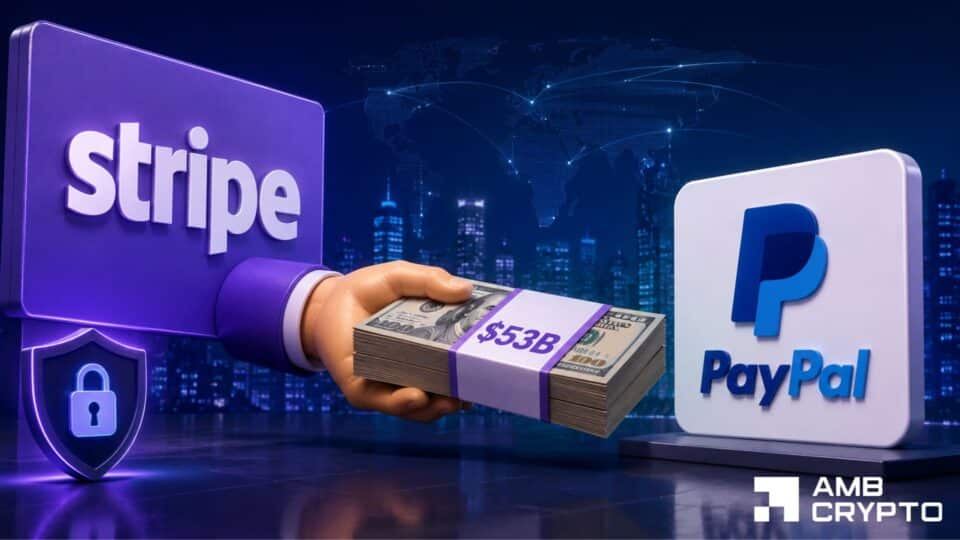
Stripe's $53.4 Billion Acquisition of PayPal: The Final Piece of the Stablecoin Empire Puzzle

Stripe has reportedly made a $53.4 billion acquisition offer for PayPal, a move that could signal a major shift in the stablecoin landscape from a "technology race" to a "customer war." Over recent years, Stripe has been quietly building nearly every layer of a stablecoin empire: acquiring the issuance platform Bridge, wallet provider Privy, co-incubating the payments-focused Layer 1 network Tempo with Paradigm, and joining the Open USD (OUSD) alliance stablecoin initiative. What it lacks, however, is a massive direct consumer user base. PayPal, with its hundreds of millions of active accounts, the Venmo app, and its own PYUSD stablecoin, would provide exactly that. The acquisition could create a closed-loop system where Stripe handles the merchant side, PayPal/Venmo serve consumers, and transactions are settled via stablecoins on a blockchain like Tempo, potentially bypassing traditional card networks and their fees. While the deal is not yet finalized and may face hurdles—including potential resistance from PayPal's board or a higher bid—the mere offer suggests Stripe's strategic focus may have evolved. It indicates that having superior infrastructure alone may not be enough; distribution and user access are critical battlegrounds. Questions remain about how PYUSD, OUSD, and Venmo would integrate with Stripe's stack, and whether private equity co-investor Advent International would prioritize such crypto experiments. If successful, this acquisition could significantly boost Tempo's position in the competitive public blockchain space and further push crypto-based payments into the mainstream, potentially fulfilling PayPal's original vision of an internet-native currency through a new, crypto-native infrastructure.

marsbit07/17 05:56

Stripe's $53.4 Billion Acquisition of PayPal: The Final Piece of the Stablecoin Empire Puzzle

marsbit07/17 05:56

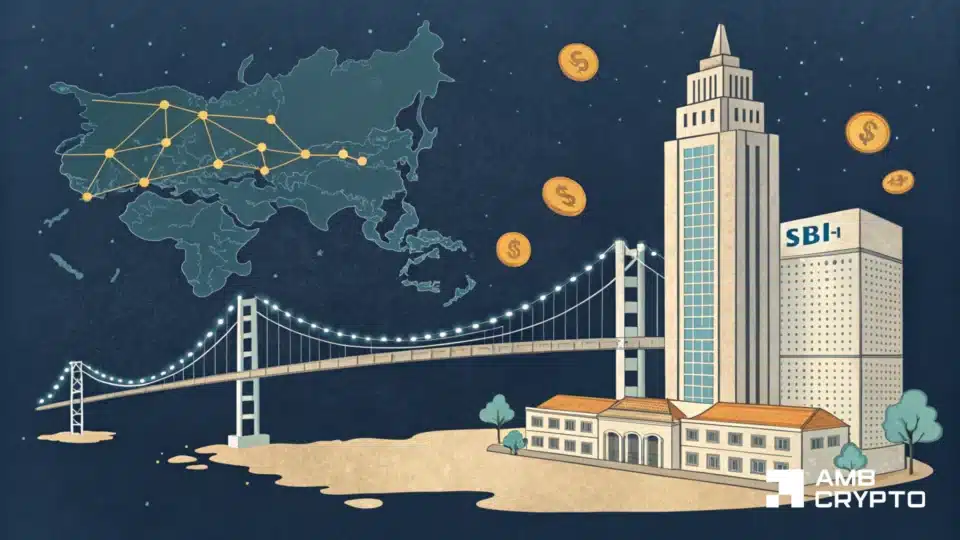
Lost 10 Billion, Yet Valued at 46.7 Billion? The True Value Revelation of Japan's Crypto Exchange 'Doomsday License'

**Summary: The Priceless "Doomsday License" – Why Japan's SBI Paid $289M for a Losing Exchange** In mid-2026, Japanese financial giant SBI Holdings acquired cryptocurrency exchange Bitbank for ¥46.7 billion (~$289 million). This valuation is puzzling on paper: Bitbank, while a long-established, licensed exchange, reported a ¥970 million loss in 2025 on shrinking revenues. The key lies not in profitability, but in a regulatory "franchise scale." SBI's purchase was for Bitbank's scarce, irreplaceable assets: its Japanese FSA license, 960,000 user accounts, and a fully compliant yen on-ramp. This acquisition came just two weeks after Japan passed a landmark amendment reclassifying crypto assets as "financial instruments" under stricter laws, dramatically raising penalties for unlicensed operations. Analysts predict up to half of Japan's ~30 licensed exchanges may exit, transforming existing licenses into non-renewable strategic resources. The deal's ~8x revenue multiple mirrors a global trend of "compliance arbitrage," where acquiring regulated entities is faster and cheaper than navigating complex, years-long licensing processes. The Japanese narrative is part of a worldwide pattern. In 2026 alone, the crypto sector saw $11.8 billion in M&A, with giants like Mastercard and Bullish acquiring regulated digital asset firms. As jurisdictions like the US, Singapore, and Hong Kong solidify frameworks, regulatory compliance shifts from a cost center to the most durable moat. The core lesson is that in maturing markets, the true value shifts from trading volume to "licensed scale." For early, compliant platforms, stringent regulation becomes a defensive asset, not a constraint. SBI's strategy of consolidating licensed Japanese exchanges illustrates this. The window to acquire such "tickets to the future financial world" at a reasonable cost is rapidly closing as global capital recognizes that in the regulated era, the license itself is the ultimate prize.

marsbit07/03 06:08
Lost 10 Billion, Yet Valued at 46.7 Billion? The True Value Revelation of Japan's Crypto Exchange 'Doomsday License'

marsbit07/03 06:08

AAVE Rallies 30% in a Week, Is It Back on Track?

Over the past week, the price of AAVE surged from around $70 to nearly $100, a rebound exceeding 30%. This occurred despite Aave's TVL continuing to decline following the Kelp DAO security incident. The price movement was partly driven by market rumors, first reported by CoinDesk, that Kraken was negotiating to acquire a stake in Aave. While Aave founder Stani Kulechov denied the specific terms, he confirmed discussions with multiple parties about purchasing Aave Labs' AAVE tokens. He also revealed ongoing work on Tokenomics 3.0, featuring an automated buyback mechanism, and plans to expand into securities-backed lending. Analysts remain optimistic about Aave's long-term prospects. Standard Chartered gave an extremely bullish $3,500 price target for 2030, citing DeFi revival and RWA tokenization. Grayscale offered a more conservative one-year target of $175. However, competitors like Morpho are gaining traction, with recent reports highlighting its advantages in capital efficiency and customization. Morpho also secured a massive $175 million funding round. Fundamentally, Aave maintains its dominance as the leading DeFi lending protocol. Its TVL is nearly double that of second-place Morpho and rivals the combined total of the next several competitors. Key metrics like active borrowing, total supply, and revenue significantly outpace rivals. While Aave faces challenges from newer, more flexible protocols, its deep liquidity and established position make it a preferred choice for large, yield-seeking users. The article concludes that despite setbacks, Aave's long-tested protocol merits ongoing attention in a market with increasingly scarce quality projects.

Foresight News06/30 03:49

AAVE Rallies 30% in a Week, Is It Back on Track?

Foresight News06/30 03:49

活动图片