The Final Piece of Franklin Templeton's Crypto Ambition

Foresight NewsPublished on 2026-06-23Last updated on 2026-06-23

Abstract

Franklin Templeton Completes Crypto Ambition with Acquisition of 250 Digital On June 22, Franklin Templeton announced the acquisition of 250 Digital and established Franklin Crypto, a new division focused on actively managed cryptocurrency strategies for institutional investors. The unit is led by Christopher Perkins and Seth Ginns. This acquisition marks a key piece in Franklin Templeton's multi-year crypto strategy, which began in 2018 with a digital assets team. The firm's crypto product suite now spans three layers: tokenized funds like the blockchain-based money market fund BENJI (~$831M AUM); a series of passive ETFs including Bitcoin (EZBC, ~$368M), Ethereum (EZET), XRP (XRPZ, ~$252M), Solana (SOEZ), and a multi-crypto index fund (EZPZ); and the newly added active management strategies from Franklin Crypto. The company has also expanded its crypto ecosystem through investments in projects like Ethena and Crossmint, and collaborations with blockchains such as Aptos and Sui. With approximately $18B in digital asset AUM and a total firm AUM of ~$1.78T, Franklin Templeton is positioning itself as a comprehensive crypto asset manager for pensions and sovereign wealth funds. In contrast, competitor Fidelity Investments has taken a different path, focusing early on building its own custody and trading infrastructure. Fidelity's Bitcoin ETF (FBTC) holds over $11B, significantly larger than Franklin Templeton's equivalent offering. Both giants' moves underscore the deepenin...


Written by: Nicky, Foresight News


On June 22, Franklin Templeton announced the completion of its acquisition of 250 Digital and officially established the crypto asset management division Franklin Crypto, focusing on providing actively managed cryptocurrency strategies for institutional investors.



The new division will be led by Christopher Perkins as head, with Seth Ginns serving as Chief Investment Officer. Both, together with Tony Pecore from Franklin Templeton's digital assets team, will manage the division, reporting to Sandy Kaul, Head of Innovation. Perkins previously worked at Citigroup for 13 years, and Ginns began his career at Credit Suisse.


This acquisition includes 250 Digital's entire investment team and its previously CoinFund-operated liquid crypto strategies. Franklin Templeton has explicitly stated it will invest capital into these strategies. As of the end of 2025, its digital assets division managed approximately $1.8 billion in assets, while the company's total assets under management were about $1.78 trillion as of the end of May 2026.
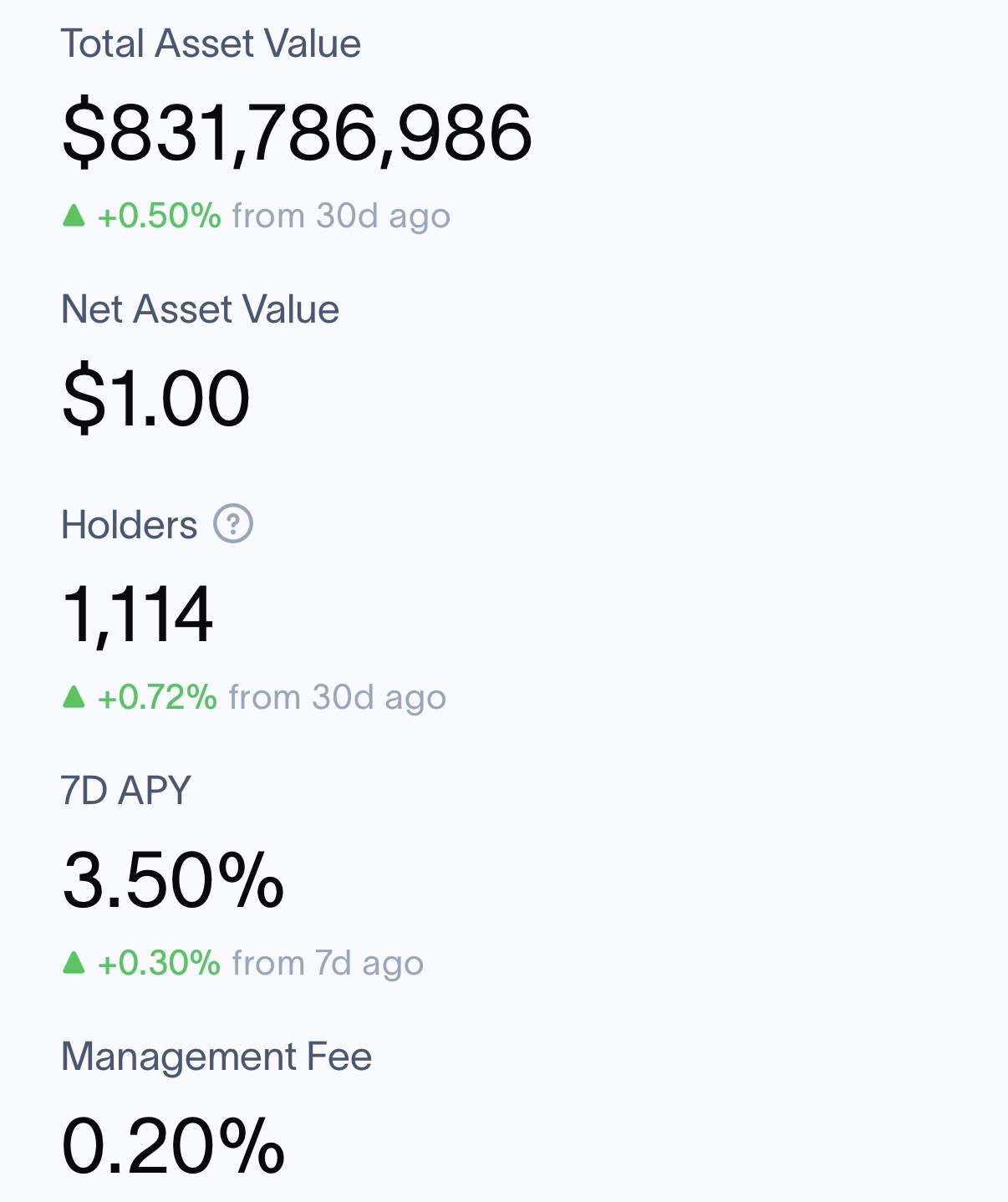


Franklin Templeton's foray into the crypto space began in 2018 when it formed a digital assets team of over 50 people, engaged in blockchain technology R&D, investment strategy development, and node validator operations. In 2021, the company launched the Franklin OnChain U.S. Government Money Fund (BENJI), the first registered U.S. mutual fund to use a public blockchain to process transactions and record share ownership. According to rwa.xyz data, BENJI currently has total assets of approximately $831 million, 1,114 holders, and a 7-day annualized yield of 3.5%.


Subsequently, its product line gradually expanded around spot ETFs. In January 2024, the Bitcoin Spot ETF (EZBC) was approved and launched, with net assets of approximately $368 million as of June 21, 2026. In July of the same year, the Ethereum Spot ETF (EZET) went live, with net assets of about $34.62 million for the same period.


In 2025, the company further expanded its crypto product offerings. In February, it launched the Crypto Index ETF (EZPZ), initially holding primarily Bitcoin and Ethereum. In December of that year, it expanded to include various crypto assets such as ADA, LINK, DOGE, SOL, XLM, and XRP. As of June 21, 2026, its net assets were approximately $12.43 million. In November, the XRP Spot ETF (XRPZ) was launched, with net assets of about $252 million for the same period, ranking second among the company's crypto ETFs. In December, the Solana Spot ETF (SOEZ) with staking functionality went live, with net assets of approximately $8.19 million for the same period, holding about 112.9K SOL, of which approximately 99.81% was staked.


Entering 2026, Franklin Templeton continued to launch new products. In June, the company filed an application with the SEC, planning to launch two Bitcoin DRIP ETFs that automatically reinvest stock dividends into Bitcoin. The initial allocation will be 95% U.S. large-cap stocks plus 5% Bitcoin, with Bitcoin's maximum share not exceeding 20%. They are expected to take effect as early as September.


Currently, Franklin Templeton's crypto product line covers three levels: tokenized funds represented by BENJI, a passive ETF series consisting of EZBC, EZET, XRPZ, SOEZ, and EZPZ, and the actively managed strategies led by Franklin Crypto. Target clients include institutions such as pension funds and sovereign wealth funds.


Beyond crypto ETFs and active management strategies, Franklin Templeton has also expanded into a broader crypto ecosystem through investments and partnerships in recent years. In 2025, the company participated in funding for the decentralized protocol Ethena, a project primarily engaged in issuing the synthetic dollar stablecoin USDe. Also in 2025, Franklin Templeton invested in crypto API developer Crossmint, which provides NFT and wallet infrastructure services for enterprises. In terms of public chain partnerships, the company established connections with Aptos, and its on-chain Treasury fund BENJI went live on the Aptos network in 2025. Furthermore, according to public reports, Franklin Templeton also has cooperative relationships with the Sui ecosystem.


For comparison, another traditional asset management giant, Fidelity Investments, has taken a different path in the crypto space. Fidelity began researching Bitcoin and blockchain in 2014, established Fidelity Digital Assets in 2018, focusing on building its own custody and trading infrastructure. Its Bitcoin Spot ETF (FBTC) had assets exceeding $11 billion by mid-June 2026, far surpassing Franklin Templeton's comparable product.


In early 2026, Fidelity also launched the Ethereum-based stablecoin FIDD, with a current circulation of approximately 62.6 million tokens. As of Q1 2026, Fidelity's total assets under management were approximately $7 trillion. While the paths of the two institutions differ, both reflect the trend of traditional asset managers delving deeper into the crypto space.


Trending Cryptos

Related Questions

QWhat is the significance of Franklin Templeton's acquisition of 250 Digital and the establishment of Franklin Crypto?

AIt represents the final piece in Franklin Templeton's crypto strategy, forming a dedicated department for actively managed cryptocurrency strategies for institutional investors like pension and sovereign wealth funds. This completes their product line which already included tokenized funds and passive crypto ETFs.

QWhat are the three layers of Franklin Templeton's current crypto product line as outlined in the article?

A1) Tokenized funds, represented by the Franklin OnChain U.S. Government Money Fund (BENJI). 2) A series of passive crypto ETFs including EZBC (Bitcoin), EZET (Ethereum), XRPZ (XRP), SOEZ (Solana with staking), and EZPZ (Crypto Index). 3) Actively managed strategies offered by the newly formed Franklin Crypto department.

QHow does Franklin Templeton's path into crypto differ from Fidelity's according to the article?

AFranklin Templeton focused on building a diverse product suite (tokenization, ETFs, active management) and partnerships/acquisitions. Fidelity took a different path by emphasizing self-built custody and trading infrastructure through its Fidelity Digital Assets subsidiary from an early stage, resulting in a larger single Bitcoin ETF (FBTC) compared to Franklin's offerings.

QWhat notable first did Franklin Templeton achieve in 2021 regarding blockchain and funds?

AIn 2021, Franklin Templeton launched the Franklin OnChain U.S. Government Money Fund (BENJI), which was the first U.S. registered mutual fund to use a public blockchain for processing transactions and recording share ownership.

QWhat new type of ETF did Franklin Templeton apply to the SEC for in June 2026, and what is its key feature?

AIn June 2026, Franklin Templeton applied to launch two Bitcoin DRIP ETFs. Their key feature is the automatic reinvestment of stock dividends into Bitcoin. The ETFs will start with a portfolio of 95% U.S. large-cap stocks and 5% Bitcoin, with a maximum Bitcoin allocation cap of 20%.

Related Reads

A Threefold Performance Leap! NEAR Achieves 200ms Physical Block Time Limit with SPICE

NEAR's core development team, Near One, has announced its next major protocol evolution: SPICE (Separation of Consensus and Execution). Currently in development, SPICE represents the most significant upgrade before the full implementation of Nightshade 3.0. Its core innovation is decoupling the consensus layer, responsible for ordering transactions, from the execution layer, which processes them. This allows the consensus layer to run at full speed without waiting for transaction execution to complete. Once deployed, SPICE is projected to triple NEAR's block production speed, achieving a 200ms block time, which is considered the physical limit due to the speed of light and network latency. This leap will dramatically reduce transaction latency and finality, with transactions confirming in roughly 0.4 seconds—faster than a typical card payment. The upgrade also enables more complex, long-running transactions and significantly improves user experience for applications like NEAR Intents and near.com. Beyond raw speed, SPICE enhances network scalability and security. It enables deeper parallelism, efficiently distributing workload across shards and improving resource utilization. The simpler block structure and lighter contracts also facilitate formal verification and security auditing. Furthermore, SPICE lays the critical groundwork for future Nightshade 3.0 features, most notably atomic cross-shard transactions, which would simplify complex contract logic and eliminate development hurdles caused by asynchronous execution. The Near One team is actively developing SPICE, targeting deployment in the coming months.

Foresight News43m ago

A Threefold Performance Leap! NEAR Achieves 200ms Physical Block Time Limit with SPICE

Foresight News43m ago

Deep Insight: Decentralized Inference is Not Hype, but a Key Track for AI to Break Through Centralized Monopoly

Decentralized Reasoning: Beyond the Hype, a Key to Breaking AI's Centralized Monopoly A future scenario where a powerful AI model is banned by a major government illustrates the core value proposition of decentralized AI: resistance to censorship. The core bet of decentralized inference networks is mitigating this risk, with other benefits like cost being secondary. The path is extremely difficult, involving four key challenges: 1. **Running Massive Models:** Distributing a single model across a decentralized GPU swarm requires sophisticated techniques like pipeline and speculative decoding to overcome crippling network latency, aiming for usable speeds (e.g., 30-40 tokens/second). 2. **Proving Model Integrity:** Verifying that a node runs the correct model is critical. Solutions range from cryptographically secure but slow ZKML to faster, economically-secure methods like statistical fingerprints, deterministic re-execution, or live-weight proofs, each involving trade-offs between integrity, latency, and cost. 3. **Ensuring Prompt Privacy:** Simply sharding a model does not protect user inputs from nodes. Robust solutions currently require trusted hardware (TEEs) or advanced cryptography (FHE), which are not yet widely deployed in consumer swarms. 4. **Building a Real Market:** Identifying the ideal customer is tough. Beyond speculative AI agents, the viable market currently consists of startups embedding AI and projects needing batch processing (e.g., synthetic data generation), where decentralized aggregation can be an advantage over low-latency needs. The article analyzes several projects tackling these problems, such as Dolphin Network (live-weight proofs), Inference.net (statistical verification), Morpheus (TEE-based), and Darkbloom (Apple Secure Enclave). It provides a framework: decentralization is a "tax" for latency-sensitive applications (e.g., chat) but a potential supply-side advantage for throughput-oriented tasks (e.g., batch processing). The long-term vision is a closed data loop where decentralized inference generates valuable data (traces, preferences) to feed decentralized training networks, which in turn produce better open-weight models for the inference networks. A due diligence checklist advises focusing on projects that: are truly decentralized at specific layers; have a credible integrity method; offer real cost benefits; ensure genuine privacy; handle node reliability; have paying users; and are built by teams with deep AI expertise. The ultimate goal should be products that appeal beyond the crypto-native audience, using crypto mechanisms invisibly to deliver better cost, performance, or privacy.

Foresight News1h ago

Deep Insight: Decentralized Inference is Not Hype, but a Key Track for AI to Break Through Centralized Monopoly

Foresight News1h ago

Trading

Spot
Futures

Hot Articles

Discussions

Welcome to the HTX Community. Here, you can stay informed about the latest platform developments and gain access to professional market insights. Users' opinions on the price of S (S) are presented below.

活动图片