The story of China's manufacturing rise has become almost cliché in recent years: leading the world in EV production, solar panels blanketing half the planet, high-speed rail reaching Indonesia, with Chinese appliances and toys found across the globe.
But if you ask, what areas in manufacturing is China still catching up in?
Many people would immediately think of a few names: lithography machines, chips, and machine tools.
Machine tools are probably the least noticed among them. Lithography machines frequently top hot searches, chips regularly stir international geopolitics, but machine tools?
They mostly stay quietly in factories, not even deserving a hot search.
Yet, they are the most fundamental equipment underlying modern manufacturing. How precisely a country can machine parts is largely capped by the level of its machine tools.
In most people's impression, Chinese machine tools are the kind of equipment bought at great expense from Germany or Japan, with a heap of restrictive rules attached.
International machine tool giant DMG MORI equips its globally exported machines with unified GPS displacement detection. The installation location is registered upon leaving the factory; moving it without authorization locks and disables the machine.
Although this is a global export compliance mechanism (to prevent resale for weapon manufacturing), the frustration of needing to file a report just to relocate a machine worth tens of millions sitting in your own factory requires little explanation.
Expensive, import-dependent, few choices, and heavy restrictions—this is the memory many have of Chinese machine tools.
But a startling figure emerged in 2025:
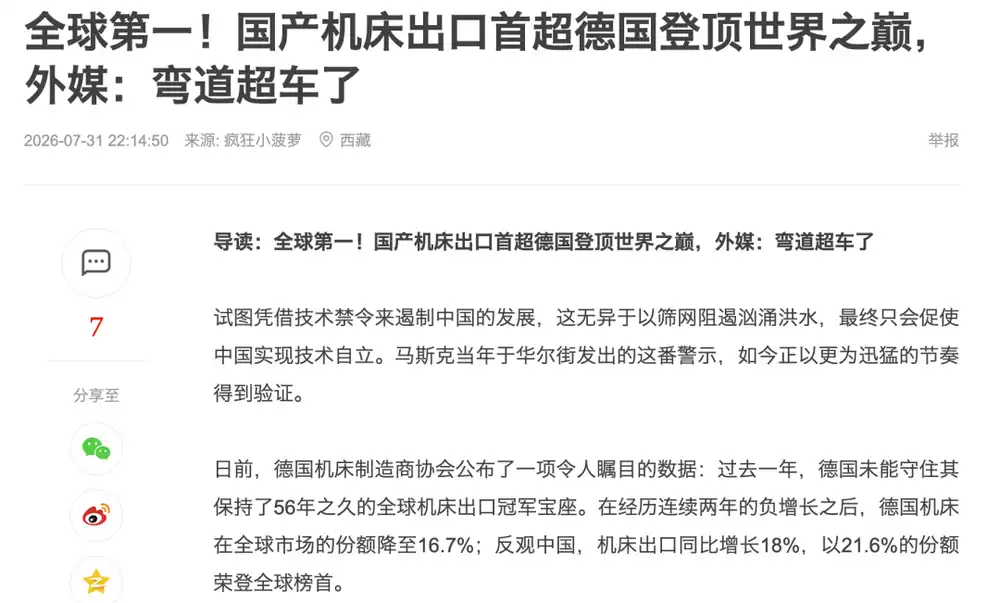
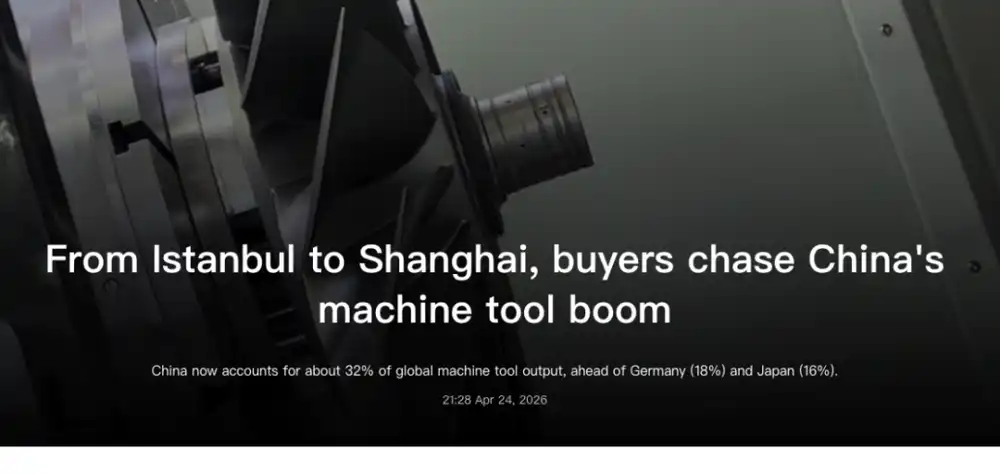
According to the German Machine Tool Builders' Association (VDW), China's machine tool export value reached €8.6 billion, capturing about 21% of the global share, surpassing Germany's €7.1 billion for the first time—a position Germany had long held.
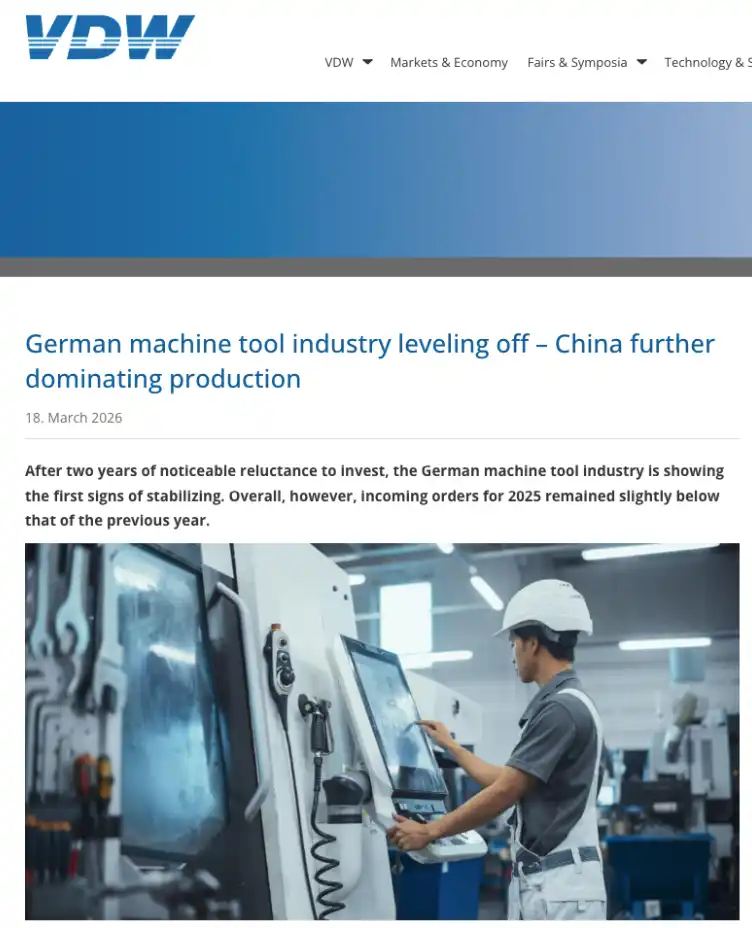
This marks the first time Chinese machine tools have topped the list, inevitably raising the question:
From spending tens of millions to buy a single machine from others, to exporting €8.6 billion a year and claiming the global top spot—what exactly happened in between?
01: Building a Good Machine Tool is Far Harder Than You Think
The job of a machine tool sounds simple: use a processing device (like a cutter) to cut, grind, or press metal into the desired shape.
A high-end machine tool needs to cut with micron-level precision—one micron is one-sixtieth the diameter of a human hair.
It might seem that with sufficiently hard material for the cutting tool and modern advanced sensors and control algorithms, this wouldn't be too difficult.
But in reality, building a usable machine tool and building a *good* one are completely different challenges.
The main issue lies in sustainability:
You need to maintain this precision while shaving metal under massive cutting forces, high-speed rotation, and impact, for tens of thousands of hours, without degradation.
This involves three fundamental physical challenges.
The first is heat: During operation, motors, bearings, and cutting areas all generate heat. Metal expands and contracts with temperature; even a few degrees' difference can cause parts to expand by several microns, ruining machining accuracy. Uneven heating across different areas also gradually shifts originally aligned axes.
High-end machine tools require complex thermal compensation systems for real-time correction. This isn't a simple sensor fix; it involves systematic optimization of the entire machine structure, material selection, and control algorithms. Imagine someone performing microsurgery while running a marathon, with their body heating up and shaking, yet needing to make that micron-precise cut.
The second is vibration: During high-speed cutting, the tool impacting metal creates significant reaction forces, inducing self-excited vibration between tool and workpiece, known as "chatter" in engineering. Once chatter occurs, the machined surface is covered in ripples and burrs; severe cases can scrap the part entirely. Vibration suppression involves structural rigidity, damping design to absorb vibrational energy, cutting parameters, and dynamic compensation by the CNC system. Weakness in any link causes problems.
The third is wear: After spinning at high speed for hundreds of millions of cycles, spindle bearings wear down, guides wear down, and ball screws wear down. Good precision at delivery is one thing; maintaining it after one or two years of operation is the real test.
Domestic machine tools often don't lack in initial accuracy, but start to drift after some use. The industry calls this "accuracy retention."
Simply put, a new car is fine when you get it. The real test is whether it still performs well after three years of driving.
And these three adversaries don't come alone; they occur simultaneously and compound each other.
These physical problems ultimately manifest in several core components: The spindle is the heart, determining cutting power and rotational accuracy; ball screws and guides are the skeleton, determining motion precision and smoothness; the CNC system is the brain, coordinating multiple axes and performing compensation and calculations.
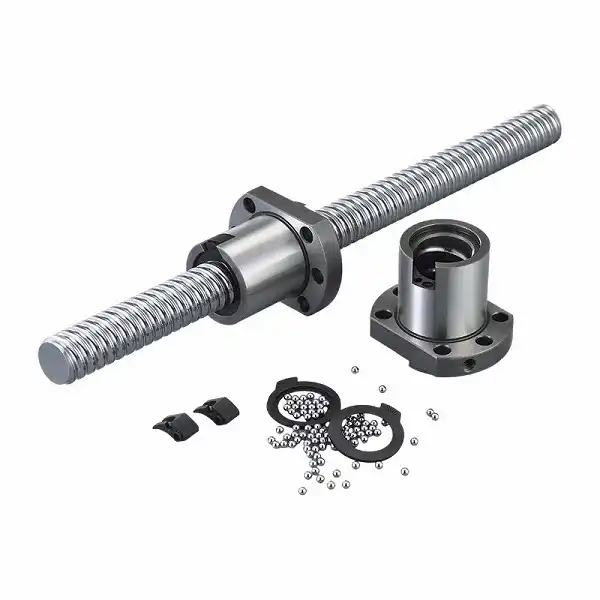
Each must be top-tier for the whole machine to be top-tier. More critically, to manufacture precise ball screws and spindles, you first need a precise grinding machine to process them. This is the classic chicken-and-egg problem in the machine tool industry: You need a good machine tool to build a good machine tool.
Where was China stuck? Precisely on these core components. As of a 2020 assessment, about 90% of high-end CNC systems and servo systems responsible for precise motion execution relied on imports; over 90% of high-end functional components like spindles, ball screws, and guides were also purchased from others. Heart, brain, skeleton—nine out of ten were not their own.
Another 2025 professional review indicated that the Mean Time Between Failures (MTBF) for foreign high-end CNC systems exceeded 50,000 hours, while domestic ones were around 30,000 hours. This metric measures the average runtime between system failures, indicating there's still room for improvement.
02: From No One Daring to Use, to Export Leader
So how was this situation gradually turned around?
First, look at how low the starting point was:
The Chinese government's largest concentrated effort in machine tools was a national major project called "High-End CNC Machine Tools and Basic Manufacturing Equipment," commonly known as the 04 Special Project.
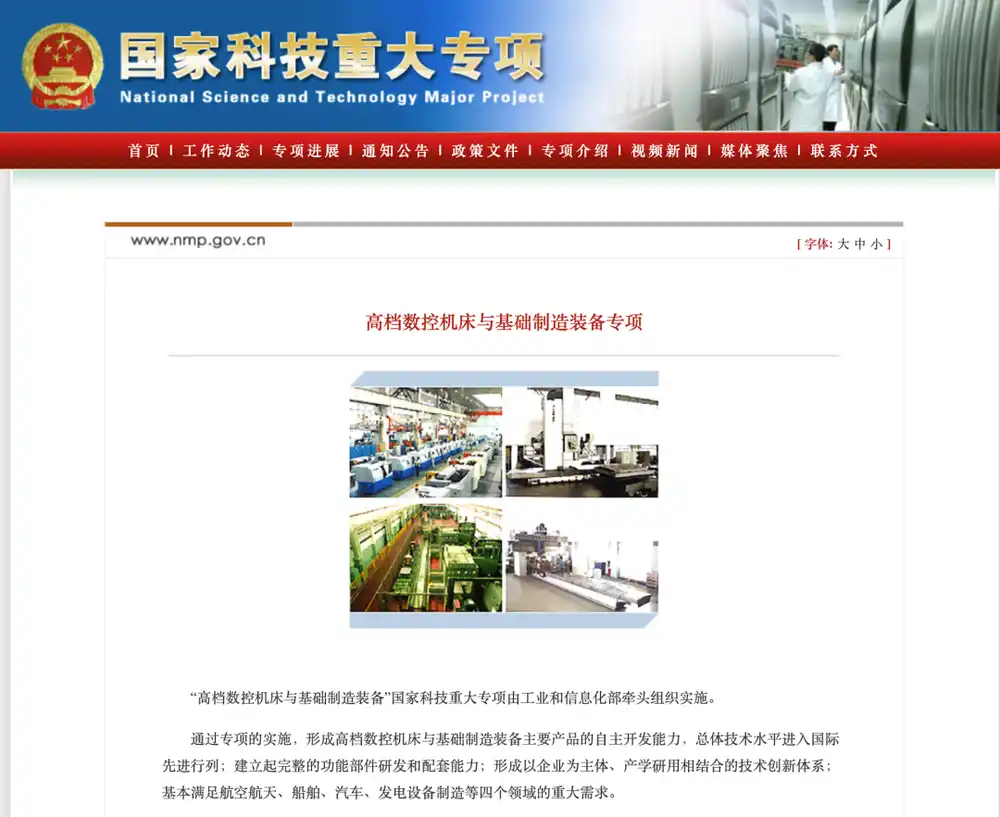
Before this project launched, domestic high-end CNC systems held less than 1% market share in domestic machine tools. The MTBF for high-end CNC machine tools as a whole was only about 600 hours. 600 hours sounds okay? Based on a 20-hour daily operation for an automotive production line, that's an average failure-free interval of about one month.
Who would dare use that?
The 04 Special Project started in 2009 and ran until 2020. Over eleven years, it achieved several concrete things:
The localization rate of high-end CNC systems increased from less than 1% to 31.9%;
The MTBF for high-end CNC machine tools as a whole improved from 600 hours to over 2,000 hours.
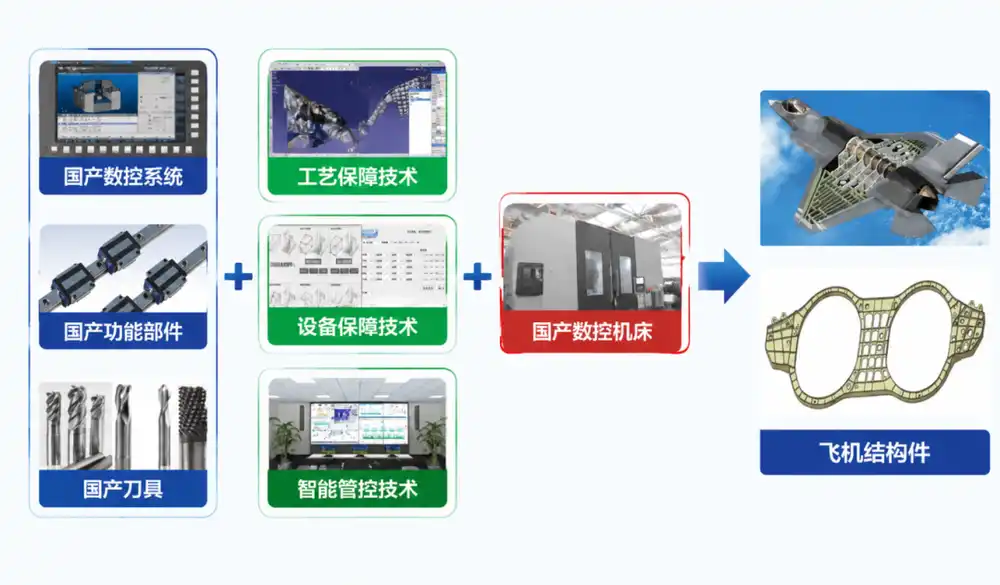
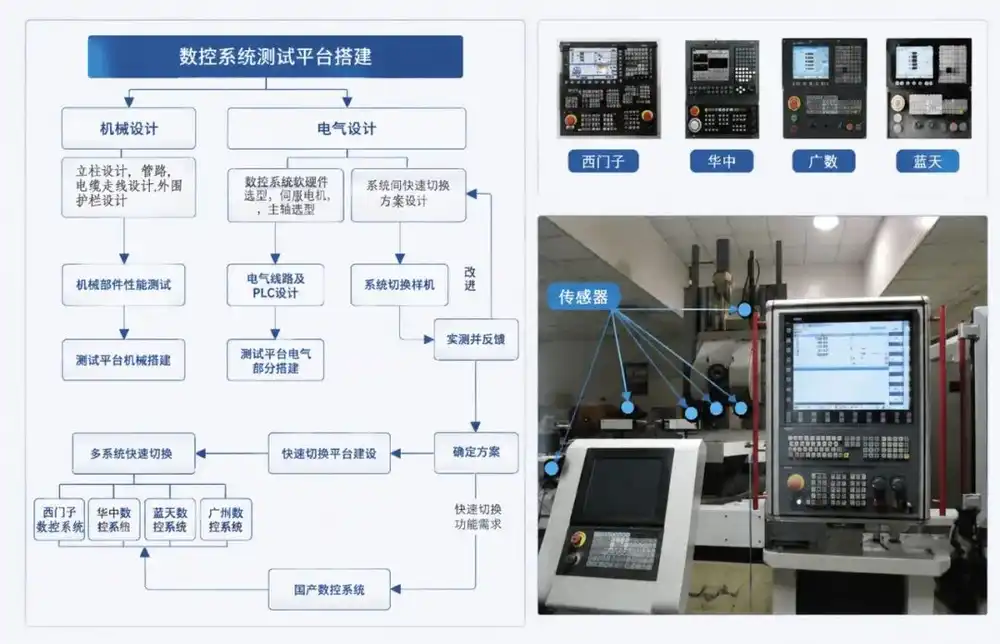
From 1% to 31.9%, from 600 to over 2,000 hours—not spectacular, but enough to get a seat at the table.
But getting a seat doesn't mean winning the game.
The overall MTBF improved significantly, but a gap remained with world leaders. Localization rates for core components like precision grinding machines and high-end ball screws were still very low.
The 04 Special Project addressed the "have or have not" question. The matter of "good or not good" needed another driving force.
That force is the market—the world's largest and fastest-iterating one. Enter the industrial Cthulhu.
Take new energy vehicles (NEVs) as an example. This industry's explosion impacted the machine tool sector not just by "increasing orders," but by changing the very nature of what needed machining: Traditional engine blocks and multi-gear transmission housings for internal combustion vehicles are no longer needed in pure EVs. They are replaced by integrated die-cast bodies (casting multiple parts into one), battery casings, and electric drive system housings. The work changed entirely, and old machining methods became obsolete.
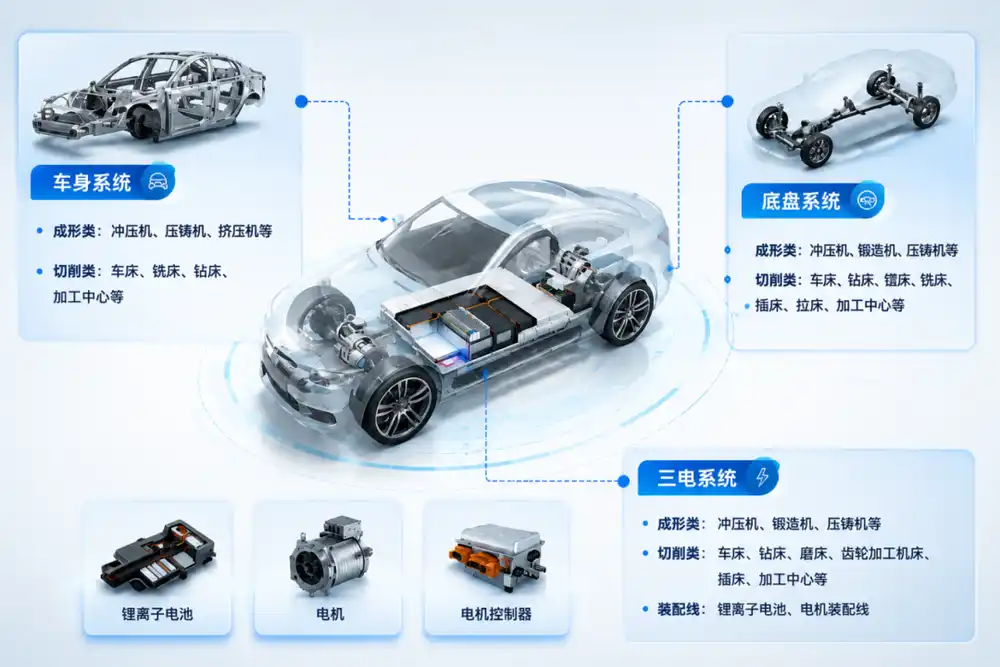
Figure | NEV body, chassis, and three-electric systems correspond to demands for large forming, cutting, die-casting, and assembly equipment.
These new demands spawned a batch of domestic equipment and turnkey solutions specifically for NEVs. Integrated die-cast parts are much larger, requiring gantry machining centers with超大行程. Battery casings have thin walls, are prone to vibration, and demand high sealing, making generic solutions difficult to apply directly, necessitating targeted fixture and machining plan development.
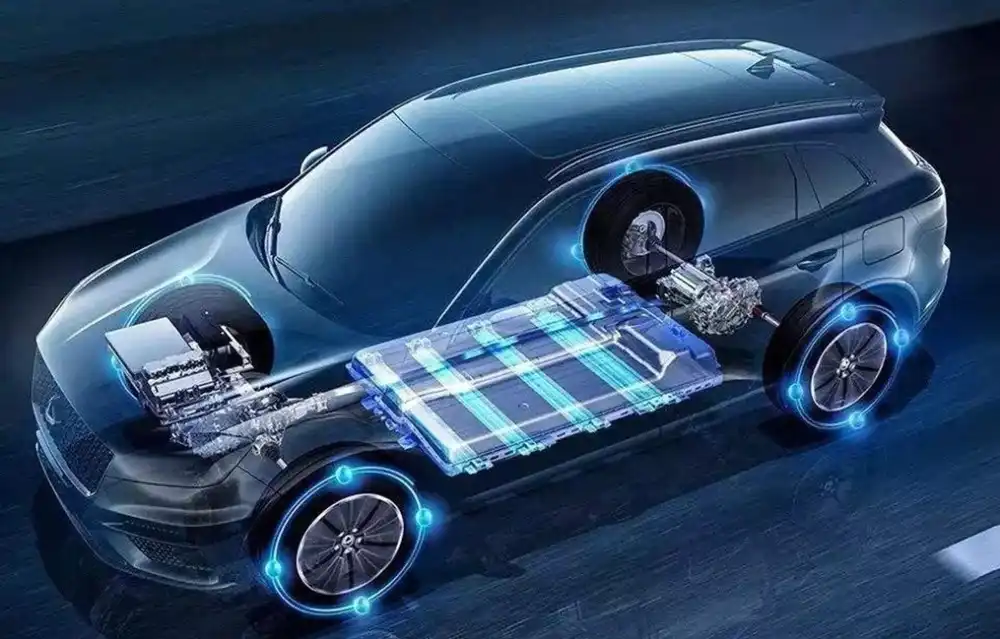
Figure | NEV battery, electric drive, and chassis systems have changed the parts and process combinations machine tool makers need to cover.
The story of integrated die-casting itself best illustrates the point.
When Tesla wanted to turn the Model Y's rear underbody from over 70 stamped and welded parts into a single cast piece, it needed an ultra-large die-casting machine in the 6,000-ton class. Few companies worldwide could build such equipment.
What does 16,000 tons of clamping force—the force holding the two mold halves together during casting—mean? It's equivalent to stacking over ten thousand compact cars and pressing down, all to form an entire body part in seconds. Integrated die-casting started with Tesla and rapidly spread to NIO, XPeng, and more Chinese automakers. A brand-new manufacturing process, from definition to mass production to diffusion, had its主场 in China.
This isn't an isolated case. In entirely new machining areas like integrated die-casting, battery casings, and electric drive housings, Chinese companies had a more level starting line with German and Japanese firms, as these were new challenges for everyone.
And domestic Chinese manufacturers had a natural locational advantage: the world's largest NEV market was right on their doorstep. With customers next door, local manufacturers, benefiting from proximity, faster response, and supply chain synergy, were better positioned to rapidly incorporate feedback into product iteration.
However, even with such a massive market pushing progress, the localization rate for high-end machine tools in the automotive sector remained below 10%. High-precision internal/external cylindrical grinders for shaft/gear parts, high-speed precision gear grinding machines, etc., had localization rates below 5%. The large market accelerated the catch-up but didn't eliminate the gap.
Technology and market are pushing forward, but manufacturing equipment follows an iron law: slow selection, even slower switching. An automotive production line runs for a decade or more after launch. Changing equipment suppliers midstream is extremely costly—not just the equipment cost, but also redoing process validation, re-verifying product yield, and retraining workers.
Therefore, automakers' logic for choosing equipment suppliers is completely different from consumer purchases: taking several years to evaluate is normal, but once chosen and validated, they rarely switch.
No matter how impressive your spec sheet looks, ultimately, you need customers willing to stake their real production line on you.
Here's a story spanning from 2004 to 2016—a twelve-year journey.
It shows that China's catch-up in machine tools wasn't a single flip of a switch. It was a process of climbing step by step, with technology, market, and user validation strands intertwined.
03: Export Value Exceeds Germany, But This Is Just the Beginning
China surpassing Germany in machine tool export value wasn't an overnight reversal: first trade surplus in the industry in 2019, surplus across all categories in 2023, export value officially surpassing in 2025—a step-by-step journey to today.
Overseas markets have transformed from supplementary channels to primary growth drivers, contributing 63.6% to the industry's revenue growth in 2025.
But this number one victory is in scale and coverage, not yet comprehensive technological leadership.
The largest export category is special processing machine tools, primarily using electrical discharge, laser, etc., rather than traditional direct-cutting tools.
The top five export destinations are Vietnam, Russia, India, Thailand, and the US. The current export focus clearly leans towards Asian manufacturing markets.
VDW also specifically noted: this total figure includes exports from the Chinese factories of international firms from Germany, Japan, Switzerland, etc., though the specific proportion wasn't disclosed. In essence, part of "Chinese exports" are actually made on their turf.
Nevertheless, the identity of Chinese machine tools has indeed changed: from being the restricted buyer, whose usable equipment precision was dictated by others' export control lists, to the reverse.
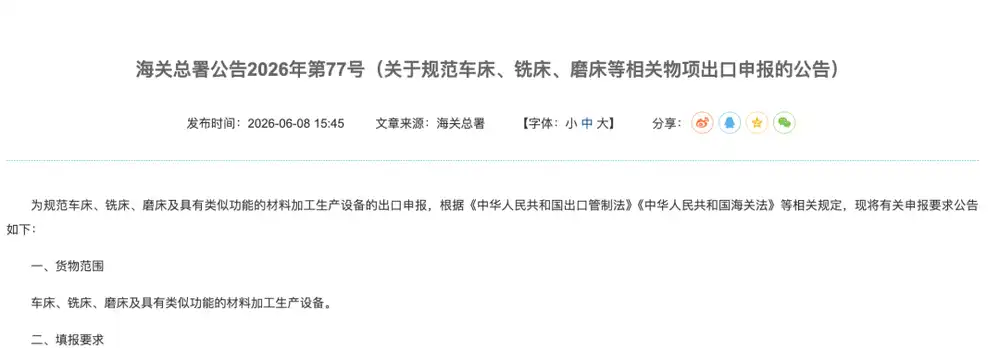
On June 30, 2026, Chinese Customs further required declaring technical parameters and indicating whether items belong to controlled categories upon export of relevant equipment.
From being restricted on purchase to beginning more精细 management of sales—the export ranking is just a number. The more significant change is that China's machine tool industry has entered a new stage where it must identify and manage exports of sensitive equipment.
And to speak冷静ly, reaching global number one isn't the same as securing it.
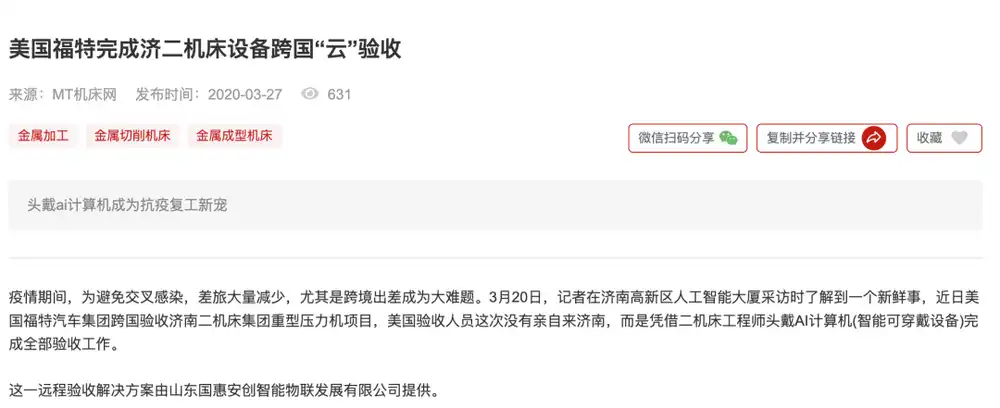
For equipment like machine tools, selling is just the beginning. What follows are ten or twenty years of installation, debugging,故障响应, spare parts supply, and accuracy guarantees. Export value can flip in a year or two, but overseas service networks can't grow that fast.
A scene at the 2026 China CNC Machine Tool Exhibition highlighted this: a Turkish buyer flew nearly 9,000 kilometers specifically to look for Chinese equipment, repeatedly asking just one thing: after purchase, will there be local support? How fast can you respond if it breaks?
Over a decade ago, Chinese companies buying German machine tools worried about long-term stable operation and GPS displacement detection restrictions.
Today, overseas buyers care more about after-sales response. The specific concerns may differ, but they point to the same thing: after purchasing such high-value equipment, can they use it with confidence over the long term?
Selling equipment abroad is just passing the first gate. Installing it well overseas, calibrating it accurately, being able to fix faults when they occur, and maintaining precision over a decade—that's when you truly secure the global number one position.
Whether this逆袭can complete its course doesn't depend on ranking tables. It depends on whether factory owners worldwide, walking into their workshops and standing before a new machine, are willing to stake their next decade's livelihood on a piece of equipment.
The kind that says "Made in China."
Compiled and edited by Cool Play Lab
First published on WeChat Official Account: Cool Play Lab (ID: coollabs)
This article is from the WeChat Official Account: Cool Play Lab , author: Cool Play Lab