Former FTX Employee Secures $35 Million in Funding, This Time They Built a Special Exchange

marsbitPublished on 2025-12-25Last updated on 2025-12-25

Abstract

Former FTX US President Brett Harrison's fintech firm, Architect Financial Technologies, has raised $35 million in Series A funding at a $187 million valuation. The round was led by MIAX and Tioga Capital, with participation from ARK Invest, Galaxy Ventures, VanEck, and Coinbase Ventures, among others. Founded in January 2023, Architect aims to bridge traditional and digital asset markets by offering brokerage services, trading technology, and post-trade solutions for institutional clients. A key product is AX, a perpetual futures exchange for traditional assets like forex, interest rates, and metals—bypassing strict U.S. crypto regulations. The platform provides API-driven tools, multi-asset brokerage, and compliance with U.S. financial standards. Architect, which operates as a B2B infrastructure provider rather than a crypto exchange, targets hedge funds and asset managers seeking to integrate TradFi and DeFi. Harrison, a Harvard graduate and ex-Jane Street executive, left FTX US in early 2022 before its collapse. Architect’s focus on regulated, institutional-grade technology positions it to capitalize on the convergence of traditional and blockchain-based finance.

Original Author: 1912212.eth, Foresight News

On December 23, Architect Financial Technologies (hereinafter referred to as Architect), a fintech company founded by former FTX US president Brett Harrison, completed a $35 million Series A funding round, reaching a valuation of $187 million. This round was led by MIAX and Tioga Capital, with participation from ARK Invest, Galaxy Ventures, VanEck, Coinbase Ventures, CMT Digital, and others. As early as February 2024, Architect completed a $12 million funding round led by BlockTower and Tioga Capital.

In the current bear market for cryptocurrencies, gaining the favor of venture capitalists and securing tens of millions of dollars in funding is quite rare across the entire industry. What makes Architect stand out?

Centralized Traditional Asset Perpetual Contract Exchange AX

Architect was established in January 2023, right as the aftershocks of the FTX collapse were still being felt. The company aims to bridge centralized and decentralized digital asset markets, helping financial institutions efficiently handle trading and post-trade processing for asset classes such as stocks, ETFs, futures, and options.

Specifically, Architect's platform covers three main modules: brokerage services, trading technology, and post-trade solutions. First, its brokerage business provides multi-asset brokerage services under US regulation, supporting stocks, stock options, futures, and futures options. The platform is equipped with a full-featured API, SDKs in various programming languages (such as Rust, Python, JavaScript), paper trading simulations, execution algorithms, and customizable trading dashboards. Users can access major global markets, including CME Group, Cboe, Nasdaq, Coinbase Derivatives, and the NYSE. This makes Architect a one-stop portal for institutional investors to access both traditional and digital assets.

In September 2023, Architect was approved by the National Futures Association (NFA) to register as an independent introducing broker, allowing it to provide derivatives brokerage services.

Secondly, one of Architect's core products is AX—a perpetual futures exchange specifically designed for traditional assets. Perpetual futures are widely popular in the crypto market, but in the US regulatory environment overseen by the SEC and CFTC, perpetual contracts for crypto assets face strict restrictions. AX cleverly sidesteps this pain point by focusing on perpetual contracts for traditional financial asset classes such as foreign exchange, interest rates, and metals.

Finally, the Post-Trade module, targeting digital assets and derivatives, provides advanced post-trade reconciliation, real-time profit and loss tracking, and detailed transaction cost analysis (TCA). This service is particularly suitable for hedge funds, family offices, asset managers, and trading firms, helping them optimize operational efficiency.

Overall, Architect's platform emphasizes flexibility in self-custody and custody options, supports multi-language APIs, and facilitates developers in building custom execution algorithms, streaming market data, and position management tools. The company also has its own regulatory entities: Architect Financial Derivatives LLC (NFA ID 0556853) and Architect Securities LLC (an SEC-registered broker-dealer and FINRA/SIPC member), ensuring all operations comply with US financial regulatory standards.

From a business model perspective, Architect is not a crypto exchange but rather more like a FinTech infrastructure provider. It does not issue tokens, does not rely on community governance, and instead profits through trading fees and similar means. This B2B-oriented strategy makes it more resilient in a bear market, avoiding the severe volatility of cryptocurrency prices.

According to the company's website, Architect's target customer base is institutional players, such as hedge funds and asset management groups, who need reliable technology stacks to bridge TradFi and DeFi. The integration of traditional assets and Crypto is already a trend, and SEC Chairman Paul Atkins predicts that within the next two years, the entire US financial market might migrate to blockchain-based technology.

Impressive Resume, Left Before the FTX Collapse

Architect founder Brett Harrison has extensive fintech experience. His career trajectory is exemplary: from traditional high-frequency trading to a crypto leadership role, and then to independent entrepreneurship.
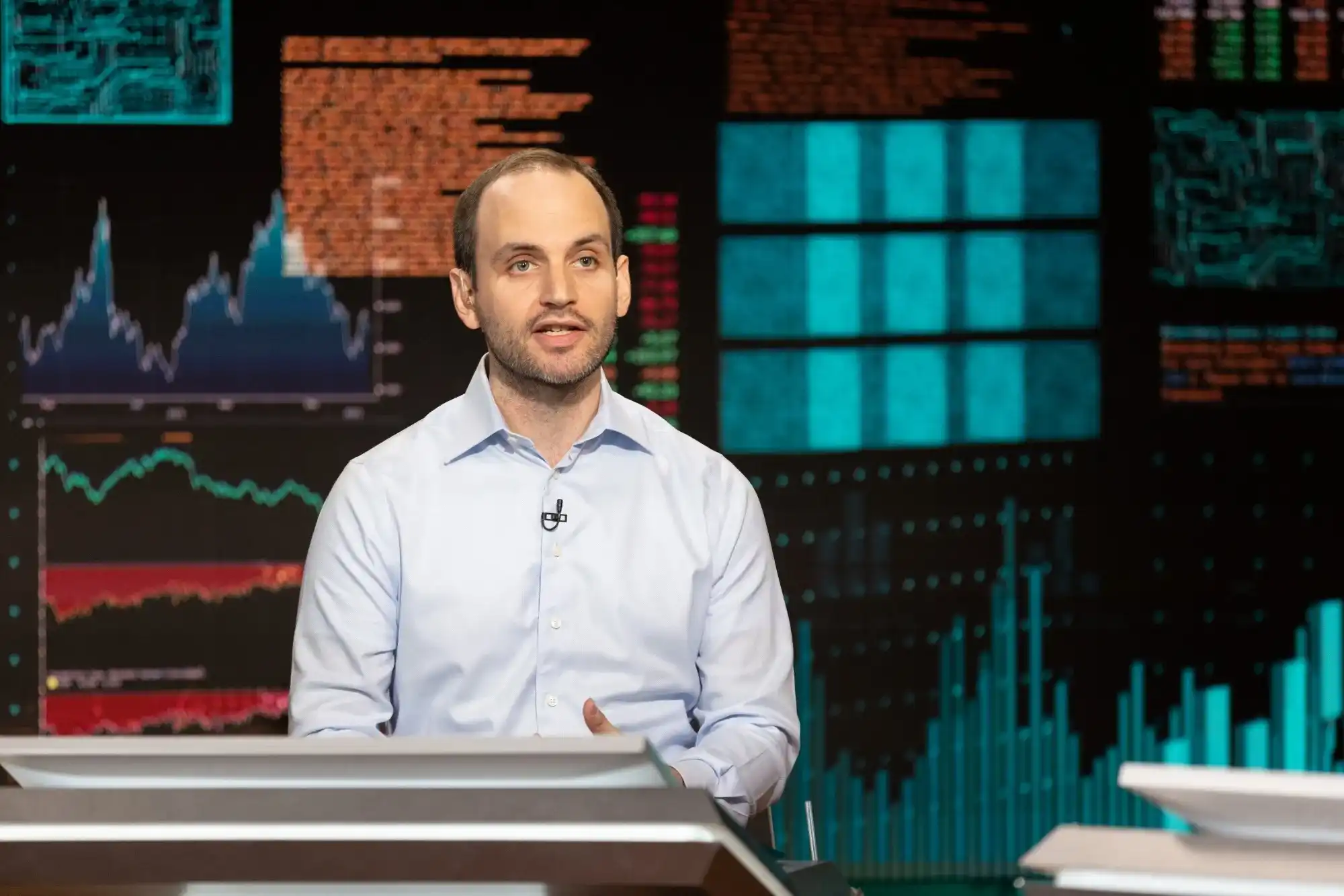
Harrison graduated from Harvard University with a Bachelor's and Master's degree in Computer Science. His career began at the top quantitative trading firm Jane Street, where from August 2010 to April 2021, he served as Head of Trading Systems Technology, responsible for building high-performance trading infrastructure. This experience gave him core skills in low-latency systems, algorithmic execution, and risk management.

In May 2021, Harrison joined FTX US as President, responsible for the expansion of the US business. At the time, FTX was at its peak, and he led the platform's technological upgrades and product innovations, including the development of derivatives tools. However, in January 2022, months before the FTX collapse, Harrison announced his resignation. In a public letter, he stated that the departure stemmed from management disagreements with founder SBF, not financial issues. According to the FTX report, it was due to a "lack of proper authorization, formal management structure, and key personnel."

This departure was seen as foresight, avoiding subsequent legal entanglements. During his time at FTX US, Harrison drove the platform's institutional transformation, attracting many traditional investors. Just months after leaving, Harrison founded Architect in January 2023 and completed a $5 million seed funding round the following month, with participation from Coinbase Ventures and others.

Currently, its AX exchange has opened its whitelist registration to both individual and institutional users.

In the macro environment of late 2025, Architect's rise is timely, coinciding with a collective surge in gold, silver, and stock assets. While the entire crypto asset market is languishing, tapping into the most profitable and fastest-growing markets, with compliance and technology as support, might be doing the right thing in the right direction.


Related Questions

QWhat is Architect Financial Technologies and what recent funding milestone did it achieve?

AArchitect Financial Technologies is a fintech company founded by former FTX US president Brett Harrison, focusing on bridging centralized and decentralized digital asset markets. It recently completed a $35 million Series A funding round at a valuation of $187 million.

QWhat is the core product offered by Architect, and how does it differ from typical crypto exchanges?

AArchitect's core product is AX, a perpetual futures exchange designed for traditional assets like forex, interest rates, and metals, rather than cryptocurrencies. Unlike typical crypto exchanges, it operates as a B2B fintech infrastructure provider, emphasizing compliance, institutional services, and avoiding token issuance or community governance.

QWho led the Series A funding round for Architect, and which notable firms participated?

AThe Series A funding round was co-led by MIAX and Tioga Capital, with participation from ARK Invest, Galaxy Ventures, VanEck, Coinbase Ventures, CMT Digital, and others.

QWhat regulatory approvals has Architect obtained to operate its services?

AArchitect has registered as an independent introducing broker with the National Futures Association (NFA) and operates through its regulated entities: Architect Financial Derivatives LLC (NFA ID: 0556853) and Architect Securities LLC (an SEC-registered broker-dealer and FINRA/SIPC member).

QWhat is Brett Harrison's professional background prior to founding Architect?

ABrett Harrison has a computer science degree from Harvard and previously worked as the head of trading systems technology at Jane Street. He later served as president of FTX US before resigning in January 2022, months before FTX's collapse, due to management disagreements with founder SBF.

Related Reads

How to Do Research Well: Deliberately Practice the Real Skills That Matter

No one truly teaches you how to do research. You're often given a desk, a pre-selected problem, and vague instructions to "create something new." Consequently, many people reverse-engineer the job based on visible outputs—papers, posts, announcements—learning only how to *appear* like a researcher rather than how to *become* one. True research capability is built from stacking small, trainable skills, nearly all of which can be developed through deliberate practice. **Pick Your Own Problem:** Most researchers absorb problems from advisors or trends, lacking the underlying reasoning. Choosing a problem you genuinely care about, as John Schulman advises, leads to original work. Develop "taste" like a muscle: predict experiment outcomes, guess paper results from methods, and track which findings remain important over time. **Upgrade Your Inputs:** Relying on shared reading lists (arXiv hot lists, filtered group chats) leads to unoriginal conclusions. Undervalued old literature often holds crucial insights (e.g., MoE, LSTM, backpropagation). Richard Sutton's "The Bitter Lesson" or Claude Shannon's 1952 talk on creative thinking are more predictive than lengthy modern surveys. Breadth matters as much as depth: draw from neuroscience, mechanism design, hardware knowledge, and honest statistics. Read papers directly, especially appendices and limitations sections. **Write Everything Down:** As Paul Graham noted, writing exposes flaws in seemingly mature ideas. Writing is the cheapest defense against self-deception. Following Feynman's principle, Darwin programmatically wrote down facts contradicting his theory to combat memory bias. Maintain a detailed log of hypotheses, setups, predictions, results, and updated understandings. Reviewing past logs fosters essential humility.

marsbit1h ago

How to Do Research Well: Deliberately Practice the Real Skills That Matter

marsbit1h ago

Following US Ban on Fable 5, Zhipu AI's Stock Soars 47%

On June 15th, shares of Zhipu AI surged dramatically on the Hong Kong stock market, peaking at a 47.6% gain before closing 32.82% higher. This sharp increase was directly triggered by two recent industry events. On June 12th, Anthropic announced it was suspending global access to its latest flagship models, Claude Fable 5 and Claude Mythos 5, to comply with a U.S. government export control order. The next day, Zhipu AI announced it would open access to its latest open-source flagship model, GLM-5.2, under the permissive MIT license. The Anthropic incident highlighted a critical issue beyond raw model capability: the risk of sudden, unpredictable loss of access to advanced AI models, especially for developers and enterprises deeply integrated with them. This has shifted industry and market focus toward factors like stability, sustainable access, and controllability. Zhipu's move, promoting "frontier intelligence for all," positions its openly available model as a reliable and accessible alternative. The GLM-5.2 model emphasizes "Long Horizon Task" capabilities with a 1M context window, targeting complex, multi-step coding and engineering workflows where maintaining context is crucial. Analysts note this event exposes the risk of dependency on closed-source models subject to single jurisdictional controls, potentially accelerating a shift toward domestic base models and localized deployments. The market's reaction signals a new valuation dimension in AI: providers who can offer stable, long-term, and sustainably accessible AI capabilities are gaining strategic importance.

marsbit2h ago

Following US Ban on Fable 5, Zhipu AI's Stock Soars 47%

marsbit2h ago

Fully Entering the AI Era: Alipay Bets on Conversation, WeChat Holds Fast to Social

In May 2026, Alipay announced over 300 million AI payment transactions. Shortly after, WeChat opened its mini-programs for AI integration, sparking controversy by requiring developer source code access. This highlights their diverging approaches to AI integration. Alipay is testing "Project Treasure," an optional AI-native interface replacing traditional app grids with a conversational window. Users can command complex tasks (e.g., "book a ride and order coffee") handled end-to-end by AI. This shift follows an abandoned standalone AI app, focusing instead on enhancing its existing user base. For unmodified mini-programs, Alipay's AI uses "screen-reading" to simulate user interactions, bypassing the need for developer overhaul. It also introduced "Token Pay" for micro-transactions and "AI Wallets" for autonomous agent spending. WeChat, prioritizing its core social function, is taking an embedded approach. Its AI agent will operate within existing contexts like group chats and official accounts, assisting without a separate interface. To enable this, WeChat offers developers two paths: granting source code access for direct AI control ("Automatic Mode") or manually encapsulating services into standardized "Skills." Both place significant burden on developers. Key differences emerge in handling legacy services: WeChat demands developer cooperation (code or labor), while Alipay's screen-reading offers immediate, if potentially less stable, compatibility. Alipay's 3 billion AI transactions demonstrate user acceptance of AI-driven commercial actions. The divergent strategies may reshape mini-program ecosystems—Alipay passively "AI-fying" services, WeChat potentially favoring resource-rich developers—and set competing technical standards. Ultimately, the competition centers on where users entrust the command to "help me get things done."

marsbit2h ago

Fully Entering the AI Era: Alipay Bets on Conversation, WeChat Holds Fast to Social

marsbit2h ago

Trading

Spot
Futures

Hot Articles

How to Buy USOIL

Welcome to HTX.com! We've made purchasing WTI Crude USOil/ CL (USOIL) simple and convenient. Follow our step-by-step guide to embark on your crypto journey.Step 1: Create Your HTX AccountUse your email or phone number to sign up for a free account on HTX. Experience a hassle-free registration journey and unlock all features.Get My AccountStep 2: Go to Buy Crypto and Choose Your Payment MethodCredit/Debit Card: Use your Visa or Mastercard to buy WTI Crude USOil/ CL (USOIL) instantly.Balance: Use funds from your HTX account balance to trade seamlessly.Third Parties: We've added popular payment methods such as Google Pay and Apple Pay to enhance convenience.P2P: Trade directly with other users on HTX.Over-the-Counter (OTC): We offer tailor-made services and competitive exchange rates for traders.Step 3: Store Your WTI Crude USOil/ CL (USOIL)After purchasing your WTI Crude USOil/ CL (USOIL), store it in your HTX account. Alternatively, you can send it elsewhere via blockchain transfer or use it to trade other cryptocurrencies.Step 4: Trade WTI Crude USOil/ CL (USOIL)Easily trade WTI Crude USOil/ CL (USOIL) on HTX's spot market. Simply access your account, select your trading pair, execute your trades, and monitor in real-time. We offer a user-friendly experience for both beginners and seasoned traders.

621 Total ViewsPublished 2026.05.25Updated 2026.05.25

How to Buy USOIL

HTX Learn: Learn USDD to Share 1000 USDT​

To enhance your understanding of USDD, we are rolling out various rewarding events. Join them now and bring home generous rewards through learning and trading.

27.6k Total ViewsPublished 2026.05.25Updated 2026.05.25

HTX Learn: Learn USDD to Share 1000 USDT​

Discussions

Welcome to the HTX Community. Here, you can stay informed about the latest platform developments and gain access to professional market insights. Users' opinions on the price of A (A) are presented below.

活动图片