DXY posts worst run in 8 years – So why isn’t Bitcoin rocketing?

ambcryptoPublished on 2026-01-29Last updated on 2026-01-29

Abstract

The U.S. Dollar Index (DXY) posted its worst performance in eight years, declining 9.4% in 2025 and continuing to weaken in 2026. Historically, such dollar weakness has been a strong catalyst for Bitcoin rallies, as seen in 2017 and 2020. However, despite this favorable backdrop, Bitcoin has not surged as expected. While former President Trump supports a weaker dollar to boost exports and economic growth, and continues pushing for rate cuts, the Fed has maintained rates, emphasizing data-driven policy. Additionally, Bitcoin's Long-Term Holders (LTHs) have been offloading BTC at the fastest pace in four months, indicating skepticism toward the DXY-Bitcoin correlation. Rising inflation risks may further undermine the rate-cut narrative, leading investors to seek safer assets instead of Bitcoin.

The market is at a crossroads. Zooming out, the weakness in the U.S. dollar reflects fading investor confidence, driven by rising debt and ongoing tariff uncertainty, both of which are eroding the dollar’s yield advantage.

This is already showing up in the data. DXY fell 9.4% in 2025, its worst performance in eight years. Now, the pressure has carried into 2026, with the index still down 2.23% so far, signaling further erosion in yield support.

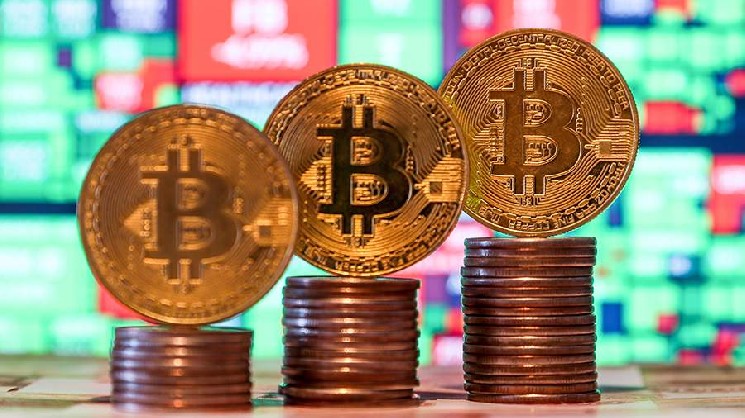
Historically, setups like this have favored Bitcoin [BTC]. In 2017, DXY fell below 96, and BTC rallied nearly 8×. A similar move in 2020, driven by liquidity injections, saw BTC climb roughly 7× in the months that followed.

Naturally, the question now is whether the playbook will repeat.

From U.S. President Donald Trump’s perspective, a weaker dollar is considered constructive. He has argued that a softer dollar boosts exports, keeps rates low, and supports GDP, making it a potential tailwind for the economy.

Meanwhile, his ongoing pressure on Fed Chair Powell for rate cuts only reinforces dollar weakness, suggesting the 2.23% dip could be just the start of a deeper move, forcing investors to continue rotating capital elsewhere.

Against this backdrop, Bitcoin’s historical rallies against a falling DXY look solid, and BTC’s chop below $90k reinforces its pre-breakout pattern. Yet, the key question is whether investors will follow through on this setup.

Key Bitcoin divergences

The Fed clearly signaled its “independence” with the recent rate decision.

At the FOMC meeting, Chair Jerome Powell resisted pressure and kept rates steady, reinforcing that policy will remain data-driven. Bitcoin reacted with a modest 1.3% intraday dip but remains well supported around $85k.

However, this isn’t the only divergence putting the market at a crossroads. Bitcoin’s LTHs have offloaded 143,000 BTC over the past month, the fastest pace in four months, pushing their net position deeper into the red.

According to AMBCrypto, it suggests LTHs aren’t buying the DXY thesis.

Even with President Trump backing a softer dollar, analysts remain wary on the long-term outlook. The U.S., world’s top importer, faces inflation risk, a headwind that could undermine Trump’s rate-cut narrative.

In this environment, Bitcoin failing to follow its historical rallies against the dollar isn’t surprising. In fact, with bids weakening, investor confidence could slip further, pushing capital into safer assets even more aggressively.


Final Thoughts

  • DXY’s decline, combined with Trump’s support for a softer dollar, sets the stage for Bitcoin.
  • LTHs are offloading, and rising inflation risk may undermine the rate-cut narrative, putting investor confidence under pressure and driving capital toward safer assets.


Trending Cryptos

Related Questions

QWhat is the main reason for the recent weakness in the U.S. dollar (DXY) according to the article?

AThe weakness is driven by fading investor confidence due to rising U.S. debt and ongoing tariff uncertainty, which are eroding the dollar's yield advantage.

QHow did Bitcoin historically perform during periods when the DXY fell significantly, as mentioned in the article?

AHistorically, Bitcoin performed very well. In 2017, when DXY fell below 96, BTC rallied nearly 8 times. A similar move in 2020 saw BTC climb roughly 7 times in the following months.

QWhy are Long-Term Holders (LTHs) selling their Bitcoin, and what does this indicate?

ALTHs have offloaded 143,000 BTC at the fastest pace in four months, which suggests they are not convinced by or 'buying' the historical thesis that a falling DXY will lead to a Bitcoin rally.

QWhat conflicting factor could undermine the narrative that a weaker dollar and potential rate cuts will benefit Bitcoin?

ARising inflation risk in the U.S., the world's top importer, is a headwind that could undermine the rate-cut narrative and push investor capital toward safer assets instead of Bitcoin.

QHow did the Federal Reserve's recent decision on interest rates affect Bitcoin's price, and what did it signal?

AThe Fed kept rates steady, reinforcing its data-driven and independent policy stance. Bitcoin reacted with a modest 1.3% intraday dip but remained well supported around $85,000.

Related Reads

Analyst Forecasts Bitcoin's Movement in August

Analyst Forecasts Bitcoin Movement in August Bitcoin ends July under market caution due to a lack of new macroeconomic catalysts and regulatory uncertainty, according to Bitbanker analyst Andrey Poroshin. He forecasts that in August, BTC may first test the $60,000–$62,000 range before recovering to around $70,000. The analyst notes that the U.S. Federal Reserve's neutral stance provided no strong market signals, with inflation remaining above target. Currently, Bitcoin trades below the U.S. mining cost range of $73,000–$75,000, a key global profitability benchmark, though costs are lower in some countries like Russia. Significant July events include the bankruptcy of derivatives exchange BitMEX, which Poroshin views as a capitulation of weaker market participants, often preceding potential reversal zones. Retail investor activity has declined, with many placing stop orders in the $60,000–$62,000 range, where significant liquidity is concentrated and could be tested. While geopolitical factors like U.S.-Iran tensions are losing market impact, regulatory uncertainty persists as the U.S. CLARITY Act vote was postponed to September. Typically, August sees lower trading activity due to holidays, leading to more technical, less volatile price movements. Poroshin's base scenario for August is a test of $60,000–$62,000 followed by a recovery to $70,000, with more significant moves likely in September post-Fed signals and potential CLARITY Act developments. Separately, a Russian deputy finance minister stated that non-qualified investors in Russia will soon be allowed to legally purchase Bitcoin, Ethereum, and major stablecoins, with an annual limit of 300,000 rubles per intermediary.

cryptonews.ru4m ago

Analyst Forecasts Bitcoin's Movement in August

cryptonews.ru4m ago

The Blockchain Industry Enters a Phase of Mass Adoption and Efficiency

In Q2 2026, the blockchain industry demonstrated a divergence between market sentiment and fundamental network growth. While on-chain activity surged, network fee revenues declined due to protocol designs making block space cheaper and more abundant. Ethereum saw institutional staking reach an all-time high of 40.2 million ETH. Despite processing nearly double the transactions per second, its network revenue fell 51% YoY to $64 million, with staker yields driven primarily by consensus rewards. Solana processed nearly 10 billion transactions, but its economic value also dropped to $51 million due to reduced congestion. Notably, its real-world asset (RWA) sector boomed, with tokenized stock trading volume growing 2,479x YoY to $3.32 billion in June 2026. Hyperliquid emerged as an outlier, generating $175 million in revenue with 32% of its $652 billion trading volume from non-crypto markets like commodities. Avalanche saw transaction growth but a sharp drop in fee revenue, while focusing on sovereign L1s for enterprise use. The NEAR Protocol ecosystem shifted from gas-intensive apps to Intents-based trading and introduced a novel feature allowing users to pay for AI services via staked tokens. The Tempo network, backed by Stripe and Paradigm, processed $386 million in stablecoin transfers, including $30 million for contractor payouts by Deel. The report concludes that the industry is transitioning from high-fee speculation to a phase of mass adoption and infrastructure efficiency, where cheap block space fuels transaction growth and institutional entry.

cryptonews.ru5m ago

The Blockchain Industry Enters a Phase of Mass Adoption and Efficiency

cryptonews.ru5m ago

Trading

Spot

Hot Articles

How to Buy T

Welcome to HTX.com! We've made purchasing Threshold Network Token (T) simple and convenient. Follow our step-by-step guide to embark on your crypto journey.Step 1: Create Your HTX AccountUse your email or phone number to sign up for a free account on HTX. Experience a hassle-free registration journey and unlock all features.Get My AccountStep 2: Go to Buy Crypto and Choose Your Payment MethodCredit/Debit Card: Use your Visa or Mastercard to buy Threshold Network Token (T) instantly.Balance: Use funds from your HTX account balance to trade seamlessly.Third Parties: We've added popular payment methods such as Google Pay and Apple Pay to enhance convenience.P2P: Trade directly with other users on HTX.Over-the-Counter (OTC): We offer tailor-made services and competitive exchange rates for traders.Step 3: Store Your Threshold Network Token (T)After purchasing your Threshold Network Token (T), store it in your HTX account. Alternatively, you can send it elsewhere via blockchain transfer or use it to trade other cryptocurrencies.Step 4: Trade Threshold Network Token (T)Easily trade Threshold Network Token (T) on HTX's spot market. Simply access your account, select your trading pair, execute your trades, and monitor in real-time. We offer a user-friendly experience for both beginners and seasoned traders.

12.6k Total ViewsPublished 2024.03.29Updated 2026.06.02

How to Buy T

Discussions

Welcome to the HTX Community. Here, you can stay informed about the latest platform developments and gain access to professional market insights. Users' opinions on the price of T (T) are presented below.

活动图片