Bitcoin Fell 14% in Q2, Yet Institutions Persistently Accumulate: Smart Money Scoops at the Bottom

marsbitPublished on 2026-08-17Last updated on 2026-08-17

Abstract

In Q2 2026, Bitcoin's price fell by 14.2%, yet institutional holdings in Bitcoin ETFs increased by 7.5%, revealing a significant bullish divergence. Smart money, defined as institutions managing over $100 million, accumulated Bitcoin as prices declined. While total ETF holdings dropped 6.6% to 1.21 million BTC, institutional holdings rose to 535,723 BTC, raising their share of total ETF holdings to a record 44.2%. Key highlights include 17 of the top 25 institutional holders increasing their positions, with Wells Fargo and JPMorgan each adding over 10,000 BTC. The Abu Dhabi sovereign wealth fund also expanded its holdings. Notable new entrants, such as wealth management giant Ameriprise, signal Bitcoin's maturation as an institutional asset class entering mainstream finance. Although the total number of reporting institutions dipped slightly, the overall increase in institutional holdings suggests major players view current prices as an attractive entry point, providing a valuable signal for potential market bottom formation.

Author:Bitcoin Strategy

Compiled by: Deep Tide TechFlow

Deep Tide Introduction: Bitcoin fell 14% in Q2, but institutional 13F holdings increased by 7.5%, with smart money continuing to accumulate at the bottom. Wells Fargo and JPMorgan each added over 10,000 BTC in a single quarter, and the Abu Dhabi sovereign wealth fund is also following suit. This indicates that institutions view the current price as an entry point, providing important reference value for judging the market bottom.

Dear Bitcoin holders,

On this week's "Bitcoin Market Conditions" program on Roxom, I discussed the price action. I categorize this cycle as an institutional adoption and maturity cycle, with the main catalyst being the ETF approval.

We have repeatedly discussed that the primary entry points for institutional adoption are ETFs and vault companies.

This is why Bitcoin Strategy publishes a quarterly institutional adoption report based on the latest institutional ETF holdings. The data comes from SEC 13F filings, required from institutions managing over $100 million in assets — the so-called smart money.

Yesterday was the deadline, and the latest data for institutional ETF holdings in Q2 2026 is out.

In today's briefing, we will discuss the latest insights from these filings, which serve as a proxy indicator for institutional Bitcoin adoption. Let's dive right in!

Institutional Adoption Report: Q2 2026
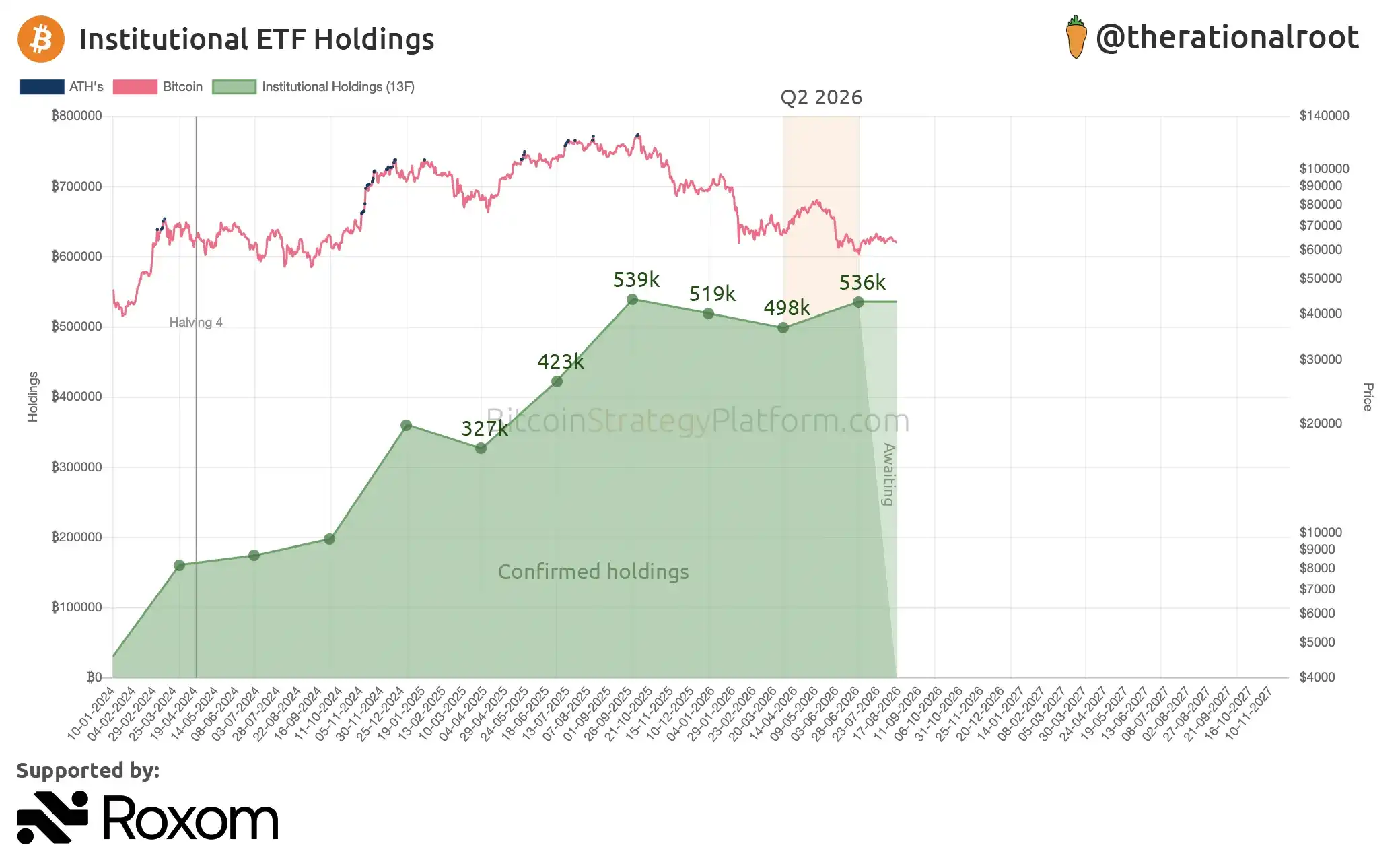
👉 Key Insight: In Q2, the Bitcoin price fell 14.2%, while institutional holdings increased by 7.5%. This bullish divergence indicates that institutions persistently accumulated during the formation of Bitcoin's bottom.

Institutional Share of ETF Holdings
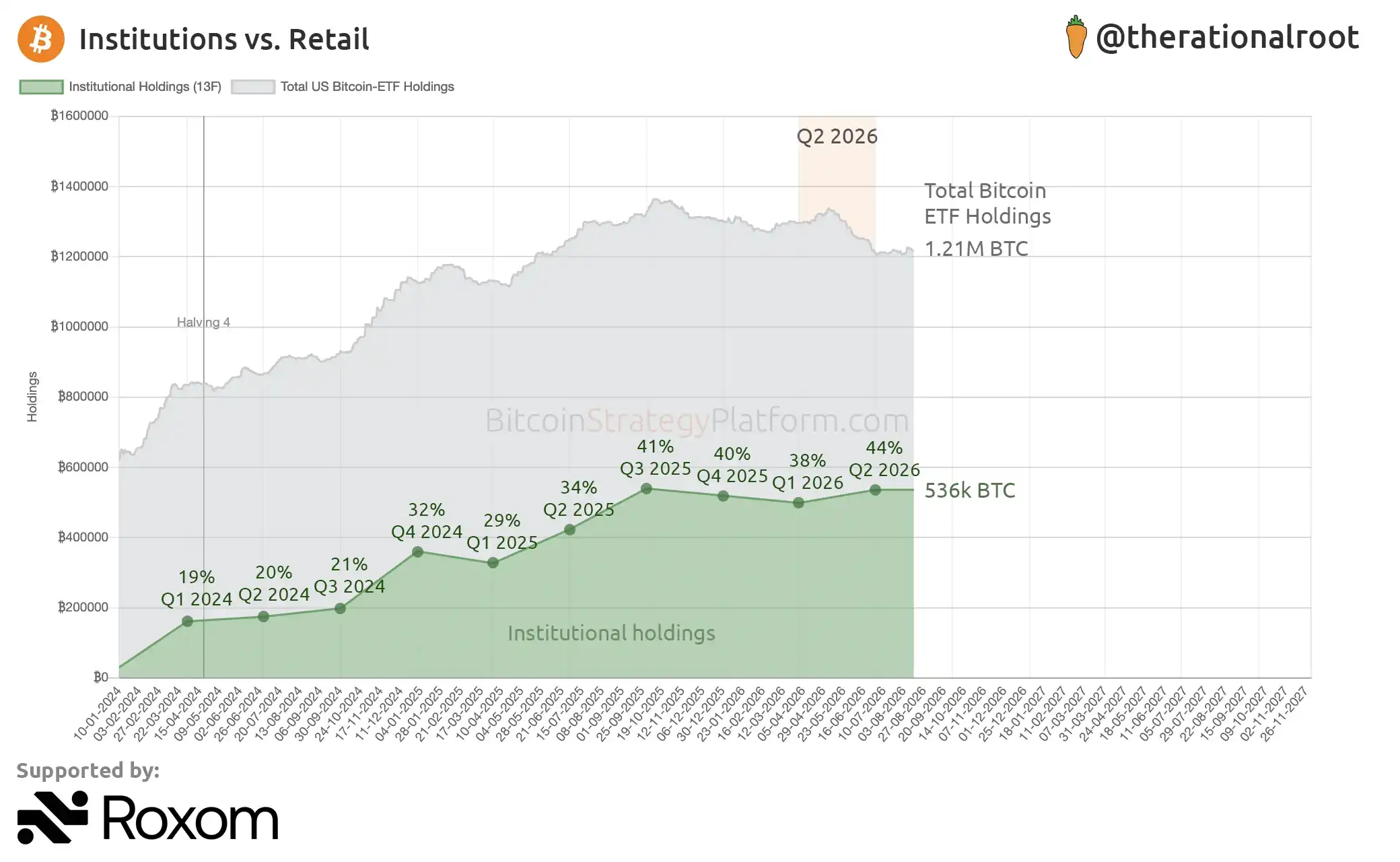
Total ETF holdings decreased from 1,297,010 BTC to 1,211,322 BTC, down 6.6%; while institutional holdings increased from 498,389 BTC to 535,723 BTC, up 7.5%.

👉 Key Insight: Despite the decrease in total ETF holdings, institutions increased their positions. The institutional share rose from 38.4% to 44.2%, reaching a new all-time high!

Top 25 ETF Holders

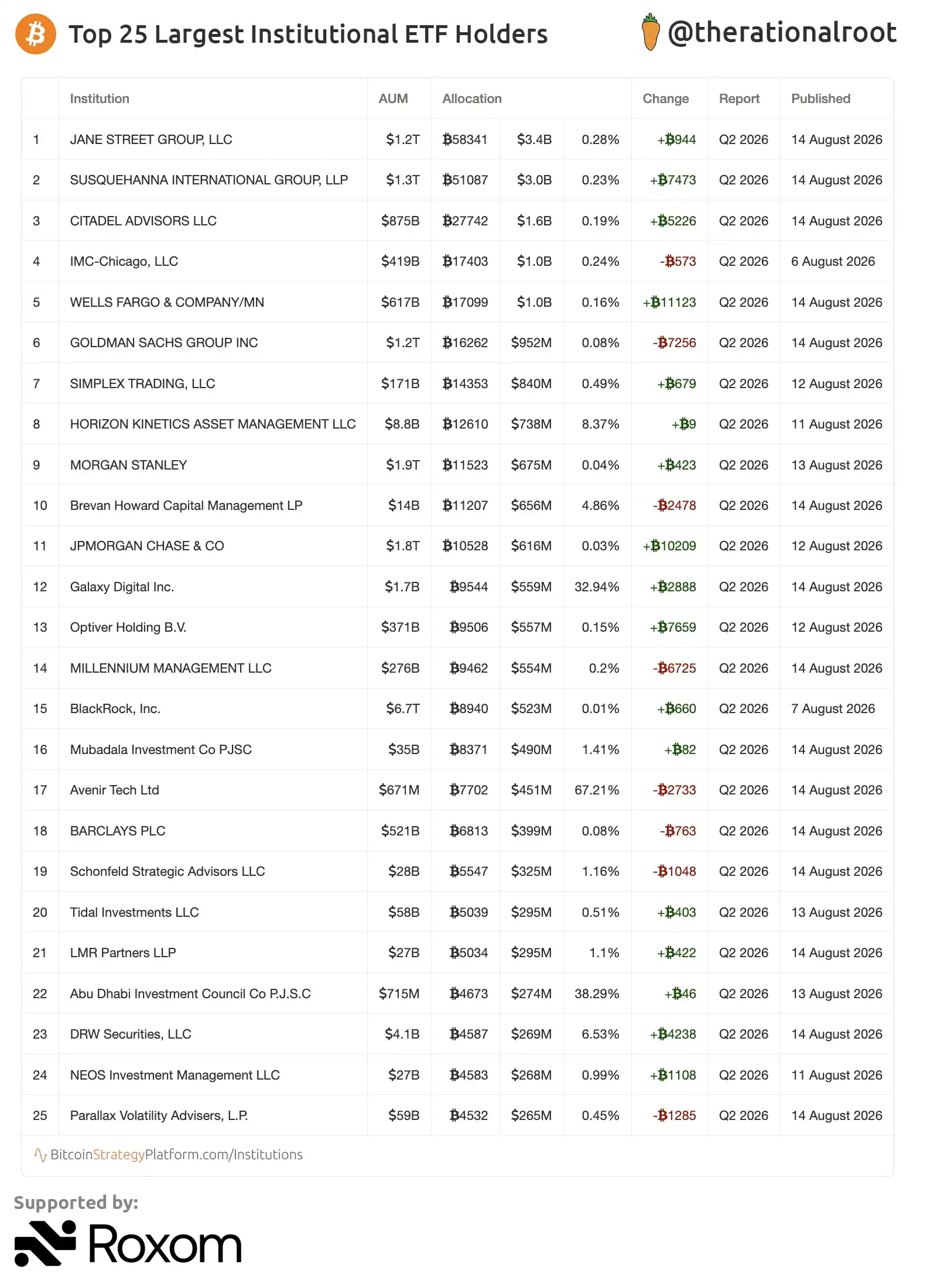
Below are the top 25 institutional Bitcoin ETF holders.
👇 Key Insights:

17 of them increased their positions this quarter.

Both Wells Fargo and JPMorgan added over 10,000 BTC.

The Abu Dhabi sovereign wealth fund increased its position.

New Entrant Institutions

Below is the list of new entrants making their first allocation of 100 BTC or more.
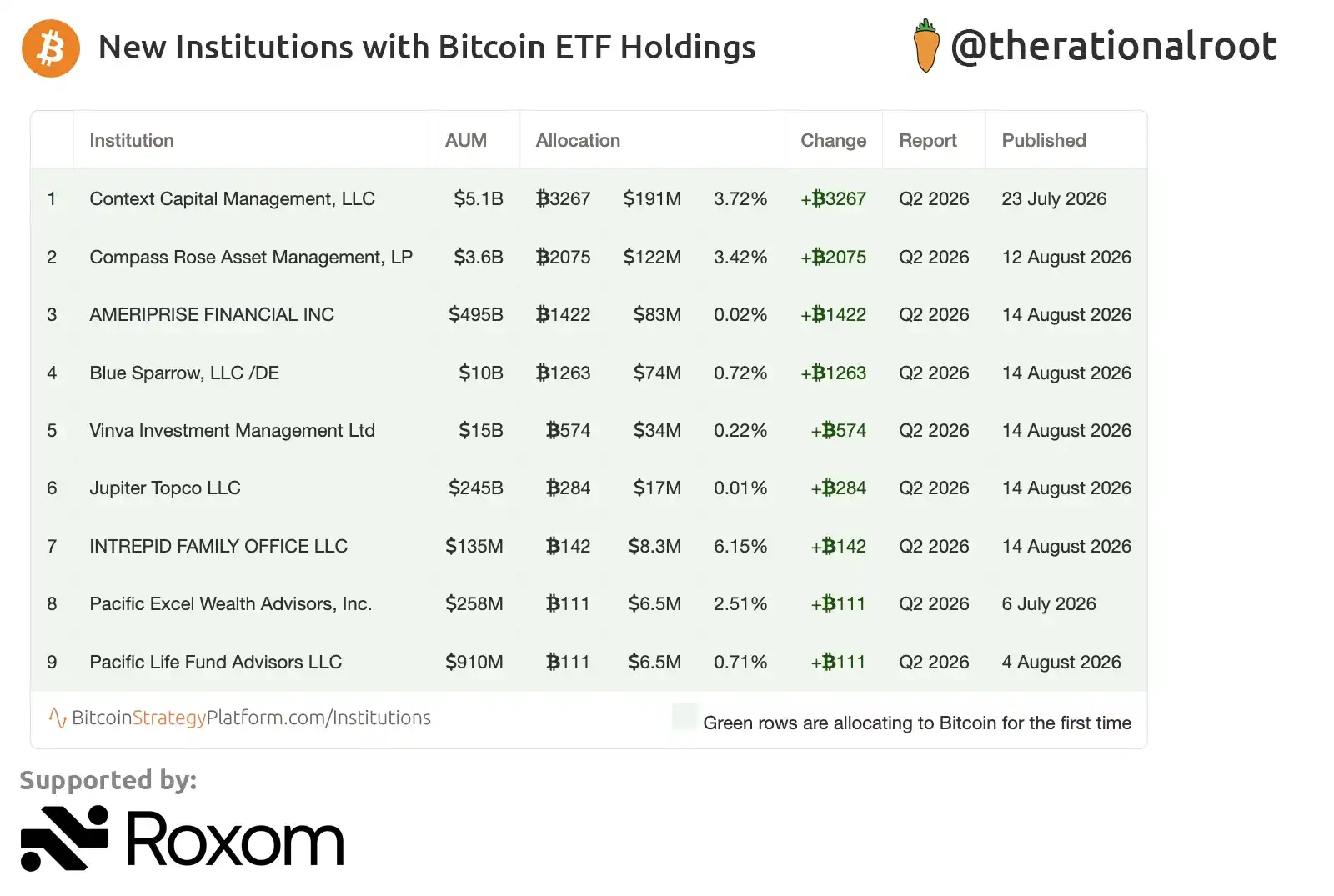
The most notable is Ameriprise, a major U.S. wealth management and financial services firm with over 10,000 financial advisors and approximately $1.7 trillion in assets under management.

This reaffirms that Bitcoin has become a mature, institution-grade asset and is gradually being incorporated into traditional wealth management through financial advisors. This is a very positive development.

Other new entrants are primarily hedge funds and investment management firms. Context Capital Management and Compass Rose Asset Management made the largest new allocations, at $191 million and $122 million respectively. While the names may not be as prominent, these are still sizable new positions and a positive signal of continued growth in institutional adoption.

Number of Institutions
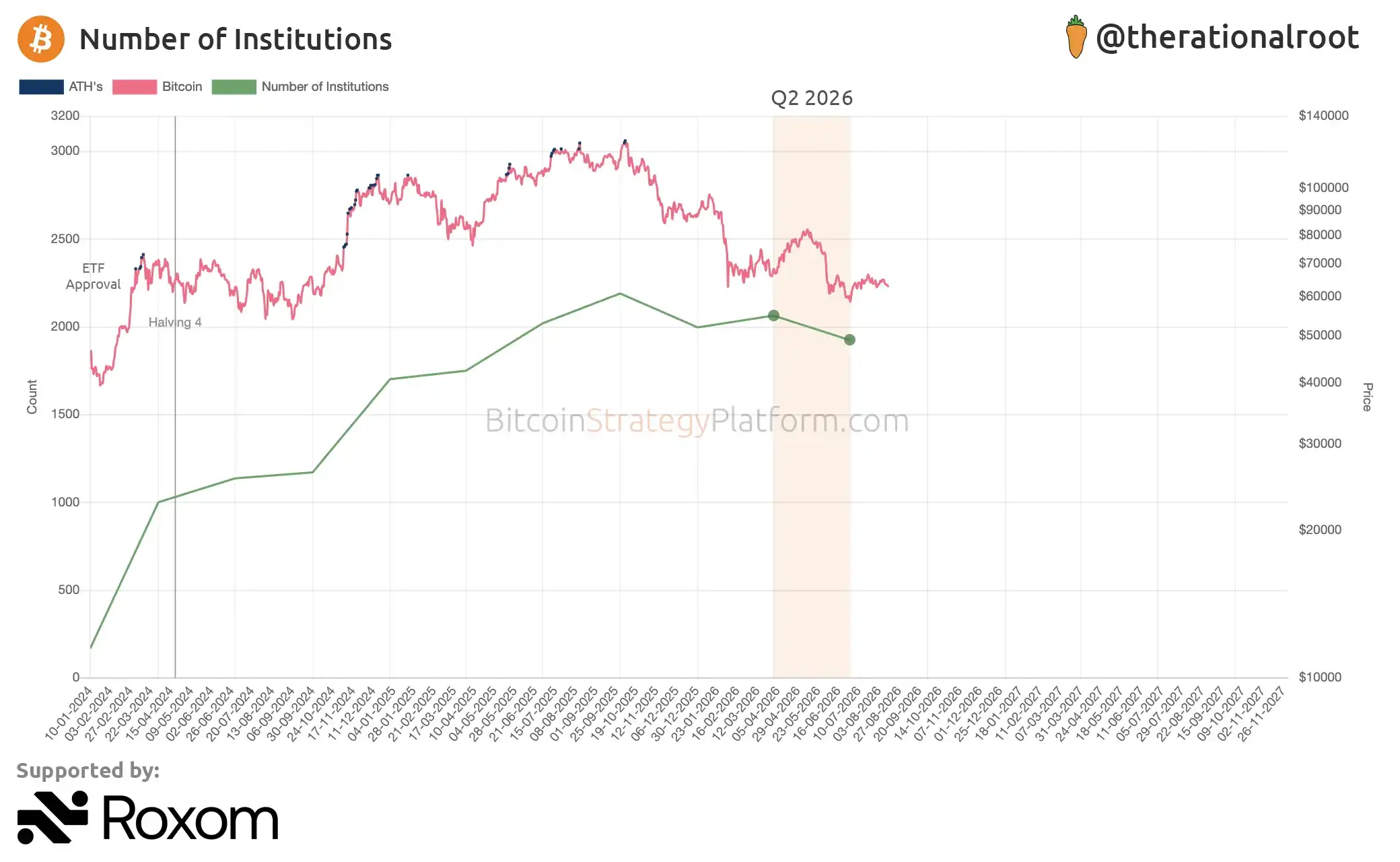
The number of institutions reporting Bitcoin holdings via 13F filings decreased from about 2,000 in Q1 to nearly 1,900 in Q2, a drop of 6.8%.

This shows that the bear market remains quite brutal. Despite the overall increase in institutional holdings, some institutions were still forced out or scared away.

Conclusion

This institutional data truly exceeded my expectations. Given the bear market phase and price action, I did not anticipate seeing such significant growth. Total institutional holdings nearly surpassed the numbers we saw at the cycle peak.

This confirms that institutions find the current price an attractive entry point. Combined with the recent recovery following the digital credit stress test, the likelihood of a rebound has increased.

I hope you appreciate this bullish divergence! As always, I strive to provide you with the best data and insights. I would love to see your comments and thoughts. 👊 🧡

See you next week, 🫡

Trending Cryptos

Related Questions

QAccording to the article, what is the key 'bullish divergence' observed in Q2 2026 regarding Bitcoin institutional holdings?

AThe key bullish divergence is that while the Bitcoin price fell by 14.2% in Q2, institutional ETF holdings (reported via 13F filings) increased by 7.5%. This indicates that institutions were accumulating Bitcoin during a period of price decline, suggesting they viewed the lower prices as an attractive entry point.

QWhich two major financial institutions added more than 10,000 BTC each to their holdings in Q2 2026, as highlighted in the article?

AWells Fargo (富国银行) and JPMorgan Chase (摩根大通) each added over 10,000 BTC to their holdings in the second quarter of 2026.

QWhat notable trend does the article highlight about the *percentage* of total ETF holdings controlled by institutions in Q2?

AThe article highlights that the share of total ETF holdings controlled by institutions rose to a record high of 44.2% in Q2 2026, up from 38.4% in the previous quarter. This occurred even as the total BTC held by all ETFs decreased by 6.6%.

QName the major new institutional entrant mentioned in the article and explain why its entry is considered significant.

AThe major new entrant is Ameriprise Financial. Its entry is significant because it is a mainstream U.S. wealth management and financial services firm with over 10,000 financial advisors and approximately $1.7 trillion in assets under management. This signals Bitcoin's maturation into an institutional-grade asset being integrated into traditional wealth management portfolios through financial advisors.

QWhat contradictory signal does the data on the *number* of reporting institutions provide, compared to the growth in total institutional BTC holdings?

AWhile the total Bitcoin holdings of institutions increased by 7.5%, the actual number of institutions filing 13F reports that hold Bitcoin decreased by about 6.8%, from roughly 2,000 to nearly 1,900. This contradiction indicates that despite overall accumulation by larger institutions, the bear market was still severe enough to force or scare some smaller holders out of the market.

Related Reads

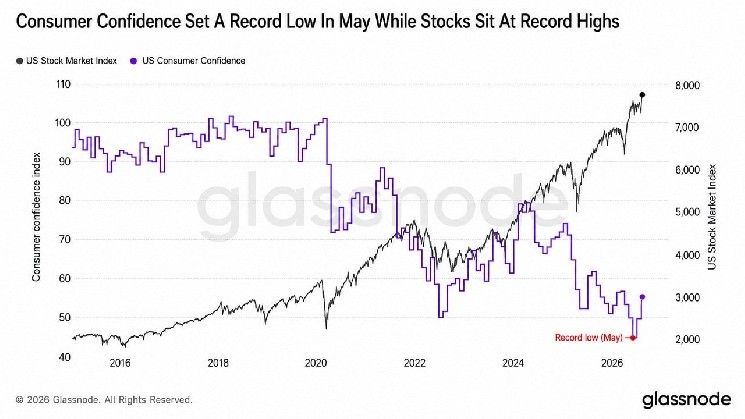
Glassnode: Consumer Confidence Falls as AI-Related Stocks Rise, Bitcoin Lags Behind

According to Glassnode, consumer confidence remains at one of its lowest levels in a decade, despite two consecutive months of improvement. This has not stopped households from moving money out of cash, as they expect further cost-of-living increases and a broader economic slowdown. The key question is where this capital is flowing. US stocks hit a new all-time high in early August, primarily driven by trading in AI-related stocks rather than a broad market rally. Bitcoin, historically seen as a hedge against declining trust in traditional finance, has not participated in this movement. Spot Bitcoin ETFs saw outflows of $389.7 million in one week, coinciding with rising equity markets—a divergence that aligns with Glassnode's data on capital flows. Bitcoin is currently trading at roughly half its October 2025 peak, stuck in a narrow range. Meanwhile, AI-related trading continues to attract fresh capital from retail traders, hedge funds, and even crypto-native institutional investors, who are redirecting funds into AI stocks and tokens. The macroeconomic backdrop has not been hostile to Bitcoin, with core inflation at a moderate 2.5% in July. However, Bitcoin's muted response to favorable inflation data is seen as a concerning signal, given its supposed role as a hedge against currency debasement. Spot Bitcoin exchange trading volume has fallen to its lowest since 2019, and recent ETF inflows are only a "fraction of any prior accumulation wave," suggesting institutional buying may have paused. This trend extends beyond trading: some Bitcoin miners are repurposing their power contracts and data center capacity for AI workloads. This appears to be a structural shift that could pressure Bitcoin's status as the default destination for capital leaving cash. The fundamental arguments for Bitcoin as a hedge against inflation or scarcity are not invalidated, but their expected impact has not materialized within the timeline anticipated by crypto optimists this summer.

cryptonews.ru3m ago

Glassnode: Consumer Confidence Falls as AI-Related Stocks Rise, Bitcoin Lags Behind

cryptonews.ru3m ago

The Optimal 'AI Bubble Trade': Simultaneously Going Long on 'Arrogance' and 'Bias'

The optimal investment strategy in the current AI bubble environment is a dual "leg" approach: going long on both "hubris" (AI tech leaders) and "humiliation" (neglected, underperforming cyclical assets). This aims to capture gains from both sides during the final surge of a nominal GDP-driven bubble, according to a Bank of America report by strategist Michael Hartnett. The bank's Bull & Bear Indicator remains in extreme bullish territory, signaling "sell", yet history shows such signals have limited immediate impact. Current fund flows show structural shifts: gold saw its largest weekly inflow since January, commodities are up 58.9% YTD, while tech stocks experienced their largest weekly outflow in seven weeks. The core thesis is that the final stage of a bubble benefits both the leading theme ("hubris" - AI) and oversold sectors ("humiliation" - like consumer stocks), similar to patterns seen in the 1999 tech bubble and 2007-2008 credit crisis. The report advises shorting "AI bonds," anticipating pressure from massive capital expenditures. Key risks include high concentration, surging bond yields, and cautious voter sentiment. The US debt burden is highlighted, with servicing costs reaching $1.4 trillion. The 10-year Treasury yield breaching 5% is seen as a red line for policymakers. For the "avoid the dollar" theme, BofA recommends gold and Hong Kong property stocks, the latter seen as deeply undervalued. The November US midterm elections, particularly the Texas governor race concerning AI data center expansion, are flagged as a critical political variable that could determine the AI bull market's trajectory. Private client data shows record-high equity allocations (66.4%) and record-low cash levels (9.4%), indicating bullish positioning. The report concludes that while overbought conditions can pause the bull market, ending it requires a combination of excessive positioning, overly optimistic earnings, and policy tightening—a scenario not yet in place.

marsbit44m ago

The Optimal 'AI Bubble Trade': Simultaneously Going Long on 'Arrogance' and 'Bias'

marsbit44m ago

Trading

Spot

Hot Articles

What is $BITCOIN

DIGITAL GOLD ($BITCOIN): A Comprehensive Analysis Introduction to DIGITAL GOLD ($BITCOIN) DIGITAL GOLD ($BITCOIN) is a blockchain-based project operating on the Solana network, which aims to combine the characteristics of traditional precious metals with the innovation of decentralized technologies. While it shares a name with Bitcoin, often referred to as “digital gold” due to its perception as a store of value, DIGITAL GOLD is a separate token designed to create a unique ecosystem within the Web3 landscape. Its goal is to position itself as a viable alternative digital asset, although specifics regarding its applications and functionalities are still developing. What is DIGITAL GOLD ($BITCOIN)? DIGITAL GOLD ($BITCOIN) is a cryptocurrency token explicitly designed for use on the Solana blockchain. In contrast to Bitcoin, which provides a widely recognized value storage role, this token appears to focus on broader applications and characteristics. Notable aspects include: Blockchain Infrastructure: The token is built on the Solana blockchain, known for its capacity to handle high-speed and low-cost transactions. Supply Dynamics: DIGITAL GOLD has a maximum supply capped at 100 quadrillion tokens (100P $BITCOIN), although details regarding its circulating supply are currently undisclosed. Utility: While precise functionalities are not explicitly outlined, there are indications that the token could be utilized for various applications, potentially involving decentralized applications (dApps) or asset tokenization strategies. Who is the Creator of DIGITAL GOLD ($BITCOIN)? At present, the identity of the creators and development team behind DIGITAL GOLD ($BITCOIN) remains unknown. This situation is typical among many innovative projects within the blockchain space, particularly those aligning with decentralized finance and meme coin phenomena. While such anonymity may foster a community-driven culture, it intensifies concerns about governance and accountability. Who are the Investors of DIGITAL GOLD ($BITCOIN)? The available information indicates that DIGITAL GOLD ($BITCOIN) does not have any known institutional backers or prominent venture capital investments. The project seems to operate on a peer-to-peer model focused on community support and adoption rather than traditional funding routes. Its activity and liquidity are primarily situated on decentralized exchanges (DEXs), such as PumpSwap, rather than established centralized trading platforms, further highlighting its grassroots approach. How DIGITAL GOLD ($BITCOIN) Works The operational mechanics of DIGITAL GOLD ($BITCOIN) can be elaborated on based on its blockchain design and network attributes: Consensus Mechanism: By leveraging Solana’s unique proof-of-history (PoH) combined with a proof-of-stake (PoS) model, the project ensures efficient transaction validation contributing to the network's high performance. Tokenomics: While specific deflationary mechanisms have not been extensively detailed, the vast maximum token supply implies that it may cater to microtransactions or niche use cases that are still to be defined. Interoperability: There exists the potential for integration with Solana’s broader ecosystem, including various decentralized finance (DeFi) platforms. However, the details regarding specific integrations remain unspecified. Timeline of Key Events Here is a timeline that highlights significant milestones concerning DIGITAL GOLD ($BITCOIN): 2023: The initial deployment of the token occurs on the Solana blockchain, marked by its contract address. 2024: DIGITAL GOLD gains visibility as it becomes available for trading on decentralized exchanges like PumpSwap, allowing users to trade it against SOL. 2025: The project witnesses sporadic trading activity and potential interest in community-led engagements, although no noteworthy partnerships or technical advancements have been documented as of yet. Critical Analysis Strengths Scalability: The underlying Solana infrastructure supports high transaction volumes, which could enhance the utility of $BITCOIN in various transaction scenarios. Accessibility: The potential low trading price per token could attract retail investors, facilitating wider participation due to fractional ownership opportunities. Risks Lack of Transparency: The absence of publicly known backers, developers, or an audit process may yield skepticism regarding the project's sustainability and trustworthiness. Market Volatility: The trading activity is heavily reliant on speculative behavior, which can result in significant price volatility and uncertainty for investors. Conclusion DIGITAL GOLD ($BITCOIN) emerges as an intriguing yet ambiguous project within the rapidly evolving Solana ecosystem. While it attempts to leverage the “digital gold” narrative, its departure from Bitcoin's established role as a store of value underscores the need for a clearer differentiation of its intended utility and governance structure. Future acceptance and adoption will likely depend on addressing the current opacity and defining its operational and economic strategies more explicitly. Note: This report encompasses synthesised information available as of October 2023, and developments may have transpired beyond the research period.

1.9k Total ViewsPublished 2025.05.13Updated 2025.05.13

What is $BITCOIN

Discussions

Welcome to the HTX Community. Here, you can stay informed about the latest platform developments and gain access to professional market insights. Users' opinions on the price of BTC (BTC) are presented below.

活动图片