Bit Digital Saw Ethereum’s Strategic Value Before Institutions Caught On

bitcoinistPublished on 2026-05-30Last updated on 2026-05-30

Abstract

Bit Digital recognized Ethereum's strategic value as a core balance sheet asset years before institutional consensus caught on. The company based its thesis on Ethereum's expanding role as the primary settlement layer for decentralized finance, stablecoins, and tokenized real-world assets (RWAs), even while its price remained compressed. Bit Digital has been building its ETH position over multiple cycles, viewing market weakness as a strategic accumulation opportunity. This view is supported by data showing large holders (with 100,000+ ETH) have increased their collective balance to a 9-week high, now holding roughly 22% of the circulating supply. The next phase of tokenization is expected to be defined by credible, compliant settlement infrastructure—a role Ethereum is increasingly dominating—rather than by speed or market narratives.

In a market where most institutions focus on crypto, Bit Digital appears to have taken a more forward-looking approach by recognizing Ethereum’s strategic importance early on. While many players were still treating ETH as a secondary asset, Bit Digital began positioning itself around ETH’s long-term potential as the backbone of decentralized finance, staking, and tokenized economies.

Ethereum’s Role As A Settlement Layer Continues To Expand

In a recent post on X, Bit Digital revealed that the company recognized Ethereum as a core strategic balance sheet asset years before the institutional consensus broadly embraced its role as the settlement infrastructure rail for crypto. Bit Digital anchored its thesis to a simple dynamic that usage and adoption continue to expand, while the price remains compressed.

As stablecoin settlement, tokenization, and on-chain financial activity continue to scale, ETH’s real-world usage has steadily increased regardless of market volatility. When the infrastructure layer individuals have been steadily accumulating becomes cheaper, and real-world utility continues to grow, the capital allocation decision becomes clearer.

The firm emphasized that its stack position has been diligently built over multiple market cycles, and its recent ETH purchase is a continuation of that strategic asset framework. Bit Digital also explains that it was early to recognize ETH as an asset suitable for a public company’s balance sheet, and that the company’s recent ETH purchase is a continuation of a long-standing thesis at a price the market made available.
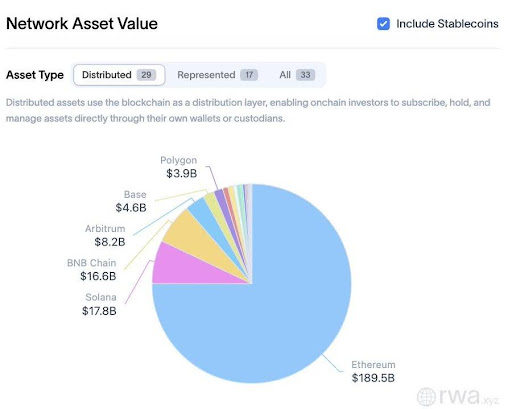
Source: Chart from Bit Digital on X

One of the strongest signals emerging from the real-world asset (RWA) market is the growing dominance of Ethereum as the primary settlement layer for the majority of tokenized financial assets. According to Pharos post, this trend is not being driven by institutions suddenly becoming more crypto-native. Instead, capital markets fundamentally value neutral settlement layers, credible infrastructure, and composability across financial applications.

Meanwhile, as the RWAs sector continues to scale, chains will increasingly compete on settlement credibility rather than community culture or market narratives. The next phase of tokenization will not be defined by who can launch assets fastest, but by who can support compliant and globally coordinated financial activity that could emerge at scale.

Large ETH Holders Continue Accumulating During Market Weakness

Ethereum is showing strong signs of quiet accumulation by large holders, a pattern often associated with early-stage bullish positioning. Crypto analyst Lucky has noted that the data reveal that wallets holding 100,000 ETH have increased their collective balance to around 17.41 million ETH, marking a 9-week high and accounting for roughly 22% of the circulating supply.

This type of behavior is what long-term investors watch closely because it reflects strategic accumulation during periods of price weakness, which is a very strong bullish setup for ETH.

ETH trading at $2,017 on the 1D chart | Source: ETHUSDT on Tradingview.com

Related Questions

QWhat differentiated Bit Digital's approach to Ethereum compared to most institutions initially?

ABit Digital recognized Ethereum's strategic importance as a core balance sheet asset and its role as the backbone for decentralized finance, staking, and tokenized economies early on, while most other institutions initially treated it as a secondary asset.

QAccording to Bit Digital, what key dynamic supported their thesis for accumulating ETH?

ABit Digital anchored its thesis to the dynamic that Ethereum's real-world usage, adoption, and utility continue to expand and scale across areas like stablecoin settlement and tokenization, while its price remained compressed.

QWhat is a primary reason for Ethereum's growing dominance in the Real-World Asset (RWA) tokenization market, as indicated in the article?

AEthereum's growing dominance is driven by capital markets fundamentally valuing neutral settlement layers, credible infrastructure, and composability across financial applications, not just institutions becoming more crypto-native.

QWhat recent on-chain data suggests bullish positioning for Ethereum by large holders?

AData shows that wallets holding 100,000 ETH have increased their collective balance to around 17.41 million ETH, a 9-week high, accounting for roughly 22% of the circulating supply, indicating strategic accumulation during market weakness.

QHow does the article characterize the next phase of competition in the tokenization sector?

AThe next phase will be defined not by who can launch assets fastest, but by which blockchain can support compliant and globally coordinated financial activity at scale, competing primarily on settlement credibility.

Related Reads

Trading

Spot
Futures

Hot Articles

Discussions

Welcome to the HTX Community. Here, you can stay informed about the latest platform developments and gain access to professional market insights. Users' opinions on the price of ETH (ETH) are presented below.

活动图片