An 80s-born Tianjin native is about to become the first person to go to Mars

marsbitPublished on 2026-05-22Last updated on 2026-05-22

Abstract

Tianjin-born Chun Wang, an avid traveler and cryptocurrency pioneer, is set to make history as the first person to journey to Mars. Born in 1982, Wang's passion for exploration began in childhood. After co-founding the major cryptocurrency mining pool F2Pool in 2013, he amassed significant wealth, which fueled his global adventures, including reaching both the North and South Poles. Feeling Earth held no new frontiers, Wang turned to space. In 2025, he commanded the privately-funded "Fram2" mission, flying a Crew Dragon spacecraft on a pioneering polar orbit to photograph Earth's poles from space for the first time. Now, SpaceX has announced Wang's next ambitious plans: a week-long commercial lunar flyby mission, followed by a groundbreaking two-year crewed mission to Mars and back—marking humanity's first interplanetary human spaceflight. Wang continues his lifelong pursuit of pushing boundaries into the final frontier.

Original | Odaily Planet Daily(@OdailyChina)

Author | Azuma(@azuma_eth)
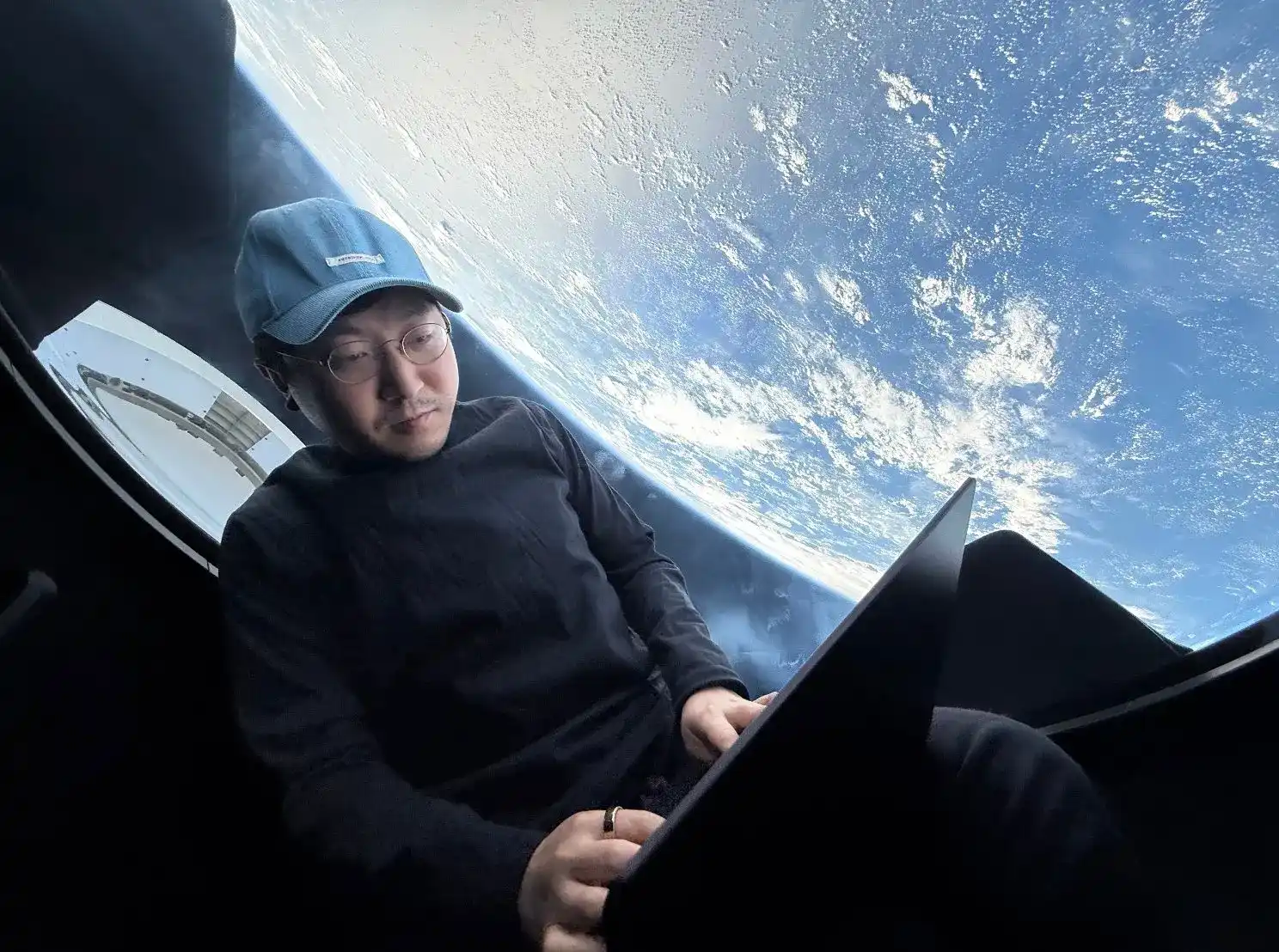
Humanity is finally embarking on its journey to Mars, and the protagonist of this mission destined to be recorded in human history is a Tianjin native.

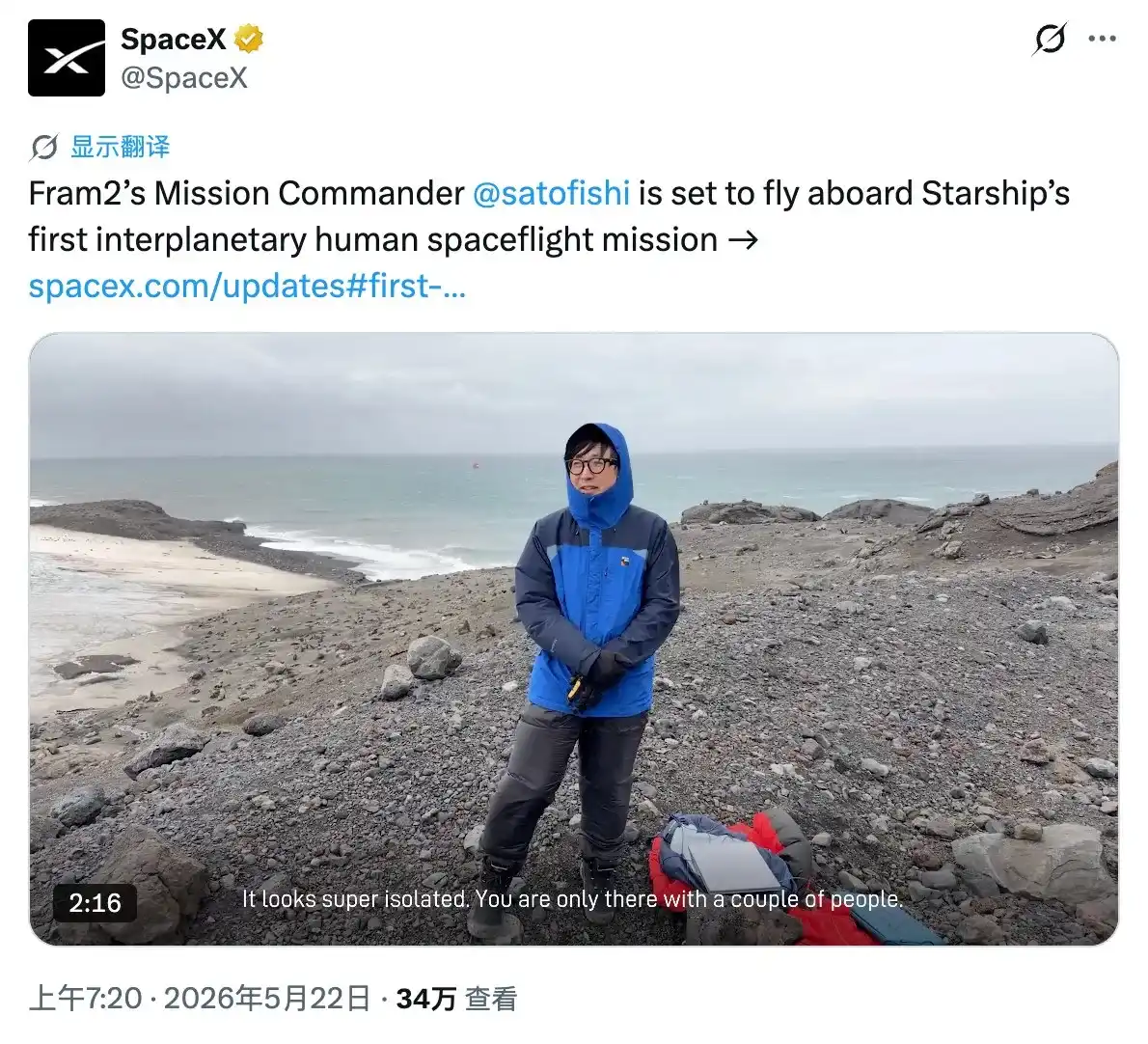
In the early morning of May 22nd Beijing time, the soon-to-IPO SpaceX dropped a major official announcement — F2Pool co-founder, Fram2 mission commander Wang Chun will board the Starship to execute the first batch of manned interplanetary Mars aviation missions! The mission is planned to be a two-year deep space flight, exiting the Earth-Moon system, skimming past Mars (without landing), and finally returning to Earth.

Prior to this mission, Wang Chun will also join Dennis Tito and Akiko Tito in participating in Starship's first commercial manned circumlunar flight mission. This mission is expected to last one week and will perform a flyby approximately 200 kilometers from the lunar surface.
The Travel Fanatic from Tianjin

On March 31, 2025, just before the Fram2 mission launch, Wang Chun gave an exclusive interview to the aerospace professional media "Spaceflight Now," revealing many previously unknown stories about his upbringing.

Wang Chun was born in Tianjin, China, in 1982 and was raised by his grandparents. He had hardly ever left his hometown until he went to university in 2000.

However, from a very young age, Wang Chun developed a strong interest in travel, often fantasizing about traveling the world: "In 1987, when I was 5 years old, my grandfather brought back a world map he found while taking a walk. That map instantly became my favorite toy and ignited my curiosity. What really caught my eye was the vast blank area at the bottom of the map — the polar regions. From that moment, I was deeply fascinated by the mystery and excitement of these distant, unknown places."

After leaving university, Wang Chun first worked for a Norwegian software company in Beijing. From then on, his travel mileage truly skyrocketed — to save money, he often slept on a French colleague's sofa or directly in the office, commuting back home about 120 kilometers away on weekends.

Wang Chun mentioned: "Even with a full-time job, in the year 2007 alone, I traveled 75,900 kilometers by train on weekends. In total, in 2007, I spent a full two months in train carriages, heading straight to the train station after work every Friday and not returning to the company until Monday morning."

Over the next four years, Wang Chun further expanded his travel map. By train, he traveled to every province in China.

In 2010, Wang Chun began his first trip abroad — to Nepal and then India. That trip took him to the southernmost tip of the Indian subcontinent. He boarded what was then India's longest-running non-stop train — the 16317 "Himsagar Express," riding from Kanyakumari all the way to Kashmir and continuing his journey in the country.

The trip ultimately cost him about $1,000, which was all the savings he had at the time.

"During those years, I was obsessed with infrastructure and transportation, especially railways. I meticulously recorded every train journey, down to the minute or even second, and posted these records on online forums and message boards. Someone once nicknamed me 'The Thousand-High-Speed-Rail Hero,' because I was counting my high-speed rail rides, aiming for the goal of 1,000 rides."

Wang Chun revealed that as of March 20, 2025, he had taken 854 high-speed rail rides, but his number of commercial airline flights was already extremely close to 1,000.

Wealth, Ability, and Resource Accumulation, Stemming from Cryptocurrency

Apart from travel, Wang Chun also showed a very strong interest in various emerging technologies.

At age 7, Wang Chun first heard about computers, but it wasn't until he graduated from primary school at age 13 that he got his first personal computer, a 486SX running MS-DOS 5.0.

Wang Chun mentioned: "Besides playing games, I also used it to write many interesting programs. One of the earliest was a gravity simulator that could visually demonstrate the motion of planets in the solar system... In school, I participated in various programming competitions, including the International Olympiad in Informatics (IOI) and ACM-ICPC (International Collegiate Programming Contest). Due to my excellent performance in these competitions, I was directly admitted to university without taking the national college entrance exam."

In 2011, Wang Chun first heard about Bitcoin through the tech website Solidot. On May 28th of that year, he bought his first Bitcoin at a unit price of $8.7.
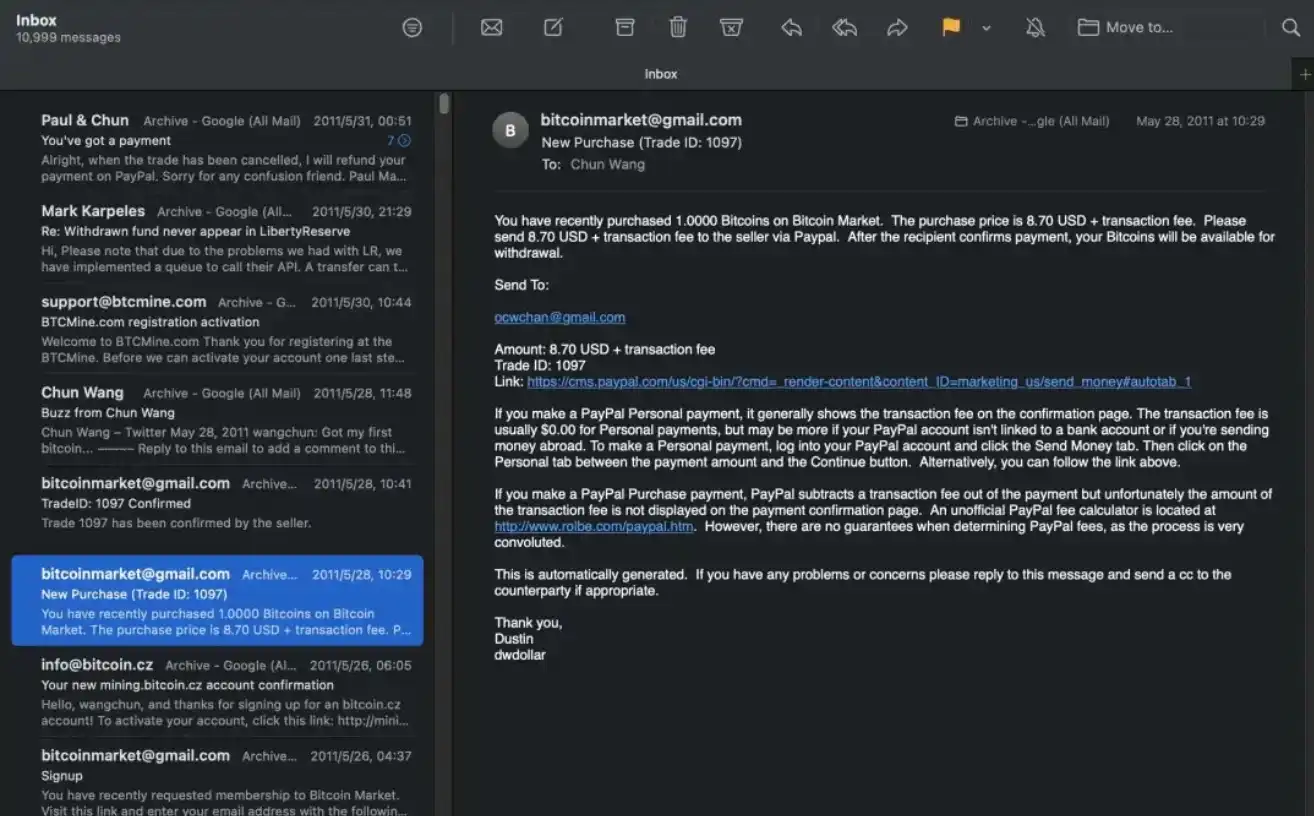
Simultaneously, as a tech enthusiast, Wang Chun began trying to assemble mining rigs himself to mine Bitcoin.

The initial story wasn't particularly smooth. Wang Chun first collaborated with Wu Gang, the later founder of Bixin, renting a few residential rooms and building a relatively rudimentary mining farm with dozens of rigs. The startup capital was even borrowed from his father... Even so, Wang Chun managed to obtain 7,700 Bitcoins through mining over two years, of which 4,000 were spent on electricity bills, 660 were traded for an iPhone (which was later stolen in the Saint Petersburg subway), and the remaining Bitcoins were sold by him in early 2023 at a price of $17 each...

The turning point occurred in 2013. In April of that year, he co-founded F2Pool (known in the cryptocurrency community as "Fish Pool") in Wenzhou with Mao Shixing, nicknamed "Shenyu." The more introverted Wang Chun was responsible for backend code, while the more outgoing Shenyu handled operations. This was China's first Bitcoin mining pool, later developing into one of the world's largest comprehensive mining pools.

In 2018, Wang Chun founded his second company, Stake.fish, in Thailand, a staking service provider focused on PoS networks, comprehensively deploying node staking services for networks like Ethereum, Cosmos, and Polygon.

The success of F2Pool and Stake.fish, coupled with the surge in cryptocurrency prices, accumulated massive personal wealth for Wang Chun — Wang Chun revealed in 2025 that over the past ten-plus years, F2Pool had mined over 1.3 million Bitcoins.

The Space Dream Chaser

The rapid growth in wealth allowed Wang Chun to fulfill his childhood travel dreams to the polar regions. In December 2021, Wang Chun successfully reached the South Pole; in July 2023, he reached the North Pole.

However, after fulfilling these dreams, Wang Chun realized it still didn't seem enough... His entire life had been on a journey, continuously moving towards the unknown distance.

  • 2006: He traveled west to the Kazakhstan border at 82°E;
  • 2011: He went to the southernmost tip of India, reaching 8°N south;
  • 2012: He took the Trans-Siberian Railway to Europe, reaching 60°N, 30°E in Saint Petersburg;
  • 2013: He went to the Kamchatka Peninsula, reaching 160°E east;
  • 2016: He visited the United States for the first time;
  • December 2021: He successfully reached the South Pole;
  • July 2023: He successfully reached the North Pole...

But now, there are no farther destinations on Earth. Where else can one go?

Wang Chun quickly found the answer: "Since SpaceX began recovering Falcon 9 first-stage rockets, the commercial aerospace industry has been advancing at an incredible pace. I once again saw something completely new and exciting unfolding, a feeling exactly like when I first heard about computers or first discovered Bitcoin."

Wang Chun's choice was to fly into space. In 2023, Wang Chun proposed an extremely bold concept to SpaceX — he hoped to privately and fully fund a SpaceX "Crew Dragon" mission, flying an orbit that passes over Earth's North and South Poles.

Wang Chun's idea was that since humans entered space in 1961, as the vast majority of rocket launches have been concentrated near the equator or at mid-latitudes, the International Space Station (ISS) and almost all previous manned spacecraft (except the distant Apollo lunar missions) have been unable to fly over Earth's poles. In other words, Earth's polar ice fields have been a visual and scientific blank spot in the history of low Earth orbit manned spaceflight for 60 years. Therefore, Wang Chun wished to take a previously untraveled polar retrograde orbit (Polar Orbit), with a 90-degree orbital inclination, directly traversing and overlooking Earth's poles.

Wang Chun named the mission "Fram2," paying homage to the legendary polar research vessel "Fram," which carried Norwegian explorers to the Arctic and Antarctic in history.

On April 1, 2025, a Falcon 9 rocket carrying the "Resilience" Crew Dragon lifted off on time from Launch Complex 39A at the Kennedy Space Center in Florida. Wang Chun, as Mission Commander, led the purely civilian, all non-American crew (including a Norwegian filmmaker, a German robotics engineer, and an Australian Arctic explorer) he personally selected, officially embarking on the space journey.
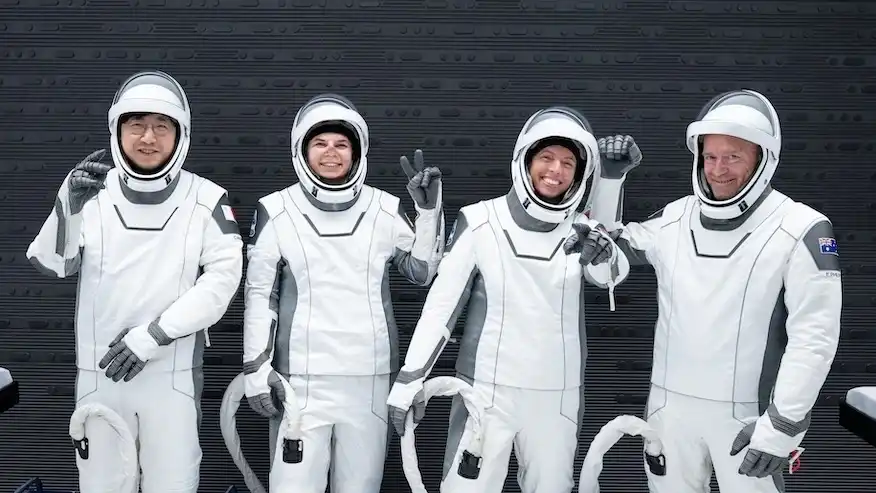
In a 90-degree polar orbit with an apogee of 413 km and a perigee of 202 km, the spacecraft orbited Earth every 93 minutes, taking only 46 minutes to fly from the North Pole to the South Pole. During the three-and-a-half-day mission, Wang Chun and the crew completed a large amount of extremely hardcore scientific research and visual capture — including close observation of the rare high-altitude atmospheric phenomenon STEVE (Strong Thermal Emission Velocity Enhancement) unique to Earth's high latitudes; capturing the first-ever X-ray image in space under microgravity conditions; the first-ever attempt to grow fungal organisms under microgravity conditions...

One noteworthy detail is that Wang Chun's friend, Bao Er Ye, revealed before the mission that Wang Chun had not made any Bitcoin private key backups. He had stated that if anything happened to him during the mission, the Bitcoins he held would be permanently destroyed.

Flying to Mars

Wang Chun's space dream did not end with the successful landing of Fram2; it continues to escalate.

Returning to the story at the beginning, just before SpaceX tested the latest generation Starship launch, SpaceX officially announced in a livestream two follow-up space plans for Wang Chun — a one-week manned circumlunar flight mission, and a full two-year, first-ever manned interplanetary Mars aviation mission in human history.

During SpaceX's live stream with Wang Chun, he was standing in the fierce winds of Bouvet Island at 54°26′S, 3°24′E. The island, located in the South Atlantic Ocean near Antarctica, is an overseas territory of Norway (Norwegian Antarctic Territory) and lies outside the land area frozen by the Antarctic Treaty.
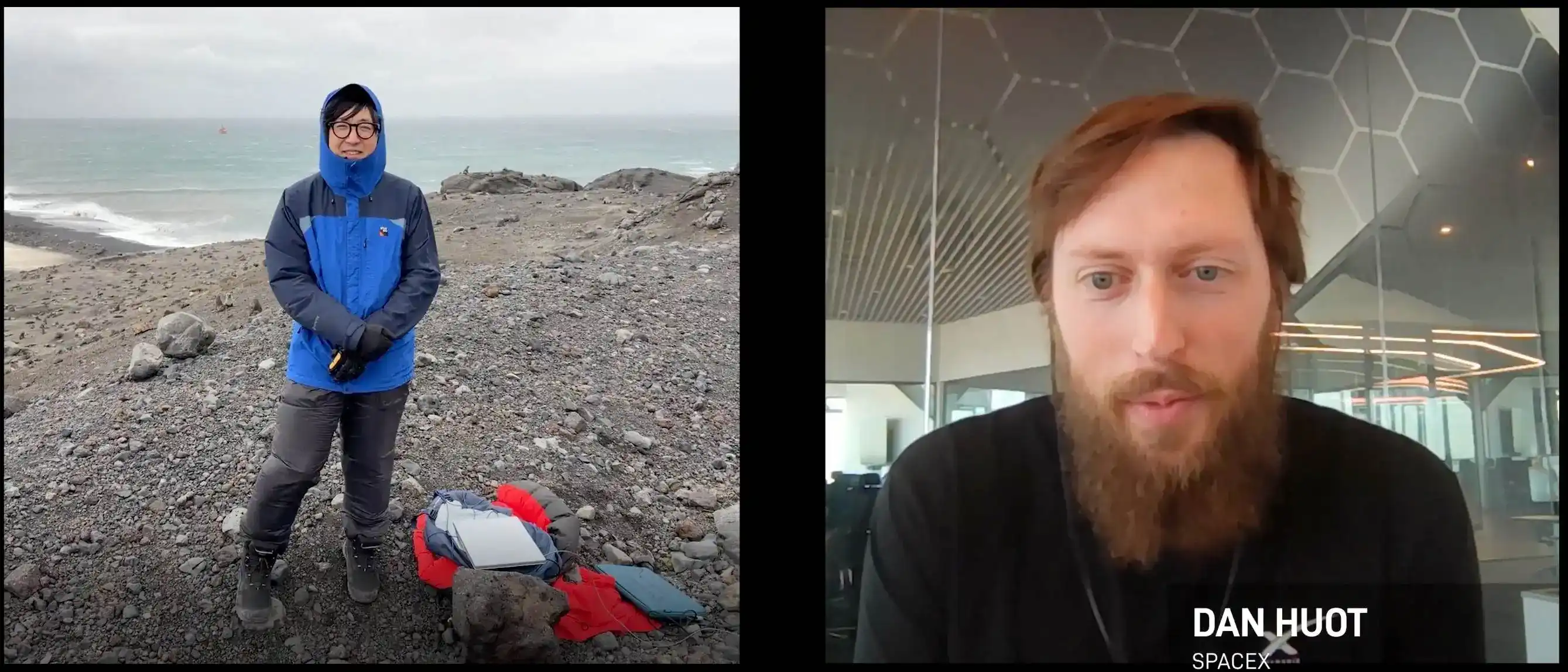
On Wang Chun's personal X homepage, he detailed his travel progress. At the time of writing, the current status is: "60% of the map of 1 celestial body checked in (150 / 249), to be continued..."


Related Questions

QWhat are the major space missions that Wang Chun is planning to participate in with SpaceX?

AWang Chun plans to participate in two major missions with SpaceX: a week-long commercial crewed mission around the Moon, and the first-ever crewed interplanetary mission to Mars, which will be a two-year flyby mission.

QHow did Wang Chun first get involved with cryptocurrency, and what was his first major venture?

AHe first learned about Bitcoin in 2011 from the tech website Solidot and bought his first Bitcoin on May 28 that year at $8.7. His first major venture was co-founding F2Pool (one of the world's largest mining pools) with 'Discus Fish' (Mao Shixing) in April 2013.

QWhat was unique about the orbital path chosen for the Fram2 mission, and why was it significant?

AThe Fram2 mission flew in a 90-degree Polar Orbit (also called a Polar Retrograde Orbit). This was significant because it allowed the spacecraft to fly directly over Earth's North and South Poles, a visual and scientific perspective that had been a blank spot in over 60 years of crewed spaceflight, as most missions launch from near the equator.

QWhat personal anecdote illustrates Wang Chun's early passion for travel?

AIn 2007, while working a full-time job, he used his weekends to travel by train for a total of 75,900 kilometers. He spent about two months of that year sleeping in train compartments, leaving for the train station right after work on Fridays and returning to the office on Monday mornings.

QWhat is the source of Wang Chun's personal wealth that funds his ambitious space projects?

AHis wealth primarily comes from his success in the cryptocurrency industry, notably as a co-founder of F2Pool, which has mined over 1.3 million Bitcoins in its history, and as the founder of the staking service provider Stake.fish.

Related Reads

Female Crypto Mogul Survived Mining Crackdown and Market Plunge, but Paid a $60 Million Tuition to a U.S.-Style 'Pig-Butchering' Scam

An 80s-born Chinese entrepreneur, Fiona Lyu (also known as Lv Yongshuang), CEO of the mining firm Chengdu Valarhash Technology, was defrauded of over $9.4 million (approx. RMB 60 million) in the US, according to a Caixin report. Lyu's company once operated the 1THash and Bytepool mining pools, which collectively controlled about 9% of the global Bitcoin hash rate at their peak in early 2020. The scam began in 2021 after China's crackdown on crypto mining forced Lyu to seek overseas relocation for her operations. She was introduced to Zubair Al Zubair, who posed as an "UAE royal family member" with connections to Middle Eastern capital and US local government resources. He and his brother, who impersonated a hedge fund manager, orchestrated a fake contract signing for a mining facility in Ohio, witnessed by local officials. Lyu transferred millions in contract payments. The brothers, both US citizens with fabricated backgrounds, later fraudulently sold 1,067 of her miners for $6.17 million. The scheme involved bribing a mayor's chief of staff for legitimacy. In May 2026, US courts sentenced Zubair to 24 years in prison, his brother to 23 years, and the official to 8 years. Simultaneously, Lyu faced a separate legal battle in China. A subsidiary of listed company ST Zhongchang sued her firm, seeking refunds for a 2021 contract involving Bitcoin mining equipment. Chinese courts ruled the mining contract invalid and ordered a refund of nearly RMB 19.3 million. This dual blow marked a stark downturn for the once-prominent figure in the crypto mining industry.

Foresight News12m ago

Female Crypto Mogul Survived Mining Crackdown and Market Plunge, but Paid a $60 Million Tuition to a U.S.-Style 'Pig-Butchering' Scam

Foresight News12m ago

Trade.xyz Pricing Controversy Exposes Fatal Weakness of Pre-IPO Perpetual Contracts

The Trade.xyz pricing controversy surrounding its SPCX (SpaceX) pre-IPO perpetual contract on Hyperliquid has exposed a critical vulnerability in decentralized finance (DeFi) platforms offering such instruments. The dispute erupted after SpaceX's updated filing revealed its total shares outstanding were approximately 10% higher than market estimates. While centralized exchanges (CEXs) paused trading and repriced contracts based on the new data, Trade.xyz maintained its position that its "IPOP" contract tracks market expectations for the per-share price, not the company's fundamental valuation or share count. This discrepancy triggered cross-platform arbitrage and led to significant losses for leveraged long positions on Trade.xyz, as the contract price gaped down without a value-neutral adjustment mechanism. The incident highlights the absence of a "Rebase" function—a mechanism that proportionally adjusts contract prices and user positions to reflect corporate actions like share count changes—within many decentralized perpetual exchanges (Perp DEXs). Unlike CEXs, which can centrally execute such adjustments, implementing Rebase on-chain involves significant technical complexity, gas costs, and potential security risks. Trade.xyz's architecture, which allows independent market deployment, further complicates platform-wide Rebase implementation. The controversy underscores broader challenges for Perp DEXs venturing into real-world assets (RWA) like pre-IPO shares. It raises questions about pricing reliability, transparent rule disclosure, and the ability to handle corporate events, testing user trust and the long-term viability of these synthetic markets for price discovery before official listings.

链捕手28m ago

Trade.xyz Pricing Controversy Exposes Fatal Weakness of Pre-IPO Perpetual Contracts

链捕手28m ago

When AI Traffic Surpasses Humans, How Do You Prove You're Human?

As AI-generated web traffic now surpasses human activity, the internet's foundational business models—built on human attention, browsing, and advertising—face severe disruption. AI agents crawl websites at immense scale without generating ad revenue, while AI summaries divert traffic from original content sites. In response, over 2.5 million sites are blocking AI crawlers, and protections like Cloudflare's "honeypot" traps have emerged, though advanced AI can bypass these. The collapse of traditional CAPTCHAs, which assumed machines were weaker than humans, has led to a shift toward behavioral biometrics for human verification. Companies like IBM and BioCatch now analyze unique human patterns—cursor movements, typing rhythms, keystroke dynamics, and even cognitive delays like the Stroop effect—to distinguish real users from bots. These biometric signatures are difficult to fake or alter, offering a new layer of security but raising significant privacy concerns. Two competing visions for a reliable human verification system are emerging. One, exemplified by Sam Altman’s World (formerly Worldcoin), uses centralized iris scanning to generate unique credentials, though it faces bans and criticism over unauthorized data collection. The other employs cryptographic zero-knowledge proofs, allowing users to prove they are human without revealing identity or biometric data, as advocated by Vitalik Buterin. However, decentralized approaches risk exploitation through identity renting in economically unequal regions. The central dilemma is between a scalable but privacy-invasive centralized system that permanently controls users' biometric data, and a privacy-preserving cryptographic system vulnerable to real-world economic manipulation. The author expresses a preference for the cryptographic path, arguing that despite its flaws, it avoids the irreversible biometric surveillance inherent in centralized alternatives.

Foresight News36m ago

When AI Traffic Surpasses Humans, How Do You Prove You're Human?

Foresight News36m ago

Crypto Primary Market Investment and Financing Forward-Looking Weekly Report | Stablecoin Regulation Nears Implementation, ETF Funds Continue to Withdraw, Capital Begins Betting on Payment and Cash Flow

Crypto Market Weekly Report (Jun 1-7, 2026): Capital Shifts Focus to Payments & Cash Flow Market data indicates a significant divergence: while traditional institutional funds continue exiting via BTC and ETH ETFs (recording net outflows of $1.72B and $168M this week, respectively), stablecoin supply continues growing. This suggests capital is shifting from speculative asset allocation toward defensive positioning within on-chain liquidity, awaiting new, concrete opportunities. This trend is reflected in venture capital focus. Weekly fundraising fell 27% to $302M, with investments concentrating on infrastructure with tangible revenue potential: 1. **Stablecoin Infrastructure (28% of funding):** Projects like M0 Protocol ($35M raise) are gaining attention as regulatory clarity (e.g., the GENIUS Act) nears, shifting the focus from legitimacy to building payment and settlement networks. 2. **AI Agent Infrastructure (26%):** Investments are moving from conceptual AI Agents towards the execution and economic layers required for a functional "Agent economy." Key raises include OpenRouter ($40M) and Halliday ($20M). 3. **Real World Assets (RWA) (18%):** The search for on-chain yield and cash flow drives continued interest in RWA platforms like Ondo Finance. Security threats are evolving from smart contract exploits toward key management failures, permission control issues, and regulatory execution risks (e.g., court-ordered asset freezes). **Key Takeaways:** The investment thesis is shifting from narrative-driven bets to revenue and cash-flow-generating protocols. Future attention should be on the progression of stablecoin regulations, the commercial validation of AI Agent economies, and the performance of high-revenue protocols like derivatives platforms.

marsbit43m ago

Crypto Primary Market Investment and Financing Forward-Looking Weekly Report | Stablecoin Regulation Nears Implementation, ETF Funds Continue to Withdraw, Capital Begins Betting on Payment and Cash Flow

marsbit43m ago

Trading

Spot
Futures
活动图片