Following the storage sector, copper and fiber optics may be the next markets to experience a major boom due to AI.
A trade that Charlie, a metal strategist at Citigroup, has been eager to execute in recent weeks: buying a digital call option on LME copper with a strike price of $15,250, expiring in August.
He believes that almost all demand growth for copper since 2022 has come from sources related to the energy transition and AI.
As of May 14, 2026, LME three-month copper is approaching $14,000 per ton, and COMEX copper opened at $6.63 per pound. Over the past 12 months, copper has risen 41%. Over the past 4 weeks, copper has risen 10%. This is a price near its historical high.
Over the past two years, the entire market has framed the AI narrative as a chip story—Nvidia's market capitalization, TSMC's capacity, HBM yield rates, CoWoS packaging bottlenecks. Almost all discussions about "AI infrastructure" have focused on those few square centimeters of silicon.
But from a perspective many are unaware of, AI demand is cascading outward from the silicon chip, down to copper mines, down to glass.
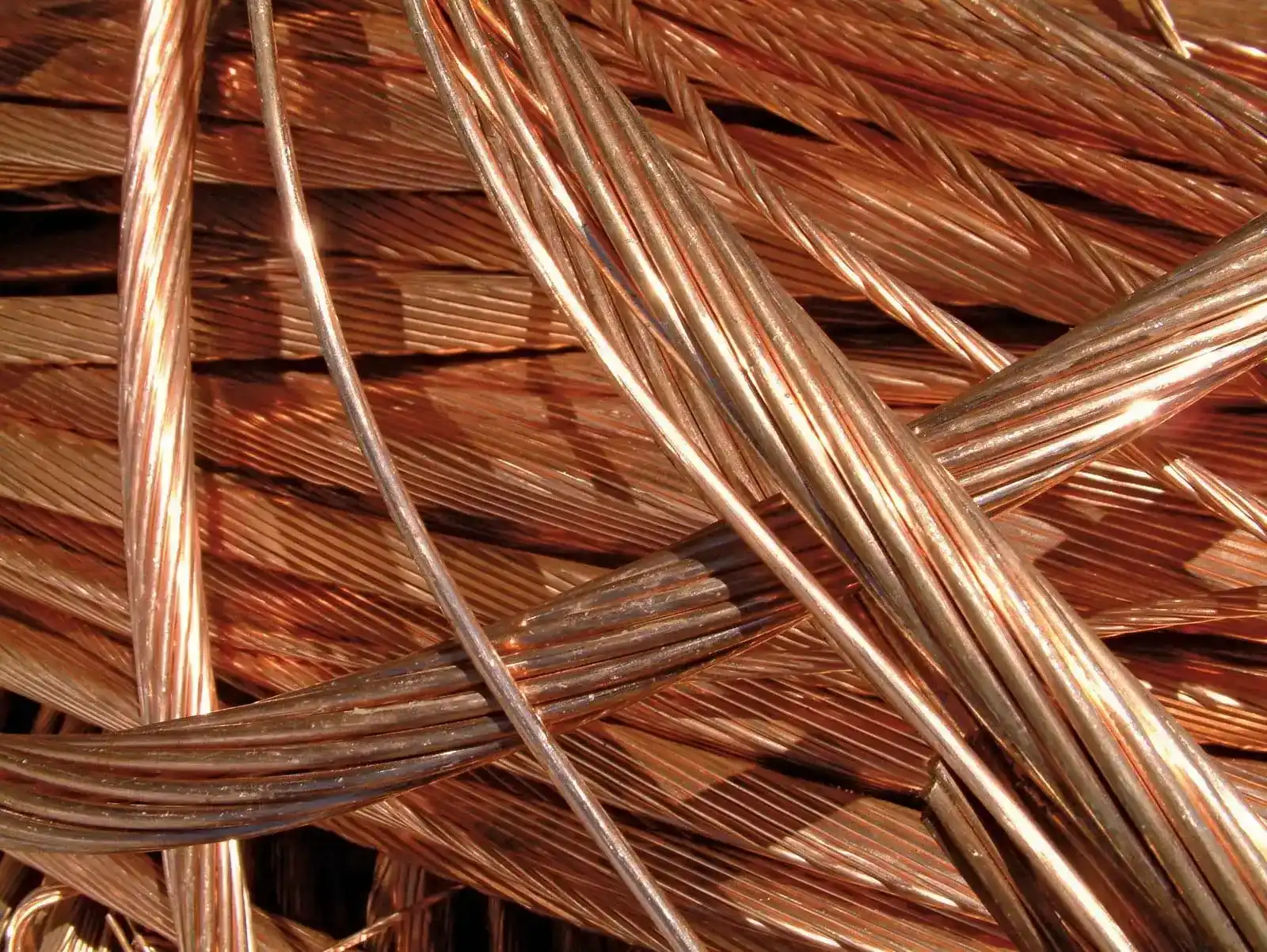
Copper is the Oil of the AI Era
Supply and demand determine price. The view that "copper demand is strong" is more directly visible in the market.
LME three-month copper closed at $13,943 per ton on May 11, 2026, an all-time LME closing high, rising 2.7% for the day. COMEX copper hit an intraday high of $6.58 per pound on May 12. Over the past 12 months, copper has risen 41%. Over the past four weeks, it has risen 10%.
At the beginning of 2025, copper was around $9,000. It broke through $12,000 mid-year, finishing the year up 43%, its best year since 2009. In January 2026, copper broke $13,000 intraday for the first time. Four months later, it's approaching $14,000. The shape of this curve resembles a rediscovered asset being priced by new logic.
Trafigura is the world's second-largest metal trader. Its head of metals analysis, Graeme Train, provided a very concise breakdown of demand: of the additional 10 million tons of copper consumption over the next decade, one-third will come from electric vehicles, one-third from power generation and transmission/distribution, and the remaining third from automation, manufacturing capital expenditure, and data center cooling systems.
In a report titled "AI and Defense Place the Power Grid at the Center of Energy Security," Goldman Sachs offered a sharper verdict: Copper will become the oil of the AI era. Goldman Sachs calculates that by 2030, global power grid and electricity infrastructure construction will account for over 60% of incremental copper demand growth.
This might sound somewhat exaggerated, but it's reasonable upon closer thought.
Copper's conductivity is 100% IACS, second only to silver among all metals. But silver is too expensive. Copper is the only practical answer for almost all large-scale conductive scenarios in industry. The closest substitute is aluminum, but aluminum's conductivity is only 61% that of copper, meaning to transmit the same megawatt of electricity, aluminum wire requires a larger cross-section—it's heavier, occupies more space, and has greater thermal losses. In the centimeter-scale space of a data center rack, this difference is almost unacceptable.
Thermal conductivity is even more so. Copper's thermal conductivity is 401 W/(m·K), five times that of iron and eight times that of stainless steel. A single NVIDIA GB200 card consumes 1,200W. A standard 72-card rack consumes over 130kW. At this level of thermal density, air cooling is insufficient; liquid cooling is mandatory. And almost every component dealing with "heat" in a liquid cooling system—cold plates, pipes, water blocks—is made of copper.
In other words, copper is not the "preferred material" for AI data centers; it is the "only physically viable choice."
AI's power consumption is disruptive, and delivering that power to data centers is very copper-intensive.
A 1GW AI data center requires roughly 27,000 tons of copper just for power distribution and wiring. Meta's Hyperion data center in Louisiana has a scale of 5GW. Calculating based on this, the copper demand for this single project alone approaches 135,000 tons. This doesn't even account for the high-voltage transmission lines, substations, and grid upgrades needed to deliver power to the data center's doorstep.
In our past impression, copper was an easily accessible metal, but recent data suggests this impression may need adjusting.
Starting in March 2026, the US-Iran conflict cut off Middle Eastern sulfur and sulfuric acid exports. Sulfuric acid is a key input for heap leaching copper refining, forcing Chilean refineries to reduce production. This was also the trigger for the current wave of price increases in 2026.
A more structural and macro issue is that globally, no super-large copper mine has been discovered in the past decade. John Meyer, an analyst at UK broker SP Angel, believes the breakeven price for developing the next generation of new copper mines is $13,000 per ton, already exceeding copper's current price. The team led by Wang Jiechao at CITIC Securities estimates a global refined copper deficit of over 100,000 tons in 2026; Citi's forecast is more aggressive at 308,000 tons.
The 2026 Fiber Optic "Great Famine"
Up to this point, the copper story is a clear bullish narrative. But if you zoom into the interior of an AI data center, you'll find something very subtle: part of the demand for copper is being replaced.
"Next-generation AI infrastructure will require massive optical connections because computational demand is growing so rapidly that copper wires can no longer keep up." This is the view expressed by Jensen Huang in an interview this month.
As Huang said, the data transmission needs of AI clusters are pushing beyond the physical limits of copper cables.
Copper cable transmission of high-speed signals has two fundamental constraints: first, signal loss increases dramatically with frequency; second, the size and weight of copper cables become unacceptable at high frequencies. The interconnect bandwidth between GPU clusters is advancing from 200G, 400G towards 800G, 1.6T. The distance copper cables can reliably sustain shrinks from several meters to tens of centimeters. But AI clusters are at a scale of tens of thousands of cards, spanning racks, sometimes even spanning data centers—copper physically cannot do it.
But fiber optics can.
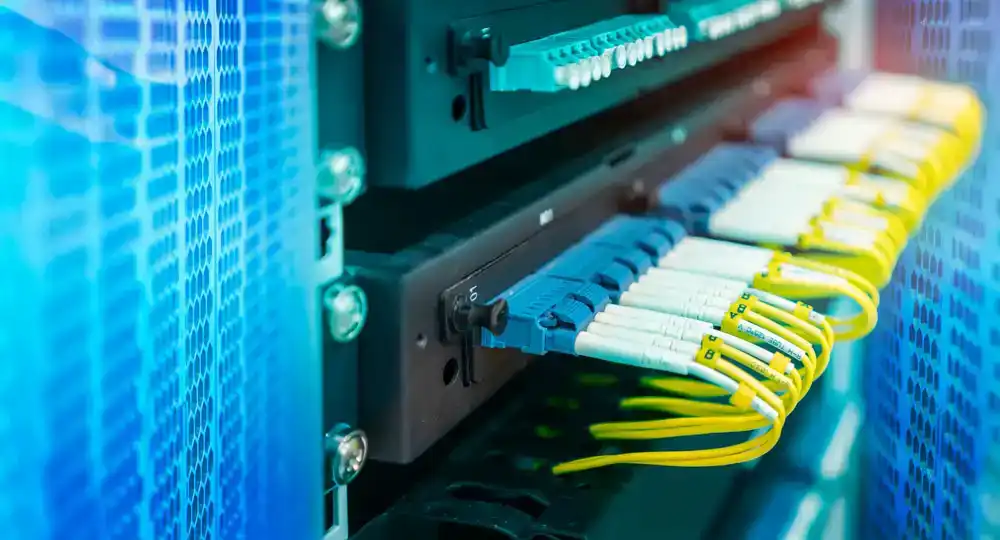
This is why the current surge in fiber optics is more intense, more pure, and more irreversible than copper's. How exaggerated is this spike in fiber optics?
According to CRU data: The price of Chinese G.652D bare fiber surged over 80% between November 2025 and January 2026. The January average price was 31.5 RMB per fiber-core-kilometer, with some actual transactions in the 40 to 50 RMB range, representing a cumulative increase of 94% to 144%.
Fiber optics, an industrial product whose price had been relatively stable for years, more than doubled in three months.
By February 2026, higher-end categories of fiber saw even sharper increases. For example, G.657.A bend-insensitive fiber rose from above 30 RMB per fiber-core-kilometer to above 50 RMB within a month. Sun Telecom directly coined the term "2026 Fiber Optic Great Famine." Its G.652D price per kilometer was $2.20 in 2024, rose to $3.00 in December 2025, and rose again to $4.10 a month later. Overall Asian fiber prices increased 75%, hitting a 7-year high.
AI data center demand for fiber optics represents an order-of-magnitude disruption.
Rahul Puri, CEO of STL's Optical Networking Business, mentioned a figure that gave us pause the first time we saw it: An AI data center requires 36 times the amount of fiber optics of a traditional CPU rack—this is a cliff-like leap.
GPU clusters operate fundamentally differently from CPU ones. A training cluster with tens of thousands of cards requires non-blocking, high-speed interconnections between all GPUs. This network architecture, called a Scale-out architecture, demands bandwidth unimaginable in the CPU era. Additionally, Data Center Interconnect (DCI) links are needed between data centers to stitch together computing clusters in different geographical locations into a supercomputer. For Meta's Hyperion data center project alone, fiber demand reaches 8 million miles.
Returning to the economic principle that price is determined by supply and demand, what about the supply side given this state of demand?
Light Reading reported that at least one leading fiber manufacturer has sold out its entire 2026 inventory. Data Center Dynamics reported that lead times for large customers have extended to 20 weeks, and for small customers, close to a year.
Why can't capacity be expanded quickly? Because the expansion cycle for optical fiber preforms—the core raw material—is 18 to 24 months, with an extremely complex manufacturing process. Even if all manufacturers decided to expand capacity today, the earliest new capacity would only come online in the second half of 2027. Meanwhile, demand will only continue to rise.
Anis Khemakhem, Chief Commercial Officer of Clearfield, provided a more macro number: By 2029, the United States alone will need to add 213.3 million miles of new fiber, doubling the existing 159.6 million miles to 372.9 million miles. In six years, the national fiber inventory doubles.
The biggest winner in this story is Corning.
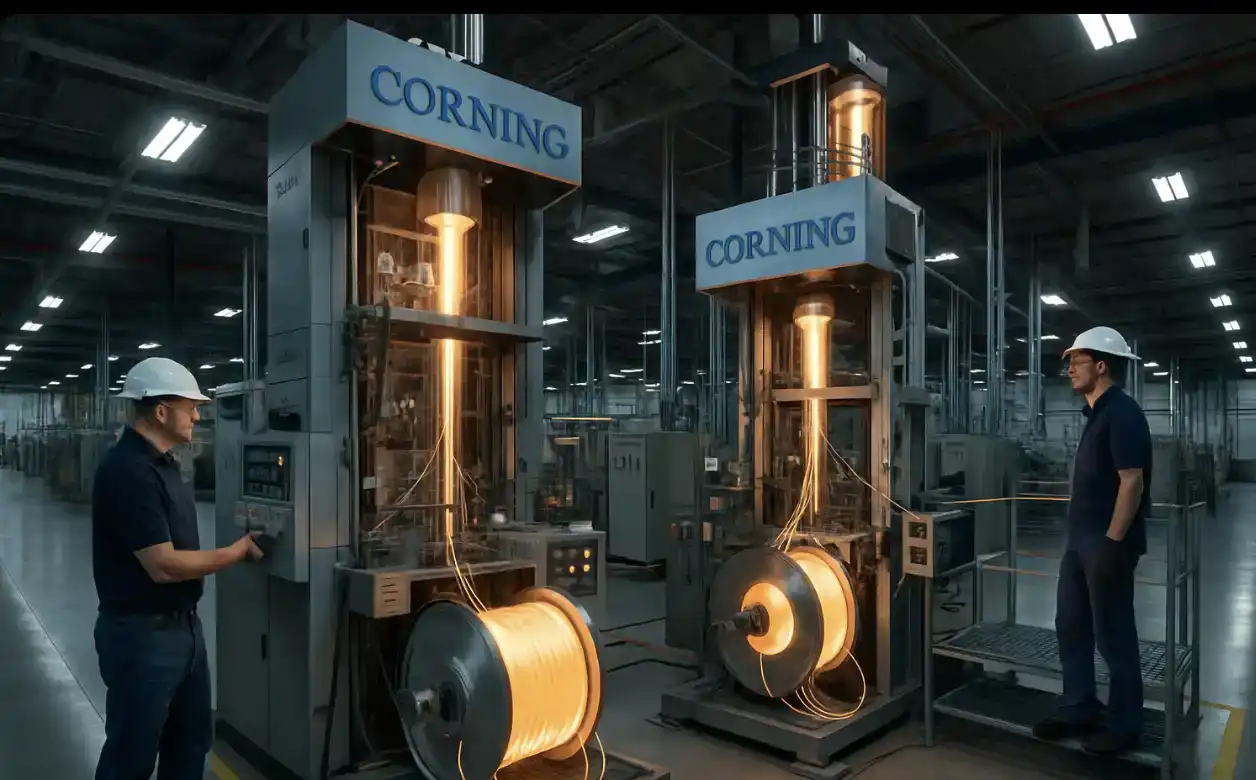
This is a glass company founded in 1851. It made glass bulbs for Edison's light bulbs, glass for TV picture tubes, and Gorilla Glass for the iPhone. Many people don't even know this company still exists. But it is now a core fiber supplier for Meta, Nvidia, OpenAI, Google, AWS, and Microsoft. Its stock price has risen over 75% in the past year. We might explore the story of Corning in a new article later, so we won't delve into it further here.
The story of copper and fiber optics seems to have only just begun to capture mainstream market attention, but we believe this might be the next explosive sector following the storage track.