A 'Difficult Midsummer' for Stock Market Bulls: $100 Oil, AI Backlash, and Tariff Resumption

链捕手Published on 2026-07-27Last updated on 2026-07-27

Abstract

Global equities face a triple threat this summer: surging oil prices, a burgeoning AI capex crisis, and resurgent tariffs, pressuring the core pillars of the current bull market. Brent crude topped $100/barrel amid Middle East and Red Sea supply disruptions, while proposed U.S. tariffs fueled inflation fears, pushing the 10-year Treasury yield to 4.66%. Simultaneously, the tech rally faltered as Alphabet's steep AI capex hike sparked concerns over returns, dragging down mega-caps and contributing to a weekly S&P 500 decline. The "Goldilocks" narrative of resilient profits, controlled inflation, and endless AI expansion is cracking. Rising oil prices threaten to reignite persistent inflation, forcing a repricing of interest rate risks. In tech, massive debt-fueled AI investments are facing investor scrutiny as higher rates raise the required return threshold. Fears are growing that the AI spending boom may be unsustainable, especially with moves toward cheaper, open-source models. Next week brings a crucial test with key central bank meetings and earnings from major tech firms like Microsoft and Apple. Technical indicators are deteriorating, with selling pressure mounting and assets like gold and the dollar gaining on避险 sentiment. Analysts warn that elevated valuations and compressed risk premiums leave markets vulnerable, with significant potential downside if the current headwinds persist.

Author: Gao Zhimou, Wall Street News

Global stock markets are facing a severe stress test this midsummer. Soaring crude oil prices, ballooning AI capital expenditures, and the resumption of tariff policies are simultaneously battering the core pillars supporting the current bull market.

Affected by severe shipping disruptions in the Middle East and the Red Sea, Brent crude oil broke through $100 per barrel this week, hitting a two-month high. Concurrently, Trump proposed tariffs of 10% to 12.5% on about 60 economies. The combination of these two factors has rapidly pushed up market inflation expectations, prompting the 10-year US Treasury yield to climb to 4.66%.

The technology sector suffered heavy losses this week. Google's significant upward revision of its capital expenditure guidance sparked concerns about the return on AI investments, dragging down the "Magnificent Seven," whose combined market value evaporated by nearly 6% for the week. As a result, the S&P 500 posted its second consecutive weekly decline and recorded its largest single-day drop of the month, while the 30-year US Treasury yield approached its highest level since 2007.

The bull market logic of resilient profits, manageable inflation, and ongoing AI spending expansion is showing signs of faltering. Currently, Barclays has downgraded its risk asset rating to neutral, Goldman Sachs maintains a neutral three-month outlook, and HSBC has shifted its strategy from the semiconductor sector to European banks. Wall Street institutions are intensively releasing tactical defensive signals.

Hundred-Dollar Oil and the Inflation Specter

Conflict in the Middle East is the origin of this week's market turbulence.

The fighting has spread from the Strait of Hormuz to the Red Sea, causing a triple fracture in the global oil supply chain: According to maritime data company Kpler, only six ships passed through the Strait of Hormuz on Thursday, with traffic dropping to one-tenth of pre-war levels; the alternative Red Sea route previously activated by Saudi Arabia to bypass the Strait of Hormuz was hindered after two Saudi oil tankers were attacked by the Houthis; and the escalation of the Russia-Ukraine conflict further constrains exports from Kazakhstan.

Maritime intelligence agency Windward analysts estimate that about 25% of global oil supply is now under threat.
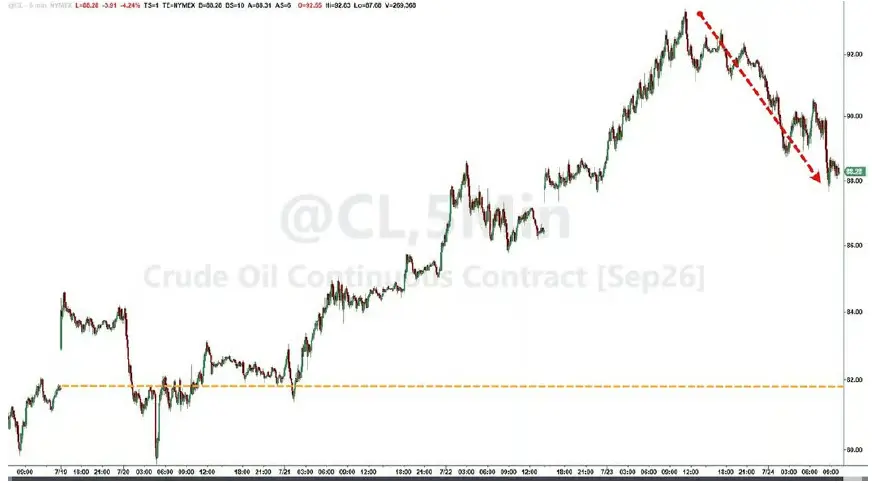
The transmission chain is interlinked: oil prices push up inflation expectations, inflation expectations alter interest rate pricing, and higher interest rates tighten financing conditions. The 10-year US Treasury yield rose about 10 basis points this week to 4.66%, a new high since the beginning of Trump 2.0 administration; the market has priced in two rate hikes this year, with the probability of an FOMC hike next week at 30%.

"Crude oil is the most likely trigger factor," judged Nomura cross-asset strategist Charlie McElligott — higher oil prices are repricing the "inflation tail risk," meaning the probability of more persistent inflation emerging. This shock transmits to the interest rate market before it erodes corporate profits.

J.P. Morgan global strategist David Lebovitz focuses on persistence: if crude oil remains high throughout the summer, risk premiums will need to be comprehensively reassessed.

The AI Arms Race Encounters a Crack in Trust

Beyond oil prices, cracks also appeared this week in the AI investment narrative.

As the first hyperscale tech company to report this quarter, Alphabet's earnings themselves were not problematic — cloud business grew 82% year-over-year, search grew 17%. However, the company simultaneously raised its 2026 capital expenditure guidance by 8% to $195-205 billion, causing its stock to plummet about 8% for the week. Tesla's experience was even more brutal: Q2 Non-GAAP EPS missed expectations due to margin compression, compounded by concerns about the pace of AI product pipeline delivery, leading to a near-20% weekly plunge.
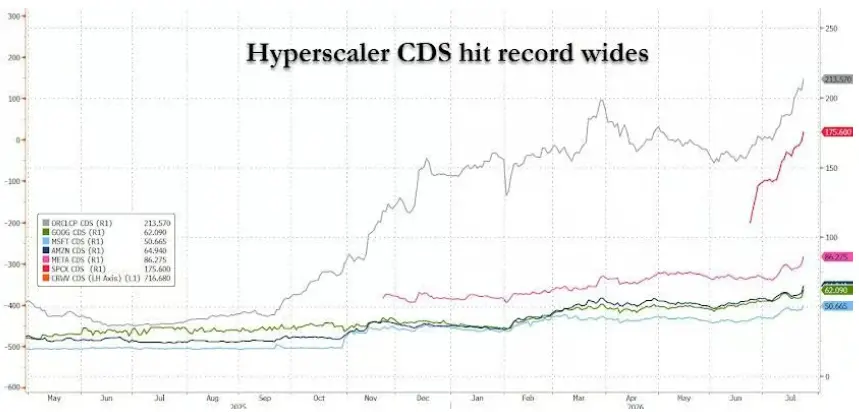
The divergence in credit markets is particularly noteworthy.

According to Goldman Sachs data, $489 billion in AI-related debt has been issued so far in 2026, a 50% increase from the full year of last year, with 60% coming from non-hyperscale tech companies. The CDS spreads of hyperscale capital spenders have risen to historic highs — while overall credit spreads remain at their tightest levels in years. Pressure has not spread widely, but it is highly concentrated on the AI industrial chain.

The entire industry is pouring unprecedented funds into projects with yet-unknown returns.

Some estimates show that by 2027, cumulative AI capital expenditures will approach $1 trillion. Higher interest rates raise the return hurdle these investments must ultimately clear. "Financing channels remain open, but investors are becoming increasingly selective," Lebovitz said, "The biggest disconnect lies in the assumption that 'AI spending can expand infinitely.'"

Public support for open-source models from Jensen Huang and Elon Musk this week could further shake this logic: cheaper models imply lower expenditure requirements, and the risk of semiconductors reverting to cyclicality is rising.

Next Week: The Ultimate Test for the Bulls

Next week, the Federal Reserve, the Bank of England, and the Bank of Japan will hold policy meetings successively. Companies representing 34% of the S&P 500's market capitalization are set to release earnings, including four of the "Magnificent Seven" — Microsoft and Meta (Wednesday), Apple and Amazon (Thursday). The latest signals on AI capital expenditures will be released intensively.
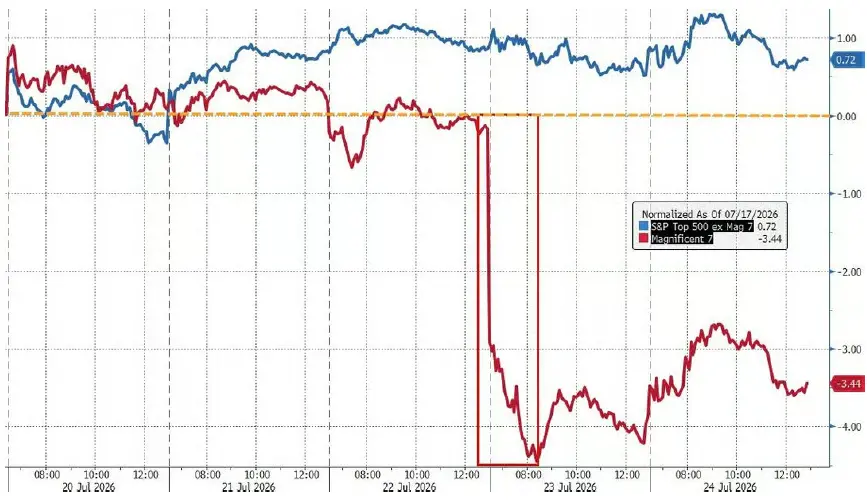
Technical conditions are already deteriorating. Goldman Sachs' trading desk reported this week that overall flows were skewed 12.6% to selling, with long-term funds' selling tilt reaching 21% — "barely seeing any buy-side interest, tech earnings have so far failed to be the stabilizing force many expected." The S&P 500 has broken below its 50-day moving average, market makers are in negative gamma territory, and CTA trigger levels are being closely watched; the Nasdaq has also broken below its 50-day moving average and is testing the June 9th low. Gold has regained the $4,000 level, and the US dollar recorded its best weekly performance in over a month — safe-haven assets are pricing the same unease.

The judgment from Bank of America's European strategist Sebastian Raedler is the most direct: margin expectations, five-year forward earnings growth rates, and the global market capitalization/GDP ratio are all at historical highs, while risk premiums are at 20-year lows. "The market is pricing a scenario where everything goes right and there are no risks," he said. He expects global equity markets to have further downside of 7% to 8%.


Trending Cryptos

Related Questions

QWhat are the three main factors that are putting pressure on the global stock market's 'bullish logic' according to the article?

AThe three main factors pressuring the bullish logic are: 1) Surging oil prices (Brent crude above $100/barrel) due to Middle East and Red Sea shipping disruptions, raising inflation fears. 2) Concerns over the return on massive AI capital expenditures, highlighted by Alphabet's increased spending guidance. 3) The proposed reintroduction of tariffs by Trump, adding to inflation and policy uncertainty.

QHow did the AI capital expenditure narrative face a 'crack in trust' recently, and which companies were key examples?

AThe AI capital expenditure narrative faced a crack in trust as investors questioned the returns on the massive, escalating investments. Key examples were: 1) Alphabet (Google), which saw its stock drop ~8% after significantly raising its 2026 capital expenditure guidance to $195-205 billion, despite strong earnings. 2) Tesla, whose stock plummeted nearly 20% due to margin pressure and concerns over its AI product pipeline's development pace.

QAccording to the article, what specific threat does the global oil supply currently face, and how does this impact financial markets?

AApproximately 25% of global oil supply is estimated to be under threat due to a triple breakdown in shipping routes: severe congestion at the Strait of Hormuz, disruption of the Red Sea alternative route after attacks on Saudi tankers, and reduced Kazakh exports from the Russia-Ukraine conflict. This pushes oil prices higher, raises inflation expectations, leads to higher interest rates (10-year Treasury yield at 4.66%), and tightens financing conditions, creating a headwind for risk assets like stocks.

QWhat is the significance of the technical market signals mentioned for the S&P 500 and Nasdaq, and what do they indicate?

AThe technical signals indicate weakening market momentum and rising selling pressure. Both the S&P 500 and Nasdaq have fallen below their 50-day moving averages. Market makers are in a negative Gamma state, and Commodity Trading Advisor (CTA) trigger levels are being closely watched. These conditions suggest increased volatility and potential for further downside, as the market's technical support levels have been breached.

QWhat are the key upcoming events for the market according to the article, and why are they considered a 'critical test for the bulls'?

AThe key upcoming events are: 1) Central bank meetings from the Federal Reserve, Bank of England, and Bank of Japan, which will provide signals on interest rate policy amidst inflation concerns. 2) Earnings reports from four of the 'Magnificent Seven' tech giants (Microsoft, Meta, Apple, Amazon), which will deliver crucial updates on AI spending plans and profitability. This confluence is a critical test because it will reveal whether corporate earnings and central bank policy can support the market's high valuations in the face of inflation, rising rates, and doubts over AI investment returns.

Related Reads

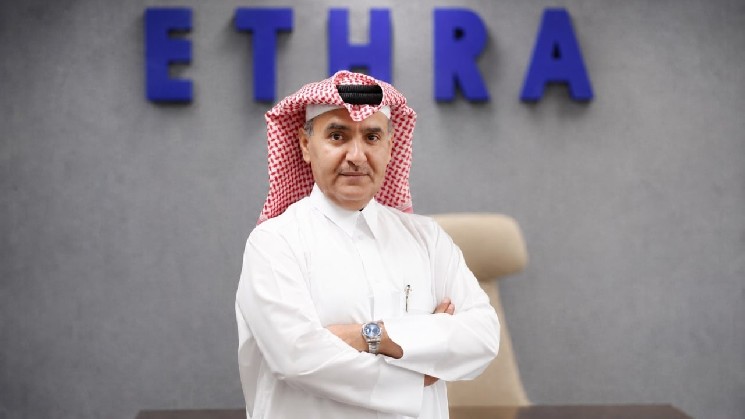
Saeed Al-Marri: How Tokenization Unlocks New Opportunities for Shipping Funds

Said Al-Marri: How Tokenization Opens New Opportunities for Shipping Funds For centuries, commercial shipping has been a capital-intensive asset class limited to institutional funds and shipping dynasties. Said bin Saleh Al-Marri, CEO of Ethra Invest and Ethra Ship, aims to break down these barriers by combining Real World Asset (RWA) tokenization with conservative private equity principles. This bridges decentralized finance (DeFi) with the physical realities of global trade. Tokenization allows fractional ownership of ships on a blockchain, giving smaller investors access to previously inaccessible markets. However, Al-Marri warns it is not a regulatory loophole or a cure for asset illiquidity. The core physical risks are isolated in Special Purpose Vehicles (SPVs) for qualified investors. While tokenization enhances transparency and ownership record-keeping, Al-Marri stresses that a liquid secondary market depends on transparent asset valuation and must not interfere with ship operations managed by professionals. Regarding legal enforcement, smart contracts cannot physically seize a ship. Legal recourse still relies on traditional maritime courts, ship mortgages, and flag state laws, with blockchain records needing to mirror legal ownership in the SPV perfectly. Beyond ownership, the industry faces administrative hurdles like paper-based bills of lading. Al-Marri argues the bottleneck is legal and operational standardization, not technology. He advocates for a hybrid model combining digital trade documents and programmable settlements with support from regulated financial institutions, rather than a full crypto replacement for tools like Letters of Credit. A major challenge is decarbonizing the global fleet by 2050. Transitioning to green fuels requires massive upfront investment. Al-Marri emphasizes a conservative, holistic approach to underwriting these projects, evaluating technology, fuel availability, safety, and resale value. Investments must be justified under conservative forecasts, not just optimistic ones. By combining pragmatic risk management with digital infrastructure, leaders like Al-Marri show that the evolution of maritime finance is about mobilizing capital to build a modernized and sustainable global fleet, not just putting ships on a blockchain.

cryptonews.ru7m ago

Saeed Al-Marri: How Tokenization Unlocks New Opportunities for Shipping Funds

cryptonews.ru7m ago

Six Years Later, UNI Finally Welcomes Its Own "Buyback Bull"

After years of debate, Uniswap's UNI token has finally entered a 'buyback bull' phase following the long-awaited activation of its fee-switch mechanism. The UNIfication proposal, executed in December 2025, redirected a portion of protocol fees from select pools and Unichain sequencer revenue into a treasury (TokenJar) dedicated to buying back and permanently burning UNI. Initial market reaction was muted due to modest early burn rates. A significant shift occurred in July 2026 with the launch of Robinhood Chain. Uniswap's immediate deployment there skyrocketed trading volume, making it a top fee-generator. Subsequently, governance votes extended the fee mechanism to v4 pools and Robinhood Chain, causing protocol revenue to nearly triple. Daily funds directed to UNI burns rose sharply, with Robinhood Chain contributing over half. This transitioned UNI's narrative from a governance token to a cash-flow asset backed by a perpetual automatic buyer. UNI's price, which had languished around $2.30 in early June, nearly doubled to approach $4.60 by late July. Analysts credit this to the tangible cash flow from fees rather than mere speculation. Unlike many newer projects where buybacks are offset by large investor unlocks, UNI's six-year history has resulted in a widely distributed and relatively clean supply, allowing the buyback pressure to effectively impact the secondary market. The key test will be whether trading activity, particularly on Robinhood Chain, sustains after its initial gas subsidies expire.

marsbit12m ago

Six Years Later, UNI Finally Welcomes Its Own "Buyback Bull"

marsbit12m ago

Only 153 Venture Capital Firms Invested in July: Is the Crypto VC Industry Experiencing a 'Mass Extinction'?

In July 2026, only 153 unique venture capital firms participated in disclosed crypto funding rounds, marking the lowest monthly count since November 2020. This figure represents an 87% decline from the peak of 1,177 firms in 2022. Overall, the first seven months of 2026 saw crypto projects raise approximately $11.78 billion across 481 rounds. This crypto VC contraction contrasts sharply with the broader venture capital landscape, where global VC investment reached a record $560.4 billion in H1 2026, heavily fueled by major AI company financings. This shift in capital allocation has drawn funds away from the crypto sector. Within crypto, funding is highly concentrated. Trading platforms, prediction markets, and payment sectors absorbed 53% of the total capital. While early-stage deals remain frequent, the largest sums flow to a few late-stage rounds and mergers & acquisitions, which surged to $7.23 billion in Q2 2026. The market is consolidating around top funds like a16z crypto and Dragonfly, which successfully raised new multi-billion dollar funds, while many smaller firms have retreated. Analysts describe this as a "great extinction" for crypto VCs, where capital is becoming more selective, favoring proven business models and assets over early-stage speculation. This raises the bar for project quality, funding efficiency, and viable exit paths.

marsbit33m ago

Only 153 Venture Capital Firms Invested in July: Is the Crypto VC Industry Experiencing a 'Mass Extinction'?

marsbit33m ago

Trading

Spot

Hot Articles

Discussions

Welcome to the HTX Community. Here, you can stay informed about the latest platform developments and gain access to professional market insights. Users' opinions on the price of AI (AI) are presented below.

活动图片