Google TPU Shipments Revised Up by 50%

marsbitОпубликовано 2026-06-17Обновлено 2026-06-17

Введение

Recent industry research indicates a significant upward revision in the shipments of Google's TPU (Tensor Processing Unit) chips. Previous expectations for 2027 were set at around 10 million units, but new estimates now point to 15 million units, a 50% increase. This substantial boost directly translates to higher demand across the entire supporting supply chain. Google's TPU clusters utilize a standardized all-optical interconnect architecture. Consequently, key hardware components are deeply integrated and scaled in fixed ratios with the chips. The 15 million TPU target will drive corresponding demand increases for NPO optical engines (roughly a 1:1 match), 1.6T optical modules, OCS optical switches, high-end server power supplies, fiber optics & MPO connectors, and liquid cooling solutions. Among these, liquid cooling is highlighted as the sector experiencing the most significant transformation and offering the most stable potential for excess returns. As next-generation TPU chips reach power levels where traditional air cooling is insufficient, liquid cooling becomes essential. 2026 is forecasted as the first year of substantial adoption for Google's liquid cooling solutions. This shift, coupled with delivery and capacity bottlenecks faced by incumbent overseas manufacturers, is creating a prime window for domestic Chinese suppliers to enter and secure Google's core supply chain. The market size for Google-specific liquid cooling is projected to potentially triple from ...

Recently, the AI computing power sector has experienced a crucial revision in expectations.

Several overseas institutions have quietly raised their shipment forecasts for Google's TPUs, directly overturning the market's previously conservative view on hardware demand for computing power in 2027.

Previously, the industry generally used a lower estimate of 10 million TPUs to calculate supporting demand. However, the latest industry research indicates this figure is likely to be revised up directly to 15 million, representing a 50% new increment.

The significant ramp-up in Google TPU shipments will undoubtedly and tangibly transmit to every link in the entire industry chain, benefiting core sectors such as NPO optical engines, 1.6T optical modules, OCS optical switches, server power supplies, optical fibers & MPOs, and liquid cooling simultaneously.

It is important to know that, unlike the elastic game with NVIDIA's computing power chain, the supporting logic for the Google TPU supply chain is very solid. Hardware ratios are basically fixed, with almost no scenario of demand shrinkage.

Google's TPU clusters adopt a standardized all-optical interconnection architecture. Each hardware component is deeply bound and highly matched with the chip: NPO optical engines and TPUs are basically matched 1:1. 15 million TPUs correspond to an increment of tens of millions of high-speed optical engines;

The previously market-estimated demand for over 30 million 1.6T optical modules will also expand accordingly;

Furthermore, procurement demand for OCS optical switches and high-end server power supplies will also rise in sync with the chip scale.

In simple terms, each upward revision of Google TPU shipment expectations lifts the demand and earnings expectations for the entire computing power supporting chain by another step.

Coupled with the potential for TPU shipments to reach 30–35 million units by 2028 in the longer term, the industry has officially entered a long cycle of sustained growth and rising prosperity. We are now only in the initial stage of performance realization and market uptrend.

Among these core beneficiary sectors, liquid cooling is the direction with the most significant changes and the most stable potential for excess returns in this round.

Previously, market perception of liquid cooling remained on a slow logic of gradual industry penetration and steady growth. However, with the finalization of Google TPU's ramp-up schedule, liquid cooling is officially ushering in a "earnings acceleration + industry reshuffle" dual-driver market, and its investment value has been thoroughly unlocked.

Institutions generally believe that the power consumption of the new generation TPU chips has surged significantly. Traditional air cooling has reached its physical limits and can no longer handle it. Google's new computing power clusters have fully switched to liquid cooling solutions.

According to institutional forecasts, 2026 will be the true first year of volume ramp for Google's liquid cooling.

Specifically, small batch deliveries will start in mid-to-late June, with large-scale volume ramp officially beginning in Q3. The performance realization in the second half of the year is expected to be very high.

But beyond short-term earnings release, the more noteworthy change in the liquid cooling industry is the disruptive window of opportunity for reshaping the competitive landscape.

For a long time, the global high-end liquid cooling market was firmly monopolized by a few leading players from Taiwan, Japan, and the United States.

But now, these overseas players have clearly hit a development bottleneck.

On one hand, their own product performance cannot keep up with the heat dissipation demands of Google's high-power TPUs, and their technological iteration speed lags severely;

On the other hand, existing production capacity is mostly occupied by other computing power sectors, leaving no spare capacity to accept Google's new orders. This has led to a continuous decline in the delivery capability and customer response efficiency of overseas manufacturers, and their once-stable market share has begun to show noticeable looseness.

This provides domestic manufacturers with an excellent window for positioning.

The AI supply chain has a distinct characteristic: whoever gets in first, gets certified first, and secures market share first can lock in stable orders for the next 2–3 years.

Now, domestic liquid cooling manufacturers, leveraging advantages like fast iteration, stable delivery, and sufficient capacity, are continuously entering Google's core supply chain. The trend of domestic substitution has become irreversible.

From a market space perspective, liquid cooling is a typical beneficiary sector of "computing power inflation," with a very logical narrative of both volume and price increases.

According to institutional calculations, as TPU shipments climb from 10–15 million units in 2027 to 30–35 million units in 2028, the market size dedicated to Google's liquid cooling will break through from the hundred-billion level to the 300-billion level, nearly tripling in two years.

Simultaneously, the single-chip power of TPUs continues to upgrade, moving from 1.4 MW towards 2.2 MW and 3 MW. This drives continuous updates and iterations of high-value core components like cold plates and CDUs, increasing the value of single-system liquid cooling solutions and further broadening the industry's profit margin.

The logic for the optical fiber sector is also being continuously refreshed.

In the past, optical fiber was always viewed as a traditional cyclical communications product, with its performance and valuation tied to operator procurement cycles, resulting in significant volatility.

But now, AI computing power construction has completely rewritten its industry logic. Optical fiber has transformed into an indispensable strategic and scarce resource for AIDC computing power clusters.

A severe mismatch in supply and demand structure is the core confidence supporting optical fiber's sustained strength in this round.

Global cloud vendors are accelerating the deployment of AIDC computing power centers. The construction of high-density computing power clusters is generating massive demand for optical fiber interconnection.

However, the expansion cycle for optical fiber preforms is as long as 18–24 months. Short-term production capacity completely fails to keep up with the explosive market demand, and the supply-demand gap in overseas markets continues to widen.

To lock in stable future supply, global leading cloud vendors like Google, Amazon, and Microsoft are proactively signing long-term volume-lock agreements.

This means that, backed by long-term agreements, optical fiber's product prices and shipment volumes will tend to stabilize, completely freeing it from the past industry pain point of major cyclical fluctuations.

From industry data, domestic optical fiber, with its globally leading production capacity, cost, and technological advantages, is steadily capturing the full benefit of globalized dividends.

Institutions predict that China's optical fiber export volume will reach 200–300 million core kilometers in 2026, capturing nearly half of the global AIDC optical fiber demand.

Furthermore, the large-scale deployment of TPU clusters continuously drives the supporting demand for optical fibers and MPO connectors. The growth certainty and sustainability of the optical fiber industry chain have significantly improved, and its valuation will gradually shift from that of a traditional cyclical stock to a high-growth computing power asset.

Beyond the two core sectors of liquid cooling and optical fiber, the upward revision in TPU supply also synchronously drives a comprehensive recovery in supporting segments like NPO optical engines, 1.6T optical modules, OCS optical switches, and server power supplies, leading to a broad-based uptrend across the entire chain.

Among these, optical communication is the most stable fundamental component of the entire industry chain.

NPO optical engines are deeply bound and rigidly matched 1:1 with TPUs. The increment of 15 million TPUs directly creates massive demand for high-speed optical engines.

1.6T optical modules, as the core interconnection hardware for the new generation of computing power clusters, see their demand scale continuously expand with the TPU ramp-up. Leading companies have full order books, and the pace of earnings realization is very clear.

Additionally, OCS optical switches, as core hardware in Google's TPU clusters responsible for dynamic bandwidth scheduling, see demand steadily climb with the scaled deployment of TPUs. Moreover, current market understanding of them is still insufficient, presenting a decent expectation gap.

Regarding the server power supply sector, it is already benefiting from technological iteration dividends. High-density TPU cabinets are comprehensively promoting the replacement of traditional power supplies with high-voltage DC power supplies. Overseas manufacturers lag in iteration speed, allowing domestic manufacturers to顺势切入 the supply chain, opening up a new incremental space for substitution.

Overall, the current investment focus in the AI computing power industry chain is gradually shifting from the pure "chip computing power game" towards the确定性增量 of computing power infrastructure support.

This round of significant upward revision in Google TPU supply, coupled with the potential for doubling in the longer term, will further lock in earnings certainty for the next two years for the entire computing power supporting industry chain.

This article is from the WeChat public account "Gelonghui Thunder Zone" (ID: glh-tlq), author: Tianya.

Связанные с этим вопросы

QAccording to the article, what is the revised shipment expectation for Google TPUs, and by what percentage does it increase?

AThe revised shipment expectation for Google TPUs is 15 million units, up from the previous baseline of 10 million units. This represents a 50% increase.

QWhat are the two core beneficiary sectors highlighted in the article due to the increase in Google TPU shipments?

AThe two core beneficiary sectors highlighted are liquid cooling and optical fiber.

QWhy does the article state that liquid cooling is entering a 'performance acceleration + industry reshuffle' phase?

AThe article states this because the new generation of TPU chips has significantly higher power consumption, making traditional air cooling inadequate. This forces a shift to liquid cooling solutions ('performance acceleration'). Concurrently, overseas suppliers are facing development bottlenecks in technology and capacity, creating a window for domestic Chinese manufacturers to gain market share ('industry reshuffle').

QWhat is the key reason the article gives for the strong performance and supply-demand mismatch in the optical fiber sector?

AThe key reason is the long lead time (18-24 months) required to expand production capacity for fiber preforms. This makes it impossible for supply to keep up with the explosive demand from global AI data center (AIDC) construction, creating a significant and widening supply gap.

QWhich component is described as having a rigid 1:1 matching ratio with Google TPUs?

AThe NPO (Near-Packaged Optics) optical engine is described as having a rigid 1:1 matching ratio with Google TPUs.

Похожее

How Much of the Subscription Fee You Pay to Claude Can Optical Module Companies Get?

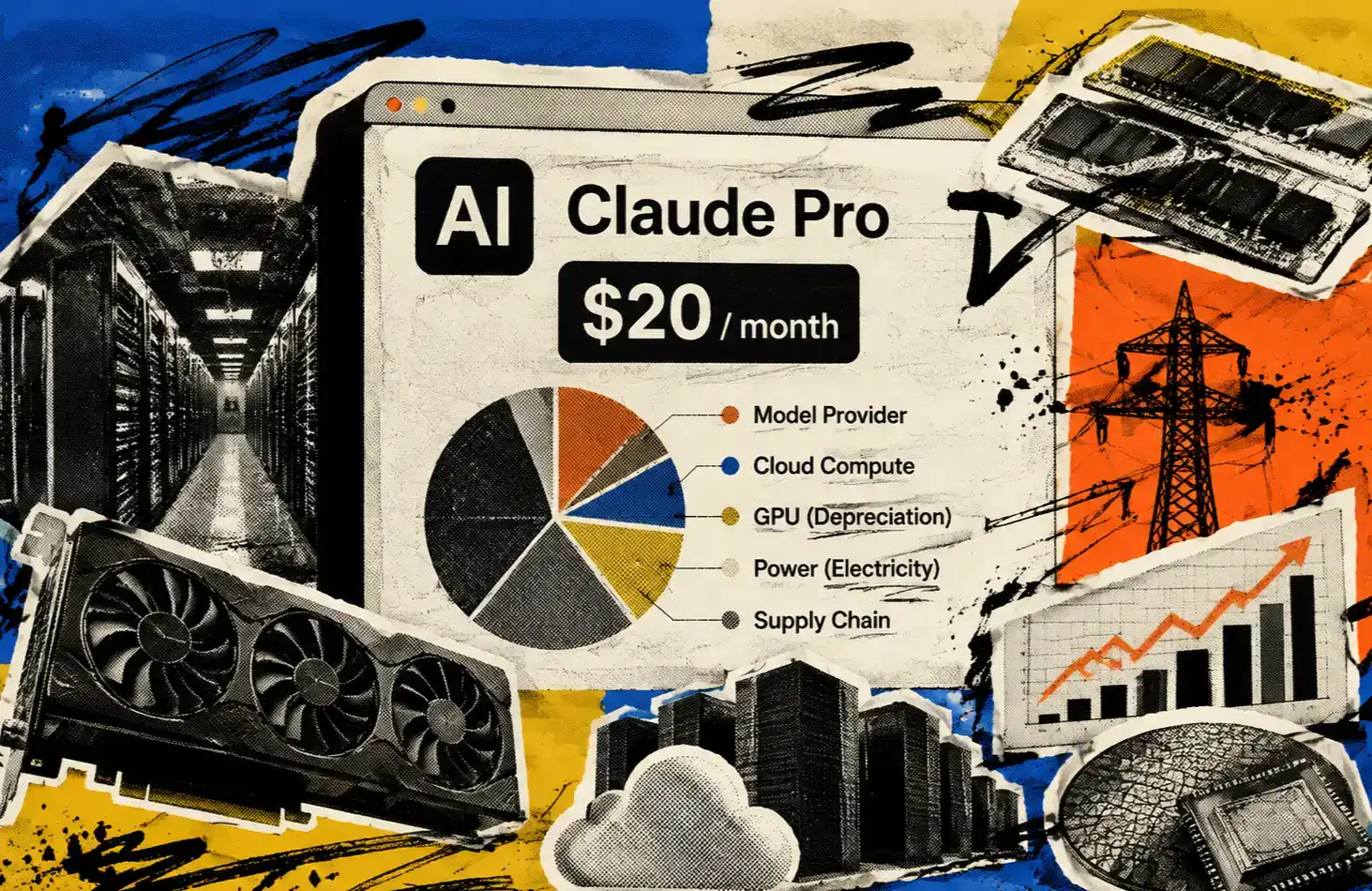
How much of your $20 Claude Pro subscription actually goes to AI model companies like Anthropic? A viral breakdown image highlights the fundamental valuation challenge for AI applications versus traditional SaaS. Unlike SaaS with high software margins, AI subscriptions face variable "inference costs": every user query consumes GPU time, power, and cloud resources. This creates a tension between fixed subscription fees and usage-driven expenses. While the specific dollar splits are illustrative, the core question is whether AI revenue can achieve SaaS-like margins as usage scales. Currently, infrastructure providers (cloud platforms, GPU makers like Nvidia, HBM suppliers, power/data centers) capture more certain revenue from growing AI usage. Their financials reflect pricing power and faster earnings validation. The bullish case hinges on efficiency improvements: model optimization, caching, smaller models, and custom chips could lower per-token costs over time. The key debate is whether cost declines can outpace increases in user workload complexity and volume. Ultimately, for AI companies to command high SaaS-like valuations, they must demonstrate not just user growth but also improving gross margins after accounting for inference costs. Investors will scrutinize not just subscriber numbers, but usage patterns, enterprise pricing tiers, and real efficiency gains.

marsbit12 мин. назад

How Much of the Subscription Fee You Pay to Claude Can Optical Module Companies Get?

marsbit12 мин. назад

OpenAI's Hyperliquid Pre-IPO Pricing Venture: Why Did It Last Only Half a Year?

The article discusses the rise and fall of Pre-IPO pricing markets on the Hyperliquid blockchain. Trade.xyz, an anonymous team, successfully built the largest pre-market for SpaceX (SPCX) by launching a contract with a clear anchor: the eventual Nasdaq listing price. This provided inherent price stability and validation. In contrast, Ventuals, a team backed by Paradigm, failed despite holding exclusive contracts for highly sought-after companies like OpenAI and Anthropic. Its key mistake was its pricing mechanism. For companies with no near-term IPO date, Ventuals' oracle relied partly on opaque private market transactions and, critically, partly on its own contract's moving average price. This created a self-referential feedback loop where prices were artificially propped up and detached from genuine supply and demand, leading to illiquid markets. Ventuals shut down after nine months, settling positions at final prices of $1,341.80 for OpenAI and $1,618.90 for Anthropic. Ironically, some employees and late-stage investors of these very companies reportedly used these flawed Ventuals prices for valuation reference, highlighting the acute demand for any price signal in illiquid private markets. The article concludes that while demand for pre-IPO trading is real and growing, with players like Coinbase now entering the space, the fundamental challenge remains: without a public listing to provide a definitive price anchor, these markets struggle to establish truly accurate and liquid pricing. The need for a transparent, self-correcting market is the critical lesson from Ventuals' failure.

marsbit28 мин. назад

OpenAI's Hyperliquid Pre-IPO Pricing Venture: Why Did It Last Only Half a Year?

marsbit28 мин. назад

With Daily Active Users Reaching 3-4 Times That of the Industry's Second Place, Which Crack in the Office Agent Market Has Tencent's WorkBuddy Torn Open?

Tencent's AI office assistant, WorkBuddy, has achieved daily active users (DAU) 3-4 times that of the industry's second-place product, primarily driven by non-technical users like HR, operations, and administrative staff. Its rapid growth, starting with a public beta in March 2026, highlights a key strategic divergence from competitors like OpenAI's Codex and Anthropic's Claude Code. Unlike those tools, which originated as developer-focused assistants (in command lines or IDEs) and are now expanding towards office scenarios, WorkBuddy was built from the ground up for non-technical office workers. Its development was user-driven, initiated after腾讯云's team observed non-technical employees using their CodeBuddy coding tool for general tasks. WorkBuddy's design is defined by three core decisions aimed at lowering barriers: 1) Using natural language instead of technical concepts, so users describe their goal without needing to understand prompts or agents. 2) Providing pre-packaged "Skill" templates for common office tasks like data processing, content creation, and research. 3) Natively integrating into existing腾讯 ecosystems like腾讯 Docs and WeChat, making the agent a seamless part of the user's workflow rather than a separate tool. This "scenario encapsulation" approach, prioritizing the shortest path for users to get work done, contrasts with the "underlying capability" focus of Codex and Claude, which offer more flexibility but require more technical setup. Analysts confirm WorkBuddy's leading market position in China by mid-2026, with massive user and request growth following its launch. Recognizing the same trend of surging non-technical adoption, OpenAI and Anthropic are now pivoting their products with features like role-based plugins (Codex) and a simplified desktop interface (Claude Cowork). However, adapting tools built for developers requires significant changes to interaction models and integrations. WorkBuddy currently holds an estimated six-month lead in delivering a complete solution for non-technical office users. Its recently launched enterprise version aims to solidify this advantage. The competition underscores two valid paths: embedding agent capabilities directly into familiar work environments versus building powerful, general-purpose agents that users must learn to access. WorkBuddy's early success demonstrates the effectiveness of the former strategy for mainstream office adoption.

marsbit36 мин. назад

With Daily Active Users Reaching 3-4 Times That of the Industry's Second Place, Which Crack in the Office Agent Market Has Tencent's WorkBuddy Torn Open?

marsbit36 мин. назад

Торговля

Спот
Фьючерсы

Популярные статьи

Неделя обучения по популярным токенам (2): 2026 может стать годом приложений реального времени, сектор AI продолжает оставаться в тренде

2025 год — год институциональных инвесторов, в будущем он будет доминировать в приложениях реального времени.

1.8k просмотров всегоОпубликовано 2025.12.16Обновлено 2025.12.16

Неделя обучения по популярным токенам (2): 2026 может стать годом приложений реального времени, сектор AI продолжает оставаться в тренде

Обсуждения

Добро пожаловать в Сообщество HTX. Здесь вы сможете быть в курсе последних новостей о развитии платформы и получить доступ к профессиональной аналитической информации о рынке. Мнения пользователей о цене на AI (AI) представлены ниже.

活动图片