Germany Considers Candidacy of Bitcoin-Critic Nagel for ECB Presidency

cryptonews.ruPublished on 2026-08-10Last updated on 2026-08-10

Abstract

Germany is considering the candidacy of Joachim Nagel, President of the Bundesbank and a critic of Bitcoin, for the position of European Central Bank (ECB) President. The post could become available before 2027, potentially due to an early departure of current ECB head Christine Lagarde. While Nagel has the backing of Germany's finance minister, his chances are considered limited. Analysts view Pablo Hernandez de Cos, former Governor of the Bank of Spain, as the frontrunner for the role. If appointed, Nagel is expected to maintain a skeptical stance toward private digital currencies, including stablecoins and crypto assets like Bitcoin. He has previously compared Bitcoin to the 17th-century tulip mania and argued it fails to meet the criteria of a safe, liquid, and transparent reserve asset, echoing views similar to Lagard's.

The position of President of the European Central Bank (ECB) could become vacant before 2027, and an economist opposed to cryptocurrencies might enter the race for this post.

According to Bloomberg reports, amid growing speculation about a hypothetical early resignation of President Christine Lagarde, discussions are underway to support a German economist for the ECB presidency in the event of unforeseen circumstances.

The candidate would be the current President of the Bundesbank, Joachim Nagel, who assumed office under German President Frank-Walter Steinmeier in 2022. Finance Minister Lars Klingbeil will support Nagel's candidacy, while conservative Chancellor Friedrich Merz has not publicly endorsed him, leaving Nagel's candidacy under discussion for now.

Nagel's chances are slim, and he would be something of a 'dark horse,' as most economists believe Pablo Hernandez de Cos, the former Governor of the Bank of Spain and current General Manager of the Bank for International Settlements (BIS), will be elected, ahead of another strong candidate, Klaas Knot. De Cos holds a critical stance on private money, emphasizing that widespread adoption of stablecoins could pose macroeconomic risks.

Nevertheless, support from the German government, which manages Europe's largest economy, could give Nagel the momentum needed to win the race.

In the past, Nagel has openly criticized cryptocurrencies; if victorious, he is expected to maintain a skeptical stance similar to Lagard's towards private money, namely stablecoins, and other cryptocurrencies.

In a 2025 interview, he compared the rise of crypto assets unlinked to the banking system, such as Bitcoin, to the 17th-century tulip mania. "The hype always dies down at some point. Crypto assets like Bitcoin are digital tulips," he emphasized.

Furthermore, he opposes the use of Bitcoin as a reserve asset, explaining that reserve assets "must be safe, liquid, and transparent." "Bitcoin does not meet any of these criteria," he concluded, expressing a viewpoint similar to Lagarde's.


Trending Cryptos

Related Questions

QWho is being considered as a potential candidate for the next ECB President, according to the article?

AJoachim Nagel, the President of the Bundesbank (Germany's central bank), is being considered as a candidate for the European Central Bank Presidency.

QWhat is Joachim Nagel's stance on cryptocurrencies like Bitcoin, as mentioned in the article?

AJoachim Nagel is a vocal critic of cryptocurrencies. He has compared the rise of crypto assets like Bitcoin to the 17th-century tulip mania, calling them 'digital tulips.' He also opposes Bitcoin being used as a reserve asset, stating it is not safe, liquid, or transparent.

QWho is considered the more likely candidate to win the ECB Presidency, and what is his view on stablecoins?

APablo Hernández de Cos, former Governor of the Bank of Spain and current General Manager of the Bank for International Settlements (BIS), is considered the more likely candidate. He holds a critical position towards private money, emphasizing that the widespread adoption of stablecoins could pose macroeconomic risks.

QWhich German political figures are mentioned in relation to supporting or not supporting Nagel's candidacy?

AGerman Finance Minister Lars Klingbeil is supportive of Nagel's candidacy. However, the conservative Chancellor Friedrich Merz has not publicly endorsed him, leaving Nagel's candidacy under discussion.

QWhy might Nagel still have a chance in the race despite being considered a 'dark horse'?

ANagel might still have a chance because he has the potential support of the German government, which runs Europe's largest economy. This backing could provide him with the necessary momentum to win the race.

Related Reads

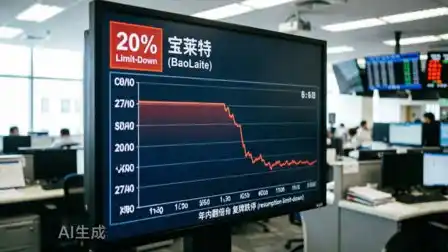
Stock Price Doubles Within the Year, Plummets 20% After Resumption, Baolai Medical's 'Chip Backdoor Listing' Script Ends

On August 10, 2026, BPL (300246.SZ) resumed trading after a nearly week-long suspension and immediately fell by a 20% limit-down. This plunge was triggered by the termination of a planned controlling stake transfer, dashing earlier market speculation. In January 2026, Zhejiang Quwei Zhihe Partnership entered as a significant shareholder, sparking hopes. Investors speculated that its backer, Weigu Information—a specialized "little giant" company in high-reliability solid-state storage chips—might be seeking a backdoor listing through BPL. This "cross-industry restructuring" expectation fueled a strong rally, with BPL's stock price more than doubling in 2026 prior to the halt. However, the deal was called off on August 7, directly causing the sharp sell-off. Underlying BPL's vulnerability is its fundamentally weak business. The company, a medical device firm, is mired in losses, having reported three consecutive years of net losses totaling over 200 million yuan. Its core hemodialysis business is squeezed by government procurement price cuts, while growth in its patient monitor segment has stalled. Furthermore, BPL faces imminent debt pressure with convertible bonds worth approximately 218 million yuan due in September 2026, and its current stock price is far below the conversion price. The failed control transfer may represent a delayed release of negative news, but BPL's core challenges remain: reversing operational losses and addressing its urgent liquidity crisis.

marsbit26m ago

Stock Price Doubles Within the Year, Plummets 20% After Resumption, Baolai Medical's 'Chip Backdoor Listing' Script Ends

marsbit26m ago

Moore Threads, Having Just Raised 8 Billion, Is Already Planning a Hong Kong IPO

On August 9th, Moore Threads announced plans for a Hong Kong IPO alongside a strong first-half 2026 earnings report. Listed on the Shanghai STAR Market in December 2025 as the "first domestic GPU stock," the company raised 8 billion yuan. Its stock price initially surged but has since fallen 40% from its peak. This decline followed market concerns over its use of substantial idle raised funds for low-risk financial products instead of promised projects. The company's H1 2026 revenue reached 1.74 billion yuan, a 147.4% year-over-year increase, already surpassing its full-year 2025 revenue. This growth is attributed to strong demand for AI and full-feature GPUs, particularly its Kuae AI computing clusters. Despite the revenue surge, Moore Threads remains unprofitable on a non-GAAP basis, with a net loss of 115 million yuan after adjustments. R&D and sales expenses grew significantly. The proposed Hong Kong listing aims to support its global strategy, attract international talent, and improve corporate governance, following the path of other Chinese tech firms pursuing dual listings. However, its港股 IPO valuation may face challenges as international investors could benchmark it against peers like Biren Technology, potentially demanding a discount. In summary, while Moore Threads is expanding rapidly and strategically seeking a港股 listing for global growth, it continues to face profitability challenges amid high costs and market skepticism about its capital allocation and valuation.

marsbit48m ago

Moore Threads, Having Just Raised 8 Billion, Is Already Planning a Hong Kong IPO

marsbit48m ago

Trading

Spot

Hot Articles

What is $BITCOIN

DIGITAL GOLD ($BITCOIN): A Comprehensive Analysis Introduction to DIGITAL GOLD ($BITCOIN) DIGITAL GOLD ($BITCOIN) is a blockchain-based project operating on the Solana network, which aims to combine the characteristics of traditional precious metals with the innovation of decentralized technologies. While it shares a name with Bitcoin, often referred to as “digital gold” due to its perception as a store of value, DIGITAL GOLD is a separate token designed to create a unique ecosystem within the Web3 landscape. Its goal is to position itself as a viable alternative digital asset, although specifics regarding its applications and functionalities are still developing. What is DIGITAL GOLD ($BITCOIN)? DIGITAL GOLD ($BITCOIN) is a cryptocurrency token explicitly designed for use on the Solana blockchain. In contrast to Bitcoin, which provides a widely recognized value storage role, this token appears to focus on broader applications and characteristics. Notable aspects include: Blockchain Infrastructure: The token is built on the Solana blockchain, known for its capacity to handle high-speed and low-cost transactions. Supply Dynamics: DIGITAL GOLD has a maximum supply capped at 100 quadrillion tokens (100P $BITCOIN), although details regarding its circulating supply are currently undisclosed. Utility: While precise functionalities are not explicitly outlined, there are indications that the token could be utilized for various applications, potentially involving decentralized applications (dApps) or asset tokenization strategies. Who is the Creator of DIGITAL GOLD ($BITCOIN)? At present, the identity of the creators and development team behind DIGITAL GOLD ($BITCOIN) remains unknown. This situation is typical among many innovative projects within the blockchain space, particularly those aligning with decentralized finance and meme coin phenomena. While such anonymity may foster a community-driven culture, it intensifies concerns about governance and accountability. Who are the Investors of DIGITAL GOLD ($BITCOIN)? The available information indicates that DIGITAL GOLD ($BITCOIN) does not have any known institutional backers or prominent venture capital investments. The project seems to operate on a peer-to-peer model focused on community support and adoption rather than traditional funding routes. Its activity and liquidity are primarily situated on decentralized exchanges (DEXs), such as PumpSwap, rather than established centralized trading platforms, further highlighting its grassroots approach. How DIGITAL GOLD ($BITCOIN) Works The operational mechanics of DIGITAL GOLD ($BITCOIN) can be elaborated on based on its blockchain design and network attributes: Consensus Mechanism: By leveraging Solana’s unique proof-of-history (PoH) combined with a proof-of-stake (PoS) model, the project ensures efficient transaction validation contributing to the network's high performance. Tokenomics: While specific deflationary mechanisms have not been extensively detailed, the vast maximum token supply implies that it may cater to microtransactions or niche use cases that are still to be defined. Interoperability: There exists the potential for integration with Solana’s broader ecosystem, including various decentralized finance (DeFi) platforms. However, the details regarding specific integrations remain unspecified. Timeline of Key Events Here is a timeline that highlights significant milestones concerning DIGITAL GOLD ($BITCOIN): 2023: The initial deployment of the token occurs on the Solana blockchain, marked by its contract address. 2024: DIGITAL GOLD gains visibility as it becomes available for trading on decentralized exchanges like PumpSwap, allowing users to trade it against SOL. 2025: The project witnesses sporadic trading activity and potential interest in community-led engagements, although no noteworthy partnerships or technical advancements have been documented as of yet. Critical Analysis Strengths Scalability: The underlying Solana infrastructure supports high transaction volumes, which could enhance the utility of $BITCOIN in various transaction scenarios. Accessibility: The potential low trading price per token could attract retail investors, facilitating wider participation due to fractional ownership opportunities. Risks Lack of Transparency: The absence of publicly known backers, developers, or an audit process may yield skepticism regarding the project's sustainability and trustworthiness. Market Volatility: The trading activity is heavily reliant on speculative behavior, which can result in significant price volatility and uncertainty for investors. Conclusion DIGITAL GOLD ($BITCOIN) emerges as an intriguing yet ambiguous project within the rapidly evolving Solana ecosystem. While it attempts to leverage the “digital gold” narrative, its departure from Bitcoin's established role as a store of value underscores the need for a clearer differentiation of its intended utility and governance structure. Future acceptance and adoption will likely depend on addressing the current opacity and defining its operational and economic strategies more explicitly. Note: This report encompasses synthesised information available as of October 2023, and developments may have transpired beyond the research period.

1.7k Total ViewsPublished 2025.05.13Updated 2025.05.13

What is $BITCOIN

Discussions

Welcome to the HTX Community. Here, you can stay informed about the latest platform developments and gain access to professional market insights. Users' opinions on the price of BTC (BTC) are presented below.

活动图片