Bitcoin is a dynamic monetary asset with the potential of being both — a commodity and a currency. For instance, the Securities and Exchange Commission (SEC) classified BTC as a commodity, whereas El Salvador made Bitcoin a legal tender in 2021.
So, does this make BTC a store of value or a medium of exchange? It can do both — On one hand, BTC can be added to treasuries as an inflationary hedge. On the other hand, it could also serve the retail purpose of paying for routine expenses.
Almost over a decade ago, the first person to utilize Bitcoin for a business transaction was Laszlo Hanyecz, who spent 10,000 BTC on two pizzas, or as the crypto community addresses it, the Bitcoin pizza. However, that is not the amount of BTC anyone needs to actually buy food in the real world now. Why? Because customers have realized to only pay the amount for which the product is worth, not more or less.
This article will discuss different ways by which one can buy food using Bitcoin. From crypto debit cards and gift cards to crypto food delivery portals, this article will lay down all possible options to efficiently use cryptocurrency for grabbing a meal.
Various ways to buy food using cryptocurrency
There are a few ways to buy food with Bitcoin, depending on the user’s needs and interests. Following this, these are the three most common ways to use cryptocurrency for daily expenses like food:
Crypto cards
Crypto cards are like regular debit or credit cards, but crypto cards let the customer use their crypto to make payments. They essentially deduct crypto from the user’s wallet and transfer fiat at the merchant’s end.
It helps users pay their routine bills through crypto without the complexities of finding outlets that accept crypto payments. Moreover, nowadays, numerous crypto card companies offer mobile apps that make it easy for the customer to spend Bitcoin anywhere.
Crypto gift cards
Customers may purchase gift cards for several food and delivery services using cryptocurrencies. They can then redeem said gift cards to pay for their meals in digital currencies. Crypto gift cards facilitate the sale and purchase of items from participating merchants to customers using cryptocurrency. There are a number of companies that offer gift cards, so it’s easy to find one that fits user needs.
Crypto food delivery portals
Crypto food delivery sites are connected to many food and beverage outlets across various regions. It is like a website or application for ordering food from nearby restaurants and paying the platform via crypto instead of paying the food vendor.
How to buy food using a crypto card?
Crypto cards allow Bitcoin transactions on various items in the physical world. However, in order to spend BTC via a crypto card for daily needs like food, consumers need to follow certain steps:
The first step is to set up a digital wallet, along with a merchant account. Given there are several crypto cards available in the market. Hence, it is ideal to research the options and choose one that meets the respective user’s needs and budget.
Sign up by downloading the app and completing the Know Your Customer (KYC) requirements. Registering for the card and creating an account with the provider will allow the user to efficiently access their funds and make purchases online or in-store.
Users may set up a spending limit along with scheduling regular deposits into their accounts.
Almost all crypto cards allow customers to instantly convert crypto to fiat. Nevertheless, how to choose a crypto card that suits an individual’s goals? While some customers may prefer cash-back rewards, others may gravitate toward yielding services.
Many cards are suitable for regular shoppers since they work as purchase reward cards that allow users to earn money back on purchases. Following this, some cards also allow users to earn interest on crypto held in the account.
Furthermore, while accessing the utility of a crypto card, make sure to check for multi-coin support. The crypto card should ideally support several cryptocurrencies, such as BTC, Ether and Litecoin, among others.
Companies offering crypto credit cards include BlockFi and Gemini. However, more companies offer crypto debit cards, such as Coinbase, Crypto.com, BlockCard, Binance Visa Card and BitPay.
How to buy food using a crypto gift card?
Crypto gift cards are loaded with digital funds that can be used at any participating restaurant or retail store. They’re straightforward to use and provide a way for customers to spend their cryptocurrencies in a convenient manner. Here are some steps on how to get started:
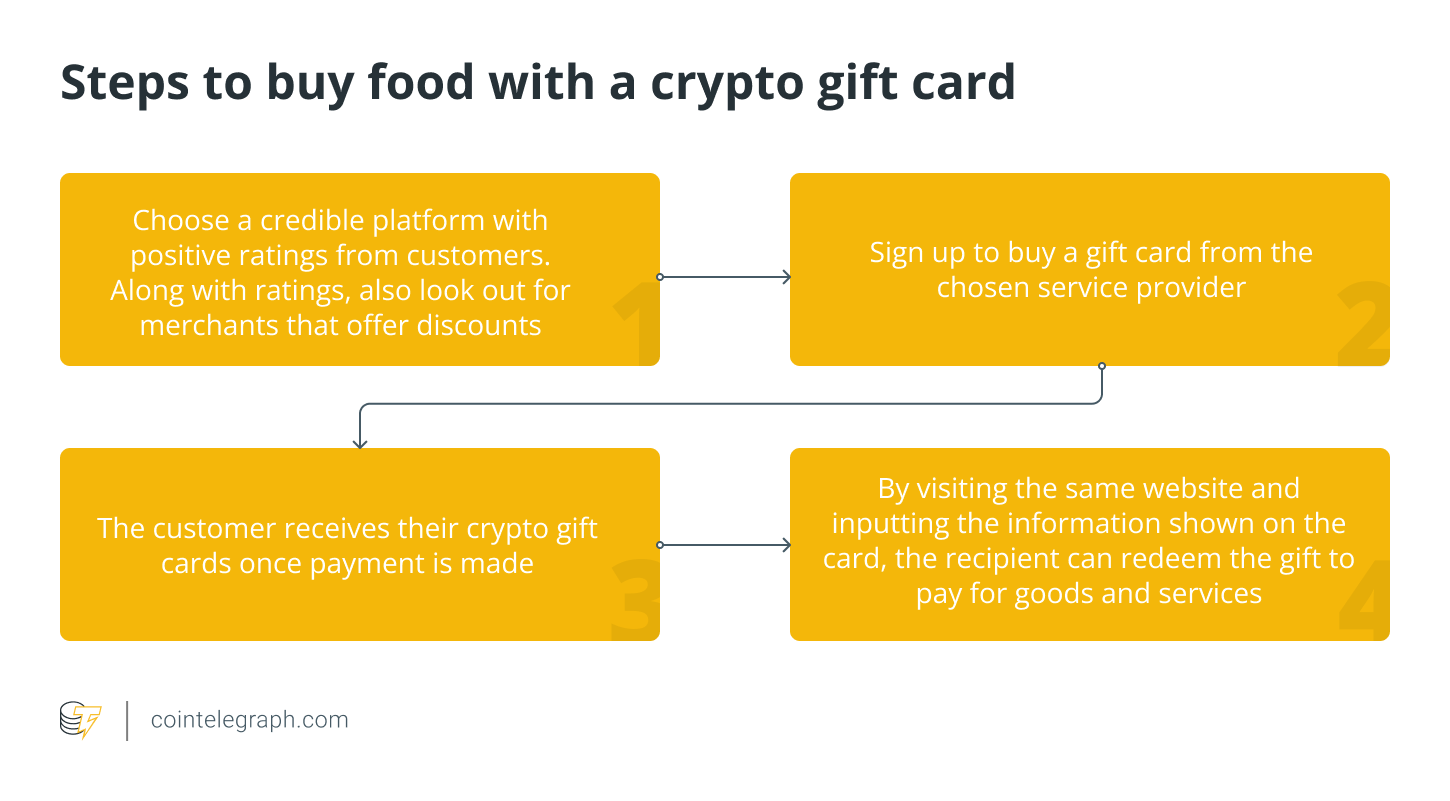
Brands like Amazon and Walmart don’t accept Bitcoin directly, but they do accept crypto gift card services. Following this, to directly pay for food in BTC using a crypto gift card, users may use Bitrefill. It is a website that offers gift cards, prepaid mobile refills and Bitcoin Lightning Network services for over 1600 products in 170 countries.
How to use crypto food delivery portals?
Crypto food delivery portals are not drastically different from using crypto gift cards. Both connect the user to merchants that accommodate the use of crypto services for payments. Following this, the steps are also fairly similar — choosing a platform, signing up and loading the wallet with funds.
Furthermore, customers have different options for using a crypto-delivery portal to buy food. From simply buying food with cryptocurrency to purchasing groceries on credit and then paying off those purchases with cryptocurrency, both make crypto delivery portals convenient for making crypto payments.
Platforms that allow users to order food directly from restaurants and then pay for it in cryptocurrency, like Hungry? in the United Kingdom, Sprigz in the United States, BiteMyCoin in Australia and Eats24/7 in Canada, can be an alternative way of ordering food using cryptocurrencies.
Should you buy food with crypto?
There is no black-and-white answer to whether or not users should choose crypto payments to buy food. However, there are both benefits and drawbacks to using cryptocurrency for food purchases.
On the plus side, cryptocurrency transactions are generally quick and straightforward. Following this, given that cryptocurrency transactions are recorded on the blockchain, it makes the process of tracing the history of transactions efficient. Furthermore, crypto payments directly connect the customer to the merchant, eliminating the need for intermediaries such as banks.
On the flip side, crypto payments pose a threat of monetary loss via hacks. Additionally, the digital asset class is also highly volatile, which may cause difficulty in pursuing daily transactions. So users must do their research before using cryptocurrency as a medium of exchange for daily expenses.