V 神:Rollup 二层网络的三个阶段

元宇宙之道Published on 2022-11-07Last updated on 2022-11-07

Abstract

目前有大量的(optimistic 和 ZK)rollup 项目,它们处于不同的发展阶段。

目前有大量的(optimistic 和 ZK)rollup 项目,它们处于不同的发展阶段。这些项目共有的一个模式是使用了临时辅助轮:虽然项目的技术仍然不成熟,但为了发展生态的目的,便选择了提前启动,而不是完全依赖其欺诈证明或 ZK 证明,然后有某种多重签名能够在代码中存在漏洞的情况下强制执行特定结果。

L2beat 的风险分析页面,显示了有关各种 rollup 项目的大量统计信息,包括它们的辅助轮状态:
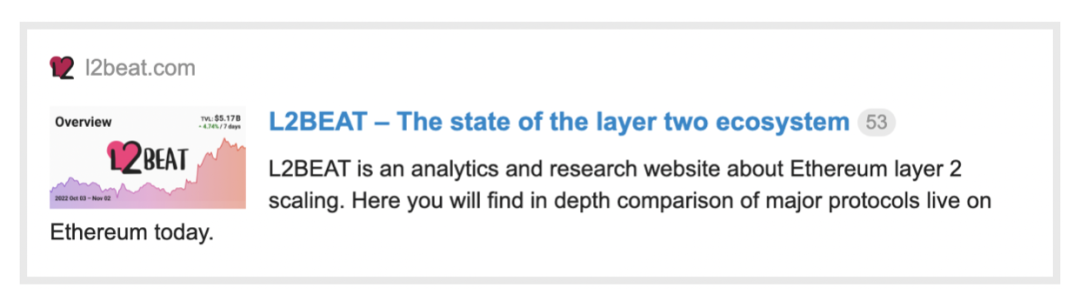
然而,截至今天,这些信息还没有很好地被标准化,这使得用户很难理解特定 rollup 所使用的特定信任模型。Rollup 团队甚至可能有动力对他们当前的信任模型保持沉默,而是将讨论重点放在完全无需信任的未来。

这篇文章提出了一个简单的基于里程碑的模式,来帮助我们将 Rollup 分为三个不同的阶段(具体取决于它们对辅助轮的依赖程度),这样做是为了实现以下几个目标:

让用户更容易识别特定 Rollup 在多大程度上依赖于“对特定人群的信任”以及“对代码的信任”;

激励 Rollup 项目方改进他们的信任模型,降低信任最小化被取消优先级的风险;

给生态一些精确的里程碑来协调和庆祝,让我们说“The Surge”何时完成一半或完全完成,这与“The Merge”是类似的。

此模式并非旨在暗示一种道德判断,即尽快实现代码信任最大化是唯一正确的行动方案。Rollup 绝对应该有一个明确的摘掉辅助轮的路线图,但只有在准备好后才应该摘掉辅助轮。

图片来源:由无界版图 AI 工具生成。

概要

阶段 0:完整的辅助轮

要求:

该项目应该称自己为 Rollup。

所有 Rollup 交易都应该上链。

应该存在一个“rollup 全节点”:一个可独立运行的软件包,它可读取 L1 链,提取和 rollup 链,并计算 rollup 链的当前状态。如果它不同意发布到合约中的 Rollup 状态根,它应该发出警报。

应该有一种机制允许用户发布 Rollup 交易,或者至少确保在没有运营商合作的情况下提取他们的资产。即运营商不能通过对用户的审查来冻结或窃取用户的资产;他们这样做的唯一可能工具,必须是发布虚假状态根。

如果发布新状态根的链上机制只是一个多重签名,其中没有任何有效的欺诈证明或有效性证明,那也没关系。

阶段 1 :有限的辅助轮

要求:

必须有一个正在运行的欺诈证明或有效性证明方案,它具有接受或拒绝哪些状态根被 Rollup 合约接受的实际权限。

可以存在基于多重签名的覆盖机制(“安全委员会”),它可以覆盖欺诈证明或有效性证明系统的输出并发布状态根,以防万一证明系统代码被利用。然而:

(1)多重签名必须是 6 of 8 或更严格的(即 >= 8 个参与者并且签名阈值 >= 75%)

(2)至少有一个仲裁阻止组(即有足够多的参与者来阻止多重签名)必须在运行 Rollup 的组织之外。

可以存在一种升级机制,但如果其阈值低于多重签名,则升级必须具有至少 7 天的强制激活延迟或防欺诈游戏的最长时长(以较长者为准)。这条规则的目标是确保升级机制不能被用来介入实时纠纷。

第 2 阶段:摘除辅助轮

要求:

如果代码没有漏洞,则不得有任何一组参与者(甚至是集体)可发布除代码输出之外的状态根。

这样做(“如果代码没有错误,那么没有人可以覆盖它”)的目的,是摆脱对安全委员会的过度依赖,后者只有在发生明显错误的情况下才能使用,例如:

Rollup 使用其状态转换功能的两个或多个独立实现(例如,两个不同的欺诈证明者,两个不同的有效性证明者,或每一个),只有当他们不同意时,安全理事会才能做出裁决——这只会在有一个漏洞时发生。

如果有人在处理相同的数据后,提交包含两个不同状态根的两个有效证明的交易或一系列交易(即“证明者不同意自己”),控制权暂时移交给安全理事会。

如果 >= 7 天没有提交有效证明(即“证明者被卡住”),控制权暂时移交给安全理事会。

允许升级,但必须延迟 >= 30 天。

Trending Cryptos

Related Reads

Rented Faith: How Much of the Bitcoin ETF Inflows Is Real Money?

"Rented Conviction: How Much of Bitcoin ETF Flows Is Real Money" The weekly inflows into Bitcoin ETFs are often interpreted as a gauge of institutional belief. However, a significant portion of this activity is driven by a hidden arbitrage trade, not directional conviction. The core mechanism is a cash-and-carry arbitrage: traders buy spot Bitcoin (often via ETFs) while simultaneously shorting CME futures to lock in the price difference, or "basis." This delta-neutral trade is essentially an interest rate play. In weekly data, about half the fluctuation in ETF flows can be explained by new short positions added by leveraged funds (hedge funds), with a correlation of 0.70. Bitcoin's price movement in a given week shows no statistical power in predicting these flows. While this arbitrage trade drives weekly *volatility*, it is not the main component of the cumulative *stock*. Of the total ~$55 billion in net ETF inflows, the current net arbitrage position is only about $1 billion. The remainder is steady, directional buying averaging ~$400 million per week, which constitutes the vast majority of the accumulated "mountain" over two years. Thus, ETF flow data overstates the *volatility* of conviction, not its *level*. This arbitrage trade has been unwinding for nearly two years. Leveraged fund short positions peaked at ~$14 billion in late 2024 and have since declined to ~$4.5 billion. When the basis compresses to unprofitable levels, ETF inflows and short positions retreat together. Recent outflows should not be mistaken for a loss of faith but rather the routine unwinding of this rate trade. For Ethereum ETFs, the pattern is weaker. Accounting for staking yield makes the basis often negative, so neither strong conviction buying nor robust arbitrage supports its flows. To interpret ETF flows correctly, monitor the CME basis versus T-bill rates and leveraged fund net shorts. They reveal how much of the next "demand" headline is real. The real, patient buy-and-hold demand is what constitutes the enduring bulk of ETF assets.

marsbit13m ago

Rented Faith: How Much of the Bitcoin ETF Inflows Is Real Money?

marsbit13m ago

Soaring Over Tenfold Within the Year: The Frenzy Over SK Hynix Leveraged Products

South China Morning Post The leveraged ETF tracking SK Hynix has surged over tenfold year-to-date, fueled by intense market speculation on the memory chip sector. By June 22, the value of the 'South Korea 2x Long SK Hynix ETF' listed in Hong Kong had skyrocketed by more than 1,061% since the start of the year, while its asset size exploded over twenty times from the end of last year. The rally is driven by AI-driven demand for high-bandwidth memory (HBM), with SK Hynix recently sampling its next-generation HBM4E product. However, industry professionals warn of significant risks. Leveraged ETFs magnify both gains and losses. During a recent market correction, while the underlying SK Hynix stock fell 19.1%, its double-leveraged ETF dropped nearly 38%. Korean regulators noted that such products could theoretically lose 60% in a single day. Additionally, these ETFs face risks like time decay in volatile markets, liquidity spirals during mass redemptions, and extreme price dislocations from market-making failures, as seen in early June when an ETF moved opposite to its underlying stock. The trading is predominantly driven by retail investors, with institutional capital largely absent due to the products' high volatility. Analysts caution that with the semiconductor sector at elevated valuations and facing geopolitical and supply chain uncertainties, leveraged ETFs pose a substantial threat of amplified losses for uninformed investors.

marsbit1h ago

Soaring Over Tenfold Within the Year: The Frenzy Over SK Hynix Leveraged Products

marsbit1h ago

18 Months, Over 50x Surge: KIOXIA's Epic Comeback

KIOXIA, a NAND flash memory giant, staged a dramatic comeback driven by AI demand. After a period of significant losses, a failed merger, and missed HBM opportunities, its 2024 IPO began modestly. However, fueled by explosive demand for AI data storage, its stock price skyrocketed over 50 times within 18 months, making it Japan's most valuable company, surpassing Toyota. Its Q1 FY2026 profit guidance soared 30-fold year-over-year, with 2026 NAND capacity already sold out. Key to its success is its 3D NAND technology, BiCS FLASH. As the inventor of NAND, KIOXIA advanced its technology through generations, reaching over 200 layers by 2023. Key innovations include CBA (CMOS directly Bonded to Array), which separately manufactures control circuits and memory arrays for better performance, and OPS (On Pitch Select Gate) to increase density. The company is now developing high-capacity packages like an 8TB solution stacking 32 dies. Looking beyond NAND, KIOXIA is exploring 3D DRAM with its OCTRAM technology, using oxide semiconductor transistors for ultra-low leakage to reduce power consumption. This fundamental research differs from HBM and represents a long-term bet to extend its 3D expertise from NAND into future DRAM architectures. KIOXIA's story highlights how technological assets and shifting market cycles can rapidly transform a company's fortunes. While questions remain about sustaining growth beyond the current AI boom, its resurgence demonstrates that in semiconductors, being down does not necessarily mean being out.

marsbit1h ago

18 Months, Over 50x Surge: KIOXIA's Epic Comeback

marsbit1h ago

Market Trends in U.S. Stocks (June 23): Peak at Listing? SpaceX Loses Over $800 Billion in Three Days, Tech Stocks Experience Severe Internal Divergence

Stock Market Trends (June 23): Did SpaceX Peak at IPO? The company loses over $800 billion in market value in three days as a sharp divergence unfolds within the tech sector. SpaceX's post-IPO decline of over 20%, falling below its first-day close, reflects a swift market repricing. The catalyst is a clear shift in narrative from "AI platform potential" to concerns over rising capital costs, as its $8.57 billion IPO and subsequent $20 billion debt offering are earmarked for acquisitions and refinancing existing bridge loans rather than de-leveraging. While high-valuation tech stocks like Google, Meta, Amazon, and Microsoft faced pressure, Micron surged nearly 7% to a record high following a strategic supply deal with Anthropic for HBM and memory, highlighting robust, tangible demand in AI infrastructure. The broader market saw funds rotate into more defensive industrial and financial names. Macro factors included a dip in oil prices to a three-month low on news of a US-Iran framework deal, though logistical hurdles for resuming full Strait of Hormuz shipments remain. Key events ahead include Nvidia's shareholder meeting, Micron's earnings, and the May PCE inflation data. The latter will be crucial in determining whether the sell-off in high-valuation growth stocks, which appears to have just begun, will persist.

marsbit1h ago

Market Trends in U.S. Stocks (June 23): Peak at Listing? SpaceX Loses Over $800 Billion in Three Days, Tech Stocks Experience Severe Internal Divergence

marsbit1h ago

Trading

Spot
Futures

Hot Articles

Discussions

Welcome to the HTX Community. Here, you can stay informed about the latest platform developments and gain access to professional market insights. Users' opinions on the price of ETH (ETH) are presented below.

活动图片