资深分析师预测比特币与山寨币价格未来:"再坚持两个月"

cryptonews.ruPublished on 2026-08-17Last updated on 2026-08-17

Abstract

知名加密货币市场分析师本杰明·考恩在最新发布的视频中,对比特币及市场整体走势给出了预测。他指出,比特币目前交易于约6.2万至6.3万美元的低成交量横盘区间,市场兴趣已显著减弱,表现为社交媒体热度与相关内容浏览量下降。 考恩认为,价格正被困在200周移动平均线与熊市阻力带之间,类似于过往周期的向下破位很可能发生。他提到比特币与创下新高的美国股市出现背离,但强调这并非历史异常,比特币遵循其独立的四年周期,不受股市直接影响。 当前市场波动性已降至历史低位(60日波动率为1.47%)。考恩预计,在如此盘整期后,市场波动将在未来几周大幅加剧,最后一波下跌可能彻底重置链上指标,或标志着市场周期底部的形成。 他判断当前处于预计约12个月的熊市第10个月,底部临近后或开启新一轮牛市。考恩建议行业应聚焦于基础建设与发展,而非单纯追逐资金或陷入模因币炒作与安全漏洞等负面因素。 *本文不构成投资建议。

加密货币市场知名分析师本杰明·考恩在其YouTube频道发布的最新分析视频中,对比特币及整体市场动态给出了引人注目的评估。

本杰明·考恩表示,目前比特币正在62,000至63,000美元区间进行低交易量的横盘整理。这位分析师称市场兴趣已显著下降,并指出了加密领域社交风险指标和内容浏览量双双下滑的现象。

考恩认为价格正卡在200周移动平均线与熊市阻力带之间,并断言像过去周期那样的向下突破极有可能发生。

这位分析师同时谈及传统股票市场与加密货币市场之间的背离现象,指出尽管美国股指屡创新高,比特币却停滞不前,这令投资者感到不安。他表示此类情况在历史上并非异常,并回顾了2014年和2018年美国中期选举期间的类似场景。考恩认为,无论股市表现如何,比特币都遵循其自身的四年周期。

考恩表示市场波动率已跌至历史低位,其中60日波动率仅为1.47%。他指出市场剧烈波动通常发生在这样的盘整期之后,并预计未来几周波动率将显著上升。他补充道,最终的下跌浪可能会完全重置链上指标,有望标志着市场周期的底部。

考恩对该行业未来持乐观态度,认为我们目前正处于预计持续约12个月的熊市第10个月。他推测在接近周期底部后,新一轮牛市可能开启,同时主张加密行业应聚焦于基础建设发展,摒弃炒作模因币和安全漏洞等负面因素,而不仅仅是吸引资金。

*本文不构成投资建议。

end-content

Trending Cryptos

Related Questions

Q知名加密货币分析师Benjamin Cowen在其最新视频中对当前比特币交易情况做出了什么评估?

ABenjamin Cowen评估,目前比特币在约62,000至63,000美元的低成交量区间内进行横盘交易。他指出市场兴趣已显著下降,这体现在加密领域的社会风险指标和内容观看量的减少。

Q根据分析师的预测,比特币价格的近期走势可能如何演变?

A分析师认为,比特币价格目前卡在200周移动平均线和熊市阻力带之间,很可能会像过去的周期一样向下突破。他预计在未来几周内市场波动性将显著增加,并且可能还会有一波最终的下跌浪来完成市场周期的探底。

Q文章中提到比特币与传统股市之间出现了什么背离现象?

A文章指出,尽管美国股市指数创下历史新高,但比特币却陷入停滞,这种背离让投资者感到担忧。不过,分析师认为这并非历史罕见情况,并援引了2014年和2018年美国中期选举期间的类似场景。他强调比特币遵循其独立的四年周期,与股票市场无关。

QBenjamin Cowen对当前市场处于熊市周期的哪个阶段以及持续时间的看法是什么?

ABenjamin Cowen认为,我们目前正处于一个预计将持续约12个月的熊市的第10个月。他推测在接近周期底部后,可能会开启一轮新的牛市。

Q在分析的最后,分析师对加密行业的未来发展提出了怎样的建议?

A分析师建议,加密行业应专注于基本面发展,而不是仅仅专注于吸引资本。他认为行业需要摒弃模因币炒作和安全漏洞等负面因素,从而实现更健康的成长。

Related Reads

Bithumb's First Half Report: Net Loss Exceeds $76 Million, Where Did the Profits Go?

**Title: Bithumb H1 2026 Report: Net Loss Exceeds $76M – Where Did the Profits Go?** Despite a headline net loss of approximately 108.7 billion KRW (~$76.44 million) for the first half of 2026, a detailed breakdown reveals Bithumb's core exchange business remained profitable. The significant loss was primarily driven by two major non-operating items: substantial losses on the disposal and valuation of the company's own cryptocurrency holdings (net loss ~$48.21 million) and a sharp increase in litigation provisions (~$25.93 million), largely linked to a regulatory fine. Operating revenue fell 48.7% year-on-year to ~$119 million, almost entirely from transaction fees, as market activity cooled. While the company drastically cut marketing and subsidy expenses by ~70% to protect margins, more rigid costs like payment processing and salaries declined only modestly. This highlights the vulnerability of its highly fee-dependent revenue model in a down market. Total assets decreased by ~$584 million, but this was largely attributable to an ~86% drop in client KRW deposits. The market value of client crypto assets under custody also fell (~32.7%), partly influenced by declining cryptocurrency prices rather than solely client withdrawals. In summary, the report indicates underlying exchange profitability was eroded by significant crypto asset losses and mounting regulatory/legal costs, against a backdrop of declining trading revenue. Future focus should be on revenue recovery, managing crypto-related损益, and the ongoing impact of regulatory challenges.

marsbit15m ago

Bithumb's First Half Report: Net Loss Exceeds $76 Million, Where Did the Profits Go?

marsbit15m ago

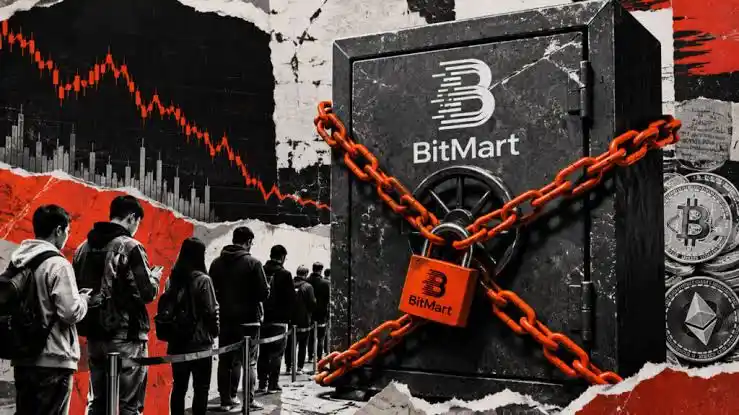
BitMart's Final 9 Days: A True Exchange Crisis Is Never About Shutting Down

BitMart's Final 9 Days: A True Exchange Crisis Is Not About Shutting Down On August 17, 2026, with just 9 days until BitMart's scheduled cessation of trading, the focus shifted from the platform's orderly closure to serious questions about user withdrawals, platform solvency, employee payments, and reserve transparency. Stakeholders, claiming to represent users and staff, publicly demanded asset/liability disclosures, explanations for withdrawal delays, a user repayment plan, and an independent audit, setting an August 19 deadline. While BitMart CEO Sheldon Lee denied allegations of insolvency or wrongdoing, the controversy highlighted a core vulnerability of centralized exchanges (CEXs). When an exchange announces its shutdown, normal user behavior changes dramatically, triggering a mass withdrawal event—the ultimate stress test for its liquidity and custodial integrity. The key question becomes not whether the platform has assets, but whether it holds sufficient *liquid* assets to cover all user liabilities on demand. The article argues that the trust placed in CEXs is based on the convenience they provide, abstracting users from direct control of their private keys. This trust is rarely questioned during normal operations but becomes critically exposed during a wind-down. The situation underscores the limitations of simple Proof of Reserves, which shows "what we have" but not the crucial "what we owe." True financial credibility requires transparent, auditable data on assets, liabilities, and segregated user funds. BitMart's situation reflects a broader, often overlooked issue in the crypto industry: while there is extensive focus on growth mechanisms for exchanges, there is little discussion or established protocol for a safe and transparent "exit mechanism." The final measure of an exchange's integrity, the article concludes, is not its user count or trading volume during a bull market, but its ability to ensure every last user can successfully withdraw their assets when the doors are closing. The outcome will be determined not by statements, but by whether the final user's funds securely leave the platform.

marsbit1h ago

BitMart's Final 9 Days: A True Exchange Crisis Is Never About Shutting Down

marsbit1h ago

Don't Speculate on 100x Coins, Just Bet on 'Cash Cows': Which Projects Are Worth Dollar-Cost Averaging in the Bear Market?

In a bearish crypto market, finding sustainable investments is more prudent than chasing speculative meme coins. This article analyzes projects generating consistent revenue, highlighting them as potential "cash cows" for long-term dollar-cost averaging (DCA). The top performers are "picks-and-shovels" plays. **Pump.fun**, a Solana-based meme coin launchpad, leads with $415.3M in monthly revenue, profiting from a 1.25% fee on token transactions. Despite market volatility, it has averaged tens of millions in monthly income in 2024. Perpetual DEX **Hyperliquid** stands out as a "bear market star," accumulating ~$352M in revenue over seven months. Its model funnels ~99% of fees into buying back and permanently burning its HYPE token. Established giants are also adapting. **Uniswap**, after enabling its fee switch, now earns protocol revenue (e.g., $5.6M recently), which is used to buy back and burn UNI, giving the token direct value accrual. Similarly, oracle provider **Chainlink** generates stable monthly revenue (~$4.57M recently) from its essential data, cross-chain, and automation services. Its new Payment Abstraction feature automatically converts service fees into LINK, accruing value in its treasury. The core thesis is clear: in a downturn, focus on projects with proven, resilient business models—those acting as essential infrastructure or capturing consistent transaction fees—rather than speculative narratives.

marsbit1h ago

Don't Speculate on 100x Coins, Just Bet on 'Cash Cows': Which Projects Are Worth Dollar-Cost Averaging in the Bear Market?

marsbit1h ago

Trends in U.S. Stocks (August 18): U.S.-Iran Deal Prospects Dim, Major Indices See Two Consecutive Down Days, Chip Stocks Defy Market Decline

**Market Overview:** On August 18th, U.S. stock indices declined for a second consecutive day. The S&P 500 fell 0.52%, the Dow dropped 0.51% to a two-week low, and the Nasdaq slipped 0.32%. The decline was driven by heightened geopolitical risk as U.S.-Iran negotiations reached a key deadline without an extension, dimming the prospect of a long-term agreement. **Key Drivers:** * **Geopolitics & Oil:** The failure to extend the U.S.-Iran memorandum led to a surge in oil prices, with Brent crude closing above $90/barrel for the first time in three weeks. * **Treasury Yields:** The 30-year U.S. Treasury yield hit a high not seen since 2007, driven by heavy corporate issuance (notably for AI investments) and ongoing fiscal deficits. * **Sector Performance:** While the "Magnificent Seven" tech giants all closed lower, semiconductor stocks bucked the trend. The Philadelphia Semiconductor Index rose 1.6%, led by memory chipmakers (e.g., SanDisk, Micron) and optical communication companies, as investors focused on the strong demand outlook for AI-related hardware. * **Currency & Safe Havens:** The U.S. Dollar Index fell for a third day, while the offshore Chinese Yuan hit a three-year high. Gold prices rose to a two-month peak, supported by safe-haven demand outweighing pressure from rising yields. Bitcoin also gained. **Outlook:** Market focus remains on potential escalation in the Middle East and its impact on oil, alongside continued scrutiny of AI-related earnings and demand signals.

marsbit1h ago

Trends in U.S. Stocks (August 18): U.S.-Iran Deal Prospects Dim, Major Indices See Two Consecutive Down Days, Chip Stocks Defy Market Decline

marsbit1h ago

Trading

Spot

Hot Articles

What is $BITCOIN

DIGITAL GOLD ($BITCOIN): A Comprehensive Analysis Introduction to DIGITAL GOLD ($BITCOIN) DIGITAL GOLD ($BITCOIN) is a blockchain-based project operating on the Solana network, which aims to combine the characteristics of traditional precious metals with the innovation of decentralized technologies. While it shares a name with Bitcoin, often referred to as “digital gold” due to its perception as a store of value, DIGITAL GOLD is a separate token designed to create a unique ecosystem within the Web3 landscape. Its goal is to position itself as a viable alternative digital asset, although specifics regarding its applications and functionalities are still developing. What is DIGITAL GOLD ($BITCOIN)? DIGITAL GOLD ($BITCOIN) is a cryptocurrency token explicitly designed for use on the Solana blockchain. In contrast to Bitcoin, which provides a widely recognized value storage role, this token appears to focus on broader applications and characteristics. Notable aspects include: Blockchain Infrastructure: The token is built on the Solana blockchain, known for its capacity to handle high-speed and low-cost transactions. Supply Dynamics: DIGITAL GOLD has a maximum supply capped at 100 quadrillion tokens (100P $BITCOIN), although details regarding its circulating supply are currently undisclosed. Utility: While precise functionalities are not explicitly outlined, there are indications that the token could be utilized for various applications, potentially involving decentralized applications (dApps) or asset tokenization strategies. Who is the Creator of DIGITAL GOLD ($BITCOIN)? At present, the identity of the creators and development team behind DIGITAL GOLD ($BITCOIN) remains unknown. This situation is typical among many innovative projects within the blockchain space, particularly those aligning with decentralized finance and meme coin phenomena. While such anonymity may foster a community-driven culture, it intensifies concerns about governance and accountability. Who are the Investors of DIGITAL GOLD ($BITCOIN)? The available information indicates that DIGITAL GOLD ($BITCOIN) does not have any known institutional backers or prominent venture capital investments. The project seems to operate on a peer-to-peer model focused on community support and adoption rather than traditional funding routes. Its activity and liquidity are primarily situated on decentralized exchanges (DEXs), such as PumpSwap, rather than established centralized trading platforms, further highlighting its grassroots approach. How DIGITAL GOLD ($BITCOIN) Works The operational mechanics of DIGITAL GOLD ($BITCOIN) can be elaborated on based on its blockchain design and network attributes: Consensus Mechanism: By leveraging Solana’s unique proof-of-history (PoH) combined with a proof-of-stake (PoS) model, the project ensures efficient transaction validation contributing to the network's high performance. Tokenomics: While specific deflationary mechanisms have not been extensively detailed, the vast maximum token supply implies that it may cater to microtransactions or niche use cases that are still to be defined. Interoperability: There exists the potential for integration with Solana’s broader ecosystem, including various decentralized finance (DeFi) platforms. However, the details regarding specific integrations remain unspecified. Timeline of Key Events Here is a timeline that highlights significant milestones concerning DIGITAL GOLD ($BITCOIN): 2023: The initial deployment of the token occurs on the Solana blockchain, marked by its contract address. 2024: DIGITAL GOLD gains visibility as it becomes available for trading on decentralized exchanges like PumpSwap, allowing users to trade it against SOL. 2025: The project witnesses sporadic trading activity and potential interest in community-led engagements, although no noteworthy partnerships or technical advancements have been documented as of yet. Critical Analysis Strengths Scalability: The underlying Solana infrastructure supports high transaction volumes, which could enhance the utility of $BITCOIN in various transaction scenarios. Accessibility: The potential low trading price per token could attract retail investors, facilitating wider participation due to fractional ownership opportunities. Risks Lack of Transparency: The absence of publicly known backers, developers, or an audit process may yield skepticism regarding the project's sustainability and trustworthiness. Market Volatility: The trading activity is heavily reliant on speculative behavior, which can result in significant price volatility and uncertainty for investors. Conclusion DIGITAL GOLD ($BITCOIN) emerges as an intriguing yet ambiguous project within the rapidly evolving Solana ecosystem. While it attempts to leverage the “digital gold” narrative, its departure from Bitcoin's established role as a store of value underscores the need for a clearer differentiation of its intended utility and governance structure. Future acceptance and adoption will likely depend on addressing the current opacity and defining its operational and economic strategies more explicitly. Note: This report encompasses synthesised information available as of October 2023, and developments may have transpired beyond the research period.

1.9k Total ViewsPublished 2025.05.13Updated 2025.05.13

What is $BITCOIN

Discussions

Welcome to the HTX Community. Here, you can stay informed about the latest platform developments and gain access to professional market insights. Users' opinions on the price of BTC (BTC) are presented below.

活动图片