评估比特币横向盘整之际,沉睡的2.9亿美元巨鲸重新进场

ambcryptoPublished on 2026-07-19Last updated on 2026-07-19

Abstract

比特币近期在63,000至64,000美元间横盘震荡,现报约63,923美元,24小时小幅上涨1.82%,但交易量大幅下降46%,市场参与度减弱。 一个休眠一年的长期持有者地址重新活跃,接收了价值约6400万美元的1001枚BTC。该地址一年前曾通过Galaxy Digital购入价值2.9亿美元的比特币,此次在弱势中回归可能显示其信心,但尚不能代表整体鲸鱼需求。数据显示,其他鲸鱼活动已显著减少,交易所鲸鱼比率维持在0.3左右,表明大额买卖双方均在观望。同时,现货净流出已连续四日为负(约-1086万美元),虽可能减轻短期抛压,却未确认鲸鱼在积累。 技术指标显示下行风险较高:ADX与-DI同步上升,+DI下降,表明下跌动能增强。若鲸鱼需求持续疲弱,比特币可能再次跌破63,000美元,测试62,697美元附近的长期均线支撑。需守住63,906美元并突破64,000美元才能避免进一步下滑。 **简要概括**: • 休眠鲸鱼时隔一年购入6400万美元BTC。 • 市场整体需求与价格动能疲软,鲸鱼参与度低,技术面偏向看跌。

比特币继续在63,000美元至64,000美元之间横向交易。截至发稿时,BTC在24小时内上涨1.82%后,交易价格约为63,923美元。

然而,交易量下降了46%,反映出市场参与度减弱。

为何这只比特币巨鲸回归?

在比特币横向盘整之际,一位长期持有者在沉寂一年后重返市场。

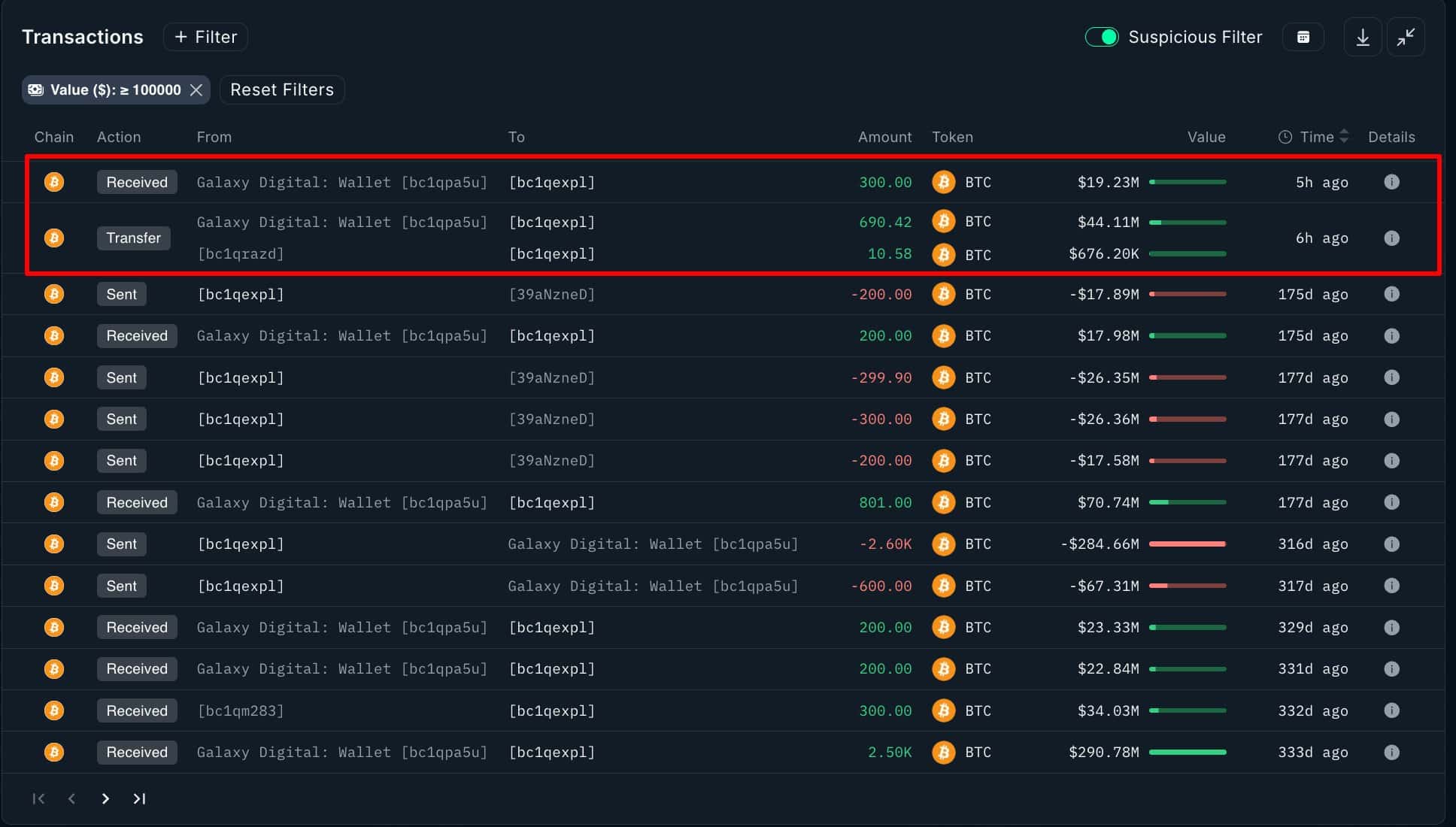
根据Onchain Lens的数据,该巨鲸钱包再次收到了1,001枚BTC,价值约6,400万美元。一年前,该巨鲸通过Galaxy Digital购入了价值2.9亿美元的比特币。

它在市场状况较弱时回归,显示出信心重燃,但仅凭这笔转账并不能确认巨鲸需求普遍回升。
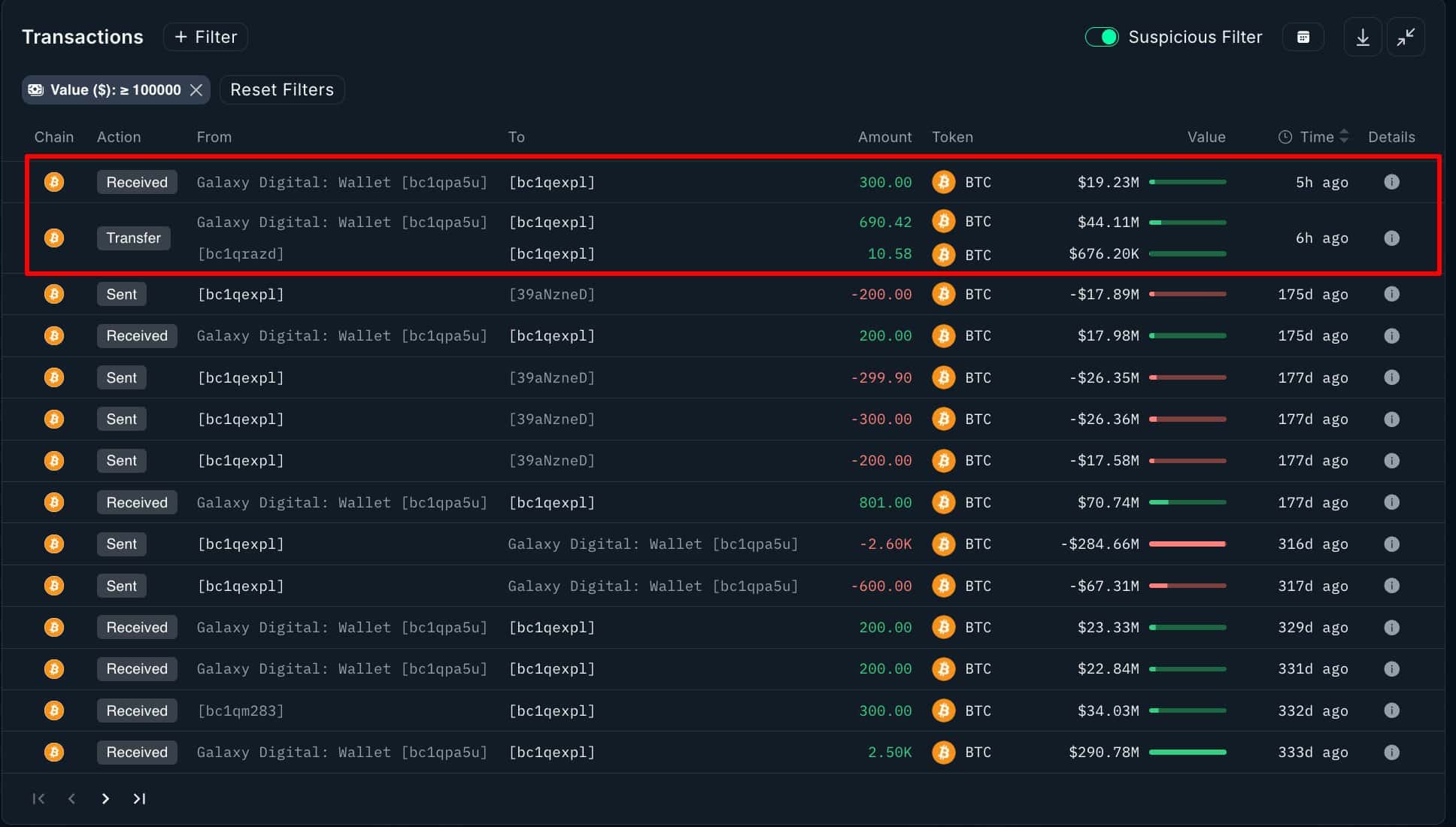
来源:Onchain Lens

其他巨鲸在买入BTC吗?

有趣的是,尽管这只巨鲸回归,但其他巨鲸已大幅缩减活动,目前处于观望状态。

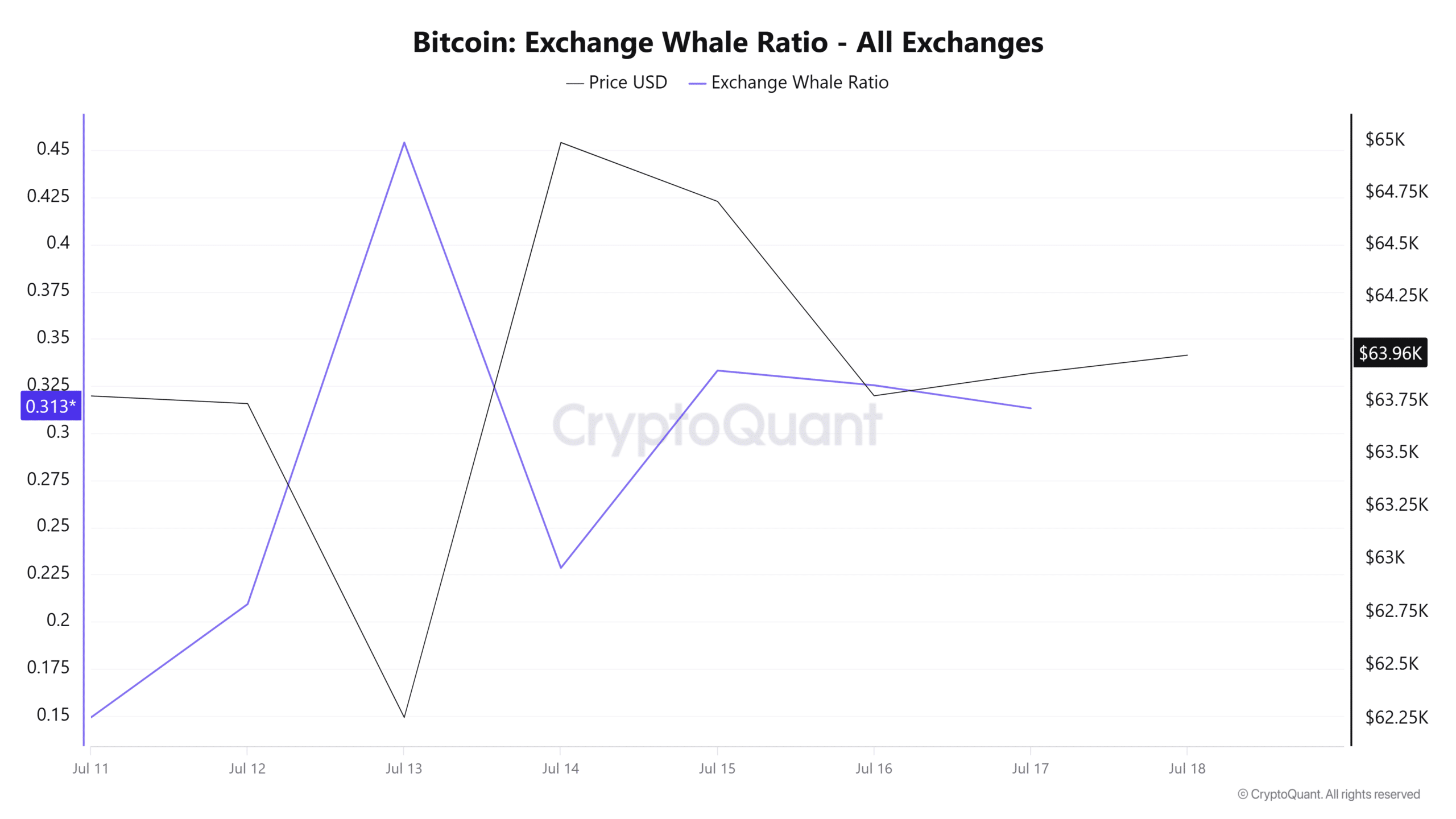
观察交易所巨鲸比率,该指标在过去三天持续横向移动,保持在0.3左右。短期内,这一指标表明巨鲸减少了买卖操作。
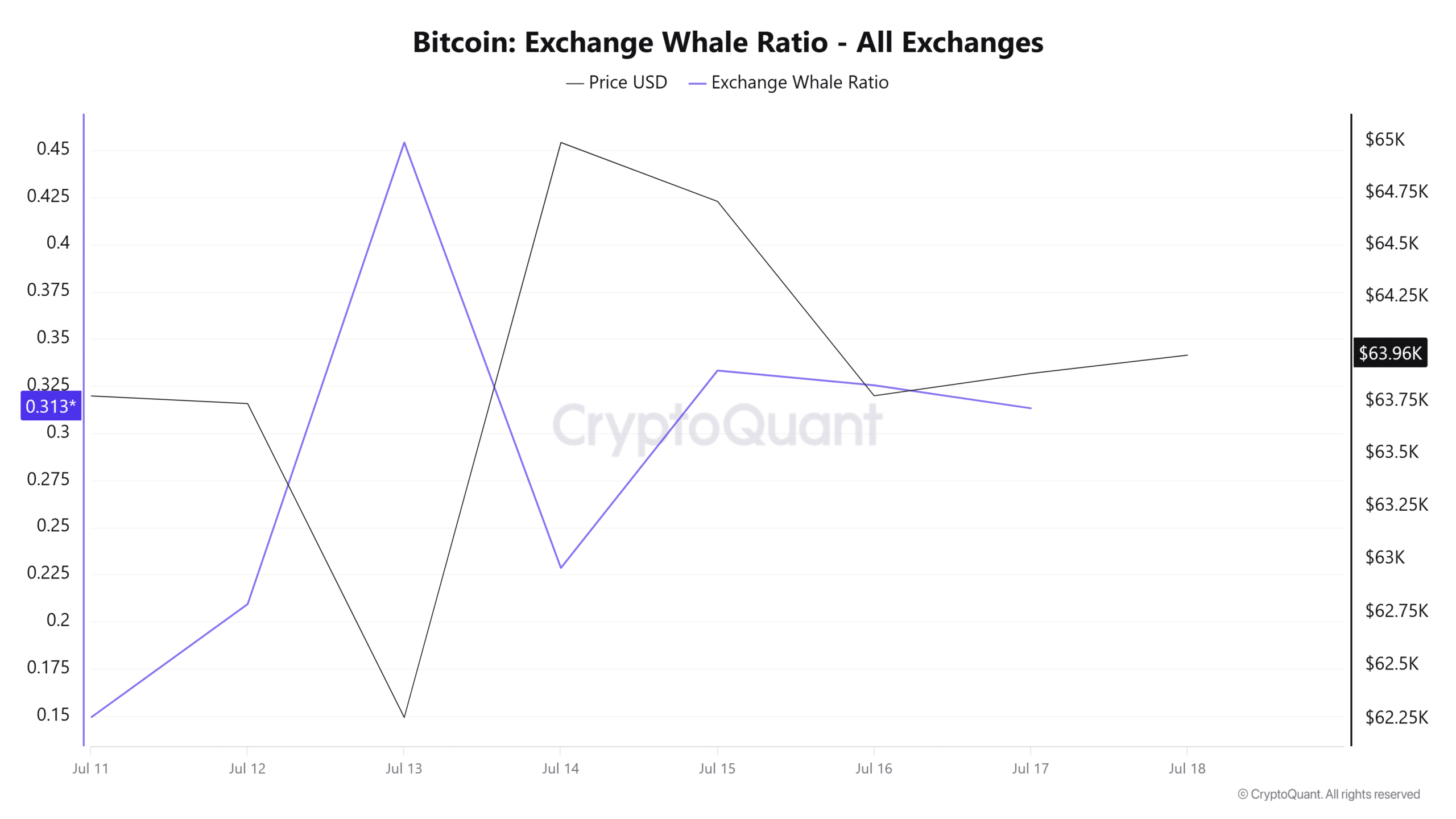
来源:CryptoQuant

该比率从0.33下滑至0.31。这意味着最大的资金流入在总存款中所占份额略有减少。

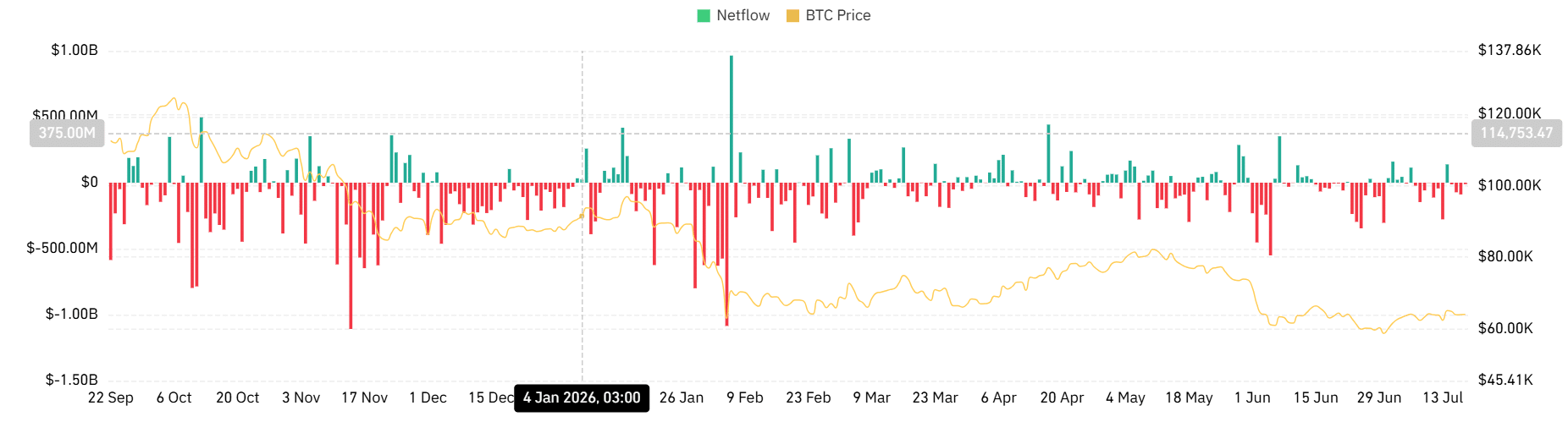
相比之下,现货净流量连续四天为负值,表明交易所总体流出量超过流入量。
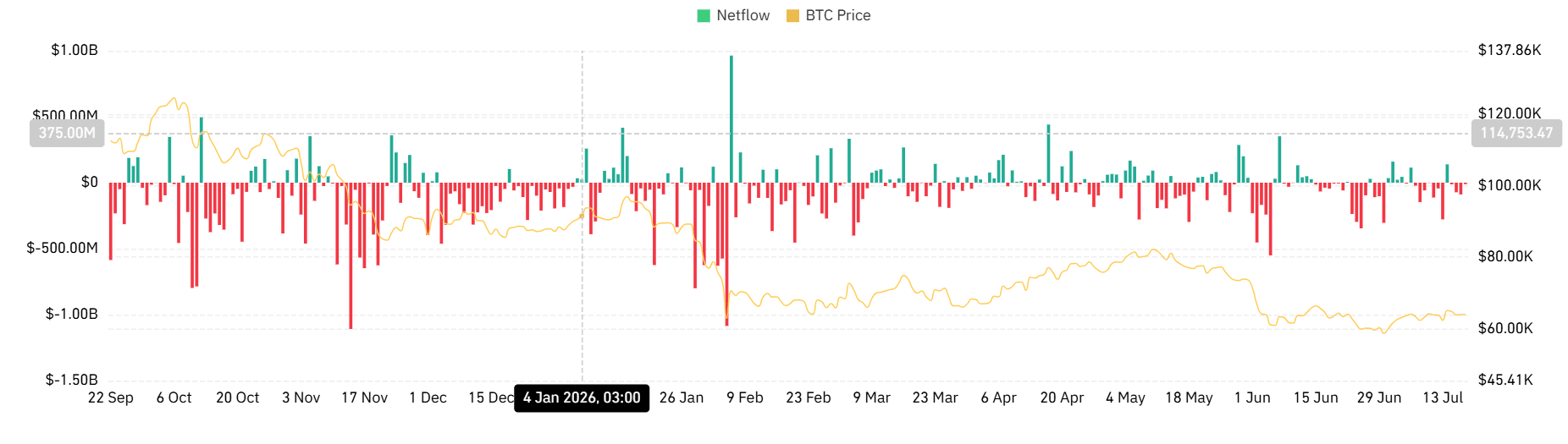
来源:CoinGlass

截至发稿时,现货净流量接近-1,086万美元。持续的流出可能减少短期的抛售压力,但这并不能确认巨鲸在积累筹码。

比特币下一步怎么走?

尽管市场上仍有一些巨鲸保持活跃,但需求依然疲弱。该群体的买入活动目前仍低于正常水平。

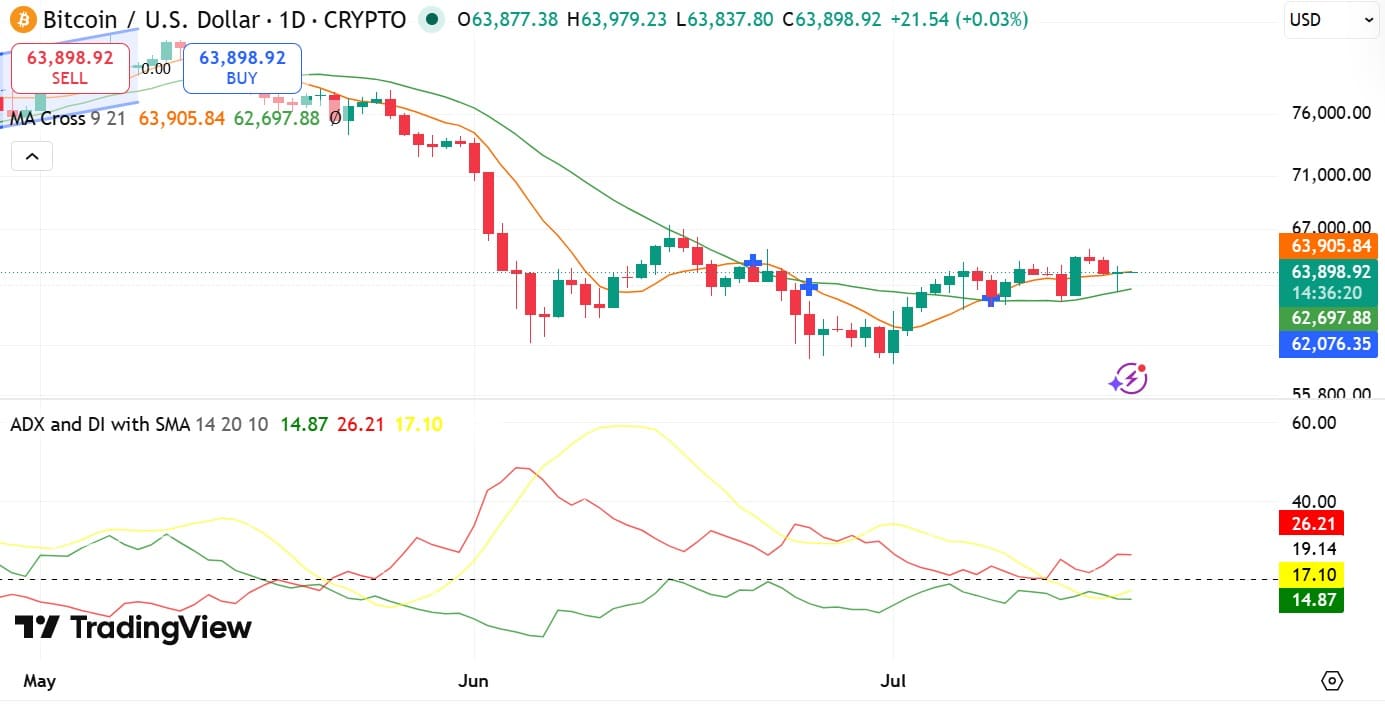
因此,下行风险依然较高。观察结合SMA指标的ADX可以看出,正向指数持续下降。+DI已降至14,而负向指数上升至26,ADX则上升至17。
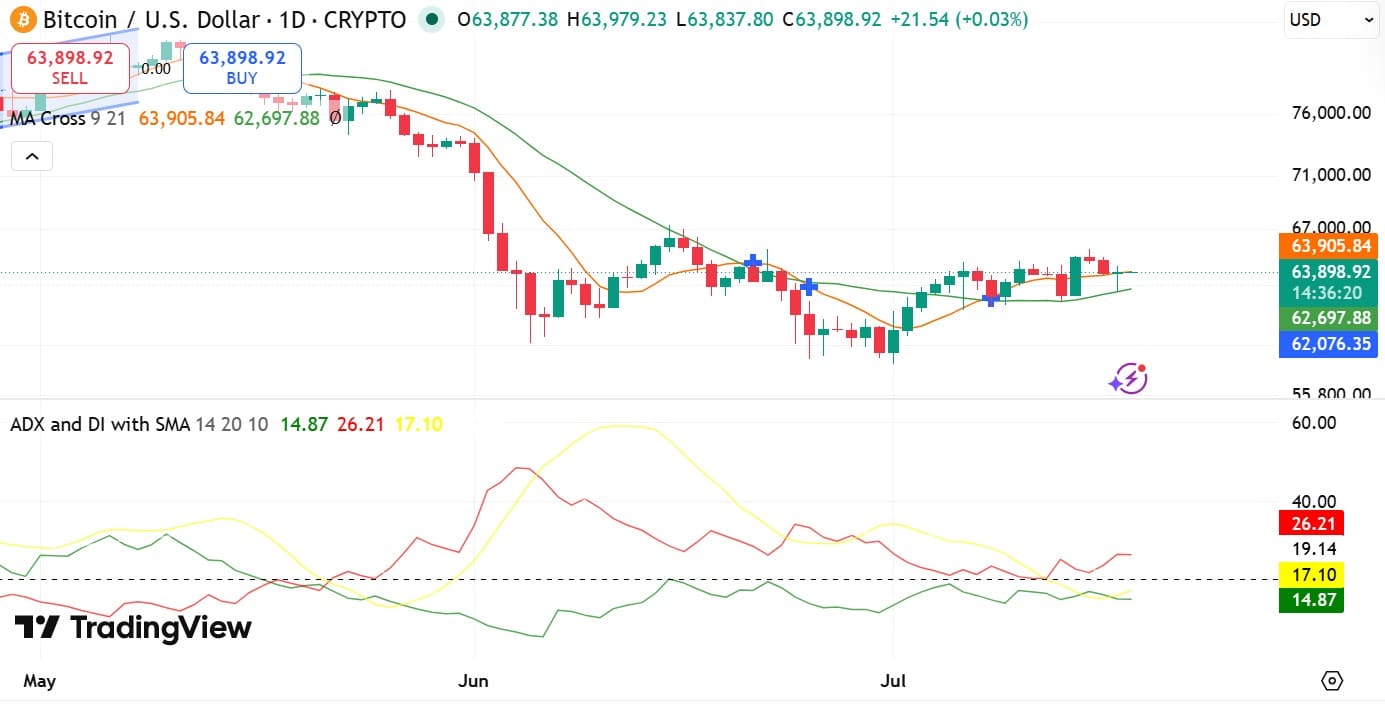
来源:TradingView

ADX和-DI一同上升表明下行压力更强。因此,比特币价格图表上很可能出现一些下跌。

如果巨鲸需求像当前一样持续疲弱,BTC很可能再次跌破63,000美元,跌向62,697美元(长期移动平均线目前所在位置)。为避免进一步下滑,BTC必须守在63,906美元以上并攻克64,000美元。


最终总结

  • 一只沉睡的巨鲸在沉寂一年后,收到了价值6,400万美元的1,001枚BTC。
  • 负值的现货净流量减少了即时供应,但更广泛的需求和价格动能依然疲弱。

Trending Cryptos

Related Questions

Q文章中提到比特币目前的价格区间是多少?

A根据文章,比特币目前持续在63,000美元至64,000美元之间横盘交易。

Q文章提到的那位长期不活跃的“鲸鱼”做了什么操作?

A该“鲸鱼”钱包在沉寂一年后,再次收到了1,001枚比特币,价值约6,400万美元。

Q文章引用“交易所鲸鱼比率”的数据表明了什么市场现象?

A“交易所鲸鱼比率”近期在0.3附近横盘,表明“鲸鱼”群体的买卖活动有所减少,他们目前倾向于在场外观望。

Q文章提到哪些技术指标暗示比特币面临下行风险?

A文章指出,ADX指标和-DI(负向指标)同时上升,表明市场的下跌压力正在增强。同时,+DI(正向指标)下降至14,也反映出买方力量较弱。

Q根据文章分析,比特币价格需要守住哪个关键位置以避免进一步下跌?

A文章分析认为,比特币需要守住63,906美元上方,并成功突破64,000美元,才能避免价格进一步滑向62,697美元的长期移动平均线支撑位。

Related Reads

U.S. Tech Momentum Stocks Post Largest Single-Day Gain Ever, But Is the Plunge Over?

US tech momentum stocks staged a sharp rebound on Tuesday (July 21st). Morgan Stanley's TMT Momentum Factor surged over 12%, marking its largest single-day gain on record, exceeding even peaks from the 2000 dot-com bubble. Key momentum indices from Goldman Sachs also posted their strongest daily performances in years. The rally was led by semiconductors, with the Philadelphia Semiconductor Index jumping 4.6%. This rebound followed three consecutive down days and a cumulative 33% plunge in momentum stocks, one of the steepest drawdowns since the dot-com era. Analysts attribute the surge largely to a short squeeze. Heavy selling had pushed high-beta momentum stocks into deeply oversold territory, forcing many short sellers, particularly in Asia, to cover their positions, creating a self-reinforcing buying spiral. However, the rebound's internals appear weak. Trading volume was notably low, and advancing stocks still lagged decliners on the S&P 500, indicating a narrow, concentrated rally rather than broad market participation. Diverging views emerge on the outlook. BTIG warns the bounce has hit key resistance and recommends selling into strength, citing extreme volatility and historical parallels to past market tops. Conversely, Goldman Sachs and UBS believe the momentum unwind is nearing its end, suggesting it may be time to gradually add exposure, as positioning has been significantly reduced. They caution, however, that high volatility warrants a measured approach, potentially using defined-risk strategies. The upcoming earnings season, particularly reports from major tech firms like Alphabet, is seen as a critical test for the rally's sustainability. Simultaneously, bond markets flashed a warning, with yields rising partly due to spiking oil prices. Analysts note that if long-term Treasury yields break decisively higher, it could pose a significant headwind for equities, especially growth stocks.

marsbit5m ago

U.S. Tech Momentum Stocks Post Largest Single-Day Gain Ever, But Is the Plunge Over?

marsbit5m ago

U.S. Tech Momentum Stocks Record Largest Single-Day Gain Ever, but Has the Rout Ended?

U.S. tech momentum stocks staged a dramatic rebound on Tuesday, July 21st. Key momentum indices like the Morgan Stanley TMT Momentum Factor and Goldman Sachs' High Beta Momentum Long Index posted historic or near-historic single-day gains, fueled largely by semiconductor stocks. This sharp rally followed a severe three-day sell-off that saw momentum stocks plunge 33%, marking one of the steepest pullbacks since the dot-com bubble. Analysts attribute the bounce primarily to a short squeeze, as forced covering from over-leveraged traders, particularly in Asia, created a buying spiral. However, the rally's health is questioned due to weak market breadth—overall trading volume was low, and decliners outnumbered advancers in the S&P 500 despite the index's gain—suggesting a narrow, concentrated surge rather than broad recovery. Opinions on the sustainability diverge. BTIG strategists warn the rebound has hit key resistance levels, citing extreme volatility and historic stock dispersion as signs of an ongoing broader correction, and recommend selling into strength. Conversely, Goldman Sachs and UBS view the aggressive momentum unwinding as nearing its end, noting reduced positioning and a lack of new fundamental catalysts. They suggest the sell-off presents a selective opportunity to add exposure, albeit cautiously and gradually using defined-risk strategies. The immediate trajectory hinges on the ongoing earnings season, with market focus on Alphabet's capital expenditure guidance for AI investment clarity. Meanwhile, bond markets present a risk, with rising Treasury yields—potentially heading toward 5.5%—and widening credit spreads for mega-cap tech companies posing a threat to equity valuations. The combination of technical factors, earnings results, and macro conditions leaves the durability of the rebound in doubt.

链捕手8m ago

U.S. Tech Momentum Stocks Record Largest Single-Day Gain Ever, but Has the Rout Ended?

链捕手8m ago

Long-Divided Must Unite, Long-United Must Divide: When L1 Becomes Its Own Rollup, What Is Ethereum's Endgame?

"The Inevitable Cycle: When L1 Becomes Its Own Rollup – What is Ethereum's Endgame?" For years, the Ethereum community grappled with concerns that L2s were fragmenting the ecosystem and eroding L1's value. While L2s provided cheaper execution, they also splintered liquidity and the unified user experience of a single chain. This has prompted a fundamental reassessment of the relationship between L1 and L2. Ethereum's roadmap is evolving. The "Scale" initiative merges L1 and L2 expansion into a holistic framework. L1 itself is advancing with higher gas limits, statelessness, and zkEVM verification, no longer content to be just a low-throughput settlement layer. Consequently, the primary value proposition of L2s is shifting from merely providing cheap blockspace to offering L1 cannot easily provide: application-specific optimizations, privacy features, and flexible governance models. L2s are becoming a spectrum of execution environments with varying degrees of security inheritance from Ethereum. A critical challenge in this multi-chain future is interoperability. The vision is to make Ethereum "feel like one chain again." This relies on advancements in native account abstraction (like EIP-7702) and intent-based architectures (Open Intents Framework), where users declare desired outcomes, and solvers handle the complex cross-chain execution. Furthermore, shortening Ethereum's finality time from minutes to seconds is crucial, as it underpins trust between chains for bridges, stablecoins, and cross-chain applications. Perhaps the most provocative idea is that Ethereum L1 itself could become a form of "its own Rollup." As zkEVM and proof systems mature, high-performance nodes could execute transactions and generate validity proofs. Regular validators would then verify these proofs instead of re-executing all transactions. This blurs the traditional L1/L2 hierarchy, making "Rollup" more of a general execution-verification architecture. Native Rollup aims to integrate L2 validation more directly into the Ethereum protocol, allowing L2s to inherit L1's security more fully and move away from reliance on security councils. In the end, L2s are not destined to replace L1 or be made obsolete by it. The likely future is a unified system where diverse execution environments—each optimized for specific use cases like DeFi, gaming, or privacy—coexist. They will share a common foundation of security, liquidity, and verifiable state, seamlessly connected to restore a cohesive user experience. The next phase for Ethereum is not just about scaling through separation, but about intelligently reintegrating what was separated back into a coherent whole.

链捕手24m ago

Long-Divided Must Unite, Long-United Must Divide: When L1 Becomes Its Own Rollup, What Is Ethereum's Endgame?

链捕手24m ago

Agent Race Ends, Super Workbench Takes Over

The era of fragmented AI agents is ending. Over the past month, China's tech giants—Tencent, Alibaba, and ByteDance—have simultaneously shifted strategy: instead of launching new, standalone AI agents, they are consolidating their various agent projects into unified "super workbenches." Tencent integrated its QClaw teams into WorkBuddy, a strategic product hailed as a potential third flagship after QQ and WeChat. Alibaba is merging its QoderWork, Wukong, and MuleRun agents into a new "Qianwen Office" platform under DingTalk's leadership. ByteDance rebranded its TRAE SOLO coding agent to TRAE Work, signaling a broader focus on workflow collaboration. This convergence marks a pivotal industry consensus. The initial exploration phase, where companies rapidly built numerous overlapping agents for different scenarios, proved costly and inefficient. With open-source tools eroding technical barriers, competition has shifted from agent creation to resource consolidation and cost control. Historically, platform wars are won not by creating more products, but by simplifying them—as seen with browsers unifying web access and super-apps consolidating services. Now, the "super workbench" aims to become the unified AI entry point for work. This reflects a deeper market realization: the primary audience for AI is no longer just programmers (a market in the tens of millions) but all knowledge workers (a market of billions). The real opportunity lies in augmenting everyday tasks—managing emails, documents, data, and meetings—across the entire workday. The core battleground is becoming control over the primary AI entry point that employees use daily. Tencent's WorkBuddy leverages WeChat and Tencent Docs; Alibaba's Qianwen Office taps into DingTalk's organizational data; ByteDance's TRAE Work integrates with Feishu's workflows. Whoever owns this "super workbench" gains strategic control over orchestrating enterprise data and APIs. This shift is redefining enterprise software. Traditional SaaS applications, valued for their user interfaces, will recede into the background. Their core functionalities will be exposed as standardized "Skills" or APIs for the super workbench's agents to invoke. Software value will shift from selling user seats to charging based on API calls and outcomes delivered. The evolution of agents is moving through clear stages: first as novel standalone products, then as consolidated primary work entry points, and finally as pervasive, invisible capabilities embedded into the digital fabric. The recent moves by major tech firms signal the transition from the first stage into the second, accelerating toward the third. In the end, the most successful agent technology may become invisible—like electricity or the HTTP protocol—a fundamental, unnamed infrastructure powering work itself.

marsbit51m ago

Agent Race Ends, Super Workbench Takes Over

marsbit51m ago

Trading

Spot

Hot Articles

Discussions

Welcome to the HTX Community. Here, you can stay informed about the latest platform developments and gain access to professional market insights. Users' opinions on the price of S (S) are presented below.

活动图片