One of Silicon Valley's most prestigious venture capital firms has become a behind-the-scenes operator quietly influencing Washington's artificial intelligence policies. As Donald Trump expresses full support for the industry's aggressive push in this emerging technology, the firm's influence has become increasingly critical.
According to current and former White House and congressional aides, senior White House officials and senior Republican congressional aides now typically make their first external call to a16z when considering measures that could affect tech companies' AI plans.
Their main point of contact is the company's chief lobbyist in the capital, Collin McCune. A former White House official said the firm, abbreviated as a16z, has a virtual veto power over almost all AI-related proposals.
"They are an absolutely powerful lobbying force, perhaps the most powerful single entity I've seen in recent years," said Doug Calidas, chief lobbyist for Americans for Responsible Innovation, a group opposing a16z's efforts to weaken state AI laws.
The company's rise in Washington is attributed to massive investments in influence, the close relationship between co-founder Marc Andreessen and Trump, and a network of partners who previously worked at the firm and now hold key government positions. Simultaneously, it has skillfully packaged its portfolio startups as exemplars of free-market innovation, celebrated in the Republican-dominated Washington.
a16z's bold, aggressive approach and enthusiasm for deregulation have reinforced the administration's view that most government-imposed regulatory constraints on AI would endanger U.S. competitiveness in this rapidly developing technology, which is a key driver of recent U.S. economic growth. The firm is also a key force behind the Trump administration's efforts to block state-level AI regulations.
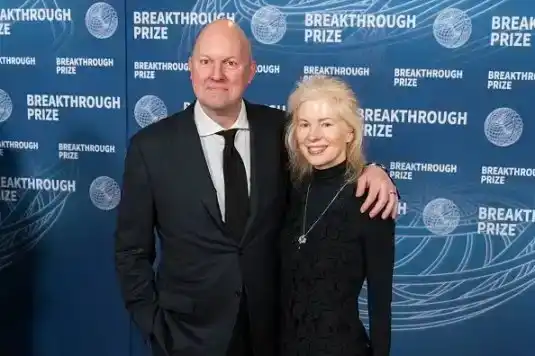
Marc Andreessen and his wife, prominent American philanthropist Laura Arrillaga-Andreessen, photographed in April. Photographer: Craig T Fruchtman/ Getty Images
White House spokesman Kush Desai said in a statement that Trump and his advisers "are always willing to listen to the views of business and tech leaders" but "the only special interest that guides this administration's decisions is the best interest of the American people; the only person with veto power over government policy is President Trump."
Collin McCune also said in a statement that Trump is "the sole person setting AI policy in this administration."
As of January, a16z managed $90 billion in assets, making it the largest venture capital firm by assets in Silicon Valley (Note: This refers to pure VC business). The company recently completed the largest fundraising round in its history, raising $15 billion, and has invested billions in AI startups like Cursor and LM Arena. These companies, along with a16z's stakes in larger tech firms like OpenAI and Meta, would all benefit from the light-touch regulatory policies it promotes in Washington.
The giant's uncompromising stance has made compromise on AI-related legislation more difficult, sometimes causing dissatisfaction even among large tech company lobbyists who are policy allies in Washington. According to people familiar with the matter, while tech giants like Microsoft and Amazon have told lawmakers they are willing to compromise on federal AI standards, a16z outright rejects proposals that would impose significant new regulations on AI development.
a16z's chief legal and policy officer, Jai Ramaswamy, said: "The end result is that large companies start making trade-offs." Large enterprises can deploy lawyers and compliance budgets, while "a small company of a few people in a garage simply doesn't have the capacity to make those compromises."
Many AI skeptics argue that the technology could harm users, replicate real-world biases against vulnerable groups, and displace jobs across industries, and therefore should be regulated. Some AI developers even believe that, left unchecked, AI could bring about doomsday.
A typical demonstration of a16z's influence occurred last December when an attempt was made to use a must-pass defense bill to preempt state AI safety laws. Just months earlier, tech industry allies in Congress had tried to add similar provisions to Trump's signature tax bill but were blocked by a coalition of Republican governors, MAGA-aligned influencers, and child safety organizations.
According to a senior Republican aide, when weighing the maneuver related to the defense bill, a16z lobbyist Collin McCune was the first person outside the government to be called. Collin McCune offered clear support and immediately acted, assisting with coordination efforts involving White House AI lead David Sacks, House Majority Leader Steve Scalise, and Senate Commerce Committee Chairman Ted Cruz.
This legislative maneuver was unsuccessful, but Trump later used presidential power to achieve the same goal: signing an executive order preventing states from enacting regulatory rules to guard against AI-related harms. According to a person close to the White House, a16z also assisted the administration in drafting the content of this directive. The executive order echoed a novel argument pushed by a16z: that under the Constitution's "Dormant Commerce Clause," states lack the authority to regulate the national AI market.
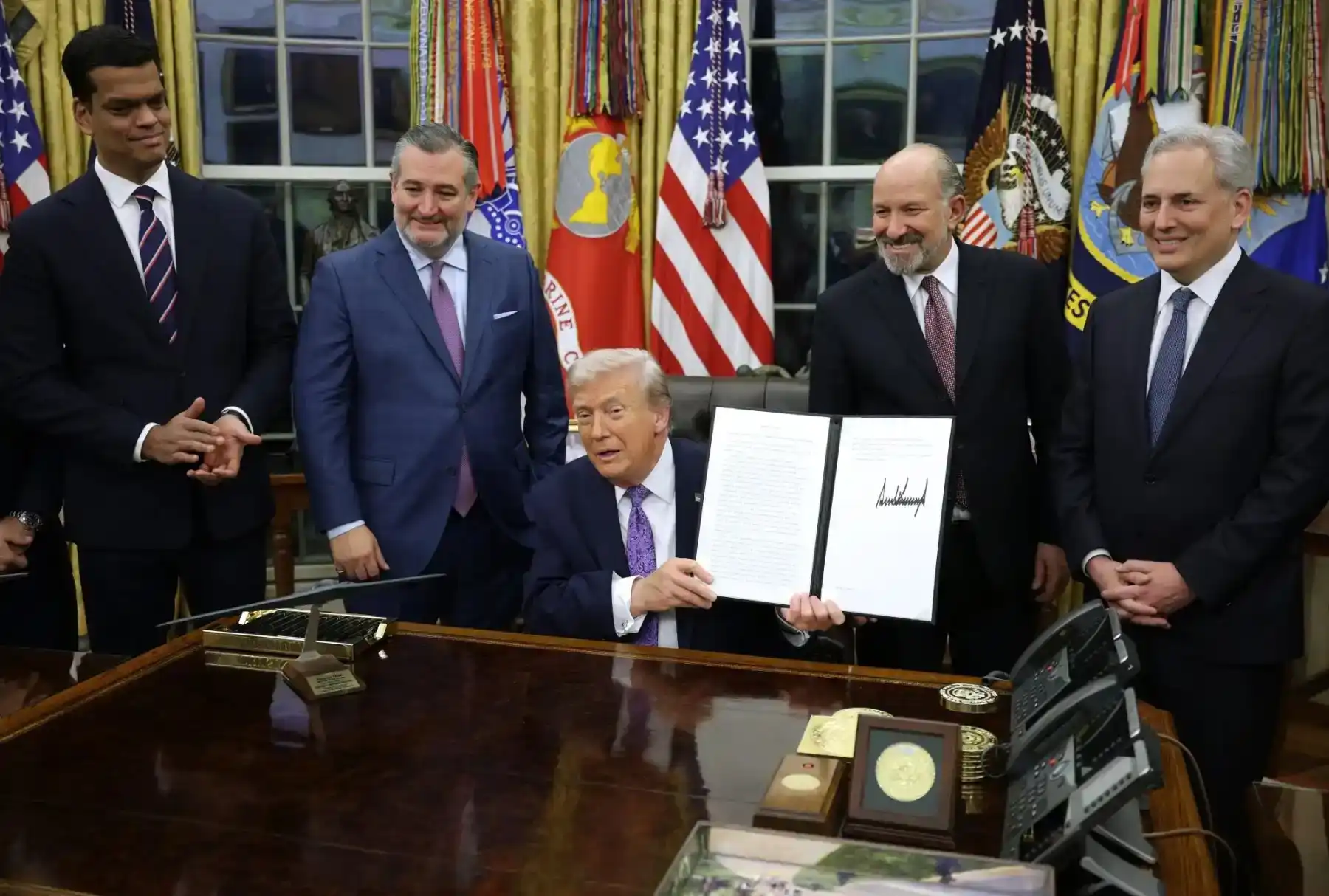
In December, Trump signed an executive order limiting states' power to regulate AI, a long-sought goal of the tech industry's lobbying. Photographer: Alex Wong/ Getty Images
The company's hard-charging co-founder, Marc Andreessen, sits at the top of its influence operation. The 54-year-old, a co-founder of Netscape who helped usher in the internet era, founded a16z with Ben Horowitz shortly after the 2008 financial crisis. Standing nearly two meters tall and flamboyant, he once joked to Fortune that his motto could be "often wrong, never in doubt."
Marc Andreessen was once a donor to both parties, even contributing to Barack Obama's first presidential campaign, but he turned completely due to the Biden administration's push for stricter tech regulation—particularly measures restricting cryptocurrencies and tech company mergers. Since then, he has become a Republican mega-donor and positioned himself as a thought leader of the "tech right."
In 2024, after donating $2.5 million to Trump's campaign, Marc Andreessen met with the president for lengthy sessions at Mar-a-Lago multiple times. According to people close to the White House, he frequently speaks with Trump on the phone about tech policy and also maintains communication with White House Chief of Staff Susie Wiles.
He also deliberately cultivates Congressional relationships. In 2024, Marc Andreessen was the featured speaker at a Republican donor event in Jackson Hole, Wyoming, hosted by House Speaker Mike Johnson. He has since frequently visited Washington, known for hosting intimate dinners with lawmakers at popular restaurants. In casual conversation, he enjoys discussing philosophy, is happy to host, but does not directly make specific policy requests.
According to a person familiar with the matter, during a two-hour dinner last year with Republican Senators Eric Schmitt and Mike Lee, he spent most of the time talking about AI-related books and podcasts that interest him.
The company first registered for lobbying in 2023, initially focusing on cryptocurrency legislation and defense procurement, areas where it also has significant tech investments.
Traditional venture capital firms typically only assess political risks to their investments, whereas a16z "proactively finds ways to address risks before they disrupt investments," said Adam Thierer, a senior fellow at the center-right think tank R Street Institute.
Marc Andreessen is unapologetic about this. "In theory, every venture capital firm, every tech company should be involved in these matters. But the reality is, the vast majority are not," he said on an a16z podcast episode in January. He and Ben Horowitz "basically decided that the stakes here are just too high. If we're going to be leaders in the industry, we have to take responsibility for our own destiny."
a16z is also willing to pay the cost. According to public disclosures, the company's federal lobbying spending alone soared to $3.53 million in 2025, double that of 2024, far exceeding other VCs like Sequoia Capital and Bessemer Venture Partners.
The company also helped establish a new lobbying group, the American Innovators Network, spending over $350,000 in New York State alone to fight AI safety legislation and targeting similar bills advancing in other states across the country.
To create a Congress more friendly to its agenda, Marc Andreessen and Ben Horowitz jointly contributed $50 million to a super PAC named Leading the Future, which has a total war chest of $100 million to support pro-industry allies and oppose AI regulation proponents. The organization aims to replicate the success of the a16z-backed crypto PAC Fairshake, which spent tens of millions of dollars influencing key congressional elections in 2024.
"Everyone I talk to is very aware that there's a $100 million 'dragon' sitting here, ready to breathe fire and pressure them," said Sunny Gandhi, vice president of political affairs at the AI safety group Encode.
The company also has numerous other connections in Washington. According to people familiar with the matter, David Sacks frequently meets with a16z's government affairs team. White House senior AI policy adviser Sriram Krishnan was a partner at a16z before joining the administration. The company's reputation for close ties to David Sacks and Sriram Krishnan, in turn, makes congressional aides more willing to engage with a16z's lobbying team.
a16z's office building in San Francisco, California. Photographer: Smith Collection/ Getty Images
But the venture firm's leadership is determined to build influence beyond the Trump administration and is hedging for a potential Democratic return to power. According to an attendee, last spring, Marc Andreessen and a16z partner Chris Dixon accepted an invitation from moderate Democrats to hold a policy briefing focused on AI and cryptocurrency, attended by several House Democratic lawmakers.
"They are trying to cultivate pro-innovation factions within both parties, at all levels of government," said Adam Kovacevich, president of Chamber of Progress, a group aligned with Democratic positions, of which a16z is a member.
Marc Andreessen and Ben Horowitz have packaged their push for light-touch as a "Tech Small Agenda," attempting to position the venture firm as a defender of disadvantaged startups. This manifesto was first released in 2024, when public discontent with Big Tech was high. a16z chief lobbyist Collin McCune also uses this rhetoric, saying his guiding principle is "to protect small tech entrepreneurs, to let them thrive."
Critics scoff at this. "They think anyone who wants to provide some protection for Americans is an idiot," said New York State Assemblyman Alex Bores, who became a target of a16z for introducing AI safety legislation in his state.
The company holds stakes in many large enterprises, including SpaceX, xAI, Airbnb, and Anduril Industries, early investments that have since skyrocketed in value. According to PitchBook data, a16z has invested in 10 of the world's 15 highest-valued venture-backed private companies. Its core business is betting on new enterprises that have the potential to become the next tech giant—a model reliant on protecting startups' ability to scale rapidly. Another important profit method for a16z is the acquisition of its portfolio startups by large tech companies.
Critics argue that these holdings in large tech companies make its defense of "small tech" hollow. a16z has not lobbied to support using antitrust laws to curb the power of the largest tech firms.
Currently, a16z's stance on AI policy often aligns with the largest tech companies. When New York Assemblyman Alex Bores was close to passing his AI safety bill, he asked the a16z policy team for suggestions on how to define small, medium, and large AI developers. Bores also agreed that the bill's most stringent provisions should apply only to the largest companies, to protect startups.
a16z's suggestion was: A "small" developer should be defined as a company with annual revenue from AI products of no more than $50 billion.
"That basically excludes every company on Earth," Bores said in an interview. Ultimately, after intense lobbying by a16z and other tech companies, the version of the bill signed by New York Democratic Governor Kathy Hochul was significantly weakened.
Now, the company sets its sights on the next step: helping to craft federal AI standards that could outlast Trump's presidency and preempt state AI laws. a16z released a federal AI legislative roadmap in mid-December, calling for provisions like "model transparency"—requiring AI developers to disclose certain details about models, such as intended uses, and protections for children using AI. Beyond that, a16z's proposal focuses on punishing "bad actors" who misuse AI, rather than regulating the developers themselves.
Doug Calidas of Americans for Responsible Innovation countered that a16z's broad proposal is just "small-step attempts" lacking solutions to mitigate AI threats. He added that its proposed transparency provisions only require developers to publish the "most basic" information about their products.
According to two congressional aides involved in preparations, core Republicans in Congress have used a16z's proposal as a starting point for legislation. But federal AI legislation is evolving into a major battle, with numerous stakeholders involved, including safety groups advocating for holding AI developers accountable for harms caused by their products.
"How much influence we can exert will be a tough fight," said Sunny Gandhi of Encode. "But they can't just ram things through."