Le jeton IA Solana Ava victime de snipping au lancement lié au déployeur : Bubblemaps

cointelegraphPublished on 2025-12-19Last updated on 2025-12-19

Abstract

Selon l'analytique blockchain Bubblemaps, 23 portefeuilles liés au déployeur du jeton IA Ava sur Solana ont accumulé environ 40% de l'offre lors du lancement, suggérant une coordination interne. Ces portefeuilles, financés via Binance et Bitget dans un court intervalle, ont acheté massivement le jeton AVA dès son lancement sur Pump.fun. Une telle concentration rend le projet vulnérable à un "rug pull". Le jeton, qui avait atteint une valorisation de 300 millions de dollars en janvier 2025, a depuis chuté de 96% par rapport à son plus haut. Ava est le premier agent IA développé sur la plateforme Holoworld AI.

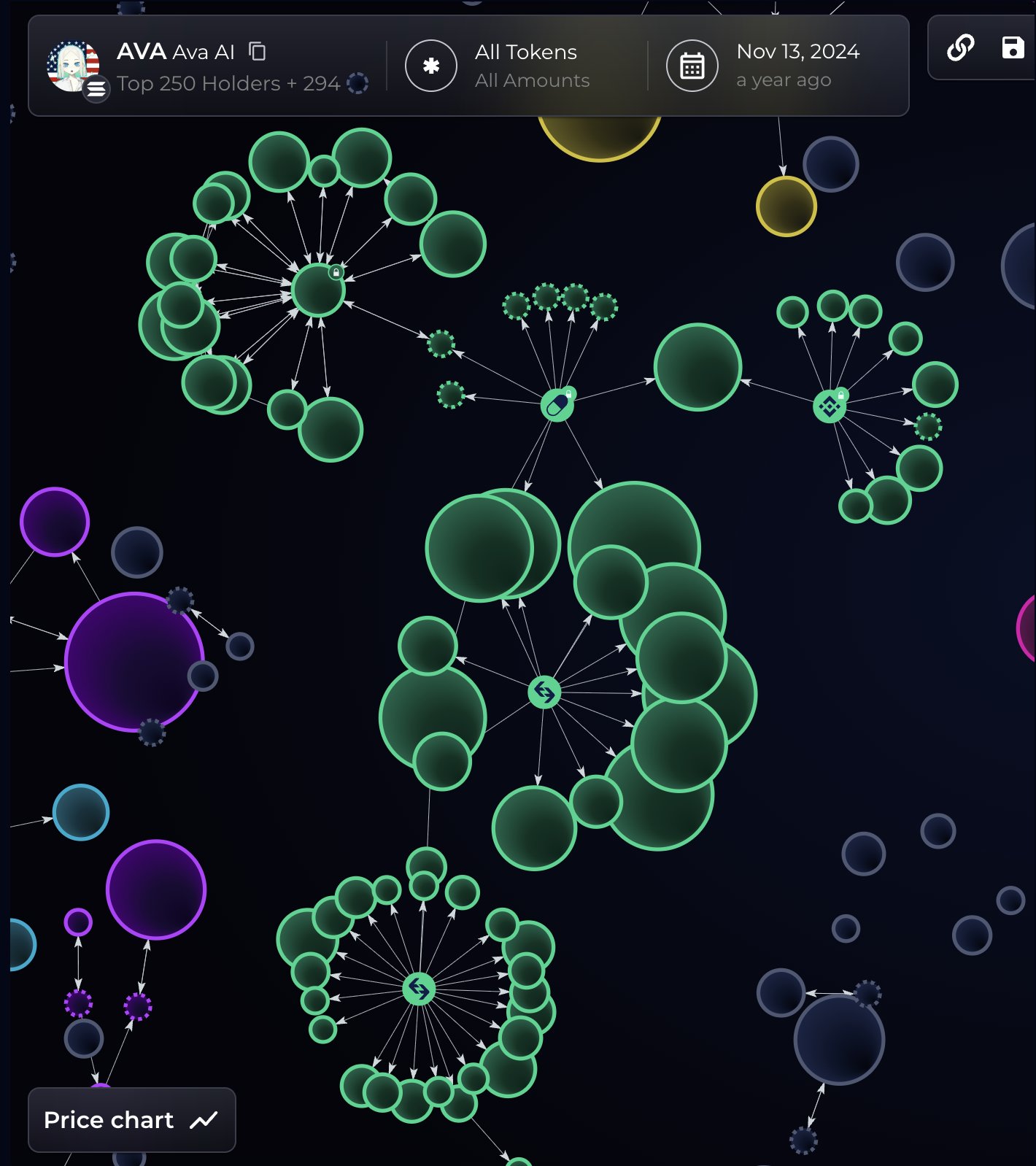
La firme d'analyse blockchain Bubblemaps a déclaré qu'un groupe de 23 portefeuilles liés au déployeur du jeton IA basé sur Solana, Ava, a accumulé environ 40 % de l'offre du jeton lors de son lancement, soulevant de nouvelles questions sur la coordination interne autour des débuts du projet.

Le cluster de portefeuilles sybils lié au déployeur partageait des modèles similaires, notamment un financement dans une fenêtre de temps serrée via Bitget et Binance, la réception de montants similaires de Solana (SOL) et l'absence d'activité blockchain avant d'acheter l'offre de jetons Ava AI (AVA) au lancement, a affirmé Bubblemaps dans un post X jeudi.

« Connectés à ces snipers se trouvent d'autres portefeuilles qui ont également acheté $AVA tôt. Des sources de financement, des tailles et des timing similaires suggèrent fortement une coordination à travers ces clusters », ont-ils déclaré.

Dans l'argot crypto, le snipping fait référence à l'utilisation de bots de trading crypto pour acheter automatiquement la nouvelle offre de jetons dès qu'ils deviennent disponibles publiquement, visant à acheter à des prix plus bas avant le grand public.

Bien que le jeton ait été lancé sur la plateforme de lancement de memecoin Pump.fun, visant un début décentralisé et communautaire, l'activité du cluster de portefeuilles suggère des acquisitions qui ont conduit à une seule entité détenant 40 % de l'offre du jeton.
Source : Bubblemaps

En relation : La crypto approche de son « moment Netscape » alors que l'industrie atteint un point d'inflexion

Une grande offre de jetons concentrée sur quelques portefeuilles peut aider les investisseurs à détecter des arnaques telles que les rug pulls, où les initiés retirent la liquidité ou organisent une vente massive, entraînant un effondrement brutal des prix qui laisse les investisseurs avec des jetons sans valeur.

L'activité coordonnée a été découverte grâce à la fonction Time Travel de Bubblemaps, un outil d'analyse de qualité médico-légale lancé en mai qui permet aux utilisateurs Web3 de reconstruire la distribution historique des jetons, visant à détecter l'activité interne précoce.

En relation : Bubblemaps remet en question le lancement équitable de PEPE, allègue que 30 % de l'offre initiale a été regroupée

Le jeton AVA AI chute de 96 % depuis son plus haut historique

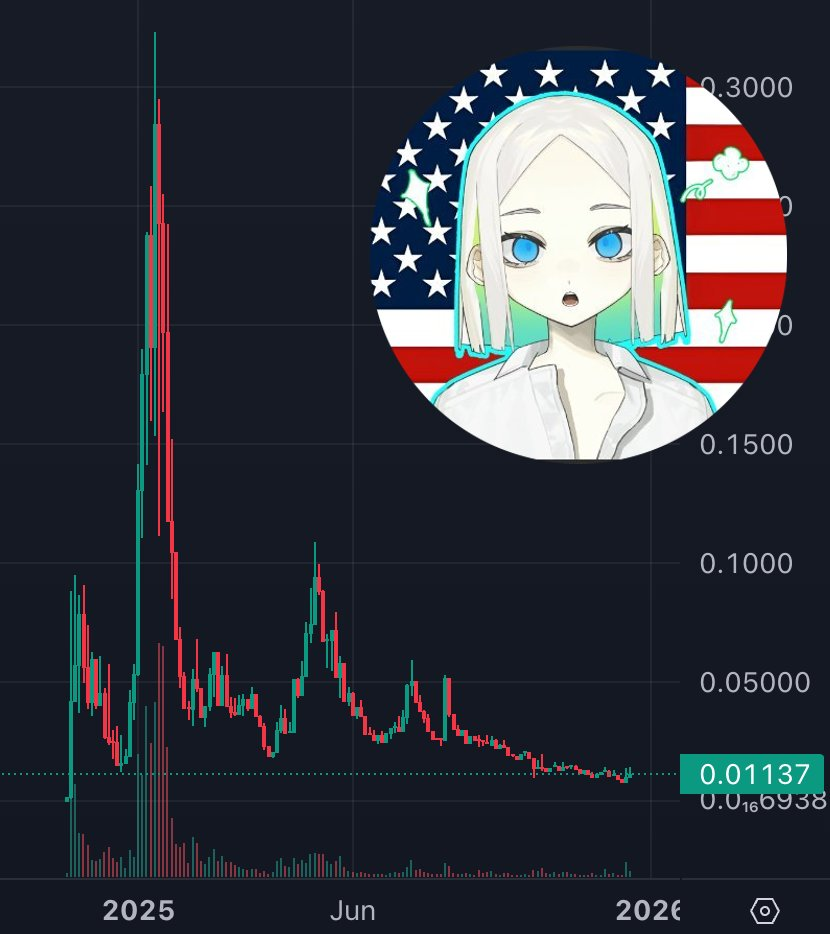
L'activité d'achat coordonnée a été révélée plus d'un an après le lancement du jeton AVA le 13 novembre 2024. Le jeton a atteint une valorisation totalement diluée (FDV) de 300 millions de dollars d'ici janvier 2025, devenant un jeton utilitaire d'agent IA autonome populaire natif de Solana.

Le jeton AVA est en baisse de plus de 79 % depuis son lancement et de plus de 96 % par rapport à son plus haut historique de 0,33 $ atteint le 15 janvier 2025, selon les données de CoinGecko.
Source : Bubblemaps

Ava, également connue sous le nom de « stagiaire IA HOLO », a été le premier agent IA construit sur la plateforme de lancement IA décentralisée Holoworld AI. La plateforme permet aux utilisateurs de créer, jouer ou lever des fonds pour des applications d'IA agentiques.

Holoworld affirme avoir plus d'un million d'utilisateurs et 700 000 « créations » IA à ce jour.

Cointelegraph a contacté Holoworld pour commenter l'activité du cluster de portefeuilles sybils pendant le lancement du jeton.

Magazine : La dégénérescence des memecoins finance une recherche révolutionnaire contre le vieillissement


Trending Cryptos

Related Questions

QQu'est-ce que Bubblemaps a découvert concernant le lancement du jeton AI Ava sur Solana ?

ABubblemaps a découvert qu'un groupe de 23 portefeuilles liés au déployeur du jeton Ava avait accumulé environ 40% de l'offre du jeton au lancement, soulevant des questions sur la coordination d'insiders.

QQuels étaient les modèles communs partagés par le cluster de portefeuilles sybil identifié ?

ALes portefeuilles partageaient des modèles similaires : financement dans une fenêtre temporelle serrée via Bitget et Binance, réception de montants similaires de Solana (SOL), et aucune activité blockchain avant d'acheter le jeton AVA.

QQu'est-ce que le 'sniping' signifie dans le contexte crypto ?

ALe 'sniping' en crypto fait référence à l'utilisation de bots de trading pour acheter automatiquement de nouveaux jetons dès qu'ils deviennent disponibles publiquement, visant à acheter à des prix avant le grand public.

QQuelles ont été les conséquences sur le prix du jeton AVA après ces activités coordonnées ?

ALe jeton AVA a chuté de plus de 79% depuis son lancement et de plus de 96% par rapport à son plus haut historique de 0,33$ atteint le 15 janvier 2025.

QQuel outil Bubblemaps a-t-il utilisé pour découvrir cette activité coordonnée et quand a-t-il lancé ?

ABubblemaps a utilisé sa fonctionnalité 'Time Travel', un outil d'analyse de grade médico-légal lancé en mai 2025, permettant de reconstruire la distribution historique des jetons.

Related Reads

Private Credit in US Dollar

Stablecoins are evolving into a new type of money market fund, channeling crypto deposits into the $2 trillion private credit market. This mirrors the 1970s innovation where money market funds pooled small deposits to buy high-yield government securities, bypassing bank restrictions. Today, platforms like Apollo's ACRED tokenized fund and Figure's on-chain lending system allow stablecoin holders to access institutional private credit strategies with no minimum investment, offering yields of 8-12%. On-chain tokenization enables greater liquidity and DeFi composability (e.g., using tokens as collateral for leveraged positions) compared to traditional, locked-up private credit funds. Consequently, on-chain private credit has grown 15x in a year to $5.87 billion, though it remains a tiny fraction (0.3%) of the global market. However, this model carries significant risks, as illustrated by the failure of Goldfinch. Launched in 2021, it directed crypto deposits to motorcycle loans in Kenya and Nigeria. Critical issues included a lack of local oversight, leading to unauthorized fund transfers and borrower defaults. With $56 million now trapped in non-performing loans, its collapse highlights that while blockchain streamlines capital transfer, the essential 90% of lending—underwriting, monitoring, and recovery—remains a costly, localized challenge. Success requires robust, traditional credit infrastructure, not just on-chain execution.

marsbit12m ago

Private Credit in US Dollar

marsbit12m ago

Goldman Sachs: How to Invest in Tech Stocks in the Second Half of the Year?

Goldman Sachs remains bullish on tech stocks in the second half of the year, advising a shift from "buying the sector" to "picking individual companies." The firm's latest report indicates the AI-driven tech cycle shows no signs of peaking, with supply exceeding demand or technological progress slowing yet to materialize. Recent pullbacks are viewed as healthy corrections following rapid gains, not a trend reversal. Three core investment themes are highlighted: 1) Maintain overweight positions in AI server and data center-related hardware stocks. 2) Conduct more nuanced risk-reward assessments in sub-sectors where supply and demand are tightening. 3) During periods of declining risk appetite, consider software and IT services companies leveraging AI to create new business opportunities as a defensive play. The report emphasizes that future outperformance will depend more on individual company competitiveness (alpha) rather than broad sector momentum (beta). Companies likely to excel are those benefiting from price increases, possessing strong capacity expansion capabilities, having undervalued AI growth potential, or holding unique catalysts. For defense, Goldman suggests focusing on AI-enabling software and service firms—such as those in AI consulting, data infrastructure, and cybersecurity—which may see efficiency gains and new demand, rather than retreating to traditional defensive sectors. Overall, the strategy balances offensive exposure to AI infrastructure with defensive positioning in AI-applicable software and services.

链捕手17m ago

Goldman Sachs: How to Invest in Tech Stocks in the Second Half of the Year?

链捕手17m ago

Wall Street's Take on the June Fed Meeting Minutes: Focus on Core Inflation, No Short-Term Urgency to Hike Rates

Wall Street's View on Fed June Minutes: Inflation is the Key, No Urgency for Near-Term Hike The minutes of the Federal Reserve's June FOMC meeting revealed a unified Wall Street interpretation: inflation remains the true determinant for future policy moves. Major institutions including Goldman Sachs, Morgan Stanley, and Citigroup concluded that the Fed remains data-dependent, with its path hinging on upcoming inflation data. Key takeaways from the minutes: * **No Immediate Tightening**: Despite "a few" participants seeing reasons to hike, none actively advocated for it at the June meeting. The consensus was to hold the federal funds rate steady at 3.5%-3.75%. * **Inflation as the Decisive Factor**: The Fed outlined two primary scenarios. If inflation declines "soon" toward the 2% target, "almost all" officials would support maintaining or eventually cutting rates. If inflation persists high due to factors like AI demand or supply shocks, "almost all" would see some policy tightening as necessary. * **Patience is Warranted**: Officials noted inflation remains above target but cited anchored inflation expectations and a labor market not currently driving price pressures as reasons for patience. The Fed is focused on the *direction* of inflation over the next few months. * **No Policy Framework Shift**: The minutes reaffirmed a data-dependent approach rather than a fundamental shift toward pre-emptive tightening. Institutional Forecasts: * **Morgan Stanley**: Expects rates on hold in 2026, with potential cuts in 2027 if inflation cools. * **Goldman Sachs**: Baseline scenario sees rates unchanged through 2026, with inflation moderating gradually. * **Citigroup**: Takes a more dovish view, suggesting market pricing for a July hike is too aggressive and forecasting potential rate cuts starting in late 2026. Overall, the minutes were perceived as marginally dovish, emphasizing a watchful stance on inflation data with no near-term urgency to hike.

marsbit23m ago

Wall Street's Take on the June Fed Meeting Minutes: Focus on Core Inflation, No Short-Term Urgency to Hike Rates

marsbit23m ago

Trump Earns $2.2 Billion Annually, Two-Thirds from Cryptocurrency, with 87 Stock Trades Daily

Former U.S. President Donald Trump reported a personal income exceeding $2.2 billion in 2025, the highest annual income for a sitting president, according to U.S. government financial disclosures. This income primarily stemmed from cryptocurrency ventures and investments, starkly contrasting the standard presidential salary of $400,000. More than two-thirds ($1.4 billion) of his income originated from cryptocurrency-related activities. This includes over $1 billion in Bitcoin and Ethereum holdings, approximately $800 million from World Liberty Financial (a crypto project co-founded with his son), and about $635 million from sales of the TRUMP meme coin. Overall, Trump family crypto operations reportedly generated over $2.3 billion in profit after his 2025 inauguration. Trump's stock portfolio showed heavy trading activity, with over 22,000 trades executed in 2025—averaging 87 trades per day. Major holdings included tech giants like Google, Apple, Nvidia, and Microsoft. Notably, some large-scale stock purchases coincided with major policy announcements, such as tariffs, raising questions about potential insider trading. His traditional business empire, centered on real estate and branding, contributed $575 million. Additionally, he earned nearly $60 million through numerous "DT Marks" licensing companies, which leverage the Trump brand globally in locations like Dubai and Abu Dhabi. The report highlights significant conflicts of interest, as countries like the UAE and Saudi Arabia, whose entities invested in Trump's businesses, later received favorable U.S. policy treatment. Trump has stated he delegates financial management and is not directly involved in day-to-day investment decisions.

Odaily星球日报23m ago

Trump Earns $2.2 Billion Annually, Two-Thirds from Cryptocurrency, with 87 Stock Trades Daily

Odaily星球日报23m ago

Trading

Spot

Hot Articles

Discussions

Welcome to the HTX Community. Here, you can stay informed about the latest platform developments and gain access to professional market insights. Users' opinions on the price of AI (AI) are presented below.

活动图片