Solana AI代币Ava遭遇与部署者相关的启动狙击:Bubblemaps报告

cointelegraphPublished on 2025-12-19Last updated on 2025-12-19

Abstract

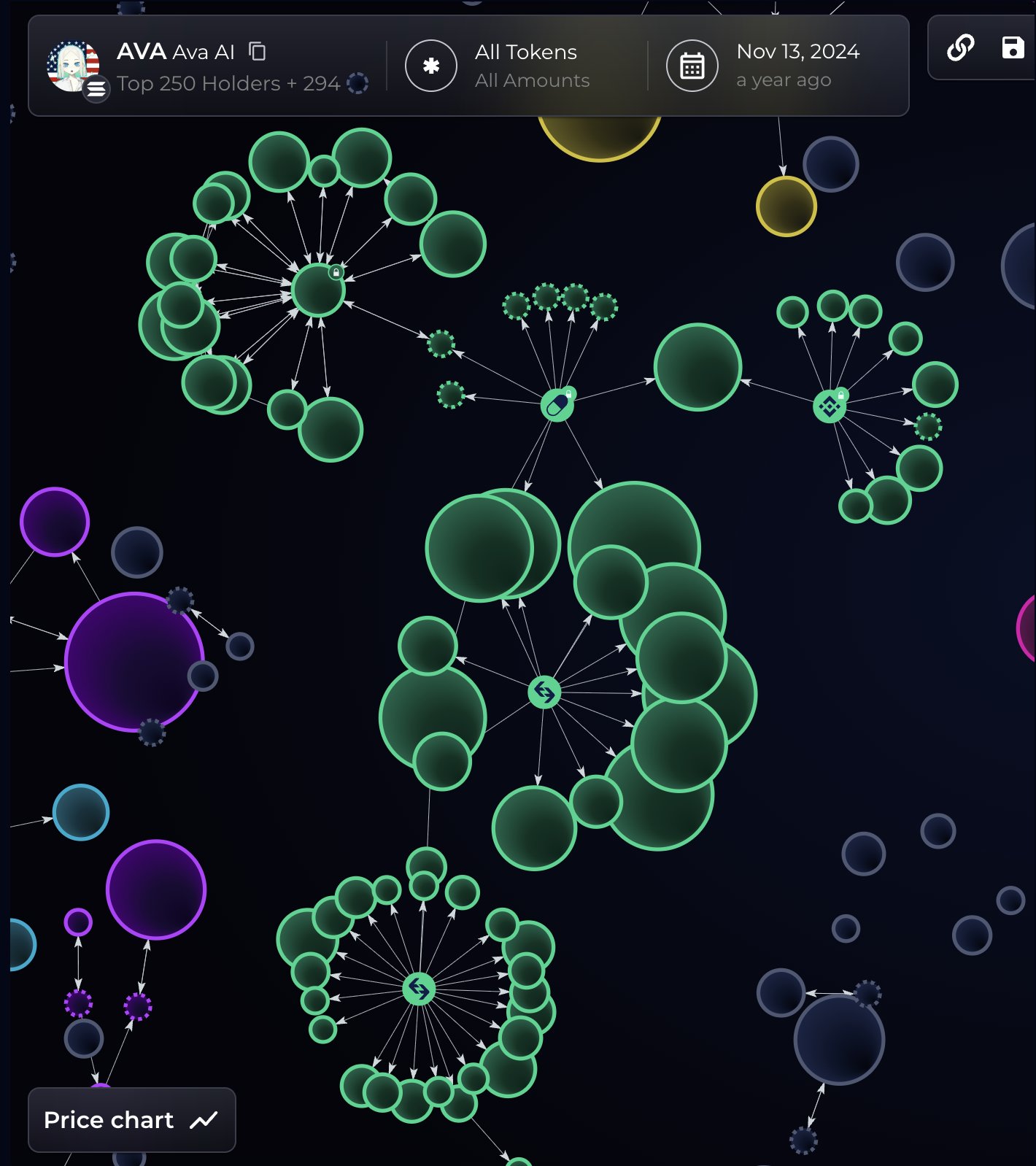
区块链分析公司Bubblemaps报告称,Solana生态AI代币Ava在启动时疑似遭遇内部狙击:23个与部署者关联的钱包集群通过币安和Bitget在短时间内获得资金,以高度协同的方式抢购了约40%的代币供应量。 这些钱包在购买Ava代币前均无链上活动记录,且资金规模和转账时间高度相似。这种“狙击”行为通常指利用交易机器人在代币上市瞬间低价抢购,而此次集中控盘可能引发拉高出货(rug pull)风险。 Ava代币于2024年11月推出,曾是Solana上热门AI应用代币,市值一度达3亿美元。但当前价格较历史高点暴跌96%,较发行价下跌79%。该项目基于去中心化AI平台Holoworld构建,号称拥有百万用户。 Bubblemaps通过其链上分析工具“Time Travel”追溯了代币分发历史,揭示了此次疑似内部操纵行为。目前团队已向Holoworld寻求回应。

区块链分析公司Bubblemaps表示,与基于Solana的AI代币Ava部署者相关的23个钱包集群在启动时积累了该代币约40%的供应量,这引发了关于该项目首次亮相内部协调的新问题。

Bubblemaps在周四的X帖子中声称,与部署者相关的Sybil钱包集群表现出相似模式,包括通过Bitget和币安在紧密时间窗口内获得资金、接收相似数量的Solana(SOL),以及在抢购Ava AI(AVA)代币供应前没有任何区块链活动。

"与这些狙击者相关的还有其他早期购买$AVA的钱包。相似的资金来源、规模和时间强烈表明这些集群之间存在协调,"他们表示。

在加密俚语中,狙击指使用加密交易机器人在代币公开可用时自动购买新供应,旨在以低于公众的价格购入。

虽然该代币在memecoin启动平台Pump.fun上推出,旨在实现去中心化、社区驱动的首次亮相,但钱包集群的活动表明收购导致单个实体持有代币供应量的40%。
来源:Bubblemaps

相关:加密行业临近转折点,接近其‘网景时刻’

集中在少数钱包中的大量代币供应可以帮助投资者检测诸如拉地毯(rug pulls)之类的骗局,其中内部人员移除流动性或进行大规模抛售,导致价格急剧崩溃,使投资者持有毫无价值的代币。

这一协调活动是通过Bubblemaps的Time Travel功能发现的,这是5月推出的法医级分析工具,使Web3用户能够重建代币的历史分布,旨在检测早期内部活动。

相关:Bubblemaps质疑PEPE的公平启动,指控30%的初始供应被捆绑

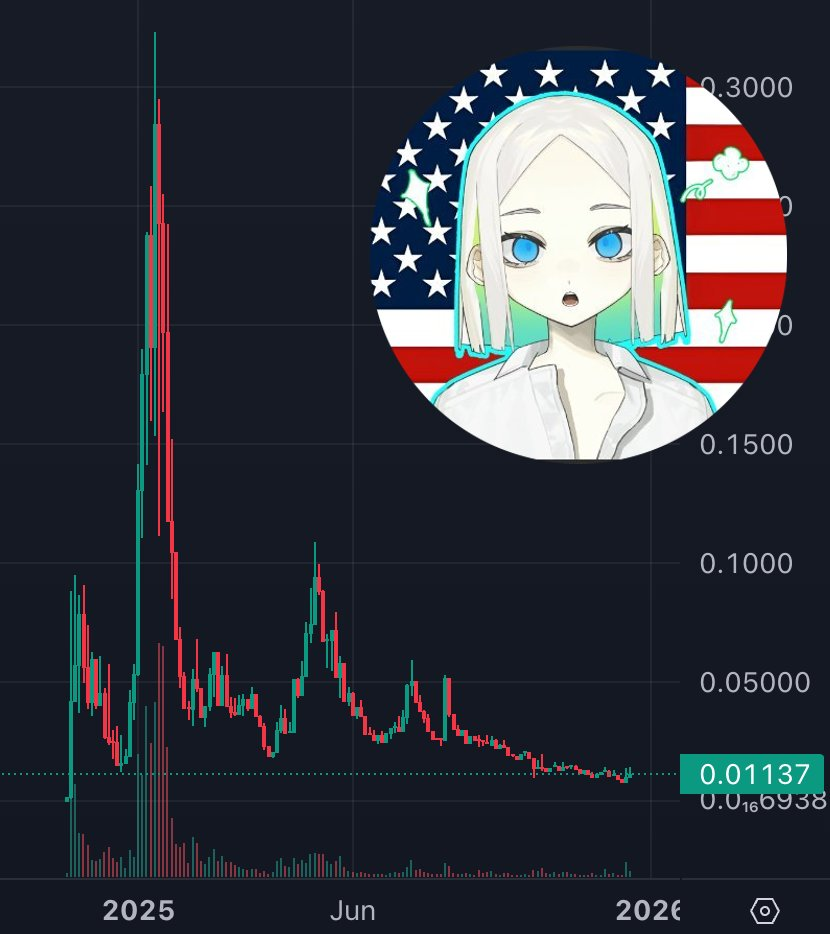
AVA AI代币从历史高点下跌96%

这一协调购买行为在AVA代币于2024年11月13日推出一年后被揭露。该代币在2025年1月达到完全稀释估值(FDV)3亿美元,使其成为Solana上流行的自主AI代理实用代币。

CoinGecko数据显示,AVA代币自推出以来下跌超过79%,较2025年1月15日创下的历史高点0.33美元下跌超过96%。
来源:Bubblemaps

Ava,也被称为“HOLO AI实习生”,是在去中心化AI启动平台Holoworld AI上构建的第一个AI代理。该平台允许用户创建、玩耍或为代理AI应用程序筹集资金。

Holoworld声称至今拥有超过100万用户和70万个AI“创作”。

Cointelegraph已联系Holoworld,就代币启动期间Sybil钱包集群的活动置评。

杂志:Memecoin的堕落行为正在资助开创性的抗衰老研究

Trending Cryptos

Related Questions

Q根据Bubblemaps的报告,与Ava代币部署者相关的钱包集群在代币发行时积累了多少比例的供应量?

A根据Bubblemaps的报告,与Ava代币部署者相关的23个钱包集群在代币发行时积累了约40%的供应量。

Q这些被认定为狙击Ava代币的钱包集群有哪些共同特征?

A这些钱包集群具有以下共同特征:在相近的时间窗口内通过Bitget和Binance获得资金、接收相似数量的Solana(SOL)、在购买Ava代币之前没有任何区块链活动历史。

Q什么是加密货币领域的'狙击(sniping)'行为?

A在加密货币领域,'狙击'指的是使用交易机器人,在代币刚公开上市时自动购买新代币供应,旨在以较低价格抢在公众之前买入的行为。

QAva代币自历史最高点下跌了多少百分比?

A根据CoinGecko数据,Ava代币从2025年1月15日创下的历史最高点0.33美元下跌了超过96%。

QBubblemaps通过什么功能发现了这次协调的购买活动?

ABubblemaps通过其'时间旅行(Time Travel)'功能发现了这次协调的购买活动,这是一个法医级分析工具,可以重建代币的历史分布情况,旨在检测早期的内部人员活动。

Related Reads

Private Credit in US Dollar

Stablecoins are evolving into a new type of money market fund, channeling crypto deposits into the $2 trillion private credit market. This mirrors the 1970s innovation where money market funds pooled small deposits to buy high-yield government securities, bypassing bank restrictions. Today, platforms like Apollo's ACRED tokenized fund and Figure's on-chain lending system allow stablecoin holders to access institutional private credit strategies with no minimum investment, offering yields of 8-12%. On-chain tokenization enables greater liquidity and DeFi composability (e.g., using tokens as collateral for leveraged positions) compared to traditional, locked-up private credit funds. Consequently, on-chain private credit has grown 15x in a year to $5.87 billion, though it remains a tiny fraction (0.3%) of the global market. However, this model carries significant risks, as illustrated by the failure of Goldfinch. Launched in 2021, it directed crypto deposits to motorcycle loans in Kenya and Nigeria. Critical issues included a lack of local oversight, leading to unauthorized fund transfers and borrower defaults. With $56 million now trapped in non-performing loans, its collapse highlights that while blockchain streamlines capital transfer, the essential 90% of lending—underwriting, monitoring, and recovery—remains a costly, localized challenge. Success requires robust, traditional credit infrastructure, not just on-chain execution.

marsbit12m ago

Private Credit in US Dollar

marsbit12m ago

Goldman Sachs: How to Invest in Tech Stocks in the Second Half of the Year?

Goldman Sachs remains bullish on tech stocks in the second half of the year, advising a shift from "buying the sector" to "picking individual companies." The firm's latest report indicates the AI-driven tech cycle shows no signs of peaking, with supply exceeding demand or technological progress slowing yet to materialize. Recent pullbacks are viewed as healthy corrections following rapid gains, not a trend reversal. Three core investment themes are highlighted: 1) Maintain overweight positions in AI server and data center-related hardware stocks. 2) Conduct more nuanced risk-reward assessments in sub-sectors where supply and demand are tightening. 3) During periods of declining risk appetite, consider software and IT services companies leveraging AI to create new business opportunities as a defensive play. The report emphasizes that future outperformance will depend more on individual company competitiveness (alpha) rather than broad sector momentum (beta). Companies likely to excel are those benefiting from price increases, possessing strong capacity expansion capabilities, having undervalued AI growth potential, or holding unique catalysts. For defense, Goldman suggests focusing on AI-enabling software and service firms—such as those in AI consulting, data infrastructure, and cybersecurity—which may see efficiency gains and new demand, rather than retreating to traditional defensive sectors. Overall, the strategy balances offensive exposure to AI infrastructure with defensive positioning in AI-applicable software and services.

链捕手17m ago

Goldman Sachs: How to Invest in Tech Stocks in the Second Half of the Year?

链捕手17m ago

Wall Street's Take on the June Fed Meeting Minutes: Focus on Core Inflation, No Short-Term Urgency to Hike Rates

Wall Street's View on Fed June Minutes: Inflation is the Key, No Urgency for Near-Term Hike The minutes of the Federal Reserve's June FOMC meeting revealed a unified Wall Street interpretation: inflation remains the true determinant for future policy moves. Major institutions including Goldman Sachs, Morgan Stanley, and Citigroup concluded that the Fed remains data-dependent, with its path hinging on upcoming inflation data. Key takeaways from the minutes: * **No Immediate Tightening**: Despite "a few" participants seeing reasons to hike, none actively advocated for it at the June meeting. The consensus was to hold the federal funds rate steady at 3.5%-3.75%. * **Inflation as the Decisive Factor**: The Fed outlined two primary scenarios. If inflation declines "soon" toward the 2% target, "almost all" officials would support maintaining or eventually cutting rates. If inflation persists high due to factors like AI demand or supply shocks, "almost all" would see some policy tightening as necessary. * **Patience is Warranted**: Officials noted inflation remains above target but cited anchored inflation expectations and a labor market not currently driving price pressures as reasons for patience. The Fed is focused on the *direction* of inflation over the next few months. * **No Policy Framework Shift**: The minutes reaffirmed a data-dependent approach rather than a fundamental shift toward pre-emptive tightening. Institutional Forecasts: * **Morgan Stanley**: Expects rates on hold in 2026, with potential cuts in 2027 if inflation cools. * **Goldman Sachs**: Baseline scenario sees rates unchanged through 2026, with inflation moderating gradually. * **Citigroup**: Takes a more dovish view, suggesting market pricing for a July hike is too aggressive and forecasting potential rate cuts starting in late 2026. Overall, the minutes were perceived as marginally dovish, emphasizing a watchful stance on inflation data with no near-term urgency to hike.

marsbit23m ago

Wall Street's Take on the June Fed Meeting Minutes: Focus on Core Inflation, No Short-Term Urgency to Hike Rates

marsbit23m ago

Trump Earns $2.2 Billion Annually, Two-Thirds from Cryptocurrency, with 87 Stock Trades Daily

Former U.S. President Donald Trump reported a personal income exceeding $2.2 billion in 2025, the highest annual income for a sitting president, according to U.S. government financial disclosures. This income primarily stemmed from cryptocurrency ventures and investments, starkly contrasting the standard presidential salary of $400,000. More than two-thirds ($1.4 billion) of his income originated from cryptocurrency-related activities. This includes over $1 billion in Bitcoin and Ethereum holdings, approximately $800 million from World Liberty Financial (a crypto project co-founded with his son), and about $635 million from sales of the TRUMP meme coin. Overall, Trump family crypto operations reportedly generated over $2.3 billion in profit after his 2025 inauguration. Trump's stock portfolio showed heavy trading activity, with over 22,000 trades executed in 2025—averaging 87 trades per day. Major holdings included tech giants like Google, Apple, Nvidia, and Microsoft. Notably, some large-scale stock purchases coincided with major policy announcements, such as tariffs, raising questions about potential insider trading. His traditional business empire, centered on real estate and branding, contributed $575 million. Additionally, he earned nearly $60 million through numerous "DT Marks" licensing companies, which leverage the Trump brand globally in locations like Dubai and Abu Dhabi. The report highlights significant conflicts of interest, as countries like the UAE and Saudi Arabia, whose entities invested in Trump's businesses, later received favorable U.S. policy treatment. Trump has stated he delegates financial management and is not directly involved in day-to-day investment decisions.

Odaily星球日报23m ago

Trump Earns $2.2 Billion Annually, Two-Thirds from Cryptocurrency, with 87 Stock Trades Daily

Odaily星球日报23m ago

Trading

Spot

Hot Articles

Discussions

Welcome to the HTX Community. Here, you can stay informed about the latest platform developments and gain access to professional market insights. Users' opinions on the price of AI (AI) are presented below.

活动图片