Правительство США переместило конфискованные биткоины на $74 млн

cryptonews.ruPublished on 2025-02-13Last updated on 2025-10-14

667 BTC, изъятых три года назад у эстонского криптосервиса HashFlare, были перемещены на отдельный кошелек

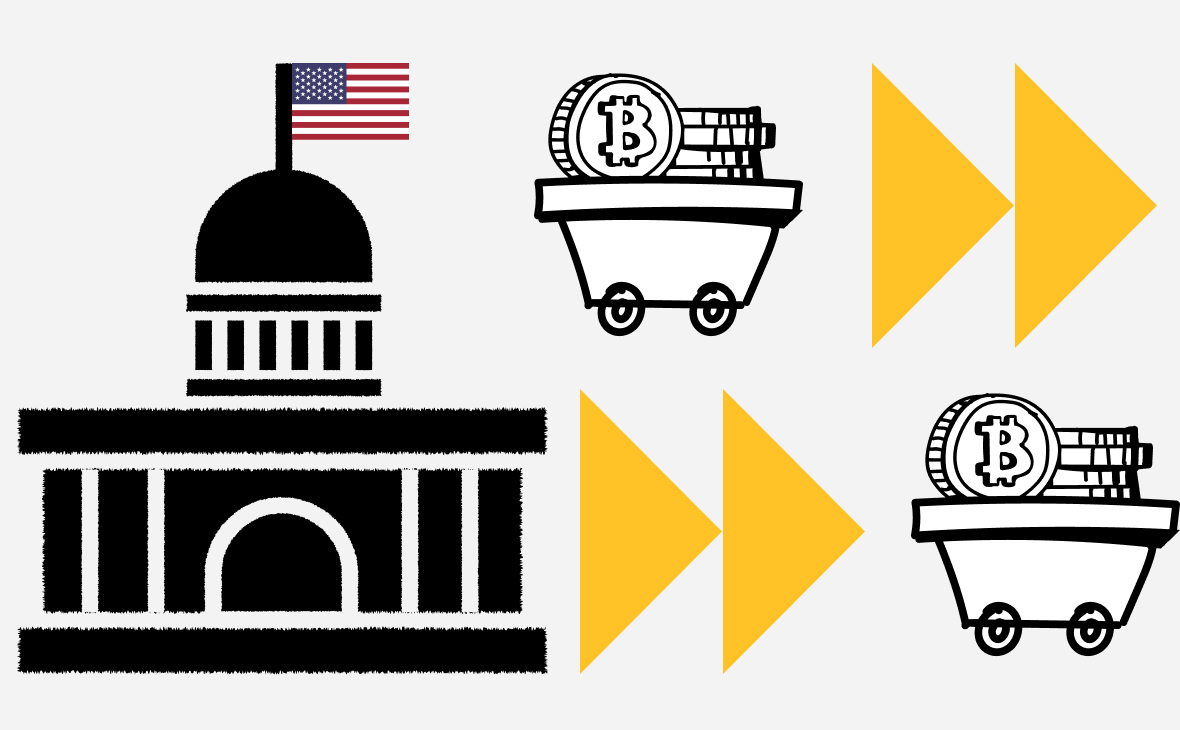
Правительство США переместило 667 биткоинов (около $74 млн) на отдельный кошелек, по данным Arkham. Это монеты, связанные с делом против эстонского облачного майнинг-сервиса HashFlare.

Переведенные биткоины были конфискованы три года назад. Согласно пометке аналитиков «Potapenko/Turogin seized funds», они связаны с делом против основателей платформы облачного майнинга HashFlare и цифрового банка Polybius Bank Сергея Потапенко и Ивана Турыгина. Американские власти обвинили их в криптовалютном мошенничестве на $575 млн и отмывании денег.

Турыгин и Потапенко, оба граждане Эстонии, были арестованы в ноябре 2022 года. А в январе 2024 года была одобрена их экстрадиция в США. В феврале этого года они признали вину в сговоре с целью мошенничества и согласились выдать активы на $400 млн, которые затем пошли бы на компенсацию пострадавшим.

rbc.group

В августе этого года суд в США приговорил их к сроку, который они уже отбыли в ожидании разбирательства (16 месяцев), штрафам по $25 тыс. и общественным работам. Ожидалось, что они вернутся в Эстонию. Но прокуратура позже подала апелляцию, настаивая на 10 годах тюремного заключения.

После перемещения 667 биткоинов HashFlare на балансе прежних кошельков правительства США остаются криптовалюты на сумму около $22,8 млрд. Из них $22 млрд приходится на биткоины (197 354 BTC).

В марте 2025 года президент США Дональд Трамп подписал указ о создании Strategic Bitcoin Reserve — национального резерва биткоина, который должен быть сформирован из конфискованных криптовалют. В августе министр финансов США Скотт Бессент подтвердил, что для резерва правительство собирается использовать только конфискованные цифровые активы, объем которых он оценил в $15–20 млрд. Продавать их, по словам Бессента, правительство не планировало.

Проверка криптоактивов федеральных ведомств, которые должны составить основу резерва, была назначена на 5 апреля 2025 года. По данным на конец сентября, аудит стратегического биткоин-резерва США до сих пор не был проведен.

Глава отдела исследований компании Galaxy Digital Алекс Торн еще весной обращал внимание на то, что по крайней мере 112 тыс. BTC из конфискованных США активов принадлежат криптобирже Bitfinex. Они должны быть ей возвращены по решению суда.


Trending Cryptos

Related Reads

In Such a Crowded Cross-border Payment Track, Where Does the Next Stop Lie in the Future?

The crowded cross-border payments industry faces a paradox: intense competition above water with financing and narratives, while beneath, price wars and shrinking margins in basic PSP services are common. The path forward lies not in simple "cross-border" solutions but in deep **localization**. Success requires mastering the fragmented and tightening regulations of fiat currencies in each market—the "last mile" of compliance, banking, and settlement. Many Chinese PSPs have succeeded by following Chinese merchants overseas but have not deeply penetrated mainstream local merchant ecosystems abroad. Their strong product capabilities need to be applied to new, complex markets. The future belongs to companies that evolve from single-channel providers to **cross-border capital network operators**. This means moving beyond competing on transaction fees to creating internal networks that optimize capital efficiency through multi-directional matching, netting, and position reuse across countries and currencies. For Web3 and stablecoins, the key is integration, not replacement. Stablecoins offer efficiency gains but cannot bypass the foundational trust, compliance, and legal frameworks of traditional finance. The realistic path is the gradual adoption and "taming" of Web3 technologies by established financial institutions. The ultimate solution is a **dual clearing infrastructure** combining deep local fiat capabilities (local accounts, compliance, banking) with lightweight stablecoin-native capabilities (on-chain settlement, wallets). The biggest opportunity lies not in oversaturated mainstream corridors but in complex, underserved regional corridors (e.g., specific CIS, Middle East-Southeast Asia, or Latin American trade pairs). The winners will be those who build hard-to-replicate, deep capabilities in these areas—acting as the essential "clearing shovels" or infrastructure providers. The future keywords are **more local, more networked, and more stablecoin-native**. High-profit opportunities remain in the non-standardized, difficult-to-replicate deep waters of the industry, requiring genuine on-the-ground presence and long-term patience.

链捕手1h ago

In Such a Crowded Cross-border Payment Track, Where Does the Next Stop Lie in the Future?

链捕手1h ago

Lightning Fast Five-Whip Combo! Strategy's Self-Rescue Plan Officially Released

Strategy, amidst the STRC de-pegging crisis, has unveiled its "Digital Credit Capital Framework" self-rescue plan. The five-part framework includes: 1) **Cash Reserves**: Management of ~$2.55B in USD reserves, dedicated solely to covering ~17.4 months of preferred stock dividends and debt interest, with a 12-month minimum coverage floor. 2) **Dividend Policy**: STRC's dividend yield rises to 12% from July 1st, with monthly reviews. Strategy clarifies de-pegging does not automatically trigger further hikes. 3) **Preferred Stock Buyback**: A $1B authorization, prioritizing STRC repurchases to support its price, reduce future dividend obligations, and signal commitment, using funds separate from dividend reserves. 4) **Common Stock Buyback**: A separate $1B authorization for MSTR stock, aimed at creating shareholder value when the stock is deemed undervalued, establishing a two-way capital management mechanism. 5) **Bitcoin Monetization**: Formal authorization to sell BTC (up to $1.25B earmarked) to build USD reserves, cover dividends/interest, or fund buybacks, marking a strategic shift where BTC becomes a managed asset rather than a strictly "hold-only" reserve. Market reaction saw MSTR and STRC shares rise pre-market, while BTC remained stable. The plan aims to restore confidence in STRC, ensure dividend sustainability, and reopen Strategy's funding channels.

Odaily星球日报3h ago

Lightning Fast Five-Whip Combo! Strategy's Self-Rescue Plan Officially Released

Odaily星球日报3h ago

Trading

Spot

Hot Articles

What is $BITCOIN

DIGITAL GOLD ($BITCOIN): A Comprehensive Analysis Introduction to DIGITAL GOLD ($BITCOIN) DIGITAL GOLD ($BITCOIN) is a blockchain-based project operating on the Solana network, which aims to combine the characteristics of traditional precious metals with the innovation of decentralized technologies. While it shares a name with Bitcoin, often referred to as “digital gold” due to its perception as a store of value, DIGITAL GOLD is a separate token designed to create a unique ecosystem within the Web3 landscape. Its goal is to position itself as a viable alternative digital asset, although specifics regarding its applications and functionalities are still developing. What is DIGITAL GOLD ($BITCOIN)? DIGITAL GOLD ($BITCOIN) is a cryptocurrency token explicitly designed for use on the Solana blockchain. In contrast to Bitcoin, which provides a widely recognized value storage role, this token appears to focus on broader applications and characteristics. Notable aspects include: Blockchain Infrastructure: The token is built on the Solana blockchain, known for its capacity to handle high-speed and low-cost transactions. Supply Dynamics: DIGITAL GOLD has a maximum supply capped at 100 quadrillion tokens (100P $BITCOIN), although details regarding its circulating supply are currently undisclosed. Utility: While precise functionalities are not explicitly outlined, there are indications that the token could be utilized for various applications, potentially involving decentralized applications (dApps) or asset tokenization strategies. Who is the Creator of DIGITAL GOLD ($BITCOIN)? At present, the identity of the creators and development team behind DIGITAL GOLD ($BITCOIN) remains unknown. This situation is typical among many innovative projects within the blockchain space, particularly those aligning with decentralized finance and meme coin phenomena. While such anonymity may foster a community-driven culture, it intensifies concerns about governance and accountability. Who are the Investors of DIGITAL GOLD ($BITCOIN)? The available information indicates that DIGITAL GOLD ($BITCOIN) does not have any known institutional backers or prominent venture capital investments. The project seems to operate on a peer-to-peer model focused on community support and adoption rather than traditional funding routes. Its activity and liquidity are primarily situated on decentralized exchanges (DEXs), such as PumpSwap, rather than established centralized trading platforms, further highlighting its grassroots approach. How DIGITAL GOLD ($BITCOIN) Works The operational mechanics of DIGITAL GOLD ($BITCOIN) can be elaborated on based on its blockchain design and network attributes: Consensus Mechanism: By leveraging Solana’s unique proof-of-history (PoH) combined with a proof-of-stake (PoS) model, the project ensures efficient transaction validation contributing to the network's high performance. Tokenomics: While specific deflationary mechanisms have not been extensively detailed, the vast maximum token supply implies that it may cater to microtransactions or niche use cases that are still to be defined. Interoperability: There exists the potential for integration with Solana’s broader ecosystem, including various decentralized finance (DeFi) platforms. However, the details regarding specific integrations remain unspecified. Timeline of Key Events Here is a timeline that highlights significant milestones concerning DIGITAL GOLD ($BITCOIN): 2023: The initial deployment of the token occurs on the Solana blockchain, marked by its contract address. 2024: DIGITAL GOLD gains visibility as it becomes available for trading on decentralized exchanges like PumpSwap, allowing users to trade it against SOL. 2025: The project witnesses sporadic trading activity and potential interest in community-led engagements, although no noteworthy partnerships or technical advancements have been documented as of yet. Critical Analysis Strengths Scalability: The underlying Solana infrastructure supports high transaction volumes, which could enhance the utility of $BITCOIN in various transaction scenarios. Accessibility: The potential low trading price per token could attract retail investors, facilitating wider participation due to fractional ownership opportunities. Risks Lack of Transparency: The absence of publicly known backers, developers, or an audit process may yield skepticism regarding the project's sustainability and trustworthiness. Market Volatility: The trading activity is heavily reliant on speculative behavior, which can result in significant price volatility and uncertainty for investors. Conclusion DIGITAL GOLD ($BITCOIN) emerges as an intriguing yet ambiguous project within the rapidly evolving Solana ecosystem. While it attempts to leverage the “digital gold” narrative, its departure from Bitcoin's established role as a store of value underscores the need for a clearer differentiation of its intended utility and governance structure. Future acceptance and adoption will likely depend on addressing the current opacity and defining its operational and economic strategies more explicitly. Note: This report encompasses synthesised information available as of October 2023, and developments may have transpired beyond the research period.

514 Total ViewsPublished 2025.05.13Updated 2025.05.13

What is $BITCOIN

Discussions

Welcome to the HTX Community. Here, you can stay informed about the latest platform developments and gain access to professional market insights. Users' opinions on the price of BTC (BTC) are presented below.

活动图片