离百万美元只差一个周期?比特币进入新倒计时

比推Published on 2025-10-10Last updated on 2025-10-10

作者:深潮 TechFlow


为期一天的币安人生狂欢结束了。

情绪消退后,少数人拿到了大结果,多数人陷入了懊悔和自省。

与这种大热 Meme 没上对车的短期遗憾相比,长期拿不住 BTC 并获取稳健收益,则是另一种隔一阵子就会出现一次的「循环式」遗憾。

比如国庆假期期间,下面这张预言图在社媒讨论中频繁出现。即使是 3 年前买了 BTC 不放手,到现在依然有不错的收益。

稳健投资者或许依然关心:作为加密市场的风向标,BTC 还能涨到多高?

之前,MicroStrategy 预测比特币 2036 年将达到 240 万美元,ARK Invest 更激进地预测 2030 年 380 万美元。这些数字一直被大家批评为过于乐观,或者是屁股决定脑袋。

但最近,一项相对更加中立和严谨的学术研究,为这些预测提供了理论支撑。

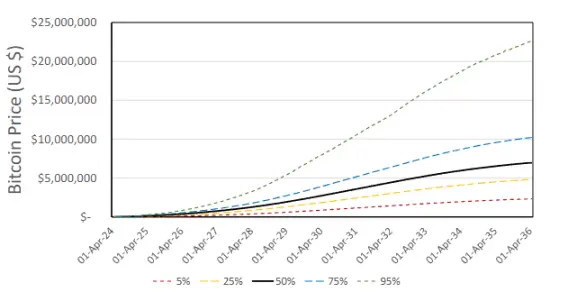
来自 Satoshi Action Education(非营利研究组织)的最新研究论文显示,基于纯粹的供需分析,比特币在 2036 年有 75% 的概率超过 481 万美元。这比机构们最激进的预测还要高出 25%。

同时,该研究也预测2030 年 BTC 有 50% 概率超过 335 万美元,与 ARK 的 380 万美元预测相差不大。
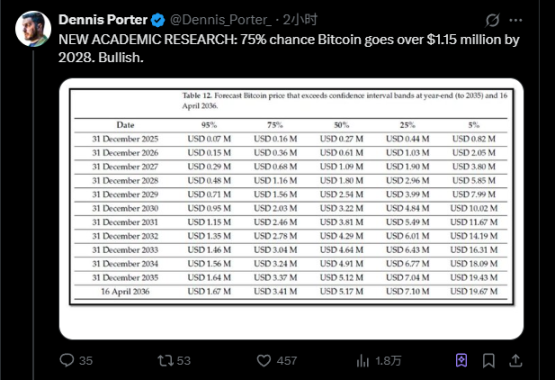
虽然理论研究并不一定能代表实际走向,但比起无脑喊单,了解一下不同的分析思路,也有助于资产配置的决策。

100 万美元,可能在 2028 年到来

先说研究的几个关键结论。

比特币在 2036 年 4 月有 75% 的概率超过 481 万美元,中位数预测约 600 万美元,对应市值约 125 万亿美元。这大约是目前全球黄金市值的 6-8 倍。

更重要的是时间点。

该研究预测比特币突破 100 万美元的时间点最可能出现在 2027 年底至 2028 年底之间。具体来看,在 50% 概率(中位数)情景下,比特币在 2027 年底已达到 110 万美元;

在 75% 概率区间下,这一里程碑出现在 2028 年内。这与 ARK Invest 预测的 2030 年 380 万美元时间线基本吻合。
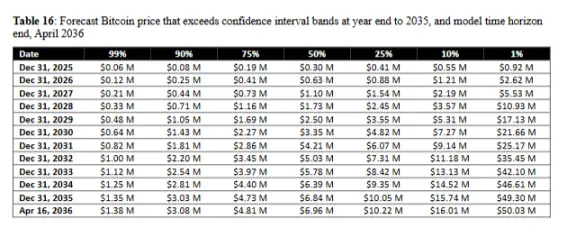
与机构预测不同的是,这项研究更多的只看比特币的供给和需求变化,也就是经济学意义上的第一性原理。说的再细一些就是:

不看什么比特币的历史价格趋势,也不预设它会取代黄金或其他资产的市场份额,

而是单纯基于 2100 万枚的固定供应上限(供给),结合当前可观测的购买行为(需求),例如 ETF 流入、企业购买、矿工囤积等数据,计算供需平衡点如何随时间演变。

这种方法的最大优势在于所有关键变量都可以持续追踪和验证。

ETF 每日净流入有彭博等金融终端的公开数据,交易所余额可以通过链上数据实时查询,长期持有者占比有 Glassnode、CryptoQuant 等分析平台的统计。

值得注意的是,基于该供需模型的研究结论,与采用完全不同方法论的机构预测得出了相近的数量级。

MicroStrategy 的 Bitcoin24 模型假设比特币价格增长率逐年递减,其基准情景也预测 2036 年 BTC 将达到 240 万美元。

机构正在以 10 倍于供应的速度扫货

与供应收缩相对的是旺盛的购买需求。研究统计了当前各类买家的日均购买量:

美国现货比特币 ETF 在 2025 年 7 月的日均净流入约 2900 枚。截至 7 月 29 日,11 只 ETF 合计持有约 148.5 万枚比特币,占总供应量的 7.1%。其中贝莱德的 IBIT 持仓已超过 73 万枚。

上市公司方面,截至 7 月 28 日,前 100 家公司合计持有超过 92.3 万枚比特币。MicroStrategy(现已更名为 Strategy)一家就持有超过 60.7 万枚,以当前约 1000 枚 / 天的购买节奏持续增持。一些比特币矿企也在囤积产出:Marathon 在 2025 年 5 月挖出 950 枚但一枚未卖,当月净增持相当于每天约 31 枚。

将 ETF 流入、企业购买、矿工囤积和散户购买加总,研究估算当前每日从市场退出流通的比特币在 5000-6000 枚之间。

而第四次减半后,矿工每天只能挖出 450 枚新币。这意味着每日需求是每日供应的 11-13 倍。
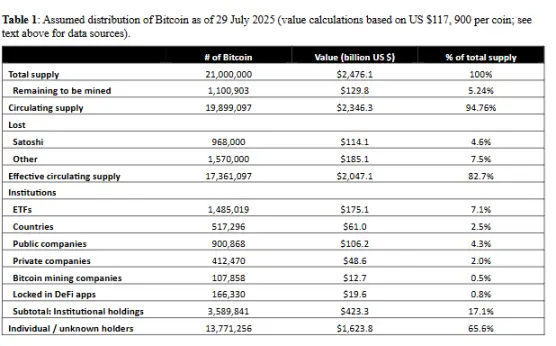
但更关键的问题是:这 1990 万枚已挖出的比特币中,有多少真正在市场流通?

截至 2025 年 7 月 29 日,比特币已挖出 1990 万枚,剩余 110 万枚将在未来 115 年内缓慢释放。

研究团队的统计显示:中本聪早期挖出的约 97 万枚从未移动,普遍认为已无法访问;保守估计约有 157 万枚因私钥丢失而永久损失;剩余 1736 万枚的「有效流通供应」中,有 1440 万枚超过 155 天未在链上移动,被归类为「非流动供应」。

这 1440 万枚「沉睡」的比特币是最大的不确定性。

研究假设其中 40%(约 576 万枚)会永久退出市场,可能被用作企业战略储备、DeFi 协议抵押品,或作为信贷基础而长期锁定。

按此计算,真正可能回流市场的供应约为 864 万枚,加上目前已知在交易所流通的 300 万枚,总流动供应约 1164 万枚。

这种供需失衡不是理论推演,而是正在发生的现实,且速度在加快。

链上数据显示,非流动供应从 2025 年 1 月 1 日的 1390 万枚增至 6 月 26 日的 1437 万枚,相当于每天约 2650 枚流入长期持有状态。统计显示,这些转出交易所的比特币中,70-90% 超过 155 天未再移动。

他们一旦离开交易所,很可能长期不会回来。

2019-2020 年,类似的供应收缩已经上演过一次:比特币持续流出交易所,流动供应逐步收紧。

2020 年 8 月 MicroStrategy 开始购买,10 月 Square 入场,随后几个月价格从 1 万美元加速上涨至 2021 年初的 6.9 万美元。当前的收缩速度更快。

如果 ETF 和企业的购买节奏持续,加上矿工减产效应,流动供应的下降速度将比上一轮周期更陡峭。

按当前速度,3-5 年内可能价格加速上涨

该研究最核心的发现是:当流动供应降至 200 万枚以下时,价格可能进入非线性增长阶段。

为什么是 200 万这个数字?

研究通过模拟不同的每日 BTC 退出流通的数量发现,当市场上可交易的比特币少于 200 万枚时,每一笔新买单都会显著推高价格,而价格上涨又激励更多人囤币不卖,形成自我强化的正反馈循环。
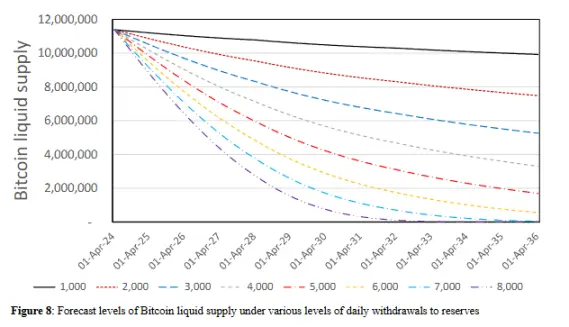
一旦进入这个区间,新增买家的每一笔购买都会产生不成比例的价格影响。

具体来看不同提币速率下的 2036 年预测结果:

  1. 如果每天退出流通 1000 枚(远低于当前水平),到 2036 年还剩 992 万枚流动供应,价格约 139 万美元,年化收益率 29.11%;这是相对温和的增长路径。

  2. 如果每天退出流通 2000 枚(接近研究的基准假设),剩余 748 万枚,价格 160 万美元,年化收益率 30.64%。

  3. 如果每天退出流通 4000 枚,剩余 330 万枚,价格 241 万美元,年化收益率 35.17%。

  4. 当每日退出流通达到 6000 枚(当前实际水平左右),流动供应会降至 56 万枚,价格飙升至 586 万美元,年化收益率 45.57%。此时已经接近临界点。

从时间维度看,按照当前速度,这个临界点可能在 3-5 年内到达。

研究显示,如果每日退出流通维持在 6000 枚,流动供应会在 2029 年底前降至 200 万枚以下;如果退出流通速度加快到 7000 枚,这个时间点会提前到 2028-2029 年。

更直观的是价格轨迹的变化。
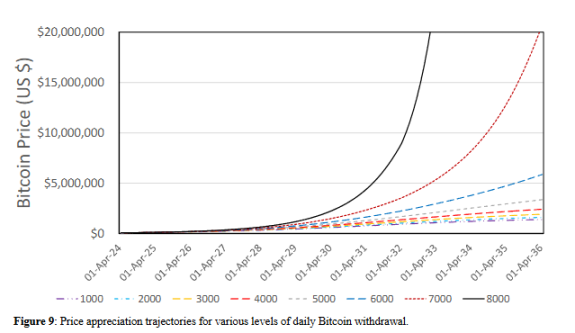
在每日退出流通 6000 枚以下的所有情景中,价格曲线都保持相对平滑的上升趋势。

但一旦退出流通量达到 7000 枚,价格曲线在 2032 年开始明显向上弯曲;

到 8000 枚 / 天时,这种弯曲在 2030 年就已经出现,2032 年后几乎垂直上升。

抛压焦虑,1440 万枚沉睡的 BTC 会醒来吗?

研究并不认为价格加速上涨一定会发生。最大的不确定性在于:

那 1440 万枚超过 155 天没动过的比特币,有多少会在价格上涨时回流市场?

研究假设其中 40%(约 576 万枚)会永久退出市场,比如被企业当作战略储备、用作 DeFi 抵押品、或者私钥真的找不回来了。

但这个假设比例不一定对,于是论文做了 10000 次模拟,让初始流动供应在 500 万到 1300 万枚之间随机变化。结果显示:

即使在最乐观的情况下(1300 万枚可流通),2036 年仍有 50% 概率超过 600 万美元。
第二个变量是买家会不会「手软」。当比特币从 12 万涨到 50 万、再涨到 100 万时,机构还会保持现在这种每天买 2900 枚的节奏吗?

研究设定了一个参数来衡量这一点:如果价格涨 3 倍,买家就减少一半购买量,那 2036 年价格可能只有 139 万美元。

从目前看,机构买家对价格并不敏感。

比特币从 6.5 万涨到 11.8 万期间(涨了 81%),ETF 和上市公司的购买节奏基本没变。如果这种模式持续,价格上涨可能不足以刹住需求。

你应该关注哪些 BTC 的指标?

这项研究的价值不仅在于给出一个价格数字,更在于它提供了一套可以持续监控的指标体系。

由于模型的所有关键变量都基于公开数据,投资者可以实时追踪市场正在向哪个方向演变。

研究建议关注四个核心指标:

交易所比特币余额

Glassnode 和 CryptoQuant 等平台每天更新各大交易所的比特币持有量。如果这个数字持续下降并接近 300 万枚(当前水平),意味着流动供应正在收紧。

更关键的是观察下降速度。如果每月减少超过 10-15 万枚,按照目前节奏,3-5 年内就会接近 200 万枚的临界区。

ETF 净流入数据

彭博等金融终端每天公布美国 11 只比特币现货 ETF 的资金流动。如果日均净流入持续保持在 2000-3000 枚以上,这本身就是一个强信号。

机构需求没有因为价格上涨而减弱。反之,如果 ETF 开始出现持续净流出,可能意味着价格敏感度在提高,市场正在自我调节。

长期持有者供应占比

链上分析平台会统计超过 155 天未移动的比特币占比。目前这个数字约为 72%(1440 万 /1990 万)。

如果这个比例持续上升并超过 75%,意味着越来越多的币正在退出流通。更重要的是观察增速:2025 年前 6 个月,BTC 非流动供应从 1390 万增至 1437 万(每天约 2650 枚),如果这个速度加快到每天 3000-4000 枚,就需要警惕了。

每日 BTC 净退出流通量的综合计算

将 ETF 流入、上市公司披露的购买量、矿工囤积数据相加,减去新增供应(安挖矿速度,约 450 枚 / 天),可以粗略估算每天有多少币退出流通。

如果这个数字稳定在 5000-6000 枚,我们正处于研究预测的中间情景;如果超过 7000 枚并持续数月,可能正在接近加速上涨的触发条件。

当然,研究也有一定的局限性。比如衍生品和信贷中介的影响尚未完全纳入模型。而且,所有这些预测都建立在一个假设之上:没有重大的黑天鹅事件,比如协议漏洞、监管禁令等。

但即便考虑这些不确定性,供需基本面的变化方向是清晰的:

每天 450 枚的新增是协议保证的,机构每天买入数千枚是公开数据,流动供应正在收缩是链上可见的。

回到文章开头的问题:比特币还能涨到多高?

总体上,这项研究没有给出一个确定答案,但它揭示了一个机制:

当 2100 万枚的固定上限遇上持续增长的机构需求,价格可能进入非线性增长阶段。75% 概率指向 2036 年的 481 万美元,但更重要的是沿途的路标,例如 2028 年的 100 万美元,2030 年的 335 万美元。

三年前在任何价位买入并持有的人,今天都还在盈利。

也许若干年后回望,今天 12 万美元的价格,会成为另一个「当时怎么会觉得贵」的时刻。或者,市场会用事实证明,模型终究只是模型。

答案在时间手中。但至少现在,你知道该看哪些数字了。


Twitter:https://twitter.com/BitpushNewsCN

比推 TG 交流群:https://t.me/BitPushCommunity

比推 TG 订阅: https://t.me/bitpush

说明: 比推所有文章只代表作者观点,不构成投资建议

Trending Cryptos

Related Reads

Upbit is Anxious: A Hasty Counterattack Aimed at Regaining Stablecoin Market Share

Title: Upbit's Rushed Counterattack to Reclaim Stablecoin Market Share Facing a dramatic shift in South Korea's stablecoin market, leading exchange Upbit launched a promotional campaign from July 26 to August 9, waiving the 0.05% trading fee for stablecoins paired with the Korean Won (KRW) and rapidly listing new stablecoins like RLUSD and USDG. This move is a direct response to its plummeting market share in this sector. Historically a duopoly with Bithumb, the market has been reshaped since October 2025 when Coinone permanently removed fees for USDC trading. By June 2026, Coinone led with 34.8% of stablecoin volume, followed by Bithumb (31.1%) and Upbit (30.1%). This contrasts sharply with the overall crypto market, where Upbit commands 60%. The data shows stablecoin demand is highly sensitive to fees, as users primarily buy them to transfer capital overseas for derivatives trading or forex arbitrage. South Korean exchanges have seen a net outflow of stablecoins for 18 consecutive months, totaling approximately 14.9 trillion KRW, underscoring their role as a cross-border capital conduit. Upbit's limited-time promotion initially boosted its daily stablecoin volume by 162%, but the surge was almost entirely in USDT (98.1% of volume). The newly listed stablecoins saw negligible, fleeting interest. Furthermore, the promotional effect quickly waned in the second week, with volume dropping 33% on weekdays. A concurrent weakening of the KRW also contributed to the trading spike, independent of the fee waiver. The analysis suggests that once the promotion ends, Upbit is unlikely to retain its temporary gains unless it matches Coinone's permanent zero-fee policy, forcing a choice between market share and fee revenue. Upbit's strategic push may be less about immediate profit and more about preparing for future regulatory shifts. With South Korea's *Digital Asset Basic Act* on the horizon, which will regulate KRW-backed stablecoins, and following Dunamu's (Upbit's parent) integration into Naver Financial to build a payment ecosystem, securing a dominant position in the dollar stablecoin distribution channel holds long-term strategic value. However, potential regulatory conflicts could prevent Upbit from listing a future Naver-issued KRW stablecoin, making the current fight for dollar stablecoin flow even more critical.

marsbit7h ago

Upbit is Anxious: A Hasty Counterattack Aimed at Regaining Stablecoin Market Share

marsbit7h ago

Trading

Spot

Hot Articles

What is $BITCOIN

DIGITAL GOLD ($BITCOIN): A Comprehensive Analysis Introduction to DIGITAL GOLD ($BITCOIN) DIGITAL GOLD ($BITCOIN) is a blockchain-based project operating on the Solana network, which aims to combine the characteristics of traditional precious metals with the innovation of decentralized technologies. While it shares a name with Bitcoin, often referred to as “digital gold” due to its perception as a store of value, DIGITAL GOLD is a separate token designed to create a unique ecosystem within the Web3 landscape. Its goal is to position itself as a viable alternative digital asset, although specifics regarding its applications and functionalities are still developing. What is DIGITAL GOLD ($BITCOIN)? DIGITAL GOLD ($BITCOIN) is a cryptocurrency token explicitly designed for use on the Solana blockchain. In contrast to Bitcoin, which provides a widely recognized value storage role, this token appears to focus on broader applications and characteristics. Notable aspects include: Blockchain Infrastructure: The token is built on the Solana blockchain, known for its capacity to handle high-speed and low-cost transactions. Supply Dynamics: DIGITAL GOLD has a maximum supply capped at 100 quadrillion tokens (100P $BITCOIN), although details regarding its circulating supply are currently undisclosed. Utility: While precise functionalities are not explicitly outlined, there are indications that the token could be utilized for various applications, potentially involving decentralized applications (dApps) or asset tokenization strategies. Who is the Creator of DIGITAL GOLD ($BITCOIN)? At present, the identity of the creators and development team behind DIGITAL GOLD ($BITCOIN) remains unknown. This situation is typical among many innovative projects within the blockchain space, particularly those aligning with decentralized finance and meme coin phenomena. While such anonymity may foster a community-driven culture, it intensifies concerns about governance and accountability. Who are the Investors of DIGITAL GOLD ($BITCOIN)? The available information indicates that DIGITAL GOLD ($BITCOIN) does not have any known institutional backers or prominent venture capital investments. The project seems to operate on a peer-to-peer model focused on community support and adoption rather than traditional funding routes. Its activity and liquidity are primarily situated on decentralized exchanges (DEXs), such as PumpSwap, rather than established centralized trading platforms, further highlighting its grassroots approach. How DIGITAL GOLD ($BITCOIN) Works The operational mechanics of DIGITAL GOLD ($BITCOIN) can be elaborated on based on its blockchain design and network attributes: Consensus Mechanism: By leveraging Solana’s unique proof-of-history (PoH) combined with a proof-of-stake (PoS) model, the project ensures efficient transaction validation contributing to the network's high performance. Tokenomics: While specific deflationary mechanisms have not been extensively detailed, the vast maximum token supply implies that it may cater to microtransactions or niche use cases that are still to be defined. Interoperability: There exists the potential for integration with Solana’s broader ecosystem, including various decentralized finance (DeFi) platforms. However, the details regarding specific integrations remain unspecified. Timeline of Key Events Here is a timeline that highlights significant milestones concerning DIGITAL GOLD ($BITCOIN): 2023: The initial deployment of the token occurs on the Solana blockchain, marked by its contract address. 2024: DIGITAL GOLD gains visibility as it becomes available for trading on decentralized exchanges like PumpSwap, allowing users to trade it against SOL. 2025: The project witnesses sporadic trading activity and potential interest in community-led engagements, although no noteworthy partnerships or technical advancements have been documented as of yet. Critical Analysis Strengths Scalability: The underlying Solana infrastructure supports high transaction volumes, which could enhance the utility of $BITCOIN in various transaction scenarios. Accessibility: The potential low trading price per token could attract retail investors, facilitating wider participation due to fractional ownership opportunities. Risks Lack of Transparency: The absence of publicly known backers, developers, or an audit process may yield skepticism regarding the project's sustainability and trustworthiness. Market Volatility: The trading activity is heavily reliant on speculative behavior, which can result in significant price volatility and uncertainty for investors. Conclusion DIGITAL GOLD ($BITCOIN) emerges as an intriguing yet ambiguous project within the rapidly evolving Solana ecosystem. While it attempts to leverage the “digital gold” narrative, its departure from Bitcoin's established role as a store of value underscores the need for a clearer differentiation of its intended utility and governance structure. Future acceptance and adoption will likely depend on addressing the current opacity and defining its operational and economic strategies more explicitly. Note: This report encompasses synthesised information available as of October 2023, and developments may have transpired beyond the research period.

1.9k Total ViewsPublished 2025.05.13Updated 2025.05.13

What is $BITCOIN

Discussions

Welcome to the HTX Community. Here, you can stay informed about the latest platform developments and gain access to professional market insights. Users' opinions on the price of BTC (BTC) are presented below.

活动图片