Whales Buy Almost $100K Bitcoin Hyper as Presale Surges Past $18M

bitcoinistPublished on 2025-09-24Last updated on 2025-09-24

Abstract

Whales just dropped nearly $100K into Bitcoin Hyper ($HYPER) within two hours today – a $87K buy followed by another...

Trusted Editorial content, reviewed by leading industry experts and seasoned editors. Ad Disclosure

Whales just dropped nearly $100K into Bitcoin Hyper ($HYPER) within two hours today – a $87K buy followed by another $12.7K minutes later. That takes the project’s viral presale haul past $18M, a number that puts it firmly on the radar of both retail speculators and seasoned traders.

Whales don’t usually bother with presales. They tend to park capital in liquid majors like $BTC and $ETH, where they can exit positions quickly. So when big wallets start piling into a presale token, it signals conviction and belief that the upside is too good to ignore.

Bitcoin Hyper ($HYPER) is gunning at Bitcoin’s oldest problem: speed and usability. For years, $BTC has been the ultimate store of value, but terrible at actually functioning as a currency.

So here’s the question: if Bitcoin is already king of crypto as digital gold, what happens if it suddenly becomes usable in daily life?

The Problem Bitcoin Still Has

Bitcoin ($BTC) remains the undisputed heavyweight of crypto, with a $2.25T market cap, Wall Street-approved ETFs, and corporate treasuries stacked with coins. But beneath the prestige lies a blunt reality: the network is painfully slow and outdated compared to modern demands.

A Bitcoin block takes around 10 minutes to confirm, and the system processes only ~7 transactions per second (TPS). To put that into perspective, Solana has a real-time TPS of 796.1, and has a max theoretical TPS of 65K. That places Bitcoin 99% short of Solana’s capabilities.
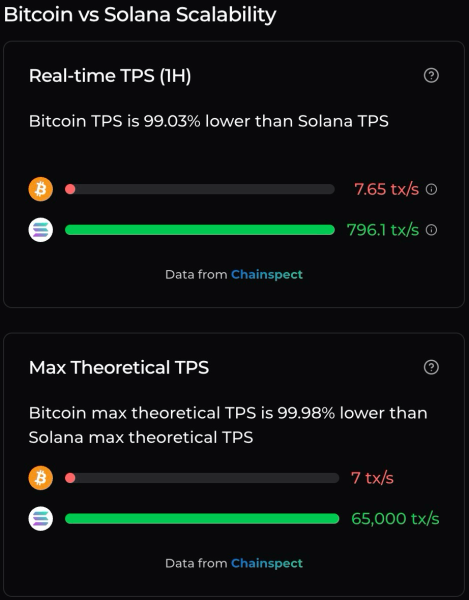
Comparison of Bitcoin and Solana scalability.
Source: Chainspect

That’s the difference between ordering a coffee and paying instantly versus standing awkwardly at the counter for 10 minutes waiting for your $BTC transaction to finalize.

This lack of throughput has left entire sectors out of Bitcoin’s reach. DeFi exploded on Ethereum, NFTs on Solana and Ethereum, and top meme coins are everywhere but on Bitcoin. The network simply couldn’t handle the traffic.

Bitcoin has been locked into its ‘digital gold’ role. Great as a store of value, nearly useless as everyday money. That gap is exactly what Bitcoin Hyper ($HYPER) is now aiming to close.

The Bitcoin Hyper Solution

Bitcoin Hyper positions itself as the first true Layer 2 for Bitcoin. Not a mere sidechain with trusted custodians, but a well-equipped execution layer that plugs directly into Bitcoin’s base chain.

Here’s how it works in practice: You bridge $BTC into the system, where a smart contract verifies the deposit against Bitcoin’s blockchain. Once confirmed, an equal amount of $BTC is minted on the Bitcoin Hyper chain – fully trustless and verifiable.

From there, you operate on Hyper’s network, which is powered by Solana’s Virtual Machine (SVM). That means sub-second transactions and near-zero fees, a world apart from Bitcoin’s ten-minute block times.
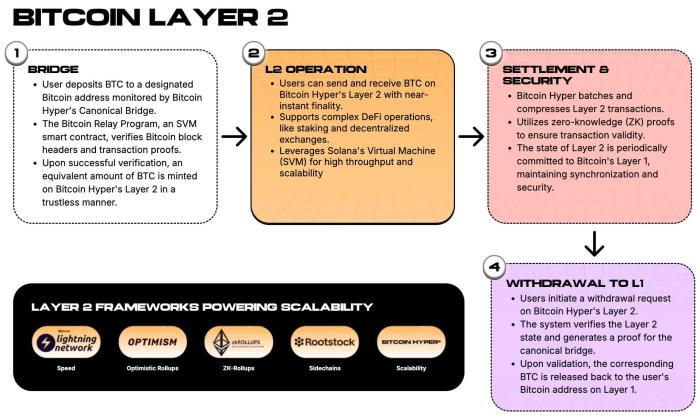
Bitcoin Hyper ($HYPER) layer 2 for powering Bitcoin scalability.

Every transaction gets bundled and secured with zero-knowledge proofs, then committed back to Bitcoin’s Layer 1. This keeps Hyper synced with Bitcoin while ensuring the speed and flexibility of a modern blockchain.

And when you want to exit, you just bridge out and your $BTC gets unlocked back on Layer 1.

The payoff is obvious. Suddenly, paying for a coffee with Bitcoin is instant. DeFi primitives like lending, staking, and yield farming can finally run on Bitcoin rails. Meme coins get a new home powered by Bitcoin liquidity. Developers also gain a full dApp stack, since Hyper’s SVM layer is Solidity-compatible.

Bitcoin Hyper ($HYPER) ecosystem.

For the first time, Bitcoin becomes a usable execution environment, not just a digital vault. Think of Bitcoin as the central bank’s settlement layer – secure but slow.

The Hyper network acts like the Visa or Mastercard layer on top, delivering speed, scalability, and flexibility without sacrificing Bitcoin’s base-layer security.

Learn more on Hyper’s official website.

Why This Could Change Bitcoin’s Place in Crypto

Bitcoin already rules the market with over 50% dominance, but its role has been limited. If Bitcoin Hyper delivers, that ceiling shatters. $BTC will no longer be an asset you buy and hold; it will become the backbone for payments, DeFi, and meme culture.

Institutional products like ETFs made Bitcoin easier to hold. Hyper makes it powerful to use. That shift mirrors what happened to Ethereum: once smart contracts launched, $ETH went from a niche asset to the base layer of DeFi and NFTs.

Hyper could be Bitcoin’s equivalent leap. Imagine Bitcoin securing its status as the hardest money and capturing transactional activity usually reserved for $ETH and $SOL. If that happens, Bitcoin’s dominance could expand even further.

Bitcoin Hyper ($HYPER) Token Presale Is Booming, Seeing Whale Action

Bitcoin Hyper ($HYPER)’s presale is booming; the numbers tell their own story. The raise has already crossed $18M, with tokens priced at $0.012965, while our Bitcoin Hyper price prediction shows it could reach $1.50 by 2030.

Whales have started circling. In just two hours today, one wallet scooped up $87K worth of $HYPER, followed by another dropping $12.7K. Nearly $100K in a single morning signals that larger players see Hyper as more than a meme coin experiment.

They’re treating it as a serious bet on Bitcoin’s next chapter.
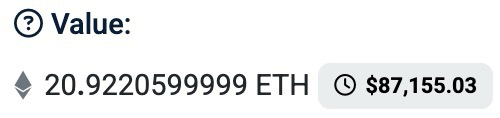
$87K whale buy on $HYPER.
Source: Etherscan

Presale buyers also get more than tokens: priority access to staking (currently 65% APY) and governance rights are just some of the major incentives for adopters. Want to get the perks? Check out our step-by-step guide on how to buy Bitcoin Hyper.

TL;DR? Backing $HYPER is an early play on making Bitcoin usable, scalable, and competitive with the chains that stole its thunder. Its promising blockchain upscaling project has attracted a lot of attention, with a $18M+ strong presale and recent whale buys nearing $100K to prove it.

Considering its presale momentum, community backing, and strong utility, our most bullish forecast sees $HYPER potentially spiking 24x soon after listing this year.

Visit the official $HYPER presale today.

As always, this article is not financial advice. Crypto carries inherent risks; please always do your own research and never invest more than you are willing to lose.

Authored by Aidan Weeks, Bitcoinist — https://bitcoinist.com/bitcoin-hyper-presale-hits-18m-as-whales-buy-100k/

Editorial Process for bitcoinist is centered on delivering thoroughly researched, accurate, and unbiased content. We uphold strict sourcing standards, and each page undergoes diligent review by our team of top technology experts and seasoned editors. This process ensures the integrity, relevance, and value of our content for our readers.

Aidan Weeks, a Master's graduate in Mechanical Engineering, has thrived as a content writer for over four years. Specializing in crypto, tech, engineering, AI, and B2B sectors, Aidan adeptly crafts web copy, blog posts, buying guides, manuals, product pages, and more, making complex concepts accessible and engaging. His transition from academia to full-time writing reflects his passion for bridging technical expertise with clear, informative content. Since joining Bitcoinist, Aidan has written extensively about DeFi, dApps, AI, and meme coins, solidifying his grasp on emerging blockchain technologies. An early adopter, he began investing in Solana in 2020, further deepening his insights into crypto markets and innovation. Today, he combines hands-on experience with a sharp editorial instinct to help readers cut through hype, spot real trends, and make sense of a fast-moving space.

Trending Cryptos

Related Reads

Mysterious "Ox Alpha" Large Model Goes Viral with Limited-Time Free Access

A mysterious anonymous AI model named "Ox Alpha," nicknamed "Cow is Coming" by Chinese netizens, has appeared on OpenRouter, sparking widespread speculation. The model offers a 1 million token context, supports text, image, and video inputs, can call tools, and is currently free. Its standout feature is strong coding ability. Initial tests on the DeepSWE benchmark, which evaluates real-world software engineering tasks, showed an 80% pass rate on a subset of tasks, reportedly nearing top-tier code models. However, follow-up tests yielded a 63% score, with variations attributed to different task sets and configurations. The model's true developer is a major topic of debate. The prevailing theory points to Zhipu AI's unreleased GLM-5.3 Flash or its multimodal variant. Evidence cited includes identical visual token consumption patterns with GLM-5V-Turbo for videos, a consistent offset in text token counts compared to GLM-5.3, and similar behavioral traits like refusing audio processing. Zhipu has a precedent of anonymous testing. Simultaneously, another anonymous model, "korrine," appeared on Code Arena, with guesses ranging from Moonshot's Kimi K3.1 to models from Qwen or MiMo, adding to the industry's guessing game. This trend of anonymous "undercover" testing allows for unbiased performance evaluation in platforms like Arena and provides real-world, high-pressure testing through tools like OpenRouter before official release. It also serves as an effective marketing tactic, prolonging discussion through suspense. If Ox Alpha is indeed a "Flash" model, its performance raises expectations for the full-scale version's potential.

marsbit3h ago

Mysterious "Ox Alpha" Large Model Goes Viral with Limited-Time Free Access

marsbit3h ago

Breaking News: DeepSeek Announces All-Day Off-Peak Pricing on Weekends, Making Weekend Work More Cost-Effective?

DeepSeek has announced a significant change to its API pricing model, effective August 23. The new policy removes peak/off-peak distinctions on weekends (Saturdays and Sundays), charging the lower off-peak rate for the entire two-day period. This adjustment has sparked mixed reactions within the developer and professional communities. For developers and businesses heavily reliant on DeepSeek's V4-Flash and V4-Pro APIs, this is welcome news. It allows them to schedule bulk processing tasks on weekends without the higher peak-hour costs, potentially halving their API bills for such workloads. Some users have celebrated the move for making weekend work more cost-effective. However, the announcement has also raised concerns among employees. There is apprehension that companies, particularly in cost-sensitive sectors like AI-powered short drama production, might reorganize work schedules to align with these new cost incentives. Instances are already emerging where teams schedule high-token tasks during cheaper nighttime hours or adjust staff shifts. This has led to worries about a potential shift towards weekend workdays and weekday time-off, prioritizing cost savings over traditional work-life balance. Debate has ensued regarding the practicality of such schedule changes, with questions about increased communication overhead and overall efficiency. Speculation about DeepSeek's motives for the change includes theories that peak pricing correlates with internal model training schedules, though others counter that training is largely automated. The new pricing structure is now in effect, prompting users to reconsider their task scheduling strategies.

marsbit4h ago

Breaking News: DeepSeek Announces All-Day Off-Peak Pricing on Weekends, Making Weekend Work More Cost-Effective?

marsbit4h ago

Just Now, The World's First Human vs. Robot Tennis Match Begins, Robot's Desperate Save Leaves Zheng Jie Astonished

Just now, the world's first human vs. robot tennis match began, featuring stunning robotic saves that left tennis star Zheng Jie in awe. This historic event, part of the second World Humanoid Robot Games and broadcast live globally by China Media Group, marked a pivotal moment in Chinese technological innovation and embodied artificial intelligence. The match featured both mixed human-robot doubles and a groundbreaking singles match between Zheng Jie and the "Galaxy Xingzai" humanoid robot developed by Galaxy General. The robot demonstrated impressive skills including serving, forehands, backhands, and strategic court movement, with serves exceeding 100 km/h. It exhibited remarkable adaptability, recovering from a fall to continue play and handling slices and spins. The doubles match highlighted its ability to coordinate dynamically with a human partner. The event's significance extends far beyond a novelty match. Tennis represents an ultimate pressure test for embodied AI, demanding real-time integration of perception, decision-making, full-body motion control, and live博弈 within fractions of a second—a stark contrast to the discrete, contemplative environment of board games like Go mastered by AlphaGo. It directly confronts Moravec's paradox, showcasing AI's move from digital cognition to physical execution. This capability is powered by Galaxy General's proprietary "Galaxy Star Brain" (AstraBrain) model. Its key innovation is a unified architecture that integrates high-level task understanding/tactical decision-making ("brain") and dynamic whole-body motion control ("cerebellum") into a single model, eliminating latency and information loss between separate modules. The model was trained using a two-step process via the "Galaxy Star Workshop" platform. First, it learned foundational movement priors from "imperfect" human motion data (both amateur and professional). Second, it underwent massive-scale evolution in a virtual tennis simulator where multiple AI agents played millions of games against each other. Through this adversarial training, skills like极限救球and recovery from falls emerged autonomously without explicit programming, before being transferred to the physical robot. This "AstraTennis" moment symbolizes a major leap: a decade after AlphaGo conquered the digital world, embodied AI from China has now demonstrated it can operate under the extreme, unpredictable physical pressures of real-world competition.

marsbit4h ago

Just Now, The World's First Human vs. Robot Tennis Match Begins, Robot's Desperate Save Leaves Zheng Jie Astonished

marsbit4h ago

Trading

Spot

Hot Articles

What is $BITCOIN

DIGITAL GOLD ($BITCOIN): A Comprehensive Analysis Introduction to DIGITAL GOLD ($BITCOIN) DIGITAL GOLD ($BITCOIN) is a blockchain-based project operating on the Solana network, which aims to combine the characteristics of traditional precious metals with the innovation of decentralized technologies. While it shares a name with Bitcoin, often referred to as “digital gold” due to its perception as a store of value, DIGITAL GOLD is a separate token designed to create a unique ecosystem within the Web3 landscape. Its goal is to position itself as a viable alternative digital asset, although specifics regarding its applications and functionalities are still developing. What is DIGITAL GOLD ($BITCOIN)? DIGITAL GOLD ($BITCOIN) is a cryptocurrency token explicitly designed for use on the Solana blockchain. In contrast to Bitcoin, which provides a widely recognized value storage role, this token appears to focus on broader applications and characteristics. Notable aspects include: Blockchain Infrastructure: The token is built on the Solana blockchain, known for its capacity to handle high-speed and low-cost transactions. Supply Dynamics: DIGITAL GOLD has a maximum supply capped at 100 quadrillion tokens (100P $BITCOIN), although details regarding its circulating supply are currently undisclosed. Utility: While precise functionalities are not explicitly outlined, there are indications that the token could be utilized for various applications, potentially involving decentralized applications (dApps) or asset tokenization strategies. Who is the Creator of DIGITAL GOLD ($BITCOIN)? At present, the identity of the creators and development team behind DIGITAL GOLD ($BITCOIN) remains unknown. This situation is typical among many innovative projects within the blockchain space, particularly those aligning with decentralized finance and meme coin phenomena. While such anonymity may foster a community-driven culture, it intensifies concerns about governance and accountability. Who are the Investors of DIGITAL GOLD ($BITCOIN)? The available information indicates that DIGITAL GOLD ($BITCOIN) does not have any known institutional backers or prominent venture capital investments. The project seems to operate on a peer-to-peer model focused on community support and adoption rather than traditional funding routes. Its activity and liquidity are primarily situated on decentralized exchanges (DEXs), such as PumpSwap, rather than established centralized trading platforms, further highlighting its grassroots approach. How DIGITAL GOLD ($BITCOIN) Works The operational mechanics of DIGITAL GOLD ($BITCOIN) can be elaborated on based on its blockchain design and network attributes: Consensus Mechanism: By leveraging Solana’s unique proof-of-history (PoH) combined with a proof-of-stake (PoS) model, the project ensures efficient transaction validation contributing to the network's high performance. Tokenomics: While specific deflationary mechanisms have not been extensively detailed, the vast maximum token supply implies that it may cater to microtransactions or niche use cases that are still to be defined. Interoperability: There exists the potential for integration with Solana’s broader ecosystem, including various decentralized finance (DeFi) platforms. However, the details regarding specific integrations remain unspecified. Timeline of Key Events Here is a timeline that highlights significant milestones concerning DIGITAL GOLD ($BITCOIN): 2023: The initial deployment of the token occurs on the Solana blockchain, marked by its contract address. 2024: DIGITAL GOLD gains visibility as it becomes available for trading on decentralized exchanges like PumpSwap, allowing users to trade it against SOL. 2025: The project witnesses sporadic trading activity and potential interest in community-led engagements, although no noteworthy partnerships or technical advancements have been documented as of yet. Critical Analysis Strengths Scalability: The underlying Solana infrastructure supports high transaction volumes, which could enhance the utility of $BITCOIN in various transaction scenarios. Accessibility: The potential low trading price per token could attract retail investors, facilitating wider participation due to fractional ownership opportunities. Risks Lack of Transparency: The absence of publicly known backers, developers, or an audit process may yield skepticism regarding the project's sustainability and trustworthiness. Market Volatility: The trading activity is heavily reliant on speculative behavior, which can result in significant price volatility and uncertainty for investors. Conclusion DIGITAL GOLD ($BITCOIN) emerges as an intriguing yet ambiguous project within the rapidly evolving Solana ecosystem. While it attempts to leverage the “digital gold” narrative, its departure from Bitcoin's established role as a store of value underscores the need for a clearer differentiation of its intended utility and governance structure. Future acceptance and adoption will likely depend on addressing the current opacity and defining its operational and economic strategies more explicitly. Note: This report encompasses synthesised information available as of October 2023, and developments may have transpired beyond the research period.

2.0k Total ViewsPublished 2025.05.13Updated 2025.05.13

What is $BITCOIN

Discussions

Welcome to the HTX Community. Here, you can stay informed about the latest platform developments and gain access to professional market insights. Users' opinions on the price of BTC (BTC) are presented below.

活动图片