特朗普团队站台的WLFI:为何被指「新骗局」?

比推Published on 2025-09-03Last updated on 2025-09-03

作者:The Smart Ape

编译:Tim,PANews

原标题:珍爱生命,远离WLFI


我觉得这个生态圈里的人都不长记性。还记得我们是怎么被TRUMP坑得血本无归的吗?如果你已经忘了,眼前的就是最典型的例子。
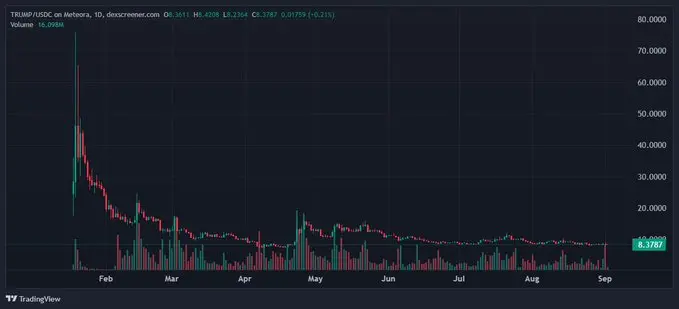
与他们现在用WLFI所做的事情相比,TRUMP根本不算什么,我看到了太多危险信号,无法在此一一列举,不然我都能写成一本书了。这里仅举几例,就足以解释你应该远离这个项目的原因。

1.团队

当我第一眼看到那张图片时,我就在想为什么会有九位联合创始人?这就让人觉得可疑。
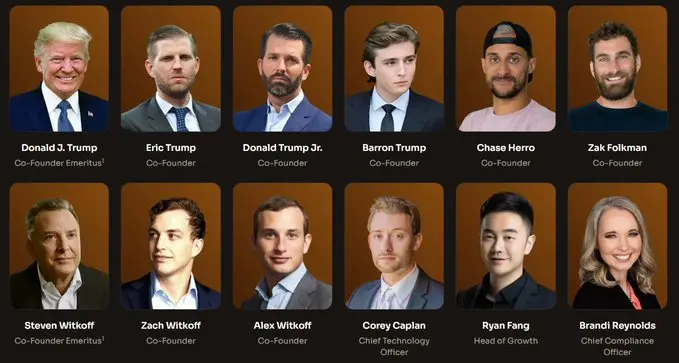
这个团队里没有一个人能让人放心。显然,特朗普家族在这里只营销门面,纯粹是个通讯工具,没有任何迹象表明他们参与了运营或技术工作。再明显不过,他们根本不懂这些业务,但绝对很清楚如何从中获利。

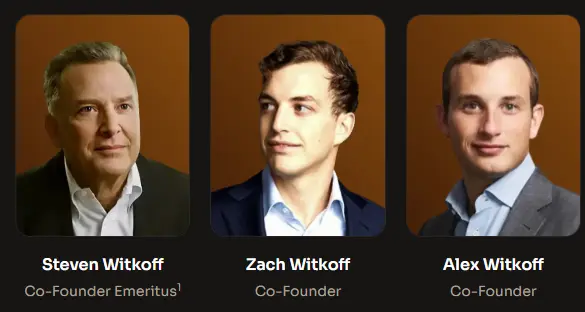
Zach Witkoff因政治身份而受到特别关注,他的公司通过USD1稳定币协助促成了与MGX(阿联酋基金)20亿美元的交易。这引发了人们对"金钱换特权"的通道担忧。
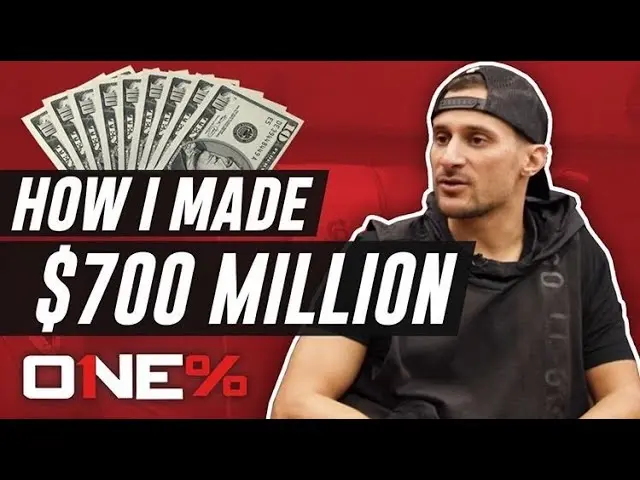
Chase Herro在加密圈更为人熟知。他自称“互联网人渣”,曾因毒品指控入狱,发起过多个最终变成骗局或被攻击的加密项目,还售卖“快速致富”课程。这可不是你项目中理想的联合创始人人选。
然后是Zach Folkman,他的背景与Herro非常相似。他曾参与Dough Finance项目,这个项目曾发生过重大的DeFi漏洞事件。总体而言,他是一位颇具争议的企业家,甚至曾举办过约会"把妹"研讨会。

在9位联合创始人中,有7位是亿万富翁之子,另外2位背景可疑,绝非什么梦之队。

2.谎言

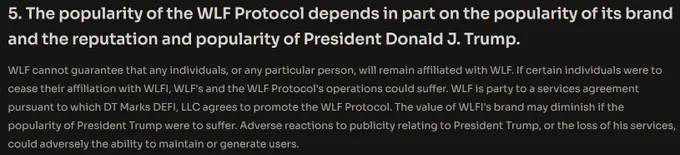
最糟糕的是他们让你相信这是一个由特朗普家族设计和运营的项目,其实不是。他们只是营销角色,让你感到安心。他们自己的披露信息基本上也说明了这一点。

更进一步说:特朗普家族并不承担合同责任。从法律上讲,他们不负有任何责任。如果有人明天卷款跑路,特朗普家族可以合法地撇清关系,而你无法追究他们的责任。
那么谁该负责呢?

毫不意外,是Chase Herro和Zak Folkman,也就是他们在波多黎各的实体公司Axiom。

尽管特朗普家族不承担法律责任,但他们持有22.5%的供应份额并获得75%的收益。Witkoff家族获得7.5%的供应份额和25%的收益。
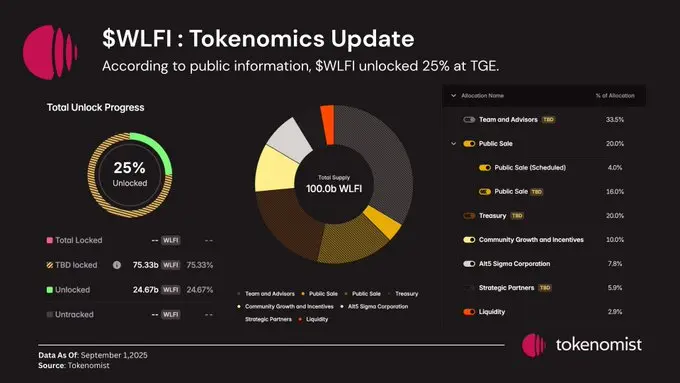
Herro和Folkman也能从代币分配中分一杯羹(不直接参与收入分成)。本质上就是两个擅长榨取利益的人,与特朗普家族达成了协议。特朗普家族拿走最大块的蛋糕,这两人只能得到些残羹剩饭,但即便是这些残羹剩饭,对他们而言依然十分可观。

3.WLFI代币

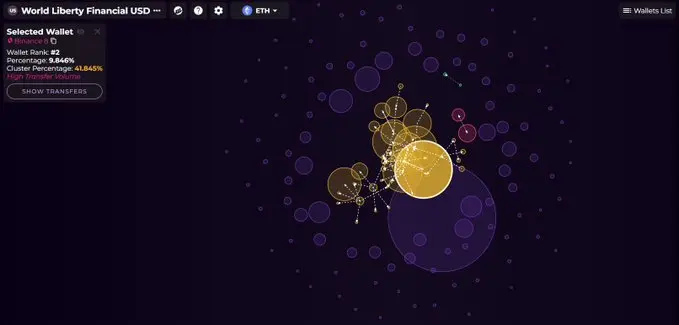
说实话,这个代币简直是个笑话。6个人就持有总供应量的40%,这简直是教科书式的中心化。超过60%的供应量由不到10个钱包持有,而且是通过多重签名方式掌握。
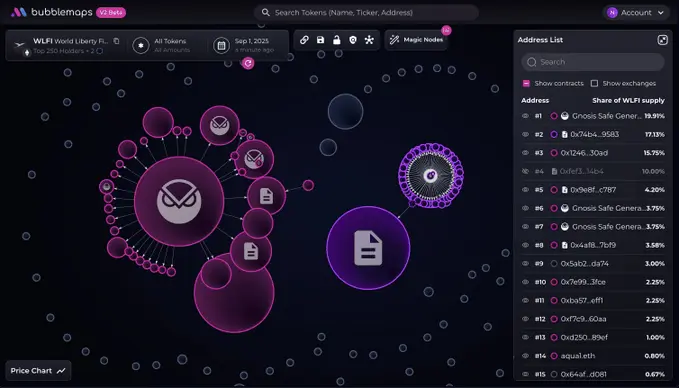
发行之初,仅有25%的供应量处于流通中。加之大量代币集中在少数人手中,导致市场出现剧烈波动和极端脆弱性。

在最初的几个小时内,出现了大规模的合约清算,期间内幕人士大量抛售,短短几小时内就套现了数亿美元。
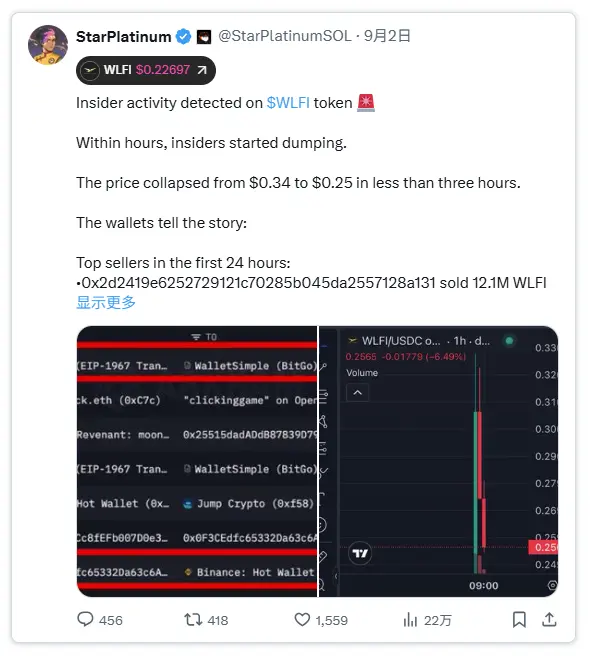
代币分配过程毫无透明度可言。大部分代币在推出后不久实际上已经可用,这让内部人士可以完全自由地随时抛售。

实用性?基本为零。它号称是"治理代币",但除此之外没有任何明确功能:没有收益分成、没有费用折扣、没有收益回报,什么都没有。而且官网上明确写着,他们可以随时地临时或永久限制你的治理权,说白了这根本就是形同虚设的治理。

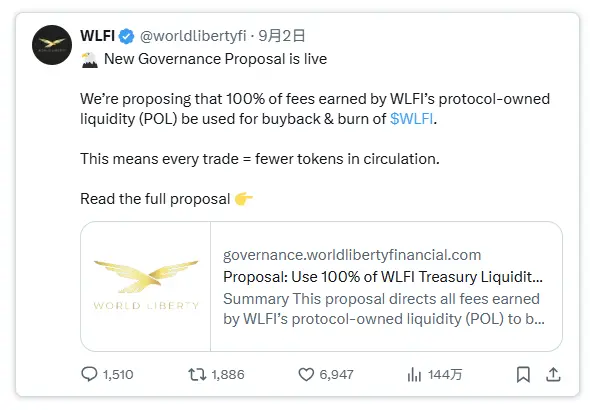
你们当中有人会提议将100%的协议费用用于回购。如果你为此欢呼,但请记住60%的供应量由内部人员控制。无论哪种情况他们都能获利,WLFI币价上涨时他们的持仓会增值,从而能以更高价格抛售套现。
4.USD1代币

USD1是WLFI发行的稳定币,单看其LOGO便知这是个玩笑。

说真的,他们就不能多用点心吗?这看起来像是七岁小孩做的东西。

USD1的市值达到27亿美元,已成为规模最大的稳定币之一,但这主要来自大型机构的资本配置,而非真实用户需求。其93%的价值集中在币安交易所,这意味着该稳定币尚未获得实际应用。
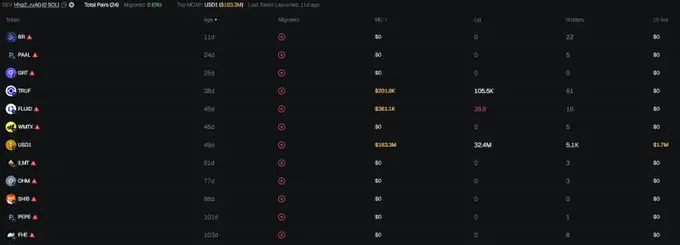
最让我震惊的是,在Solana上部署USD1的钱包还部署了其他一些几乎没有任何交易量的垃圾币。他们甚至不愿意用一个新地址来干净地部署USD1,而是使用了一个已经与垃圾币相关联的地址,这就很能说明问题了。
5.网站

如果你仍有疑虑,最简便的方法就是去查阅网站上的披露信息。那是他们唯一会稍显诚实的地方。你很快就会发现他们正试图推卸责任,基本上就是在告诉你这个项目不靠谱,如果出现问题你也别感到意外。

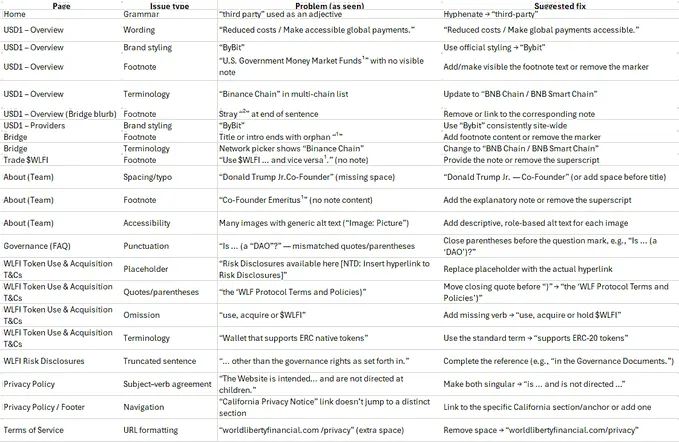
网站上到处都是错误,断链、错字、图片排版问题……网站做得很差,缺乏专业性,透着一股敷衍了事的态度。
结语

WLFI本质上就是TRUMP的2.0版本,一个高度中心化的Meme币,除暴利外毫无用处且零创新。其唯一目的就是让本已富裕的人更加富裕。仅一天的研究我就发现了约20个危险信号,为了让文章结构简洁,还留有更多信号未在此列举。

我的建议是:远离。如果你获利了,就获利了结,然后离开。

这东西能有热度,纯粹是靠特朗普的品牌效应。但说实话,就算你让特朗普解释他自己搞的项目到底是什么,恐怕他也说不清楚。


Twitter:https://twitter.com/BitpushNewsCN

比推 TG 交流群:https://t.me/BitPushCommunity

比推 TG 订阅: https://t.me/bitpush

说明: 比推所有文章只代表作者观点,不构成投资建议

Related Reads

New AMD Paper Overturns Conventional Wisdom: FP4 Training Instability's Cause Is Not Insufficient Randomness

AMD's new research challenges the conventional understanding of FP4 training instability. While reducing precision from FP8 to FP4 promises doubled computational throughput and is supported by new hardware like NVIDIA Blackwell and AMD MI350 series, training large language models natively with FP4 has been notoriously unstable, often attributed to insufficient stochasticity. The paper "Pretraining large language models with MXFP4 on Native FP4 Hardware" demonstrates successful end-to-end FP4 pre-training of Llama 3.1-8B on AMD MI355X GPUs using the MXFP4 format, achieving a 9-10% overall speedup over FP8. Crucially, it identifies the root cause of instability: not randomness, but the accumulation of *structural micro-scaling errors* along the sensitive weight gradient (Wgrad) path. Through controlled experiments, researchers found that quantizing the Wgrad operation to FP4 caused significant convergence degradation. Counterintuitively, common stochasticity-based mitigation techniques like stochastic rounding and randomized Hadamard transforms worsened performance. In contrast, applying a *deterministic* Hadamard transform successfully stabilized training by ensuring consistent error patterns, reducing the extra token cost from 26-27% to just 8-9%. This work has significant implications: 1) It provides a clear diagnostic for low-precision training instability, steering focus towards structural errors. 2) It pushes FP4 from a primarily inference-focused format into the realm of viable training. 3) It leverages the open OCP Microscaling (MX) standard, promoting cross-vendor compatibility. The research marks a critical step towards more economical large model training by further pushing the boundaries of low-precision computation.

marsbit6m ago

New AMD Paper Overturns Conventional Wisdom: FP4 Training Instability's Cause Is Not Insufficient Randomness

marsbit6m ago

Will ONDO's 'Tokenization Narrative' Change After Its CEO's Unexpected Passing?

Ondo Finance founder and CEO Nathan Allman has passed away unexpectedly. Allman, a Brown University graduate with a background in private credit and Goldman Sachs' digital asset team, was a key architect of Ondo's pivot from DeFi structured yield products to becoming a leading Real-World Asset (RWA) protocol. He drove the strategy to tokenize traditional financial assets like US Treasuries (OUSG), yield-generating dollar assets (USDY), and US stocks/ETFs (Ondo Global Markets) for on-chain accessibility. The company announced that President Ian De Bode, a former McKinsey partner with a strong institutional strategy and operations background, will succeed Allman as CEO. While Allman's sudden departure presents a near-term challenge, testing market confidence and Ondo's continuity, the project is seen as more than a founder-driven narrative. It has an established product suite and a management team with deep traditional finance experience. The long-term impact hinges on the new leadership's ability to execute. De Bode's expertise in compliance, distribution, and institutional partnerships aligns with RWA's next phase of scaling infrastructure. The core question is whether Ondo can maintain its product momentum and institutional relationships. Ondo's native ONDO token represents governance and RWA narrative value, not direct revenue from the underlying assets. Its future as a "top tokenization play" will depend on the team's continued delivery of product growth, asset scale, and real-world demand, moving beyond the initial emotional shock.

marsbit52m ago

Will ONDO's 'Tokenization Narrative' Change After Its CEO's Unexpected Passing?

marsbit52m ago

Bankless Co-founder's Confession on Selling Off ETH: Ethereum Did the Right Thing, but 'ETH as Money' Has No Future

Bankless co-founder David Hoffman recently sold his remaining ETH holdings, sparking debate within the Ethereum community. In a detailed explanation, Hoffman clarifies that his decision was not based on bearish sentiment towards Ethereum itself, which he remains highly optimistic about, but rather on the conclusion that the "ETH is Money" narrative has largely run its course. Hoffman argues that for ETH to achieve its envisioned status as global money, Ethereum needed to execute flawlessly across multiple layers—governance, technology, and market dominance—in a highly coordinated manner. He acknowledges Ethereum's significant successes and current justified valuation but suggests the window for a major revaluation based on this monetary narrative is closing. The post examines several challenges: the strong correlation between L1 chain activity/fees and native token value; the perceived failure of the "strong version" of crypto (user-owned, egalitarian systems) versus the rise of a "weak version" (efficient ledger technology for traditional finance); and the possibility that ETH's momentum as money was uniquely tied to the distorted conditions of the 2020-2021 period. Crucially, Hoffman highlights a structural tension: Ethereum is architected as a "giver, not a taker," providing critical infrastructure like secure block space and tokenization at cost. This ethos benefits the broader ecosystem (applications, L2s) but doesn't prioritize extracting maximum value for ETH itself. The "ETH is Money" thesis required Ethereum to win a war of overwhelming market dominance—a war its design philosophy refuses to explicitly fight. Therefore, while he sees continued immense success for the Ethereum network and its ecosystem (following a "fat application" theory where value accrues to apps and L2s), Hoffman finds it increasingly difficult to foresee a structural upward revaluation for the ETH asset based on the monetary narrative. His capital reallocation reflects a belief that this particular investment thesis has played out.

Odaily星球日报58m ago

Bankless Co-founder's Confession on Selling Off ETH: Ethereum Did the Right Thing, but 'ETH as Money' Has No Future

Odaily星球日报58m ago

Trading

Spot
Futures

Hot Articles

How to Buy WLFI

Welcome to HTX.com! We've made purchasing Official World Liberty Financial (WLFI) simple and convenient. Follow our step-by-step guide to embark on your crypto journey.Step 1: Create Your HTX AccountUse your email or phone number to sign up for a free account on HTX. Experience a hassle-free registration journey and unlock all features.Get My AccountStep 2: Go to Buy Crypto and Choose Your Payment MethodCredit/Debit Card: Use your Visa or Mastercard to buy Official World Liberty Financial (WLFI) instantly.Balance: Use funds from your HTX account balance to trade seamlessly.Third Parties: We've added popular payment methods such as Google Pay and Apple Pay to enhance convenience.P2P: Trade directly with other users on HTX.Over-the-Counter (OTC): We offer tailor-made services and competitive exchange rates for traders.Step 3: Store Your Official World Liberty Financial (WLFI)After purchasing your Official World Liberty Financial (WLFI), store it in your HTX account. Alternatively, you can send it elsewhere via blockchain transfer or use it to trade other cryptocurrencies.Step 4: Trade Official World Liberty Financial (WLFI)Easily trade Official World Liberty Financial (WLFI) on HTX's spot market. Simply access your account, select your trading pair, execute your trades, and monitor in real-time. We offer a user-friendly experience for both beginners and seasoned traders.

5.8k Total ViewsPublished 2025.09.01Updated 2025.09.04

How to Buy WLFI

Discussions

Welcome to the HTX Community. Here, you can stay informed about the latest platform developments and gain access to professional market insights. Users' opinions on the price of WLFI (WLFI) are presented below.

活动图片