比特币可能要接近 20 万一枚了

深潮Published on 2025-08-21Last updated on 2025-08-22

目标价格 19 万美元,潜在上行空间 67%。

撰文:Tiger Research

编译:AididiaoJP,Foresight News

摘要:

  • 比特币的机构采用加速:美国 401(k) 投资渠道开放,ETF 和公司实体持续大规模积累

  • 自 2021 年以来的最佳环境:全球流动性处于历史高位,主要国家处于降息模式

  • 从零售主导转向机构主导的市场:尽管存在过热信号,机构买盘有力支撑下行风险

全球流动性扩张、机构积累和监管顺风推动比特币的采用

目前有三个核心驱动力推动比特币市场:1) 不断扩张的全球流动性,2) 加速的机构资本流入,以及 3) 对加密货币友好的监管环境。这三个因素同时作用,创造了自 2021 年牛市以来最强劲的上行动力。比特币同比上涨约 80%。在近中期内,可能破坏这种上行势头的影响因素有限。
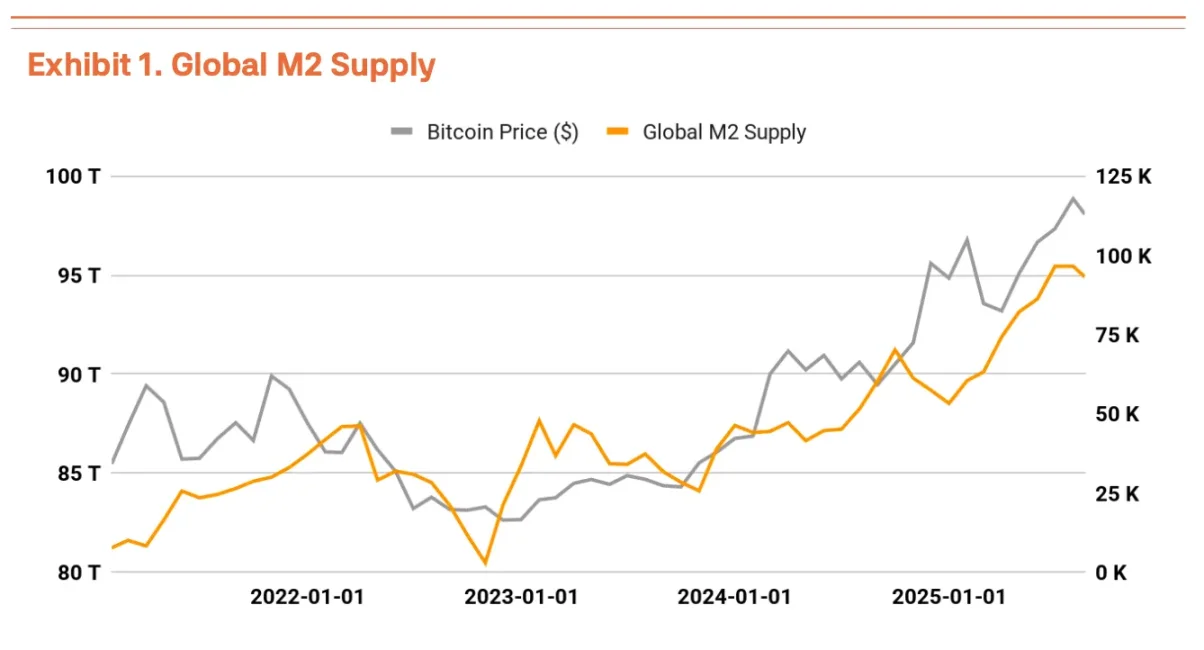
在全球流动性方面,突出的一点是主要经济体的 M2 货币供应量已超过 90 万亿美元,创下历史新高。历史上,M2 增长率和比特币价格显示出相似的方向性模式,如果当前的货币扩张持续下去,则仍有进一步的升值空间(图表 1)。

此外,特朗普总统施压降息以及美联储的鸽派立场,为过剩流动性流入另类资产开辟了途径,而比特币成为主要受益者。

与此同时,机构对比特币的积累正以前所未有的速度进行。美国现货 ETF 持有 130 万枚 BTC,约占总供应量的 6%,而仅 Strategy(MSTR) 就持有 629,376 枚 BTC(价值 712 亿美元)。关键在于这些购买行为代表的是结构性策略,而非一次性交易。Strategy 通过发行可转换债券进行持续购买,尤其标志着新的需求层正在形成。

此外,特朗普政府于 8 月 7 日发布的行政命令代表了一个改变局面的因素。向 401(k) 退休账户开放比特币投资,意味着可能触及一个 8.9 万亿美元的资本池。即使保守地分配 1%,也将意味着 890 亿美元,大约是比特币当前市值的 4%。鉴于 401(k) 资金长期持有的特点,这一发展不仅应有助于价格升值,也应有助于降低波动性。这标志着比特币从投机性资产明确转变为机构核心持仓。

机构推动交易量,零售活动消退
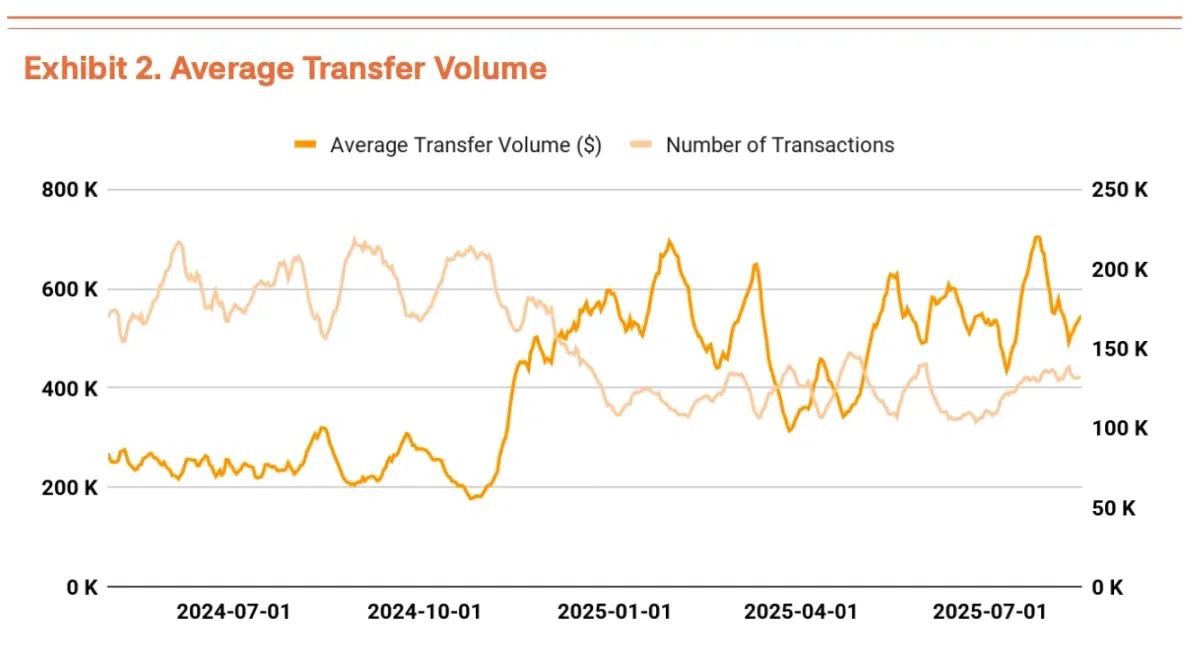
比特币网络目前正围绕大投资者进行重组。日均交易笔数从 2024 年 10 月的 66 万笔下降 41% 至 2025 年 3 月的 38.8 万笔,然而每笔交易的比特币转账量实际上增加了。来自像 Strategy 这样的机构不断增长的大额交易扩大了平均交易规模。这标志着比特币网络从「小额高频」向「大额低频」交易模式转变(图表 2)。
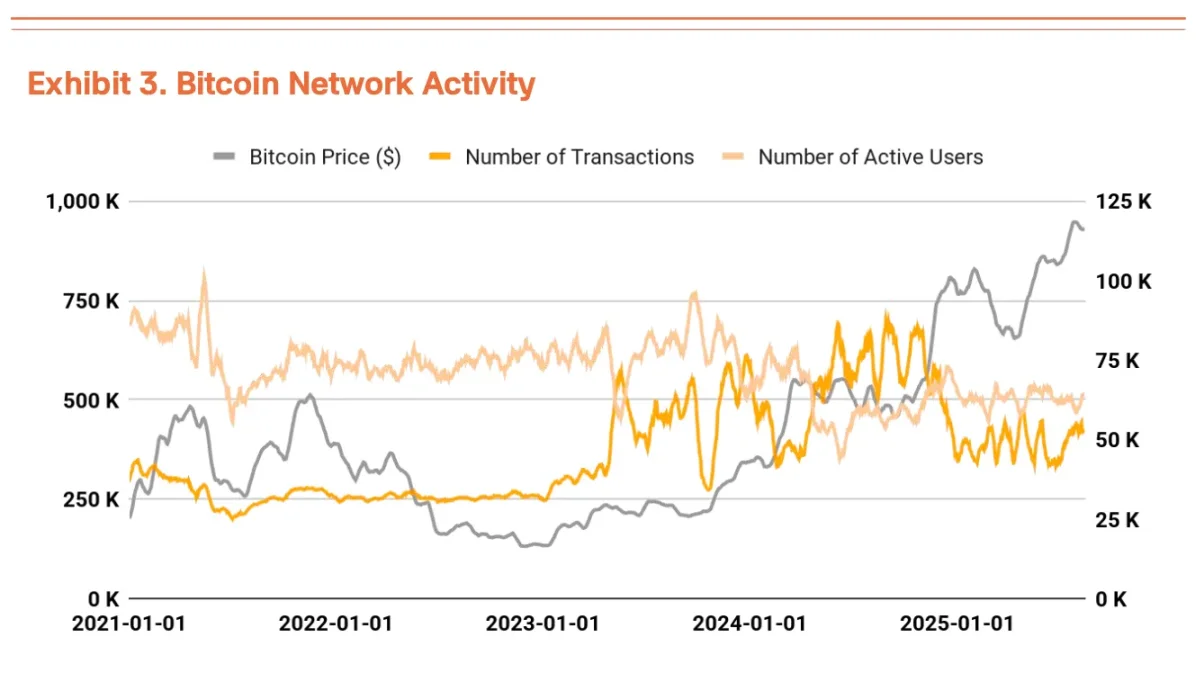
然而,基本面指标显示出不平衡的增长。虽然机构重组显然推动比特币网络价值走高,但交易笔数和活跃用户数仍未恢复(图表 3)。

基本面的改善需要通过 BTCFi(基于比特币的去中心化金融服务)和其他举措来激活生态系统,但这些仍处于早期发展阶段,需要时间才能产生有意义的影响。

超买,但机构提供底部支撑
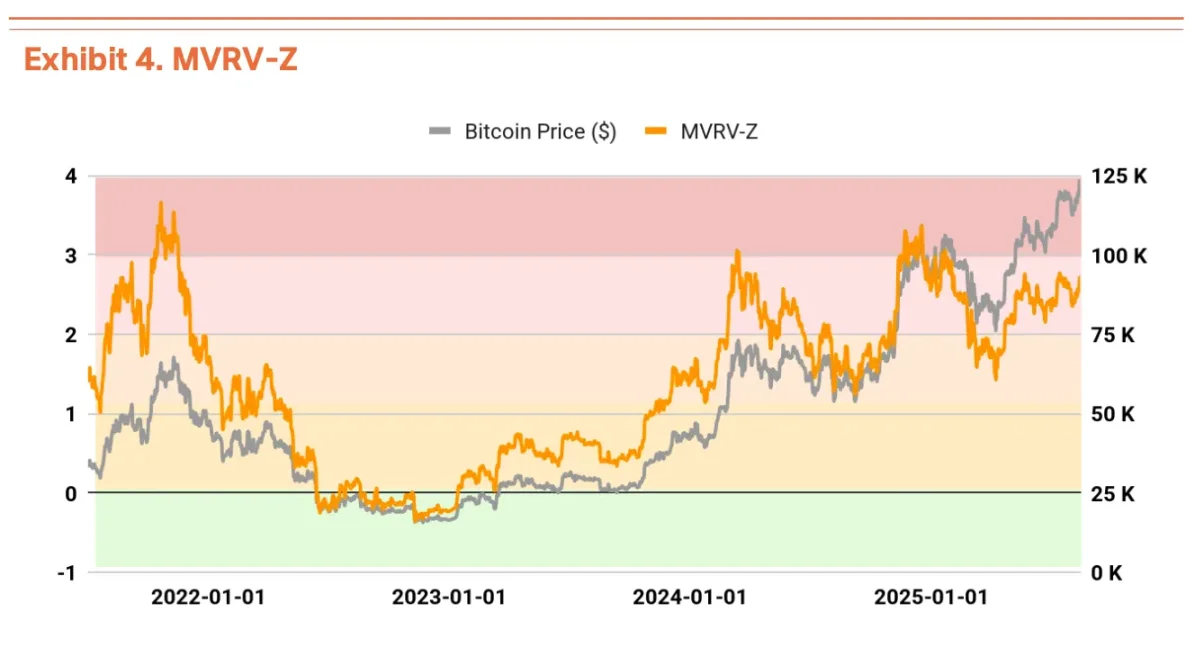
链上指标显示一些过热信号,但重大的下行风险仍然有限。MVRV-Z 指标(衡量当前价格相对于投资者平均成本基础)处于 2.49 的过热区域,并且最近曾飙升至 2.7,警告可能存在近期的回调(图表 4)。
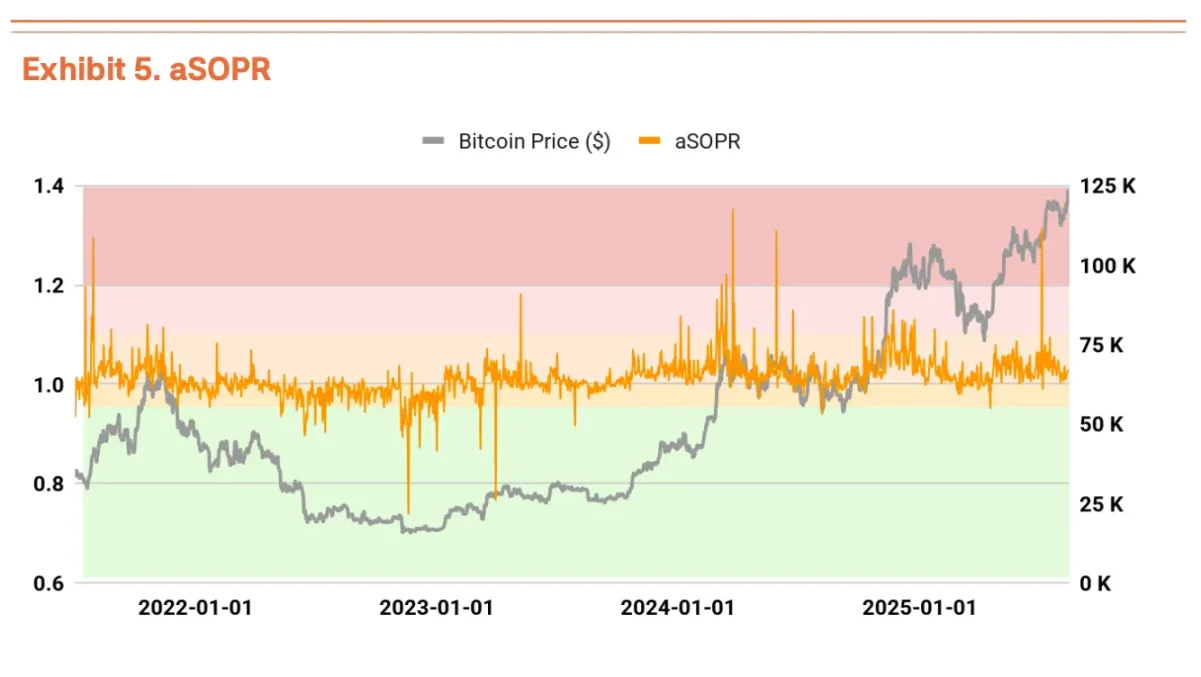
然而,aSOPR(1.019,追踪投资者已实现盈亏)和 NUPL(0.558,衡量市场整体未实现盈亏)均保持在稳定区域,表明市场整体健康(图表 5,6)。
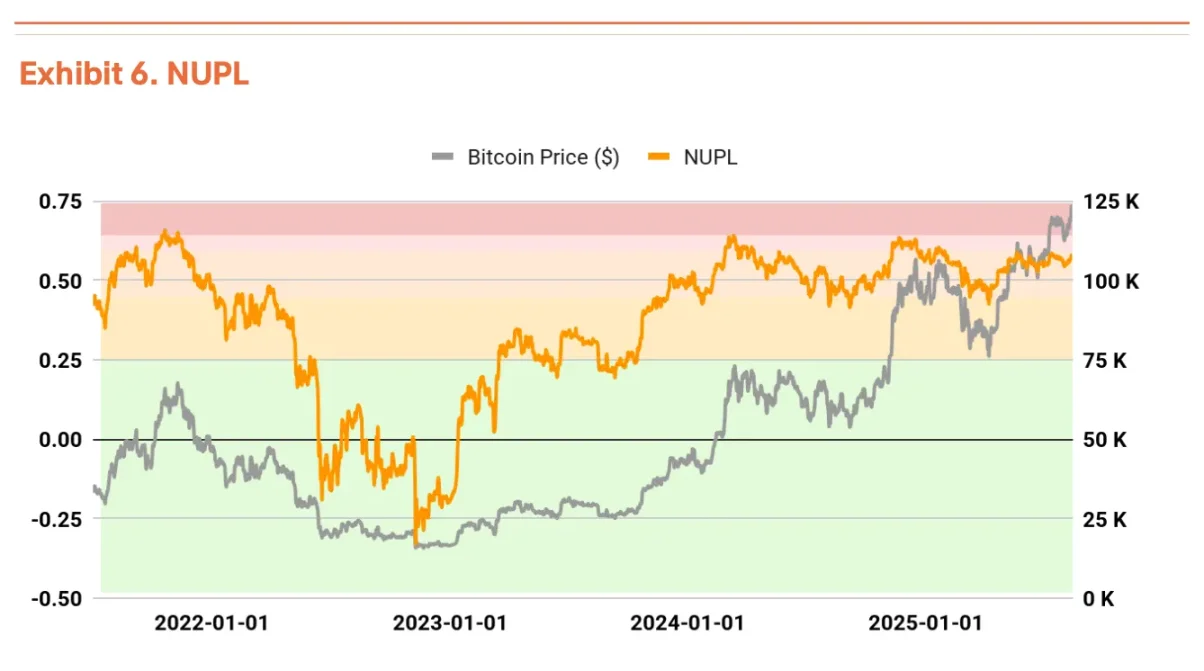
简而言之,虽然当前价格相对于平均成本基础(MVRV-Z)偏高,但实际卖出发生在适度的利润水平(aSOPR),并且整个市场尚未达到过度盈利区域(NUPL)。

支撑这种动态的是机构购买力。来自 ETF 和 Strategy 类实体的持续积累提供了坚实的价格支撑。短期内可能出现回调,但趋势逆转似乎不太可能。

目标价格 19 万美元,潜在上行空间 67%

我们的 TVM(时间价值模型)方法通过以下框架得出 19 万美元的目标价格:我们设定一个 13.5 万美元的基础价格(从当前价格中剔除极端恐惧和贪婪情绪),然后应用 +3.5% 的基本面指标乘数和 +35% 的宏观指标乘数。

基本面指标乘数反映了网络质量的改善:尽管交易笔数减少,但交易价值更高。宏观指标乘数捕捉了三种强大的力量:不断扩张的全球流动性(例如,M2 超过 90 万亿美元)、加速的机构采用(例如,ETF 持有 130 万枚 BTC)以及改善的监管环境(例如,401(k) 资格开放了 8.9 万亿美元的资金池)。

从当前水平来看,这意味着 67% 的上行潜力。虽然目标激进,但它反映了比特币从投机性资产向机构投资组合配置转变过程中正在发生的结构性变化。

Related Reads

Investment Philosophy of Gavin Baker, an Early Nvidia Investor: Long AI Infrastructure Bottlenecks, Short Overall Market Risk

Gavin Baker, an early investor in Nvidia and founder of Atreides Management, outlines his investment philosophy: going long on AI infrastructure bottlenecks while hedging against broader market risk. He argues AI is not a bubble but a supercycle driven by constraints in power, wafers (semiconductors), and compute efficiency (tokens per watt). True alpha, he believes, lies not in application-layer companies like OpenAI but in "picks and shovels" providers—companies solving physical bottlenecks in GPU connectivity (e.g., Astera Labs), memory (Micron), inference chips (Cerebras, Positron), advanced manufacturing (TSMC, ASML), and energy supply. His portfolio reflects this barbell strategy: concentrated bets on key infrastructure players alongside a significant put position on the QQQ ETF to hedge overall market downside. Baker contends this cycle differs from the dot-com bubble because demand is fueled by the strong balance sheets of hyperscalers (Google, Meta, Amazon, Microsoft), not debt, and physical supply constraints (e.g., chip manufacturing capacity) prevent runaway overinvestment. He highlights the growing importance of inference (vs. pre-training), vertical/small language models, sovereign infrastructure deployment speed, and the convergence of energy and space (e.g., orbital compute). His long-term view is that performance-per-watt and token cost reduction will dictate winners as AI scaling hits fundamental physical limits.

marsbit11m ago

Investment Philosophy of Gavin Baker, an Early Nvidia Investor: Long AI Infrastructure Bottlenecks, Short Overall Market Risk

marsbit11m ago

Apple Re-invented Image Compression with AI: Same Quality, One-Third the File Size

Apple’s PICO: An AI-Powered Image Codec That Cuts File Size by Two-Thirds at Equal Perceived Quality In 2025, JPEG AI became the first international standard for learned image compression. However, it, like most codecs, still prioritizes mathematical metrics like PSNR over true perceptual quality—what the human eye finds pleasing. Apple researchers have introduced PICO (Perceptual Image Codec), a neural codec designed to optimize for human perception. It tackles key practical challenges: 1) Speed: A novel "one-shot context model" accelerates entropy encoding without sacrificing compression efficiency. 2) Artifacts: A dedicated TextFidelity loss preserves text clarity, and a TilingArtifact loss eliminates color seams between image tiles processed in parallel. 3) Control: It avoids the "hallucinations" common in GAN-based perceptual models. In a large-scale human evaluation (74,925 comparisons), PICO achieved the same perceived quality as standards like AV1, VVC, and JPEG AI while using only 30-43% of the bitrate. It also outperforms other learned perceptual codecs by 20-40%. Remarkably, it runs in 230ms (encode) and 150ms (decode) on an iPhone 17 Pro Max. While less efficient on synthetic graphics, PICO represents a significant shift from optimizing mathematical scores to directly targeting human visual experience, making high-quality perceptual compression practical for consumer devices. The work builds on expertise from WaveOne, whose team joined Apple and previously advanced neural video compression.

marsbit46m ago

Apple Re-invented Image Compression with AI: Same Quality, One-Third the File Size

marsbit46m ago

Shanghai's Leading Large Model Company Initiates A-Share Listing

Shanghai-based AI large language model leader MiniMax has initiated the process for an A-share listing in China, having filed a pre-IPO tutoring report with the Shanghai Securities Regulatory Bureau on May 29. This move positions it to compete with Zhipu AI for the title of the first major domestic LLM company to list on the A-share market. Having already completed an IPO in Hong Kong in January 2026, MiniMax's stock price has surged approximately 409% since its debut, with its market capitalization reaching around HK$263.45 billion (approximately RMB 227.55 billion) as of May 29. The company's rapid growth is supported by strong business performance. Its Annual Recurring Revenue (ARR) has grown over 100% in the past two months and now exceeds $300 million. It serves over one million global enterprise and developer clients and has around 300 million users worldwide. For the full year 2025, MiniMax reported revenue of $79.038 million, with a gross margin of 25.4%. While it reported an adjusted net loss of $250 million, the loss rate has narrowed significantly year-over-year. On the product front, MiniMax has released several flagship models this year, including MiniMax-M2.5, M2.6, and M2.7, with the first and last being open-sourced. Its models gained significant traction earlier in the year, briefly becoming the top model provider by usage share on the OpenRouter platform in February. The company has also upgraded its AI agent product, now named Mavis, and is preparing to launch its next-generation MiniMax-M3 model. Technical previews indicate M3 will feature a novel "MiniMax Sparse Attention" mechanism, promising substantial improvements in inference speed. MiniMax's push for an A-share listing reflects a broader trend among China's leading AI firms, including Zhipu AI, Moonshot AI, StepFun, and 01.AI, to seek public listings. This strategy aims to secure broader financing channels to support the immense computational costs and ongoing commercialization efforts inherent in developing advanced large language models.

marsbit49m ago

Shanghai's Leading Large Model Company Initiates A-Share Listing

marsbit49m ago

Trading

Spot
Futures

Hot Articles

What is $BITCOIN

DIGITAL GOLD ($BITCOIN): A Comprehensive Analysis Introduction to DIGITAL GOLD ($BITCOIN) DIGITAL GOLD ($BITCOIN) is a blockchain-based project operating on the Solana network, which aims to combine the characteristics of traditional precious metals with the innovation of decentralized technologies. While it shares a name with Bitcoin, often referred to as “digital gold” due to its perception as a store of value, DIGITAL GOLD is a separate token designed to create a unique ecosystem within the Web3 landscape. Its goal is to position itself as a viable alternative digital asset, although specifics regarding its applications and functionalities are still developing. What is DIGITAL GOLD ($BITCOIN)? DIGITAL GOLD ($BITCOIN) is a cryptocurrency token explicitly designed for use on the Solana blockchain. In contrast to Bitcoin, which provides a widely recognized value storage role, this token appears to focus on broader applications and characteristics. Notable aspects include: Blockchain Infrastructure: The token is built on the Solana blockchain, known for its capacity to handle high-speed and low-cost transactions. Supply Dynamics: DIGITAL GOLD has a maximum supply capped at 100 quadrillion tokens (100P $BITCOIN), although details regarding its circulating supply are currently undisclosed. Utility: While precise functionalities are not explicitly outlined, there are indications that the token could be utilized for various applications, potentially involving decentralized applications (dApps) or asset tokenization strategies. Who is the Creator of DIGITAL GOLD ($BITCOIN)? At present, the identity of the creators and development team behind DIGITAL GOLD ($BITCOIN) remains unknown. This situation is typical among many innovative projects within the blockchain space, particularly those aligning with decentralized finance and meme coin phenomena. While such anonymity may foster a community-driven culture, it intensifies concerns about governance and accountability. Who are the Investors of DIGITAL GOLD ($BITCOIN)? The available information indicates that DIGITAL GOLD ($BITCOIN) does not have any known institutional backers or prominent venture capital investments. The project seems to operate on a peer-to-peer model focused on community support and adoption rather than traditional funding routes. Its activity and liquidity are primarily situated on decentralized exchanges (DEXs), such as PumpSwap, rather than established centralized trading platforms, further highlighting its grassroots approach. How DIGITAL GOLD ($BITCOIN) Works The operational mechanics of DIGITAL GOLD ($BITCOIN) can be elaborated on based on its blockchain design and network attributes: Consensus Mechanism: By leveraging Solana’s unique proof-of-history (PoH) combined with a proof-of-stake (PoS) model, the project ensures efficient transaction validation contributing to the network's high performance. Tokenomics: While specific deflationary mechanisms have not been extensively detailed, the vast maximum token supply implies that it may cater to microtransactions or niche use cases that are still to be defined. Interoperability: There exists the potential for integration with Solana’s broader ecosystem, including various decentralized finance (DeFi) platforms. However, the details regarding specific integrations remain unspecified. Timeline of Key Events Here is a timeline that highlights significant milestones concerning DIGITAL GOLD ($BITCOIN): 2023: The initial deployment of the token occurs on the Solana blockchain, marked by its contract address. 2024: DIGITAL GOLD gains visibility as it becomes available for trading on decentralized exchanges like PumpSwap, allowing users to trade it against SOL. 2025: The project witnesses sporadic trading activity and potential interest in community-led engagements, although no noteworthy partnerships or technical advancements have been documented as of yet. Critical Analysis Strengths Scalability: The underlying Solana infrastructure supports high transaction volumes, which could enhance the utility of $BITCOIN in various transaction scenarios. Accessibility: The potential low trading price per token could attract retail investors, facilitating wider participation due to fractional ownership opportunities. Risks Lack of Transparency: The absence of publicly known backers, developers, or an audit process may yield skepticism regarding the project's sustainability and trustworthiness. Market Volatility: The trading activity is heavily reliant on speculative behavior, which can result in significant price volatility and uncertainty for investors. Conclusion DIGITAL GOLD ($BITCOIN) emerges as an intriguing yet ambiguous project within the rapidly evolving Solana ecosystem. While it attempts to leverage the “digital gold” narrative, its departure from Bitcoin's established role as a store of value underscores the need for a clearer differentiation of its intended utility and governance structure. Future acceptance and adoption will likely depend on addressing the current opacity and defining its operational and economic strategies more explicitly. Note: This report encompasses synthesised information available as of October 2023, and developments may have transpired beyond the research period.

363 Total ViewsPublished 2025.05.13Updated 2025.05.13

What is $BITCOIN

Discussions

Welcome to the HTX Community. Here, you can stay informed about the latest platform developments and gain access to professional market insights. Users' opinions on the price of BTC (BTC) are presented below.

活动图片