9月降息预期猛增,市场能否重回牛市节奏

区块律动Published on 2025-08-05Last updated on 2025-08-05

Abstract

议息会议与非农风波后,市场后续如何

7 月议息会议上,鲍威尔的鹰派发言为降息预期泼下冷水——他一方面肯定了当前劳动力市场的稳健表现,并再度强调关税可能带来的通胀压力,警惕一次性价格冲击演变为持续性通胀风险;另一方面,即便面对特朗普持续施加的政治压力,鲍威尔依旧毫无退缩迹象,坚持「数据导向」原则,并强调维护美联储的独立性。这番表态使得市场原本高涨的降息预期迅速降温。

然而,周五公布的非农数据却让市场情绪急转直下:7 月新增就业仅 7.3 万,创 9 个月新低,更关键的是,5 月与 6 月的就业数据合计被下修 25.8 万,实际仅剩 3.3 万,创下新冠以来的最低水平。衰退预期骤然升温,美股与加密市场同步大幅回调。

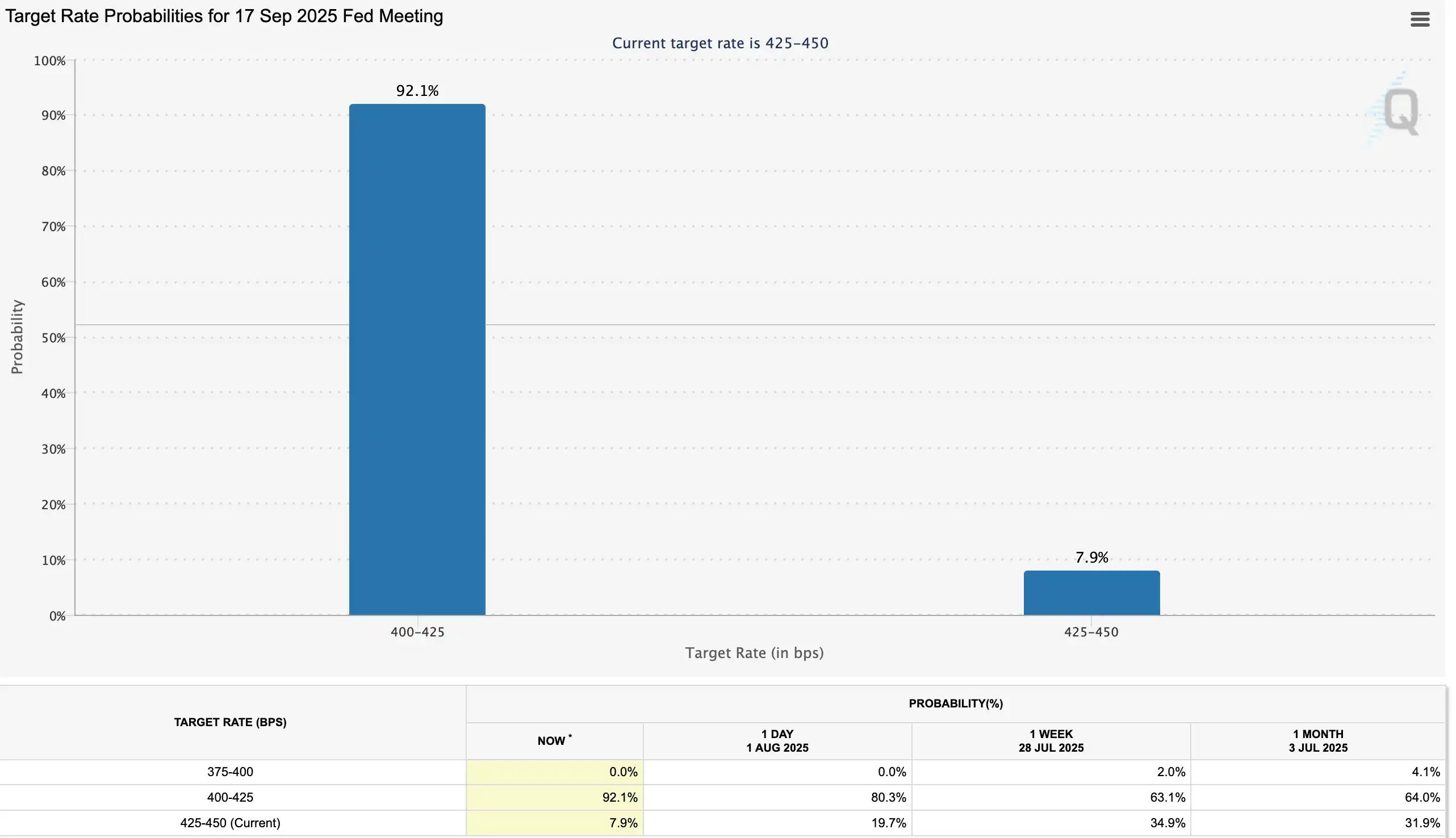
受此影响,9 月降息预期被迅速推高——芝商所 FedWatch 工具显示,当前 9 月降息概率已飙升至 92.1%,而一周前这一数字仅为 63.1%。与此同时,白宫也正式对美联储发起「围猎」:数据公布当日,特朗普解雇了由拜登政府任命的劳工统计局局长,并接受了美联储理事库格勒的辞呈,这意味着 9 月的议息会议白宫将势在必得。
接下来,律动 BlockBeats 整理了交易员们对接下的市场情况的看法,为大家本周的交易做出一些方向参考。

大盘后续走势如何

@CryptoHayes

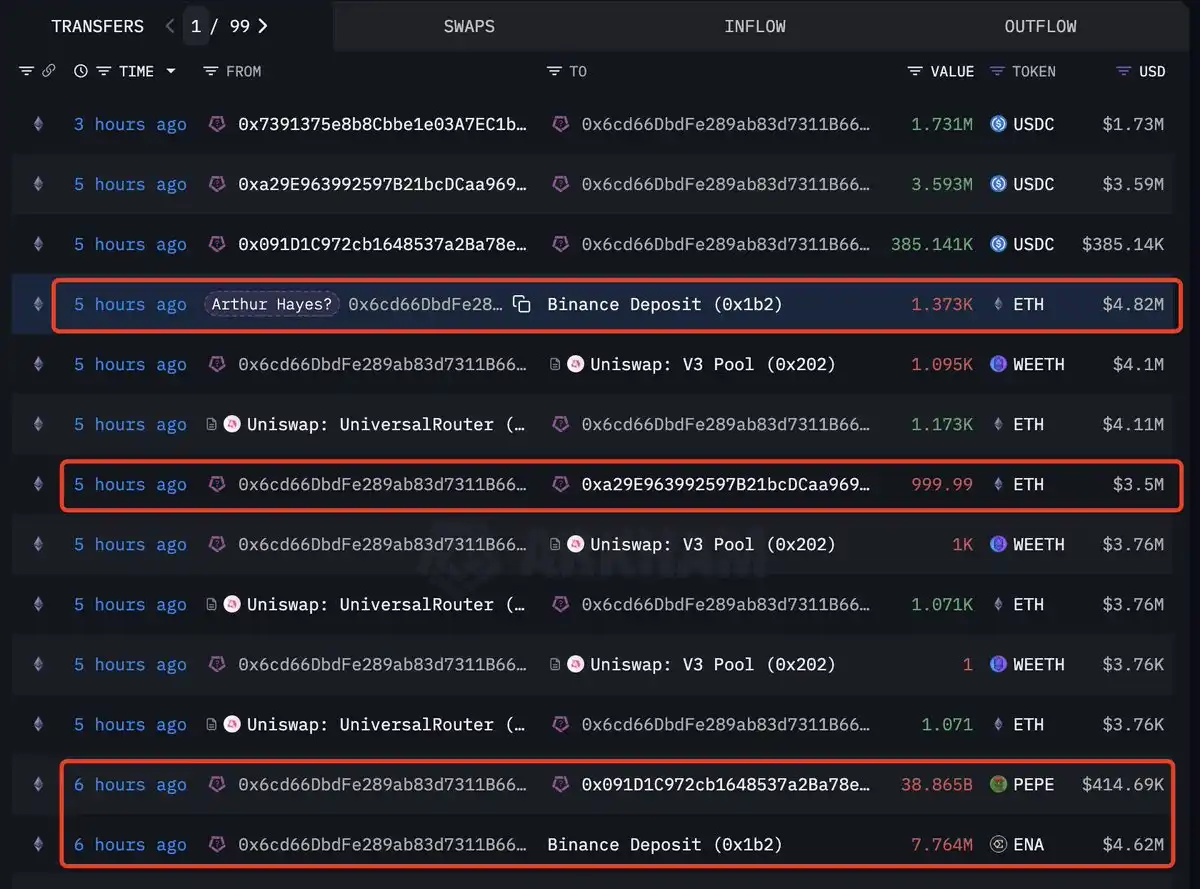
@CryptoHayes 近日抛售了包括 ETH、ENA、PEPE 在内的多种代币,套现金额接近 1300 万美元,并直言看空后市,预计 BTC 或将回落测试 10 万美元关口,而 ETH 可能下探至 3000 美元。

他指出,美国的关税法案可能在三季度到期,这意味着财政刺激力度将减弱;叠加最新非农数据疲软,市场对经济增长乏力的担忧正在加剧。与此同时,主要经济体并未释放足够的信贷来支撑 GDP,这让风险资产在短期内的承压预期进一步升温。
@qinbafrank

市场大概率会先把「衰退预期」这条叙事走到头,再顺势切换到「降息预期」的主线。逻辑也不难理解——美股自 4 月以来几乎没有经历像样的调整,一旦出现某个明显超预期的利空数据,就容易引发估值回调,美股杀估值、币市杀杠杆、情绪同步降温。不过,从中长期视角看,这种回调反而是利好。

在宏观政策层面,「一体两翼」的组合仍在为市场托底。「一体」是指《大美丽法案》所涵盖的减税、扩大国防与移民开支、缩减福利支出以及债务上限调整等一揽子财政刺激;「两翼」则是人工智能领域的《AI 行动计划》与加密资产领域的《稳定币法案》及《数字资产市场机构法案》。这些政策不仅释放了未来产业投资信号,也强化了美国财政与产业的扩张意愿。

基本面上,美国经济尚未进入衰退区间,企业财报普遍稳健;利率一旦下行,美债付息成本也将随之下降,财政空间将进一步释放。值得关注的是,拜登提名的美联储理事库格勒已宣布辞职,并将在 8 月 8 日离任,这为特朗普提前任命与其立场一致的新理事打开了窗口,或将直接影响 9 月会议的降息节奏。

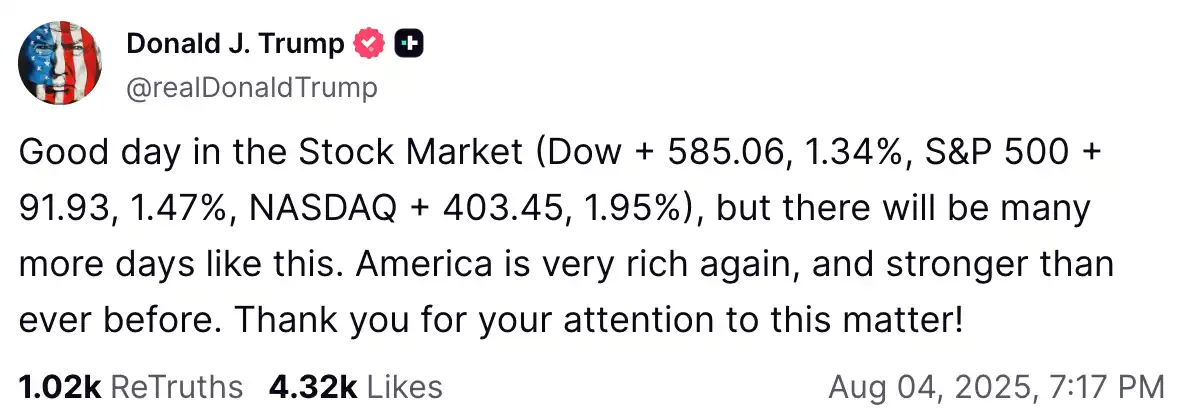
8 月 4 日美股在短线调整后迎来反弹,标普 500 指数收涨 1.47%,纳斯达克指数上涨 1.95%,显示市场情绪正从恐慌快速回暖,特朗普也在盘后发文进行庆祝。
@Murphychen888

在 8 月 1 日的推文中,我们通过筹码结构的分析得出「一旦 117K 的重要支撑失守,补缺口就是大概率事件」的结论。而当前缺口所在位置$112,000-$113,000 已经补上,且这里恰好也是高低 2 个筹码堆积区(A、B 区间)的中间位置。通过测试,再次验证了双锚结构有效性。
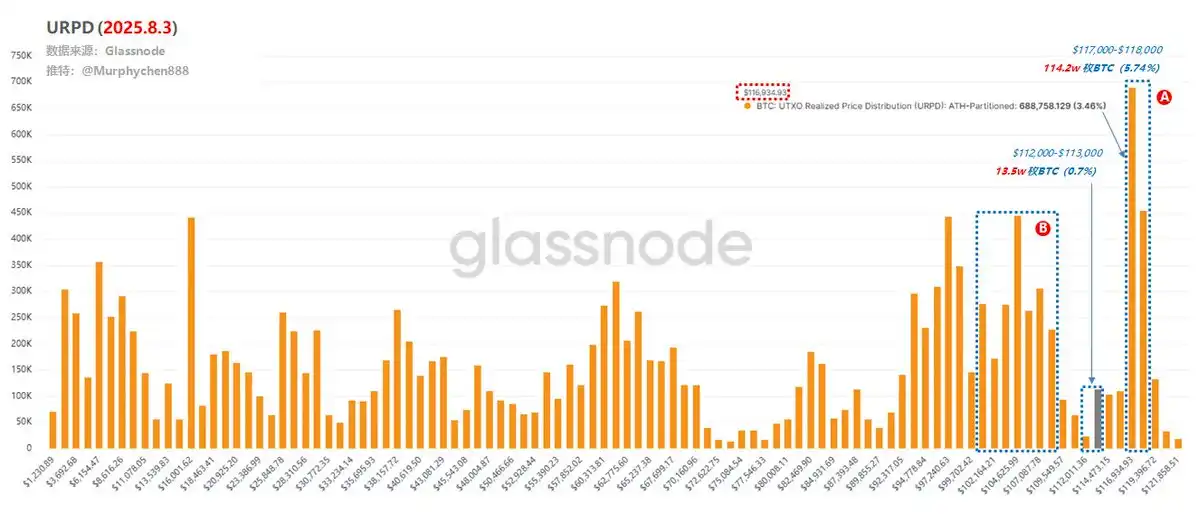
截止到今天,在$112,000-$113,000 区间已有 13.5w 枚 BTC 完成了换手,其中近一半来自 A 区间的高位套牢筹码。高位换低位,会降低整体持仓成本,有利于市场重新寻找价格共识。等到 A/B 区间内不坚定的浮亏/浮盈筹码都换手到这里,那么这里就是相对的底部。

客观的说,按当前筹码分布及运行逻辑上看,后面可能会出现以下 2 种情况:

1、在$112,000-$113,000 形成新的堆积区(筹码柱越来高),A 区间的套牢筹码逐渐被消化(114w 枚 BTC),那么在休整一段时间后 BTC 将再次尝试向上的突破。

2、A/B 区间的筹码大量松动,市场承接不住而继续下行寻找支撑。那就会进入 B 区间,而 B 区间也是 BTC 回调过程中真正意义上的强支撑区,既有宽度也有高度(195w 枚 BTC)。

币股叙事是否具有持续性

@fundstrat

Bitmine 董事长 Tom Lee 表示:「华尔街普遍认为,以太坊将是未来十年最重要的宏观交易之一。」

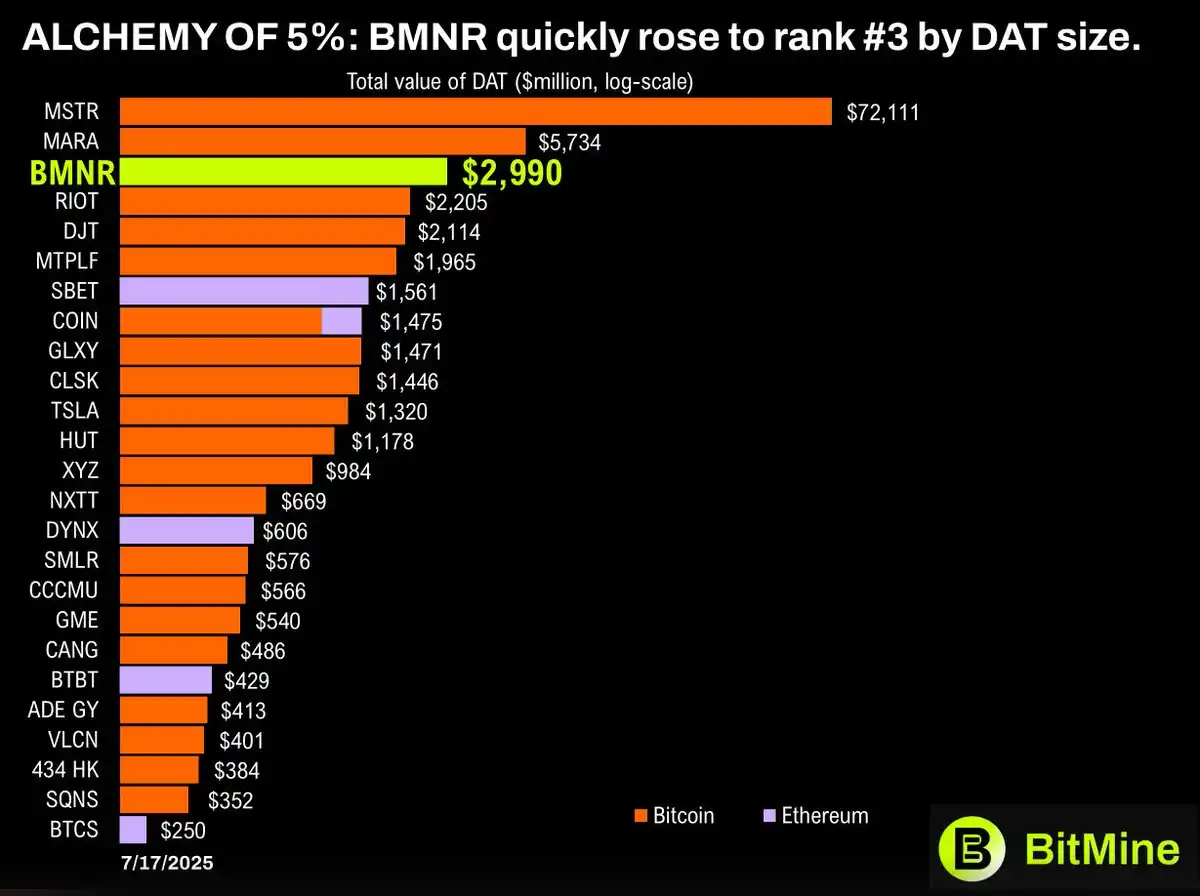
目前,BMNR 持有 833,133 枚 ETH,市值约 30 亿美元——不仅是全球最大的 ETH 国库,也是全球第三大加密资产国库。Lee 强调,ETH 仍是未来 10-15 年的核心宏观趋势之一,随着华尔街推动区块链金融化,以及 AI 驱动机器人资产的代币化,这一趋势将进一步加速。
他指出,随着 SEC 与白宫推出 Project Crypto,美国金融市场正加速向链上迁移,而作为当前最大的智能合约公链,以太坊无疑是最大受益者。华尔街青睐 ETH 的关键原因在于其 零宕机记录,并且已被 摩根大通、Robinhood 等传统金融与科技巨头采用。

Bitmine 数字资产团队预计,ETH 在未来 12 个月的公允价值可能达到 1-2 万美元;而这波稳定币浪潮对于以太坊的意义,堪比 ChatGPT 之于 AI,将推动华尔街加速入场。长期来看,随着华尔街将 现实世界资产(RWA)代币化 并迁移至链上,同时大规模参与 ETH 质押,ETH 价格有望冲击 6 万美元甚至更高,如同 NVIDIA 在 AI 浪潮中的地位,成为链上金融的核心基础设施。

@0xSunNFT

7 月 29 日,「山寨币微策略」集体跳水,引发了交易员们对其可持续性的讨论。目前,市场上多数交易员对「ETH 微策略」仍持乐观态度,但对其他「山寨币微策略」则更为谨慎。
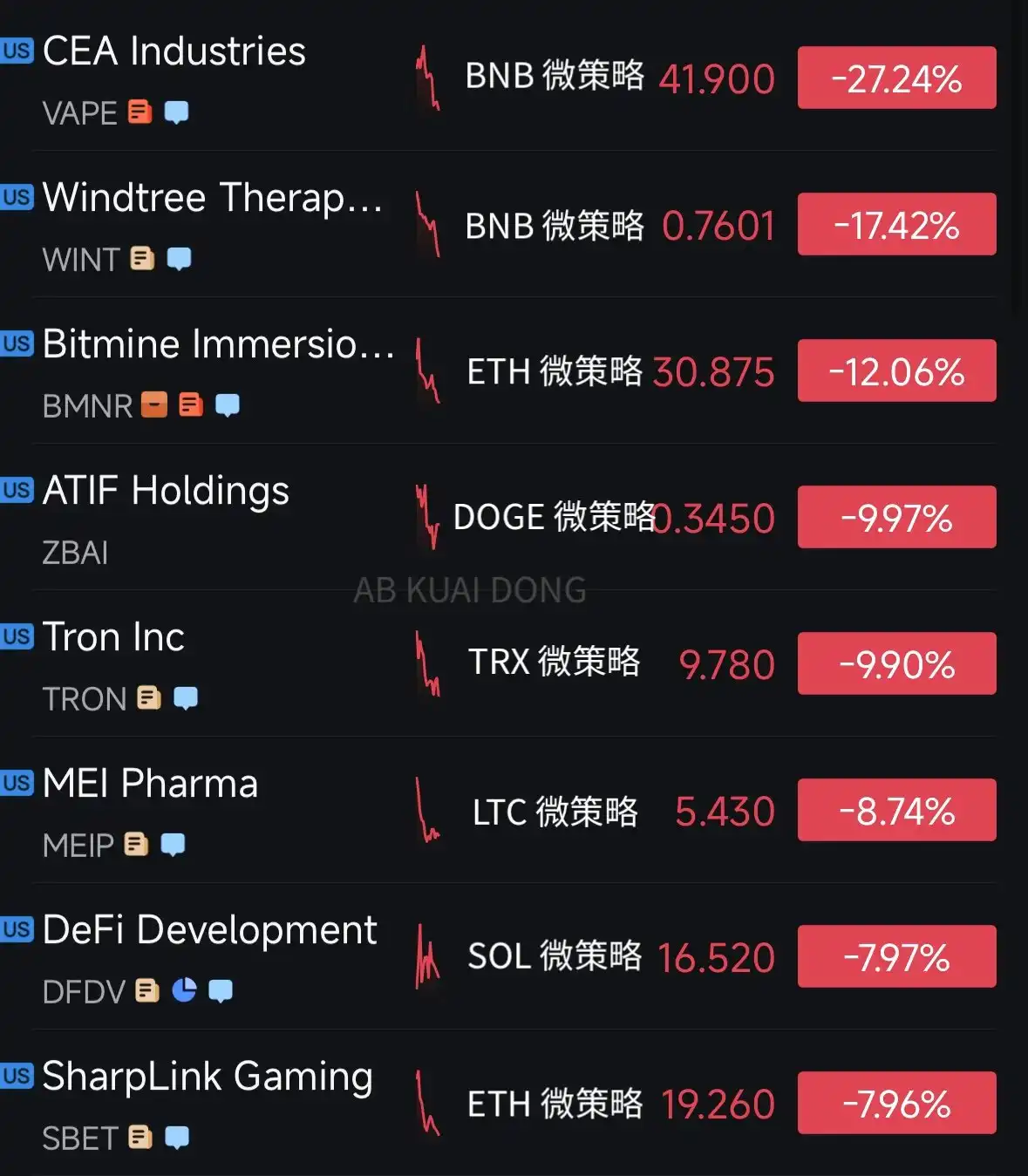
交易员 @0xSunNFT 指出,ETH 是自 6 月底以来本轮上涨的核心发动机,背后有两股主要动力:一是机构效仿 MicroStrategy,通过币股融资大举买入 ETH;二是稳定币叙事的升温,而 ETH 正是相关的核心基础设施与结算层。

参考此前 MicroStrategy 推动 BTC 价格一路攀升的过程,最终大部分山寨币依然没能跑赢比特币。对于 ETH 微策略而言,币股和机构投入的这部分资金大概率不会外溢到其他山寨币上。数据显示,根据 CMC 统计,在过去 30 天 Top200 的代币中,涨幅超过 ETH 的仅有 20 个,而且多是 Bonk、Zora、CFX、ENA 这类受特定利好事件驱动的个案。

在山寨选择上,策略仍遵循此前做空逻辑:优先锁定市值偏高、非龙头、走势疲软、存在感低的标的,并采取分散做空、严格止损的方式,以防单一标的突发暴涨。

展望下半年,若行情延续牛市格局,大概率依然由 ETH 领涨;若转入熊市,山寨币恐难以独善其身,而 ETH 至少仍有机构买盘提供一定托底力量。

Related Reads

Ten-Thousand-Word Analysis: From $10 to $290, MRVL Wins the Entire AI Era by 'Not Making GPUs'

Marvell Technology's stock price surged from under $10 in 2016 to a record $290 in June 2026, fueled not by making GPUs, but by dominating AI infrastructure connectivity. This analysis argues the market misvalues MRVL as merely a smaller Broadcom in custom AI chips, overlooking its true, unique position. Marvell's core strength lies in enabling high-speed data flow for AI clusters through three interconnected businesses. First, it holds a commanding ~70% market share in high-speed optical DSPs (essential for data center light modules), a deep-moat business with accelerating growth. Second, its custom AI chip design business serves hyperscalers like AWS, Microsoft, and Google, with a significant revenue pipeline despite lower margins. Third, stable cash flows come from Ethernet switch chips and enterprise storage controllers. Together, they form a full-stack "AI data movement" platform. CEO Matt Murphy's transformative leadership since 2016, involving strategic divestments, key acquisitions (like Inphi for optical DSPs), and securing long-term agreements with major cloud providers, repositioned the company. A pivotal $2 billion strategic investment from NVIDIA in 2026 underscored Marvell's critical role in the AI ecosystem, particularly through collaborations like NVLink Fusion. While Marvell faces risks—including client concentration (losing the Amazon Trainium3 design), lower-margin business mix, competitive threats, insider selling, and complex supply chains—its fundamentals remain strong. The optical interconnect moat is widening with the acquisition of Celestial AI (photonics fabric), and financial metrics show accelerating revenue growth and operating leverage. With a PEG ratio suggesting undervaluation relative to its growth, the thesis is that the market undervalues Marvell's monopolistic position in AI "plumbing" while overemphasizing its competitive custom chip segment. The story transcends investing, symbolizing how in any complex system—from the internet to AI—the value of "connection" ultimately surpasses that of individual "nodes."

marsbitHá 13m

Ten-Thousand-Word Analysis: From $10 to $290, MRVL Wins the Entire AI Era by 'Not Making GPUs'

marsbitHá 13m

AI Relay Stations Spark Heated Debate on Zhihu: Behind Cheap Tokens, What Are Users Really Worried About?

A discussion on Zhihu about "AI relay stations" shifted the niche developer topic of "cheap tokens" into broader user awareness. Users moved beyond simply questioning the legitimacy of these services to focus on practical concerns: Where do cheap tokens truly come from? Is the model being accessed the real one? Can relay stations see prompts, code, and API keys? For occasional users, are the risks worth it? The core debate centered less on price and more on trust. A primary worry is model authenticity—the risk of "model swapping," where users paying for a premium model might be routed to a cheaper one, creating an information asymmetry. Others argued that cost comparisons matter; while cheaper than official pay-as-you-go APIs, relay stations may not be the lowest-cost option versus subscriptions, domestic models, or free tiers, making user needs assessment crucial. Speculation about token sources ranged from legitimate bulk discounts to gray-area methods like account sharing or exploiting regional pricing. This opacity makes risk assessment difficult for users. Data security emerged as a critical concern, especially for enterprise use. When processing sensitive information like code, contracts, or client data, the inability to verify a relay station's data handling, retention, or access policies poses significant compliance and confidentiality risks. The evolving consensus suggests relay stations can be used cautiously for low-sensitivity, disposable tasks (e.g., summarizing public info, simple translation). However, they should not be the default for sensitive, professional, or production workflows involving proprietary data, Agents, or automated systems. Recommendations include avoiding large prepayments, not relying on a single service, using test prompts to monitor quality, anonymizing data where possible, and keeping official channels as backups. Ultimately, the discussion framed tokens not just as a billing unit but as a measure of real cost encompassing price, model integrity, data security, and service stability. The popularity of relay stations highlights user demand for affordable access, but the debate underscores a key trade-off: the savings from cheap tokens may come at the price of trust, transparency, and control over one's data and AI experience.

marsbitHá 43m

AI Relay Stations Spark Heated Debate on Zhihu: Behind Cheap Tokens, What Are Users Really Worried About?

marsbitHá 43m

In-Depth Research Report on TradFi: The Convergence Wave of Crypto and Traditional Finance

In 2026, the crypto industry is undergoing a profound infrastructure-level transformation—TradFi assets are migrating on-chain at an unprecedented pace. According to CoinGecko's Q1 2026 report, the total value locked (TVL) of tokenized real-world assets (RWA) has surpassed $31 billion, a nearly 4x increase from $7.8 billion at the beginning of 2025, with the sector’s aggregate market capitalization reaching $19.3 billion. Among these, the market cap of tokenized stocks surged from $2 million to $486 million, with Q1 spot trading volume reaching $15.1 billion—a single quarter already surpassing the entire second half of 2025. RWA perpetual contract Q1 trading volume reached a staggering $524.8 billion, far exceeding the $313 billion for all of 2025. Meanwhile, BlackRock's BUIDL fund has reached $2.3 billion in scale and has filed for two new tokenized funds, signaling that the world's largest asset manager's tokenization strategy is evolving from pilot to product suite expansion. HTX, as a core participant in the crypto exchange sector, officially launched TradFi perpetual futures products including NVDA, AAPL, MSFT, META, and SPY in 2026, enabling crypto users to gain 24/7 trading access to core U.S. equities. Boston Consulting Group predicts that global tokenized asset scale could reach $16 trillion by 2030, while McKinsey offers a conservative estimate of approximately $2 trillion. The on-chain migration of TradFi assets is no longer a "future narrative" but a structural transformation unfolding in real time, as crypto exchanges evolve from single crypto asset trading platforms toward "multi-asset-class trading infrastructure."

HTX LearnHá 46m

In-Depth Research Report on TradFi: The Convergence Wave of Crypto and Traditional Finance

HTX LearnHá 46m

Trading

Spot
Futures

Hot Articles

What is $BITCOIN

DIGITAL GOLD ($BITCOIN): A Comprehensive Analysis Introduction to DIGITAL GOLD ($BITCOIN) DIGITAL GOLD ($BITCOIN) is a blockchain-based project operating on the Solana network, which aims to combine the characteristics of traditional precious metals with the innovation of decentralized technologies. While it shares a name with Bitcoin, often referred to as “digital gold” due to its perception as a store of value, DIGITAL GOLD is a separate token designed to create a unique ecosystem within the Web3 landscape. Its goal is to position itself as a viable alternative digital asset, although specifics regarding its applications and functionalities are still developing. What is DIGITAL GOLD ($BITCOIN)? DIGITAL GOLD ($BITCOIN) is a cryptocurrency token explicitly designed for use on the Solana blockchain. In contrast to Bitcoin, which provides a widely recognized value storage role, this token appears to focus on broader applications and characteristics. Notable aspects include: Blockchain Infrastructure: The token is built on the Solana blockchain, known for its capacity to handle high-speed and low-cost transactions. Supply Dynamics: DIGITAL GOLD has a maximum supply capped at 100 quadrillion tokens (100P $BITCOIN), although details regarding its circulating supply are currently undisclosed. Utility: While precise functionalities are not explicitly outlined, there are indications that the token could be utilized for various applications, potentially involving decentralized applications (dApps) or asset tokenization strategies. Who is the Creator of DIGITAL GOLD ($BITCOIN)? At present, the identity of the creators and development team behind DIGITAL GOLD ($BITCOIN) remains unknown. This situation is typical among many innovative projects within the blockchain space, particularly those aligning with decentralized finance and meme coin phenomena. While such anonymity may foster a community-driven culture, it intensifies concerns about governance and accountability. Who are the Investors of DIGITAL GOLD ($BITCOIN)? The available information indicates that DIGITAL GOLD ($BITCOIN) does not have any known institutional backers or prominent venture capital investments. The project seems to operate on a peer-to-peer model focused on community support and adoption rather than traditional funding routes. Its activity and liquidity are primarily situated on decentralized exchanges (DEXs), such as PumpSwap, rather than established centralized trading platforms, further highlighting its grassroots approach. How DIGITAL GOLD ($BITCOIN) Works The operational mechanics of DIGITAL GOLD ($BITCOIN) can be elaborated on based on its blockchain design and network attributes: Consensus Mechanism: By leveraging Solana’s unique proof-of-history (PoH) combined with a proof-of-stake (PoS) model, the project ensures efficient transaction validation contributing to the network's high performance. Tokenomics: While specific deflationary mechanisms have not been extensively detailed, the vast maximum token supply implies that it may cater to microtransactions or niche use cases that are still to be defined. Interoperability: There exists the potential for integration with Solana’s broader ecosystem, including various decentralized finance (DeFi) platforms. However, the details regarding specific integrations remain unspecified. Timeline of Key Events Here is a timeline that highlights significant milestones concerning DIGITAL GOLD ($BITCOIN): 2023: The initial deployment of the token occurs on the Solana blockchain, marked by its contract address. 2024: DIGITAL GOLD gains visibility as it becomes available for trading on decentralized exchanges like PumpSwap, allowing users to trade it against SOL. 2025: The project witnesses sporadic trading activity and potential interest in community-led engagements, although no noteworthy partnerships or technical advancements have been documented as of yet. Critical Analysis Strengths Scalability: The underlying Solana infrastructure supports high transaction volumes, which could enhance the utility of $BITCOIN in various transaction scenarios. Accessibility: The potential low trading price per token could attract retail investors, facilitating wider participation due to fractional ownership opportunities. Risks Lack of Transparency: The absence of publicly known backers, developers, or an audit process may yield skepticism regarding the project's sustainability and trustworthiness. Market Volatility: The trading activity is heavily reliant on speculative behavior, which can result in significant price volatility and uncertainty for investors. Conclusion DIGITAL GOLD ($BITCOIN) emerges as an intriguing yet ambiguous project within the rapidly evolving Solana ecosystem. While it attempts to leverage the “digital gold” narrative, its departure from Bitcoin's established role as a store of value underscores the need for a clearer differentiation of its intended utility and governance structure. Future acceptance and adoption will likely depend on addressing the current opacity and defining its operational and economic strategies more explicitly. Note: This report encompasses synthesised information available as of October 2023, and developments may have transpired beyond the research period.

363 Total ViewsPublished 2025.05.13Updated 2025.05.13

What is $BITCOIN

Discussions

Welcome to the HTX Community. Here, you can stay informed about the latest platform developments and gain access to professional market insights. Users' opinions on the price of BTC (BTC) are presented below.

活动图片