剑桥最新报告:比特币挖矿能源结构已悄然改变

Odaily星球日报Published on 2025-04-30Last updated on 2025-04-30

Abstract

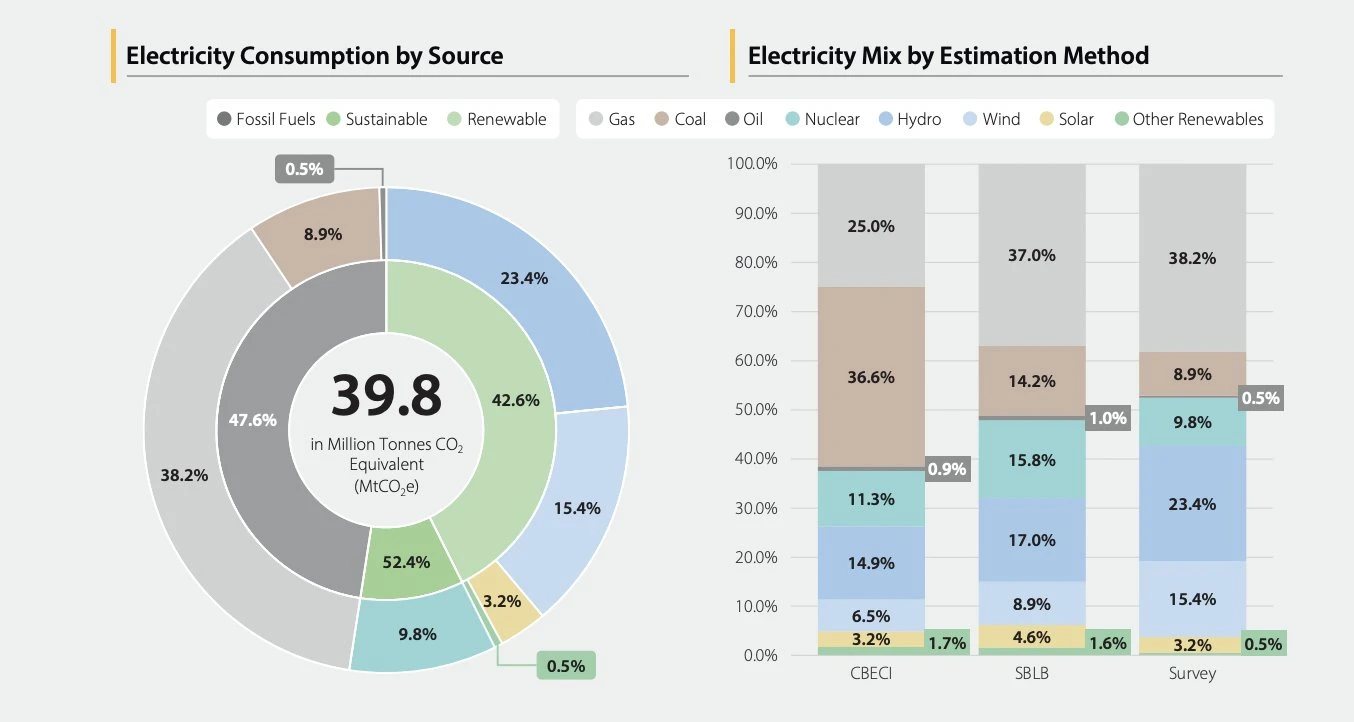
目前有52.4%的比特币网络算力来自“零排放”能源。

原文作者 | @DSBatten

编译 | Odaily星球日报(@OdailyChina

译者 | 叮当(@XiaMiPP

剑桥最新报告:比特币挖矿能源结构已悄然改变

编者按:剑桥替代金融研究中心(CCAF)发布了最新版比特币挖矿可持续发展报告,给出了一个非常关键的新数据:目前有 52.4% 的比特币网络算力来自“零排放”能源。而在上一次的报告中,这一比例还只有 37% 。换句话说,比特币挖矿在能源结构上的“绿色转型”进度,远超很多人的预期。

如今,比特币网络已经:

  • 有一半以上算力来自零碳能源

  • 碳排强度低于多数行业

  • 设备回收率超过 86% 

  • 甲烷减排正在产生实质影响

以下内容是@DSBatten对本次报告的重点摘要,由Odaily星球日报进行编译:

完整报告阅读:https://www.jbs.cam.ac.uk/wp-content/uploads/2025/04/2025-04-cambridge-digital-mining-industry-report.pdf

注:研究团队首次对 49 家真实运营中的比特币矿企做了深入调查,不再只是用老旧模型来推测数据。这让整个报告的可信度大大提高,也让我们对比特币挖矿的能源使用方式有了更全面的了解。

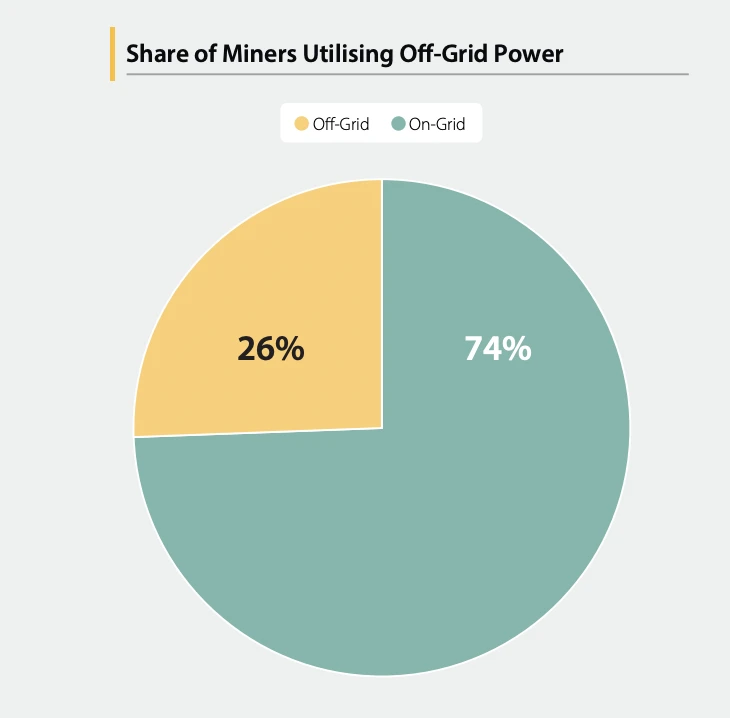
一、 26% 的挖矿来自“离网”电力,绿色能源更常见

一个很重要的新发现是,全球有 26% 的比特币挖矿算力来自“离网”能源(即不接入主流电网的能源)。这些矿场大多建在电力成本更低、接近清洁能源产地的区域,比如水电丰富的山区、风能强劲的高原、地热资源充沛的地区,甚至还有直接用天然气余气发电的。

相比之下,早期的报告大多默认挖矿就是“上网”行为,忽视了这部分“离网”矿工的存在。而实际上,离网挖矿反而更有可能使用可再生能源或废能利用方式,对环境的影响相对更小。

剑桥最新报告:比特币挖矿能源结构已悄然改变

二、碳排强度大幅下降,比许多传统行业都低

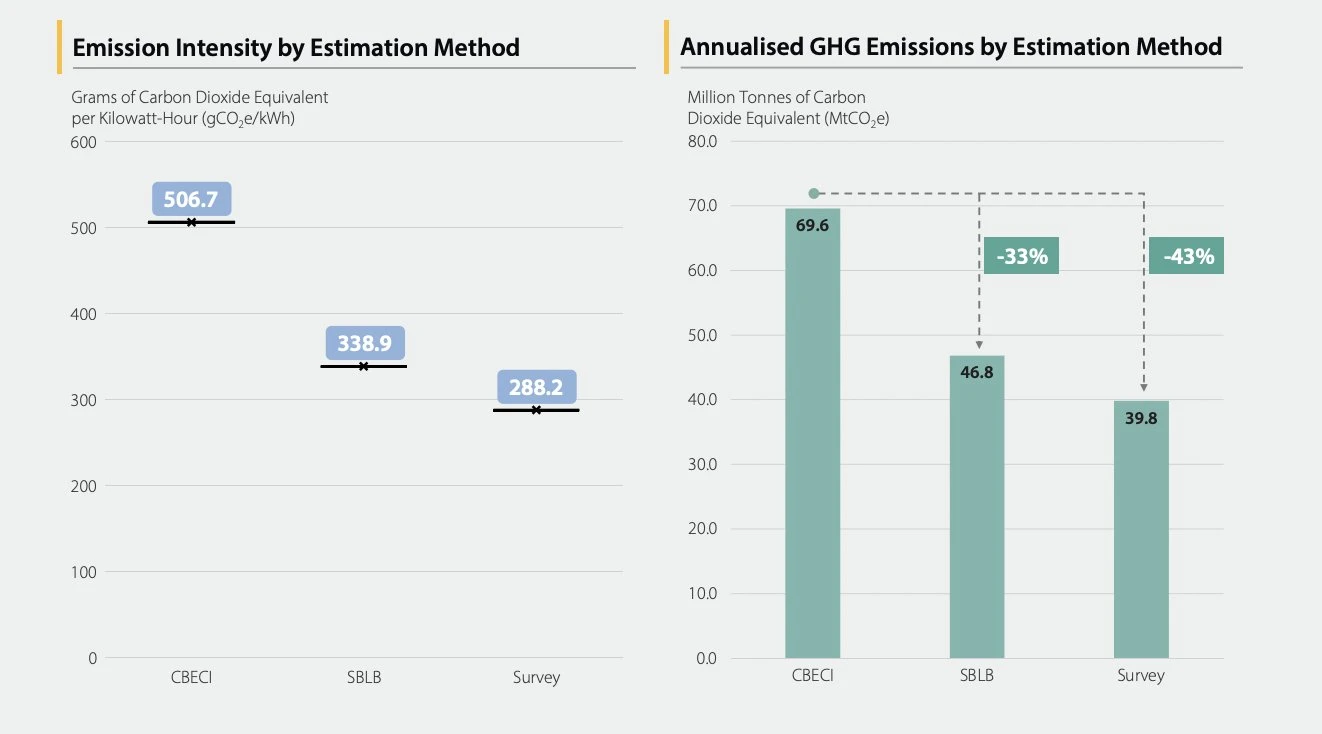
在碳排放方面,这次报告给出一个最新估算:比特币网络每度电产生的碳排为 288.2 克 CO₂e/kWh。这个数值已经比很多大型传统产业要低,而且和独立研究员 Daniel Batten 的估值(266 克)也非常接近,说明数据基本靠谱。

剑桥最新报告:比特币挖矿能源结构已悄然改变

更重要的是,比特币全网的年度碳排总量约为 3980 万吨 CO₂e,这个数值比很多人想象的都要低,而且过去四年基本没有显著增长。这主要得益于两个方面:

  • 挖矿机器本身效率越来越高,单位能耗的算力越来越强;

  • 越来越多矿工主动迁移到使用清洁能源的地区。

剑桥最新报告:比特币挖矿能源结构已悄然改变

三、甲烷减排手段开始显效, 5.5% 排放已被抵消

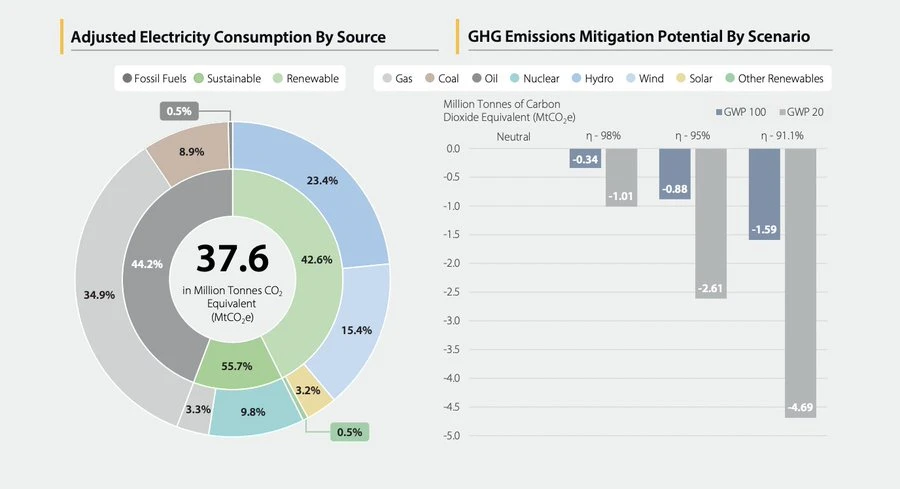
除了“用什么电”之外,挖矿行业正在开始用一些更“激进”的减碳手段。比如,一些矿企直接使用油气田中“本来要被烧掉”的天然气余气(Flare Gas)来发电挖矿。这样一来,不但挖到了矿,还避免了甲烷直接排入大气。

将这种“负碳能源”计算进去后,比特币网络的净排放降到 3760 万吨 CO₂e,比最初的数据再降了大约 5.5% 。这部分减排贡献,已经不容忽视。

剑桥最新报告:比特币挖矿能源结构已悄然改变

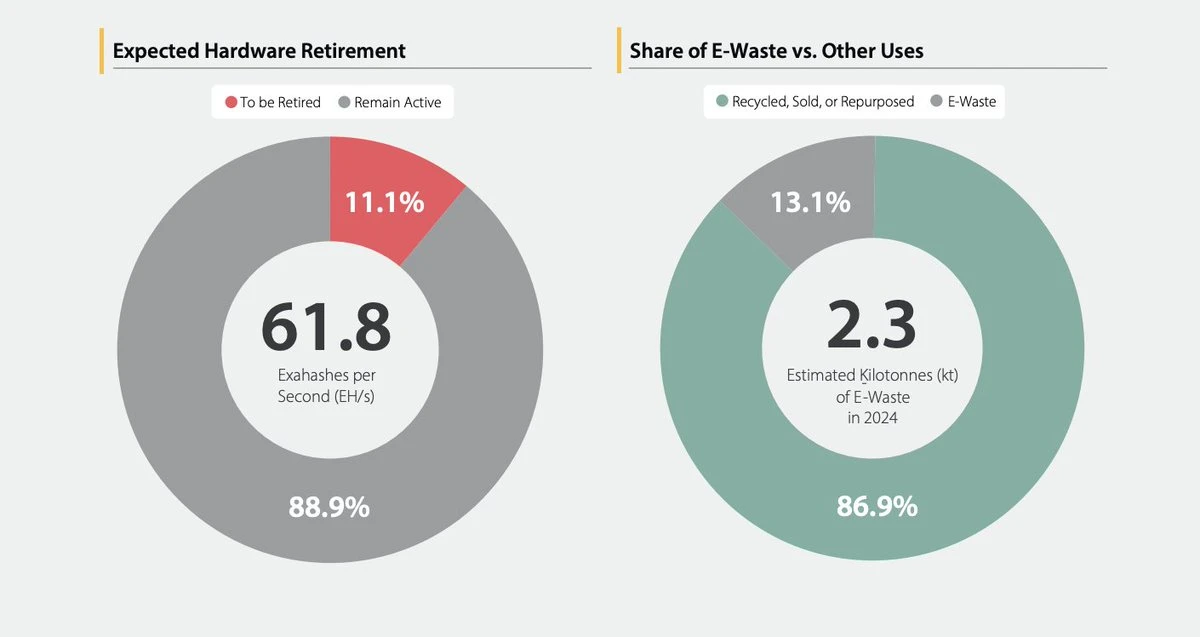
四、矿机回收率高达 86.9% ,电子废弃物处理优于多数行业

很多人会担心,比特币挖矿设备更新快,会不会产生很多电子垃圾?这次报告也对这个问题给出了回应:

  • 86.9% 的设备被回收、转售或再利用,并没有直接报废;

  • 只有 3.2% 的企业没有专门的电子废弃物管理方案。

这说明比特币挖矿行业在环保这块的意识,其实比外界想象的要高得多。

剑桥最新报告:比特币挖矿能源结构已悄然改变

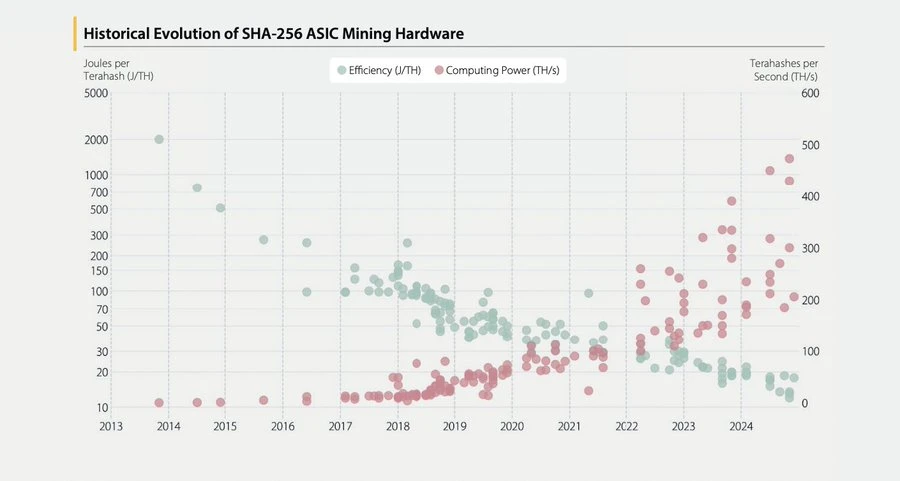
五、挖矿设备越来越高效,很多人低估了这点

剑桥团队还特别提到,很多过去批评比特币“耗能高”的观点,其实忽略了一个关键变量:设备效率一直在进步。

从早期的 CPU/GPU,到 ASIC 专用芯片,每一次迭代都会带来单位能耗的算力提升。就像当年评论互联网“太耗电”的人没考虑摩尔定律一样,现在也有不少人忽视了矿机进步带来的能效革命。

剑桥最新报告:比特币挖矿能源结构已悄然改变

六、比特币的“非法用途”正在减少,而不是增加

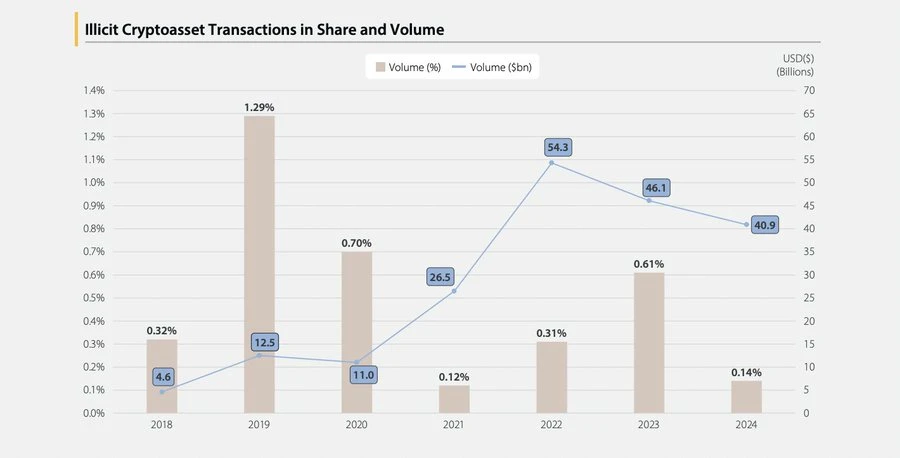
报告还对比特币在非法活动中的使用情况做了说明:数据显示,用于非法用途的比例在 2019 年达到峰值,绝对数量在 2022 年见顶,如今两个指标都在下降中。

剑桥最新报告:比特币挖矿能源结构已悄然改变

这份报告是对比特币“污名化”认知的一次正面纠偏。它打破了“比特币=化石能源”这种过时的印象,也为政策制定者、监管机构、媒体提供了新的事实基础。

Trending Cryptos

Related Reads

Crypto Payment Cards with $1.5 Billion Monthly Transaction Volume, Stuck in the 1990s

Monthly crypto payment card transaction volume has reached $15 billion, but the industry's development stage is comparable to debit cards in the 1990s, before they became a mainstream financial staple. A key limitation is the lack of established daily financial relationships, such as direct salary deposits and recurring bill payments, with crypto wallets. Despite annualized transaction volumes of approximately $18 billion, the market is concentrated and immature. The leading provider, RedotPay, commands over half the market share. User adoption is heavily skewed towards emerging markets like Bangladesh, India, and Nigeria, where access to USD and stable financial services is limited, rather than developed economies. The sector features four primary business models: 1) Card-issuing infrastructure providers, 2) Exchange-affiliated cards for user retention, 3) Decentralized wallet/DeFi cards with self-custody but high complexity, and 4) Stablecoin-focused digital banks, which dominate transaction volume by offering integrated financial services. The article argues that a pure payment functionality is insufficient for long-term success, mirroring the historical trajectory of traditional debit cards. Future winners will need to: 1) Control the upstream flow of funds, 2) Secure defensible niches in underserved markets, and 3) Most crucially, build core account relationships that integrate into users' daily financial lives. Without this evolution, crypto cards risk remaining niche prepaid tools rather than becoming universal financial infrastructure.

Foresight News5m ago

Crypto Payment Cards with $1.5 Billion Monthly Transaction Volume, Stuck in the 1990s

Foresight News5m ago

$7.8 Billion in Theft and Losses Reveals the Truth: Security Costs Have Become an Unavoidable Liquidity Tax for DeFi

"7.8 Billion in Thefts Reveals the Truth: Security Costs Have Become DeFi's Unavoidable 'Liquidity Tax'" A summary of Q2 2026 data reveals that security risks are now a fundamental capital cost in DeFi, directly impacting user returns and liquidity decisions. DeFiLlama recorded 88 hacking incidents with quantified losses totaling $780.3 million in Q2. April was the worst month with $644.8 million lost. DeFi protocol attacks accounted for $735.8 million, while cross-chain bridge exploits resulted in $354.4 million in losses (note: some event categorizations overlap). Cumulatively, DeFi hacks have reached $7.85 billion, with bridge losses at $3.26 billion. The quarter highlighted two primary risk categories: high-value infrastructure vulnerabilities (e.g., bridges, oracles, admin keys) causing massive single losses, and more frequent contract logic bugs. This signals a critical market shift: from post-incident analysis to preemptive pricing of risk. Users and liquidity providers now implicitly factor in the security of the entire asset pathway—not just pool APY—into their decisions. This hidden "risk premium" manifests through wider spreads, higher liquidity incentives, and capital migration towards perceived safer routes. Cross-chain bridge risks, responsible for over $353 million in Q2 losses, exemplify this change. Asset routing credibility is now part of the transaction. Following incidents like KelpDAO and THORChain, markets are demanding safer bridges, asset insurance, and clearer risk disclosure, increasing the cost of capital for riskier pathways. Consequently, security spending is transforming from a defensive cost into a core distribution cost for attracting liquidity. Protocols must invest more in audits, bug bounties, real-time monitoring, and insurance to remain competitive. Users are increasingly demanding transparency about fund flow paths, associated risks, and contingency plans. The key indicators for the industry's direction will be whether capital continues consolidating in trusted channels, if projects delay launches for enhanced audits, if insurance premiums rise, and if aggregators start displaying security risk metrics. Q2 2026 may be remembered not just as a bad period, but as the point when DeFi underwent a fundamental asset risk repricing, where security became a persistent,隐性 tax on all on-chain activity.

Foresight News34m ago

$7.8 Billion in Theft and Losses Reveals the Truth: Security Costs Have Become an Unavoidable Liquidity Tax for DeFi

Foresight News34m ago

Breaking News: The "Worker's Edition" Claude 5 Is Here, Everyone Can Use It

BREAKING: Claude Sonnet 5, dubbed "Fennec," is now the default model for all Free and Pro users. This mid-tier model boasts the strongest Agent capabilities in the Sonnet line yet, with performance rivaling the flagship Opus 4.8. It features autonomous planning and can utilize browser and terminal tools—capabilities previously exclusive to costly, large models. Key benchmarks highlight significant gains over its predecessor, Sonnet 4.6, in reasoning, tool use, coding, and knowledge work. Sonnet 5 scores 63.2% on SWE-bench Pro (surpassing GPT-5.5's 58.6%), 80.4% on Terminal-Bench 2.1, and 57.4% on Humanity's Last Exam (just 0.5% behind Opus 4.8). It even slightly outperforms Opus 4.8 in some knowledge tasks. Anthropic positions it as delivering ~90% of Opus's capability at a fraction of the cost. Pricing is aggressive: a limited-time promotional rate of $2 per million input tokens and $10 per million output tokens (reverting to $3/$15 after August 31). This undercuts Opus 4.8 ($5/$25) and GPT-5.5 ($5/$30). However, a new tokenizer may increase token counts by 1.0-1.35x, affecting final costs post-promotion. Notably, Sonnet 5 excels in security, with a mere 0.93% browser injection attack success rate, outperforming Mythos 5 and Opus 4.8. Its prompt injection defense matches Opus 4.8 at 0.19%. Launching amid uncertainty around the region-restricted Fable 5, Sonnet 5 is globally available. It targets the mid-market, offering near-flagship performance at a competitive price, effectively lowering the barrier for multi-Agent development and presenting a compelling alternative for cost-conscious developers.

marsbit49m ago

Breaking News: The "Worker's Edition" Claude 5 Is Here, Everyone Can Use It

marsbit49m ago

Trading

Spot

Hot Articles

What is $BITCOIN

DIGITAL GOLD ($BITCOIN): A Comprehensive Analysis Introduction to DIGITAL GOLD ($BITCOIN) DIGITAL GOLD ($BITCOIN) is a blockchain-based project operating on the Solana network, which aims to combine the characteristics of traditional precious metals with the innovation of decentralized technologies. While it shares a name with Bitcoin, often referred to as “digital gold” due to its perception as a store of value, DIGITAL GOLD is a separate token designed to create a unique ecosystem within the Web3 landscape. Its goal is to position itself as a viable alternative digital asset, although specifics regarding its applications and functionalities are still developing. What is DIGITAL GOLD ($BITCOIN)? DIGITAL GOLD ($BITCOIN) is a cryptocurrency token explicitly designed for use on the Solana blockchain. In contrast to Bitcoin, which provides a widely recognized value storage role, this token appears to focus on broader applications and characteristics. Notable aspects include: Blockchain Infrastructure: The token is built on the Solana blockchain, known for its capacity to handle high-speed and low-cost transactions. Supply Dynamics: DIGITAL GOLD has a maximum supply capped at 100 quadrillion tokens (100P $BITCOIN), although details regarding its circulating supply are currently undisclosed. Utility: While precise functionalities are not explicitly outlined, there are indications that the token could be utilized for various applications, potentially involving decentralized applications (dApps) or asset tokenization strategies. Who is the Creator of DIGITAL GOLD ($BITCOIN)? At present, the identity of the creators and development team behind DIGITAL GOLD ($BITCOIN) remains unknown. This situation is typical among many innovative projects within the blockchain space, particularly those aligning with decentralized finance and meme coin phenomena. While such anonymity may foster a community-driven culture, it intensifies concerns about governance and accountability. Who are the Investors of DIGITAL GOLD ($BITCOIN)? The available information indicates that DIGITAL GOLD ($BITCOIN) does not have any known institutional backers or prominent venture capital investments. The project seems to operate on a peer-to-peer model focused on community support and adoption rather than traditional funding routes. Its activity and liquidity are primarily situated on decentralized exchanges (DEXs), such as PumpSwap, rather than established centralized trading platforms, further highlighting its grassroots approach. How DIGITAL GOLD ($BITCOIN) Works The operational mechanics of DIGITAL GOLD ($BITCOIN) can be elaborated on based on its blockchain design and network attributes: Consensus Mechanism: By leveraging Solana’s unique proof-of-history (PoH) combined with a proof-of-stake (PoS) model, the project ensures efficient transaction validation contributing to the network's high performance. Tokenomics: While specific deflationary mechanisms have not been extensively detailed, the vast maximum token supply implies that it may cater to microtransactions or niche use cases that are still to be defined. Interoperability: There exists the potential for integration with Solana’s broader ecosystem, including various decentralized finance (DeFi) platforms. However, the details regarding specific integrations remain unspecified. Timeline of Key Events Here is a timeline that highlights significant milestones concerning DIGITAL GOLD ($BITCOIN): 2023: The initial deployment of the token occurs on the Solana blockchain, marked by its contract address. 2024: DIGITAL GOLD gains visibility as it becomes available for trading on decentralized exchanges like PumpSwap, allowing users to trade it against SOL. 2025: The project witnesses sporadic trading activity and potential interest in community-led engagements, although no noteworthy partnerships or technical advancements have been documented as of yet. Critical Analysis Strengths Scalability: The underlying Solana infrastructure supports high transaction volumes, which could enhance the utility of $BITCOIN in various transaction scenarios. Accessibility: The potential low trading price per token could attract retail investors, facilitating wider participation due to fractional ownership opportunities. Risks Lack of Transparency: The absence of publicly known backers, developers, or an audit process may yield skepticism regarding the project's sustainability and trustworthiness. Market Volatility: The trading activity is heavily reliant on speculative behavior, which can result in significant price volatility and uncertainty for investors. Conclusion DIGITAL GOLD ($BITCOIN) emerges as an intriguing yet ambiguous project within the rapidly evolving Solana ecosystem. While it attempts to leverage the “digital gold” narrative, its departure from Bitcoin's established role as a store of value underscores the need for a clearer differentiation of its intended utility and governance structure. Future acceptance and adoption will likely depend on addressing the current opacity and defining its operational and economic strategies more explicitly. Note: This report encompasses synthesised information available as of October 2023, and developments may have transpired beyond the research period.

537 Total ViewsPublished 2025.05.13Updated 2025.05.13

What is $BITCOIN

Discussions

Welcome to the HTX Community. Here, you can stay informed about the latest platform developments and gain access to professional market insights. Users' opinions on the price of BTC (BTC) are presented below.

活动图片