2025 年比特币战略储备法案

marsbitPublished on 2024-11-17Last updated on 2024-11-18

注:Satoshi Action Fund 首席执行官 Dennis Porter 在社交媒体上发文表示,该机构已公开其比特币战略储备法案。 据悉,宾夕法尼亚州众议院此前于 10 月 25 日通过的“比特币权利”法案即由比特币倡导组织 Satoshi Action Fund 起草,是帮助立法者了解区块链技术和比特币细微差别的最新举措。

战略性比特币储备是政府持有的安全的比特币基金,旨在保护财富和金融稳定。与黄金储备类似,比特币储备可以对冲货币贬值和经济不确定性。它在危机时期提供了灵活性,因为比特币的去中心化性质和有限的供应使其能够抵御通胀和地缘政治风险。通过将部分州或国家储备持有为比特币,政府可以实现资产多元化,减少对法定货币的依赖,并将自己定位在金融创新的前沿——确保他们为数字经济的发展做好准备。


2025年比特币战略储备法案


第1节. 立法调查

州立法机构得出以下结论:

  • 通货膨胀已经侵蚀了由州财政管理的州基金及州退休基金中资产的购买力。这种侵蚀减损了州储备的价值,影响了州、纳税人及居民的财务稳定和经济安全。
  • 尽管州政府无法直接控制国家的货币供应量或影响通胀的政策,但州有责任保障其财务资源免受通胀及其他经济不确定性的影响。
  • 在过去16年的历史中,比特币的价值大幅上升,市值已超过一万亿美元。
  • 比特币正日益被接受为一种国际交换媒介,包括美国在内的世界各国的财政部门也持有比特币。
  • 比特币被主权国家及像贝莱德(Blackrock)、富达(Fidelity)和富兰克林邓普顿(Franklin Templeton)等投资顾问视为对抗通胀的资产。
  • “此处应插入州名”州应当拥有如比特币这样的工具,以抵御通货膨胀。


第2节. 立法目的

立法机关的意图在于授权州财政和养老基金:

  1. 允许将比特币和其他可能的数字资产纳入,作为保值手段并提供对抗通胀的保护,从而保护州基金的购买力。
  2. 确保州财政和养老基金的投资策略与提高州经济安全和财务韧性的目标一致。
  3. 保持投资灵活性:允许根据变化的经济状况和可能提供更好保护或收益的新兴机会灵活作出投资决策。


第3节. 定义

在本章中,以下术语具有如下含义:

  1. "交易所交易产品(ETP)":指任何经证券交易委员会、商品期货交易委员会或州银行和证券部门批准的在美国监管的交易所交易的金融工具,其价值来自于包括股票、债券、商品或指数在内的基础资产池。
  2. "比特币":指2009年根据中本聪的白皮书《比特币:一种点对点电子现金系统》推出的去中心化数字货币。比特币也指基于比特币的交易所交易产品,该产品由证券交易委员会监管。
  3. "数字资产":指虚拟货币、加密货币、原生电子资产,包括稳定币和非同质化代币(NFT)等,仅通过数字形式授予经济、所有权或访问权利或权限的资产。
  4. "私钥":指用于在区块链上签署交易的唯一加密数据元素,仅为私钥持有者所知。
  5. "安全托管解决方案":指具有以下所有特征的技术产品或混合产品与服务:
  • 加密私钥仅由政府实体知道和访问。
  • 加密私钥仅在加密环境中,并只能通过端到端加密的渠道访问。
  • 加密私钥绝不会由智能手机持有、访问或控制。
  • 存储加密私钥的任何硬件至少需位于两个地理分散的特别指定安全数据中心内。
  • 安全托管解决方案强制执行多方治理结构以授权交易,执行用户访问控制,并记录所有用户发起的操作。
  • 安全托管解决方案的提供者实施了灾难恢复协议,以确保在提供者无法使用的情况下,客户能继续访问资产。
  • 安全托管解决方案定期接受代码审计和渗透测试,任何发现的漏洞都应及时修复。
  1. "合格托管人":指任何联邦或州特许的银行、信托公司、特定用途的存托机构或由州监管的公司,这些公司为经过批准的交易所交易产品托管数字资产。


第4节

  1. 州财政部长可以用以下基金投资比特币:
  • 州一般基金
  • 预算稳定储备基金
  • 州投资基金
  • 任何由立法机关认定合适的其他州基金
  1. 州财政部长投资比特币的公共基金金额不得超过该账户公共资金总额的10%。
  2. 第4.1节所列的任何基金所获取的数字资产应通过以下方式持有:
  • 由州财政部长直接通过安全托管解决方案持有;
  • 由合格托管人代表州持有;或
  • 以注册投资公司发行的交易所交易产品形式持有。
  1. 如果贷款数字资产不会增加州的财务风险,财政部长可根据制定的规则贷款该数字资产以为州带来进一步回报。


第5节

所有以比特币支付的税费应转入州的一般基金。州一般基金应以美元补偿指定用于合格数字资产的任何基金。


第6节

任何州退休基金可投资于已被证券交易委员会、商品期货交易委员会或州证券办公室正式注册的交易所交易产品。

Trending Cryptos

Related Reads

Are the Frantic Acquisitions of Crypto Companies by Giants Good or Bad?

In a bear market, giants are actively acquiring crypto companies. Recent months have seen at least five major deals: Samsung Securities bought a 2% stake in Upbit operator Dunamu; Robinhood acquired WonderFi for $180 million to enter the Canadian market; Figure purchased Kiavi for $717 million to expand into on-chain real estate credit; Franklin Templeton bought 250Digital to launch Franklin Crypto; and Blockworks acquired data platform Messari at a steep discount—over 90% less than its 2022 $300 million valuation. These moves highlight a strategic shift. Cash-rich giants are consolidating resources at low cost, targeting companies with established compliance frameworks to navigate tightening global regulations. Acquisitions like WonderFi and the Upbit stake provide immediate market access and licensed user bases. Figure's deal signals real-world asset (RWA) tokenization moving from concept to large-scale implementation, with Kiavi's $7+ billion annual transaction volume being integrated into on-chain capital markets. Franklin Crypto's launch targets institutional investors like pension funds, offering them tailored, compliant crypto strategies. For these strategic players, bear markets present an ideal entry point: valuations are depressed, speculative noise is minimized, and they can acquire robust technology and compliance infrastructure at a fraction of the cost. This acquisition wave marks a transitional phase for crypto—from a wild frontier toward an institutional, regulated financial system. Giants are positioning themselves to capture future growth when macroeconomic conditions and liquidity improve, leaving latecomers behind.

marsbit1h ago

Are the Frantic Acquisitions of Crypto Companies by Giants Good or Bad?

marsbit1h ago

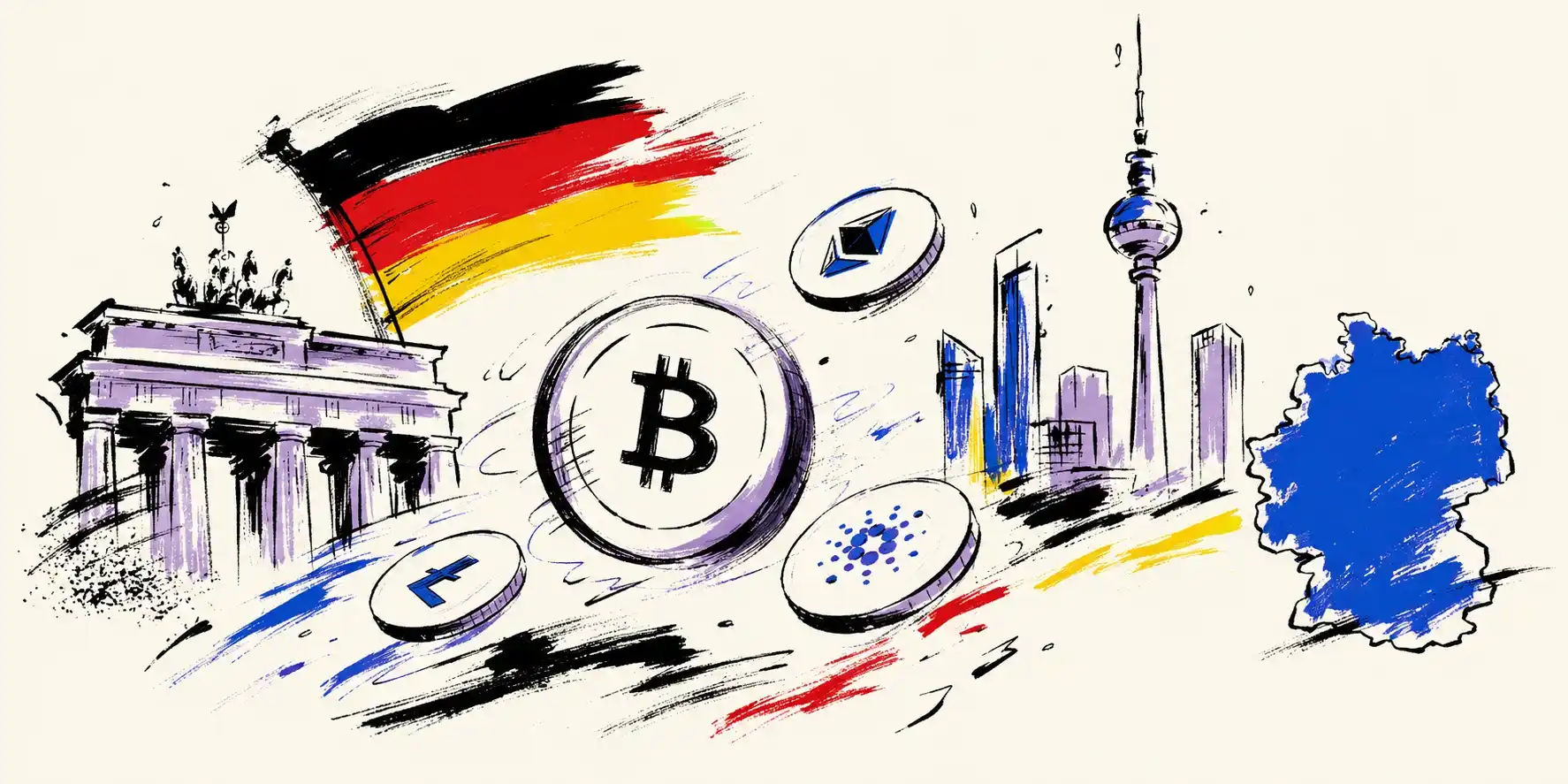
In the MiCA Era, Europe's New Cryptography Landscape: Why is Germany Taking Center Stage?

With MiCA's transitional arrangements concluding, Europe's crypto industry has undergone a regulatory consolidation. Post-MiCA, platforms must secure CASP authorization to operate compliantly within the EU. As of July 1st, only about 12% of crypto firms have received authorization, with Germany emerging as a key player, holding 57 authorizations (roughly 23% of the EU total). This positions Germany as a primary compliance gateway to the EU's unified market. Germany's advantage stems from its established, function-based regulatory framework, which integrated crypto activities into existing banking, securities, and payment systems pre-MiCA. This allowed a smoother transition and attracted both domestic platforms (like Bitcoin.de, BISON) and international ones (like Coinbase Germany). A distinctive trend is German banks becoming direct retail entry points for crypto services. Examples include DZ Bank integrating "meinKrypto" into its VR Banking App and the Sparkassen savings bank network planning to offer crypto trading via DekaBank. This mainstreams crypto access for ordinary users. Beyond trading, Germany is evolving into a digital asset infrastructure hub. Deutsche Börse Group's Clearstream is developing a next-generation platform for issuing, settling, and servicing both traditional and tokenized securities. Furthermore, German banks like DekaBank and DZ Bank are key participants in the Qivalis project, a European initiative for a regulated euro stablecoin, positioning Germany at the intersection of critical future capabilities like custody, settlement, and cross-border services.

marsbit1h ago

In the MiCA Era, Europe's New Cryptography Landscape: Why is Germany Taking Center Stage?

marsbit1h ago

Trading

Spot

Hot Articles

What is $BITCOIN

DIGITAL GOLD ($BITCOIN): A Comprehensive Analysis Introduction to DIGITAL GOLD ($BITCOIN) DIGITAL GOLD ($BITCOIN) is a blockchain-based project operating on the Solana network, which aims to combine the characteristics of traditional precious metals with the innovation of decentralized technologies. While it shares a name with Bitcoin, often referred to as “digital gold” due to its perception as a store of value, DIGITAL GOLD is a separate token designed to create a unique ecosystem within the Web3 landscape. Its goal is to position itself as a viable alternative digital asset, although specifics regarding its applications and functionalities are still developing. What is DIGITAL GOLD ($BITCOIN)? DIGITAL GOLD ($BITCOIN) is a cryptocurrency token explicitly designed for use on the Solana blockchain. In contrast to Bitcoin, which provides a widely recognized value storage role, this token appears to focus on broader applications and characteristics. Notable aspects include: Blockchain Infrastructure: The token is built on the Solana blockchain, known for its capacity to handle high-speed and low-cost transactions. Supply Dynamics: DIGITAL GOLD has a maximum supply capped at 100 quadrillion tokens (100P $BITCOIN), although details regarding its circulating supply are currently undisclosed. Utility: While precise functionalities are not explicitly outlined, there are indications that the token could be utilized for various applications, potentially involving decentralized applications (dApps) or asset tokenization strategies. Who is the Creator of DIGITAL GOLD ($BITCOIN)? At present, the identity of the creators and development team behind DIGITAL GOLD ($BITCOIN) remains unknown. This situation is typical among many innovative projects within the blockchain space, particularly those aligning with decentralized finance and meme coin phenomena. While such anonymity may foster a community-driven culture, it intensifies concerns about governance and accountability. Who are the Investors of DIGITAL GOLD ($BITCOIN)? The available information indicates that DIGITAL GOLD ($BITCOIN) does not have any known institutional backers or prominent venture capital investments. The project seems to operate on a peer-to-peer model focused on community support and adoption rather than traditional funding routes. Its activity and liquidity are primarily situated on decentralized exchanges (DEXs), such as PumpSwap, rather than established centralized trading platforms, further highlighting its grassroots approach. How DIGITAL GOLD ($BITCOIN) Works The operational mechanics of DIGITAL GOLD ($BITCOIN) can be elaborated on based on its blockchain design and network attributes: Consensus Mechanism: By leveraging Solana’s unique proof-of-history (PoH) combined with a proof-of-stake (PoS) model, the project ensures efficient transaction validation contributing to the network's high performance. Tokenomics: While specific deflationary mechanisms have not been extensively detailed, the vast maximum token supply implies that it may cater to microtransactions or niche use cases that are still to be defined. Interoperability: There exists the potential for integration with Solana’s broader ecosystem, including various decentralized finance (DeFi) platforms. However, the details regarding specific integrations remain unspecified. Timeline of Key Events Here is a timeline that highlights significant milestones concerning DIGITAL GOLD ($BITCOIN): 2023: The initial deployment of the token occurs on the Solana blockchain, marked by its contract address. 2024: DIGITAL GOLD gains visibility as it becomes available for trading on decentralized exchanges like PumpSwap, allowing users to trade it against SOL. 2025: The project witnesses sporadic trading activity and potential interest in community-led engagements, although no noteworthy partnerships or technical advancements have been documented as of yet. Critical Analysis Strengths Scalability: The underlying Solana infrastructure supports high transaction volumes, which could enhance the utility of $BITCOIN in various transaction scenarios. Accessibility: The potential low trading price per token could attract retail investors, facilitating wider participation due to fractional ownership opportunities. Risks Lack of Transparency: The absence of publicly known backers, developers, or an audit process may yield skepticism regarding the project's sustainability and trustworthiness. Market Volatility: The trading activity is heavily reliant on speculative behavior, which can result in significant price volatility and uncertainty for investors. Conclusion DIGITAL GOLD ($BITCOIN) emerges as an intriguing yet ambiguous project within the rapidly evolving Solana ecosystem. While it attempts to leverage the “digital gold” narrative, its departure from Bitcoin's established role as a store of value underscores the need for a clearer differentiation of its intended utility and governance structure. Future acceptance and adoption will likely depend on addressing the current opacity and defining its operational and economic strategies more explicitly. Note: This report encompasses synthesised information available as of October 2023, and developments may have transpired beyond the research period.

684 Total ViewsPublished 2025.05.13Updated 2025.05.13

What is $BITCOIN

Discussions

Welcome to the HTX Community. Here, you can stay informed about the latest platform developments and gain access to professional market insights. Users' opinions on the price of BTC (BTC) are presented below.

活动图片