加密 ETF 周报 | 上周加密 ETF 表现惨淡,全球比特币现货 ETF 持仓减少 1.08 万枚

链捕手Published on 2024-09-09Last updated on 2024-09-09

整理:Fairy,ChainCatcher

编辑:Marco,ChainCatcher


上周加密现货 ETF 表现

上周,全球比特币现货 ETF 流出加剧,表现惨淡,持仓减少 1.08 万枚BTC。

除灰度外,美国其他比特币现货ETF减持了 6744 枚 BTC,成为流出的主力军。仅德国比特币现货ETF实现净流入,小幅增持 22 枚BTC。

数据来@Phyrex_Ni

 美国比特币现货ETF净流出7.06亿美元

上周,美国比特币现货ETF净流出7.06亿美元。贝莱德 IBIT 和 WisdomTree  BTCW 连续四天无资金流动。其余ETF有资金流动时几乎都为净流出,反映出美国投资者情绪非常低迷。

上周净流出量最多的为比特币现货 ETF 为富达 FBTC ,净流出 4.04 亿美元,资产净值降至91.7 亿美元。其次为灰度 GBTC 净流出 1.6 亿美元,资产净值降至119.2 亿美元。

来源:Farside Investors

超半数的美国以太坊现货 ETF 无资金流动

上周,美国以太坊现货 ETF 净流出 9110 万美元,是前一周的7 倍。灰度 ETHE 净流出1.11亿美元,资金外流再次加剧。

上周3支以太坊现货 ETF 为净流入状态,但资金量都较小:

  • 贝莱德 ETHA 净流入 470 万美元,资产净值为 39.1亿美元;
  • 富达 FETH 净流入 490 万美元,资产净值为 2.9亿美元;
  • 灰度 ETH 净流入 1030 万美元,资产净值为 8.29亿美元;

超过半数的ETF 无资金流动,显示出以太坊现货 ETF 流动性依然不足。

(注:美国比特币现货 ETF 和以太坊现货 ETF 9 月2 日数据均未出,或会对整体数据造成影响)
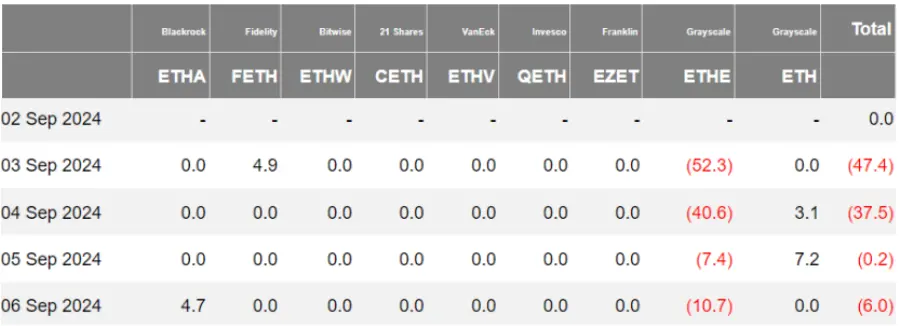
来源:Farside Investors

 香港加密 ETF 无资金流动

 上周,香港比特币现货 ETF和以太坊现货 ETF 都无资金流动,这是首次出现该状况。

成交额方面,比特币现货ETF 于9月2日和9月4日的成交额较高,分别为129万美元和131万美元,其余两天稳定在60万美元左右。以太坊现货 ETF  9 月5 日成交额较高,为 60.2万美元。

(注:香港 9月6日因台风原因港股休市,所以当日加密 ETF 无交易)

数据:SoSoValue

上周加密 ETF 的动态一览

巴西已拥有 16 只加密货币 ETF巴西首个加密 ETF 于 2020 年获批,管理公司 BLP 于 2017 年在巴西推出加密投资基金。

BLP 、Hashdex 和 QR Asset 为巴西主要的加密货币基金管理公司。16 只加密货币 ETF 中一半以上来自 Hashdex(6只基金)和 QR Asset(4只基金)。Hashdex 和 QR 加密资产风险敞口高达 100%。

Monochrome 向澳交所提交以太坊 ETF 上市申请Monochrome 与 Vasco Trustees Limited 向 Cboe 澳大利亚交易所提交 Monochrome 以太坊 ETF(代码:IETH)的上市申请。 IETH 将被动持有以太坊,为散户投资者提供一个受监管的投资渠道。 IETH 将采用双重准入机制,允许投资者进行现金和实物申购赎回。

待获得上市批准后,Monochrome 预计 IETH 将于 2024 年 9 月底在 Cboe 澳大利亚交易所上市,并将在主要经纪平台上提供交易。

VanEck 宣布关闭并清算其以太坊期货 ETF (EFUT)VanEck ETF Trust 董事会批准清算和解散该基金。

VanEck 表示,由于需求不足,该公司将关闭该基金,因为现货 ETF 已占据了资金流入的主导地位。关闭的原因包括基金的业绩、流动性、管理资产和投资者兴趣等因素。

2024 年 9 月 16 日市场收盘后,基金股份将不再在上市交易所交易,并随后被摘牌。预计基金清算日期为 2024 年 9 月 23 日前后。

美SEC将7RCC现货比特币和碳信用期货ETF相关决议推迟至11 月 21 日美国证券交易委员会(SEC)宣布,将对 7RCC 现货比特币和碳信用期货 ETF 的决策推迟至 11 月 21 日。

SEC 表示,为了充分考虑拟议的规则变更及相关评论,委员会认为需要更多时间来发布批准或否决命令。

关于加密 ETF 的观点和分析

CCData:现货ETF推出以来,以太坊市场深度不升反降

CCData 的数据显示,自 7 月 23 日 9 只以太坊 ETF 首次亮相以来,以太坊的订单流动性反而下降。美国中心化交易平台 ETH 货币对的平均 5% 市场深度已下降约 20%,至约 1,400 万美元。这意味着,现货价格更容易在任一方向上移动 5%,这是流动性减少和对大订单敏感性增加的迹象。CCData 认为,市场状况不佳和季节性因素是主要原因。

平均 5% 市场深度是指资产中间市场价格 5% 以内的买卖订单金额。深度越大,流动性越强,滑点成本越低。

Galaxy Research:以太坊现货 ETF 交易量低的原因之一是主要交易柜台未提供保证金服务

Galaxy Research 最新分析指出,自以太坊 ETF 推出以来,其交易量明显低于比特币 ETF,远低于 ETH/BTC 在中心化交易所的交易量和市值比例。主要原因之一是许多交易柜台尚未对以太坊 ETF 提供保证金服务。

为排除保证金不可用等因素的影响,可以比较每组产品推出前 25 天的交易量。在这段时间里,以太坊 ETF 的交易量与比特币 ETF 的交易量比率持续下降。

Trending Cryptos

Related Reads

Valuation of $8 Billion, Up 200% in 8 Months! What's Behind Crypto-Friendly Bank Erebor Bank's Rise?

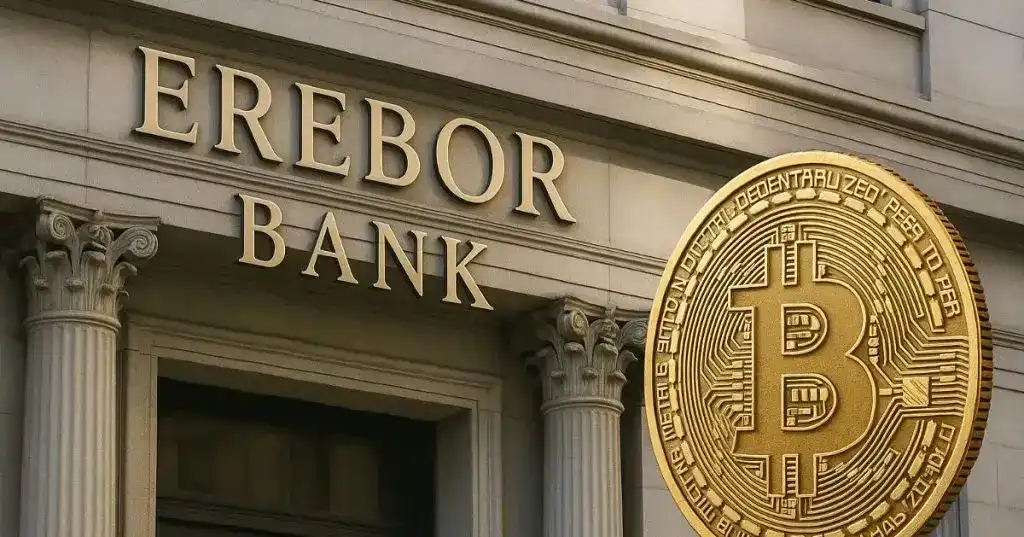
Erebor Bank, a digital bank founded by Palmer Luckey and backed by Peter Thiel, is in talks for new funding at a target valuation of $8 billion, double its $4.35 billion valuation from December. This surge is driven by explosive deposit growth, which soared from $1.1 billion in March to approximately $4.05 billion within a quarter, alongside adding nearly 400 new clients. The bank, launched in February 2026, holds a full national bank charter from the OCC, a strategic choice to avoid reliance on partner banks. It aims to serve tech startups, defense contractors, and crypto-native businesses, addressing gaps left by Silicon Valley Bank's collapse. Core promises include lending against non-traditional assets like hardware, offering 24/7 settlement, and integrating stablecoin services with traditional banking. It has already enabled stablecoin deposits and withdrawals on the Sui network. However, its current financials show minimal lending activity and a net loss, with high liquidity in cash and securities. The valuation hinges on future potential to monetize deposits through lending and crypto services. The bank's experienced management team includes veterans from Wells Fargo and crypto compliance firms. Risks are significant. Its concentrated customer base and exposure to volatile sectors like crypto and venture capital echo SVB's vulnerabilities. Its entire model depends on continued regulatory favor towards digital assets, which could shift. Erebor represents a high-profile experiment at the intersection of banking, crypto, and industrial policy, with its execution and market demand yet to be fully proven.

marsbit1h ago

Valuation of $8 Billion, Up 200% in 8 Months! What's Behind Crypto-Friendly Bank Erebor Bank's Rise?

marsbit1h ago

$8 Billion Valuation, 2x Growth in 8 Months! What Makes Crypto-Friendly Bank Erebor Bank So Special?

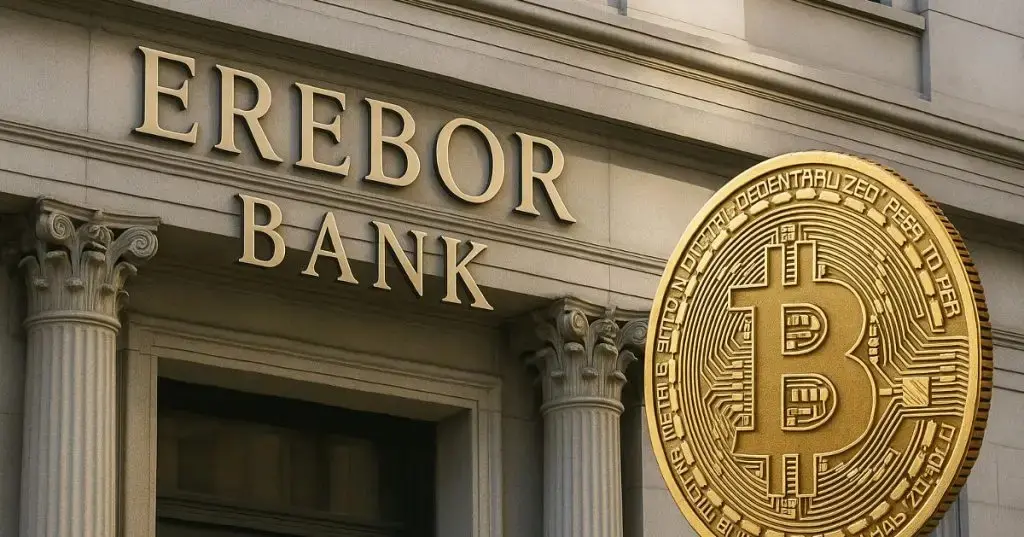
Erebor Bank, a crypto-friendly U.S. bank founded by Palmer Luckey, is reportedly in talks for a new funding round targeting a valuation of at least $8 billion, double its $4.35 billion valuation from December. Despite being operational for only a few months, its rapid growth—deposits surged from $1.1 billion in March to approximately $4.05 billion within a quarter, adding nearly 400 clients—has attracted investor interest. The bank aims to fill the void left by Silicon Valley Bank's collapse, targeting startups and businesses with non-traditional assets like defense contracts and digital tokens. Its strategy involves holding its own banking license to offer services like stablecoin deposits, payments, and 24/7 on-chain settlement. While digital assets are a core long-term focus, recent growth has been driven more by financing for U.S. manufacturing and defense sectors. Erebor's leadership combines Luckey's tech/defense background with a seasoned financial team. It received a national bank charter from the OCC in early 2026, benefiting from a favorable regulatory climate for digital assets. However, the bank faces significant risks, including reliance on a concentrated client base, exposure to crypto market volatility, potential regulatory shifts, and the unproven demand for its integrated banking model. Investors are betting on its future potential to monetize deposits through lending and crypto services, despite current losses typical for a new bank.

链捕手1h ago

$8 Billion Valuation, 2x Growth in 8 Months! What Makes Crypto-Friendly Bank Erebor Bank So Special?

链捕手1h ago

Trading

Spot

Hot Articles

What is $BITCOIN

DIGITAL GOLD ($BITCOIN): A Comprehensive Analysis Introduction to DIGITAL GOLD ($BITCOIN) DIGITAL GOLD ($BITCOIN) is a blockchain-based project operating on the Solana network, which aims to combine the characteristics of traditional precious metals with the innovation of decentralized technologies. While it shares a name with Bitcoin, often referred to as “digital gold” due to its perception as a store of value, DIGITAL GOLD is a separate token designed to create a unique ecosystem within the Web3 landscape. Its goal is to position itself as a viable alternative digital asset, although specifics regarding its applications and functionalities are still developing. What is DIGITAL GOLD ($BITCOIN)? DIGITAL GOLD ($BITCOIN) is a cryptocurrency token explicitly designed for use on the Solana blockchain. In contrast to Bitcoin, which provides a widely recognized value storage role, this token appears to focus on broader applications and characteristics. Notable aspects include: Blockchain Infrastructure: The token is built on the Solana blockchain, known for its capacity to handle high-speed and low-cost transactions. Supply Dynamics: DIGITAL GOLD has a maximum supply capped at 100 quadrillion tokens (100P $BITCOIN), although details regarding its circulating supply are currently undisclosed. Utility: While precise functionalities are not explicitly outlined, there are indications that the token could be utilized for various applications, potentially involving decentralized applications (dApps) or asset tokenization strategies. Who is the Creator of DIGITAL GOLD ($BITCOIN)? At present, the identity of the creators and development team behind DIGITAL GOLD ($BITCOIN) remains unknown. This situation is typical among many innovative projects within the blockchain space, particularly those aligning with decentralized finance and meme coin phenomena. While such anonymity may foster a community-driven culture, it intensifies concerns about governance and accountability. Who are the Investors of DIGITAL GOLD ($BITCOIN)? The available information indicates that DIGITAL GOLD ($BITCOIN) does not have any known institutional backers or prominent venture capital investments. The project seems to operate on a peer-to-peer model focused on community support and adoption rather than traditional funding routes. Its activity and liquidity are primarily situated on decentralized exchanges (DEXs), such as PumpSwap, rather than established centralized trading platforms, further highlighting its grassroots approach. How DIGITAL GOLD ($BITCOIN) Works The operational mechanics of DIGITAL GOLD ($BITCOIN) can be elaborated on based on its blockchain design and network attributes: Consensus Mechanism: By leveraging Solana’s unique proof-of-history (PoH) combined with a proof-of-stake (PoS) model, the project ensures efficient transaction validation contributing to the network's high performance. Tokenomics: While specific deflationary mechanisms have not been extensively detailed, the vast maximum token supply implies that it may cater to microtransactions or niche use cases that are still to be defined. Interoperability: There exists the potential for integration with Solana’s broader ecosystem, including various decentralized finance (DeFi) platforms. However, the details regarding specific integrations remain unspecified. Timeline of Key Events Here is a timeline that highlights significant milestones concerning DIGITAL GOLD ($BITCOIN): 2023: The initial deployment of the token occurs on the Solana blockchain, marked by its contract address. 2024: DIGITAL GOLD gains visibility as it becomes available for trading on decentralized exchanges like PumpSwap, allowing users to trade it against SOL. 2025: The project witnesses sporadic trading activity and potential interest in community-led engagements, although no noteworthy partnerships or technical advancements have been documented as of yet. Critical Analysis Strengths Scalability: The underlying Solana infrastructure supports high transaction volumes, which could enhance the utility of $BITCOIN in various transaction scenarios. Accessibility: The potential low trading price per token could attract retail investors, facilitating wider participation due to fractional ownership opportunities. Risks Lack of Transparency: The absence of publicly known backers, developers, or an audit process may yield skepticism regarding the project's sustainability and trustworthiness. Market Volatility: The trading activity is heavily reliant on speculative behavior, which can result in significant price volatility and uncertainty for investors. Conclusion DIGITAL GOLD ($BITCOIN) emerges as an intriguing yet ambiguous project within the rapidly evolving Solana ecosystem. While it attempts to leverage the “digital gold” narrative, its departure from Bitcoin's established role as a store of value underscores the need for a clearer differentiation of its intended utility and governance structure. Future acceptance and adoption will likely depend on addressing the current opacity and defining its operational and economic strategies more explicitly. Note: This report encompasses synthesised information available as of October 2023, and developments may have transpired beyond the research period.

591 Total ViewsPublished 2025.05.13Updated 2025.05.13

What is $BITCOIN

Discussions

Welcome to the HTX Community. Here, you can stay informed about the latest platform developments and gain access to professional market insights. Users' opinions on the price of BTC (BTC) are presented below.

活动图片