CLARITY Act path clears as U.S. Sheriffs drop opposition – Reasons explained!

ambcryptoPublished on 2026-07-04Last updated on 2026-07-04

Abstract

The CLARITY Act, a crypto market structure bill, has seen improved support as the Major County Sheriffs of America (MCSA) shifted its position from opposition to neutral, particularly regarding Section 604 which offers developer protections. This change addresses prior law enforcement concerns about facilitating illicit finance. However, new ethics concerns have emerged following reports that former President Donald Trump's crypto ventures yielded over $1.4 billion in 2025, including significant profits from an "Official Trump" memecoin. In response, Senator Kirsten Gillibrand has renewed calls for provisions to bar elected officials from creating their own crypto tokens, warning that such self-dealing could threaten the bill's broader goals. While the final text is expected soon with a potential Senate vote this month, analysts are split on its chances of becoming law this year, as debates over ethics provisions could potentially derail its progress.

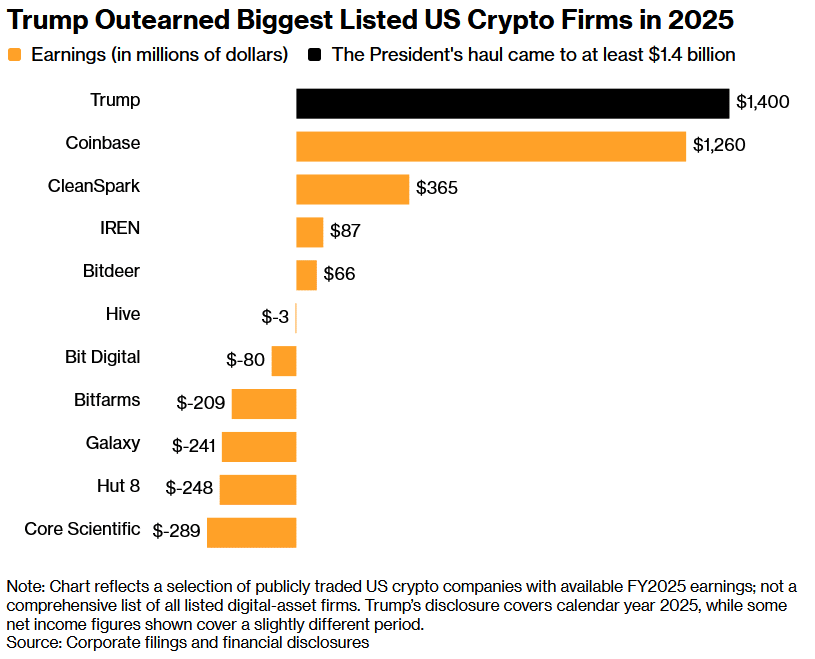
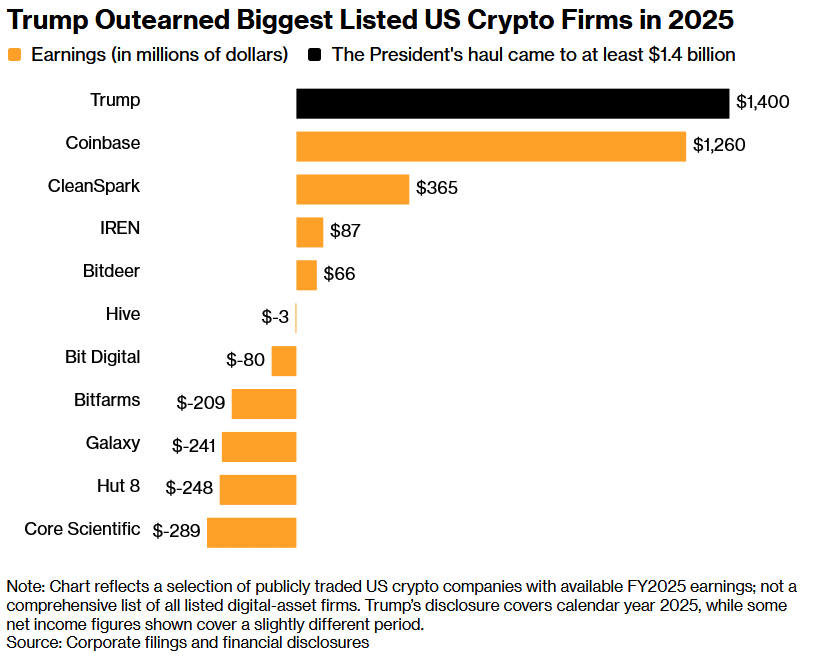
The crypto market structure bill, the CLARITY Act, has seen improved support for Section 604 (developer protections). But the ethics issue could become complicated after reports of U.S. President Donald Trump’s latest $1.4B crypto windfall.

In a letter to the Senate, the Major County Sheriffs of America (MCSA) said it has shifted its position on the bill to “neutral,” noting the ongoing talks on Section 604.

We believe there remains an opportunity to further strengthen the legislation in ways that support responsible innovation and the practical needs of state and local law enforcement.

AD

The law enforcement group further called for the framework to provide necessary resources to help federal and state officers implement the digital assets policy effectively.

In June, four different law enforcement agencies, Catholic groups, and the banking lobby opposed Section 604 of the bill, arguing that it would facilitate illicit financial flows.

As such, the neutral stance by MCSA showed improved support from some of those who previously opposed the bill.

For Coinbase CEO Brian Armstrong, the update was ‘huge,’ implying a clearer path to passage of the CLARITY Act, now that the law enforcement concerns have been addressed.

Will Trump’s $1.4B crypto profit derail CLARITY Act?

However, the ethics concerns are back on the table. Recent reports showed the Trump family’s crypto empire made over $1.4B in 2025. Over $630M of the profit was from the Official Trump memecoin.

Based on the above, Senator Kirsten Gillibrand has renewed ethics concerns and call to bar elected officials creating their own crypto tokens.

This is a commonsense requirement that should get broad bipartisan support – public officials and their spouses should not be issuing memecoins.

She added,

We cannot let self-dealing destroy an opportunity to strengthen consumer protections, crack down on illicit finance, and expand economic opportunity for the millions of Americans our financial system has left behind.

Worth noting that the ethics provisions in the CLARITY Act hit a rocky start last month. But Democrats insisted that the concerns must be addressed before they support the bill.

Reacting to Trump’s crypto windfall, Hasu, a strategic advisor at Lido, raised similar worries and noted,

Shameful is what it is. And I don’t see how it doesn’t backfire on this industry in a major way.
Source: X

The final updated CLARITY Act text was speculated to be published the July 4th weekend with a potential Senate floor vote later in the month.

While Bloomberg projected a 60% chance the bill becomes law this year, Galaxy Research is 50-50. It remains to be seen whether ethics provisions will derail the bill’s progress.


Final Summary

  • A sheriff’s group flipped its stance on the CLARITY Act from ‘opposition’ to ‘neutral’
  • However, Sen Gillibrand has renewed calls for ethics provisions after Trump’s $1.4B crypto profit


Trending Cryptos

Related Questions

QWhat is the major change in the position of the Major County Sheriffs of America (MCSA) regarding the CLARITY Act, and what was their previous stance?

AThe Major County Sheriffs of America (MCSA) has shifted its position on the CLARITY Act from 'opposition' to 'neutral'. Their previous opposition was primarily against Section 604 of the bill.

QAccording to the article, what is the primary concern that Senator Kirsten Gillibrand renewed following reports about Donald Trump's crypto profits?

ASenator Kirsten Gillibrand renewed ethics concerns, specifically calling for a ban on elected officials and their spouses creating and issuing their own cryptocurrency tokens or memecoins.

QWhat specific section of the CLARITY Act was previously opposed by law enforcement and other groups, and what was their stated reason for opposition?

ASection 604 of the CLARITY Act was opposed by four law enforcement agencies, Catholic groups, and the banking lobby in June. They argued that it would facilitate illicit financial flows.

QWhy does Coinbase CEO Brian Armstrong consider the MCSA's updated stance to be 'huge' for the CLARITY Act?

ACoinbase CEO Brian Armstrong considered the update 'huge' because it implies a clearer path to the passage of the CLARITY Act, as a major law enforcement concern has been addressed with the group moving to a neutral stance.

QWhat are the two different probability estimates mentioned in the article for the CLARITY Act becoming law this year, and who provided them?

ABloomberg projects a 60% chance the bill becomes law this year, while Galaxy Research gives it a 50-50 chance.

Related Reads

Analysis of 13F Holdings of Seven Major Funds: What Are Buffett, Duan Yongping, Li Lu, and Dan Bin Thinking?

A summary of Q2 2026 13F filings from seven major funds (Berkshire Hathaway, Duquesne Family Office, H&H International Investment, Himalaya Capital, ARK Investment, Oriental Harbor Investment Master Fund, Situational Awareness LP) reveals AI remains the central investment theme, with significant capital reallocation within the sector. Berkshire Hathaway, under Greg Abel, made its largest net stock purchases in years, heavily increasing its stake in Alphabet, signaling a strategic tilt towards tech while maintaining core holdings in consumer and financial stocks. Duquesne Family Office (Stanley Druckenmiller) rotated within semiconductors, selling Micron, Broadcom, and Intel but adding to positions in TSMC, STMicroelectronics, and AMD, while also reinvesting in cloud giants Alphabet and Amazon and cautiously re-entering Chinese tech via Baidu. H&H International Investment (Duan Yongping) and Himalaya Capital (Li Lu) both significantly increased their stakes in PDD, with Li Lu also concentrating his portfolio by selling out of several financial and energy holdings to focus on core positions like Alphabet and Berkshire. H&H also took profits from high-flying AI/tech names like Nvidia and Google, viewing the moves as valuation adjustments rather than a loss of conviction. ARK Investment (Cathie Wood) aggressively bought SpaceX upon its IPO and continued hunting for disruptive innovation across AI, energy, and biotech, while reducing its Tesla holding. Oriental Harbor Investment Master Fund (Dan Bin) executed a dramatic shift towards AI hardware, launching major new positions in Intel, SanDisk, AMD, and others while selling down software/platform holdings like Google and clearing out consumer names Apple and Tesla. Situational Awareness LP's filing, reflecting pre-liquidation positions, showed a story of missed hedging opportunities leading to significant losses. The consensus is that AI growth is continuing, but capital is actively rotating to identify the next profit centers within the value chain—from semiconductors and infrastructure to eventual commercialization. The filings, while lagging, offer a snapshot of how sophisticated investors are positioning for AI's next phase.

Odaily星球日报24m ago

Analysis of 13F Holdings of Seven Major Funds: What Are Buffett, Duan Yongping, Li Lu, and Dan Bin Thinking?

Odaily星球日报24m ago

Arthur Hayes Makes a High-Profile Comeback, Flop Labs Aims to Become the "Fuel" for the Agent Economy

Arthur Hayes, co-founder of BitMEX, has announced his return as head of a new project called Flop Labs, declaring "FLOP is food for your AI agent." This marks his first high-profile return to a leadership role since stepping back from BitMEX. Flop Labs aims to be a native monetary network and verifiable computation settlement layer for the AI Agent economy, distinguishing itself from existing AI Agent projects. Its core concept is "Proof-of-Useful-Inference," which seeks to integrate useful AI inference tasks into the blockchain consensus mechanism, allowing FLOP tokens to serve as the native currency for Agents to purchase computing resources and store memory. The ecosystem involves four key roles: Miners (provide GPU compute), Validators (verify services), Agents (consume services), and KOLs/Partners (community growth). The project promises a 100% fair launch with no presale or VC involvement. A large airdrop is planned for Q4 2026, with the genesis block targeted for Q1 2027. While the announcement has generated community excitement, particularly around the airdrop, the project is in an early conceptual stage. It currently lacks a published whitepaper, detailed tokenomics, technical specifics on its consensus mechanism, or smart contract audits. Arthur Hayes has defended the venture, separating his belief in the potential of the Agentic Economy from concerns about an AI stock bubble. The success of Flop Labs will hinge on its ability to deliver substantive technical progress and ecosystem development in the coming months.

Odaily星球日报40m ago

Arthur Hayes Makes a High-Profile Comeback, Flop Labs Aims to Become the "Fuel" for the Agent Economy

Odaily星球日报40m ago

World Chain Launches EIP-7928 Block Access Lists on Mainnet

World Chain has launched EIP-7928 block access lists on its Mainnet, becoming the first production layer-2 network to implement this standard. This deployment aims to significantly increase blockchain throughput without substantially raising the hardware requirements for validators. By providing access list data incrementally every 200 milliseconds through its flashblock architecture, World Chain enables validators to verify transactions in parallel and begin validation while a block is still being built, eliminating the need for sequential re-execution. Implemented via a runtime flag rather than a hard fork, this approach is an extension of the EIP-7928 standard, which Ethereum may incorporate in a future update. Internal benchmarks on World Chain test networks showed validation latency remained stable as throughput scaled up to one gigabit per second on standard cloud infrastructure, suggesting the potential for increased throughput without a proportional increase in computational resources for validators. This mainnet launch represents the first production use of streaming EIP-7928 block access lists and contributes to Ethereum's broader scaling strategy by expanding verification capacity while remaining accessible to independent validators. Built on the OP Stack and secured by Ethereum, World Chain is designed for scalability within the Superchain ecosystem. It focuses on applications like stablecoin finance, international remittances, and trading, utilizing World ID's proof-of-human system. The network aims to make blockchain technology widely accessible, starting with discovery and use through compatible wallets like World App.

TheNewsCrypto45m ago

World Chain Launches EIP-7928 Block Access Lists on Mainnet

TheNewsCrypto45m ago

Trading

Spot

Hot Articles

How to Buy BILL

Welcome to HTX.com! We've made purchasing Billions Network (BILL) simple and convenient. Follow our step-by-step guide to embark on your crypto journey.Step 1: Create Your HTX AccountUse your email or phone number to sign up for a free account on HTX. Experience a hassle-free registration journey and unlock all features.Get My AccountStep 2: Go to Buy Crypto and Choose Your Payment MethodCredit/Debit Card: Use your Visa or Mastercard to buy Billions Network (BILL) instantly.Balance: Use funds from your HTX account balance to trade seamlessly.Third Parties: We've added popular payment methods such as Google Pay and Apple Pay to enhance convenience.P2P: Trade directly with other users on HTX.Over-the-Counter (OTC): We offer tailor-made services and competitive exchange rates for traders.Step 3: Store Your Billions Network (BILL)After purchasing your Billions Network (BILL), store it in your HTX account. Alternatively, you can send it elsewhere via blockchain transfer or use it to trade other cryptocurrencies.Step 4: Trade Billions Network (BILL)Easily trade Billions Network (BILL) on HTX's spot market. Simply access your account, select your trading pair, execute your trades, and monitor in real-time. We offer a user-friendly experience for both beginners and seasoned traders.

3.3k Total ViewsPublished 2026.05.07Updated 2026.06.02

How to Buy BILL

Discussions

Welcome to the HTX Community. Here, you can stay informed about the latest platform developments and gain access to professional market insights. Users' opinions on the price of BILL (BILL) are presented below.

活动图片