Spot Bitcoin ETFs Investors Have “Bet On The Wrong Horse,” Peter Schiff Claims

bitcoinistPublished on 2024-09-07Last updated on 2024-09-07

Abstract

Lately, positive sentiment around the Spot Bitcoin Exchange-Traded Funds (ETFs) seems to have reduced drastically, prompting criticism from Gold advocate...

Lately, positive sentiment around the Spot Bitcoin Exchange-Traded Funds (ETFs) seems to have reduced drastically, prompting criticism from Gold advocate and economist, Peter Schiff. The economist argues that Bitcoin is a bad investment due to its inherent volatility and lack of intrinsic value when compared to more conventional assets like gold.

Spot Bitcoin ETF Investors Chose The Wrong Investment?

In a recent post on the X (formerly Twitter) platform, crypto critic Peter Schiff issued a stern warning to investors who are placing bets on spot Bitcoin ETFs that they are making a wrong investment choice. Schiff contends that the hype around the products is unwarranted since they have performed less than the Gold ETF.

According to the economist, despite a massive influx of capital observed following the launch of the spot BTC ETFs, the products have attracted gains of less than 17%. Meanwhile, with significant outflows, its Gold Exchange-Traded Fund (ETF) counterpart, GLD, has amassed gains of more than 20%.

Considering both investment vehicles, Schiff claims that spot BTC ETF investors are “betting on the wrong horse.” His comparison demonstrates his long-standing belief in gold as a better investment option over Bitcoin, the largest cryptocurrency asset.

The post read:

Since they first launched in January of this year, despite massive inflows, the new Bitcoin ETFs are up less than 17%. In contrast, GLD, the largest gold ETF, despite massive outflows, is up over 24%. It’s clear that despite all the hype, ETF investors bet on the wrong horse.

Schiff’s criticism comes in light of recent pessimism around the spot BTC ETFs, which has triggered speculations about the long-term potential of Bitcoin. It appears that the current price fluctuations of BTC have impacted investors’ sentiment as the products recorded another massive outflow after the market closed on Thursday.

Reports from Farside Investors show that the funds saw an outflow of capital worth a whopping $211 million, suggesting a decrease in adoption and reassessment of both institutional and retail investors’ exposure to the products.

Blackrock‘s BTC ETF (IBIT), Ark Invest BTC ETF (ARKB), Invesco BTC ETF (BTCO), Franklyn BTC ETF (EZBC), Valkyrie BTC ETF (BRRR), VanEck BTC ETF (HODL), and WisdonTree BTC ETF (BTCW) recorded zero inflows. Meanwhile, Fidelity BTC ETF (FBTC), Bitwise BTC ETF (BITB), and Grayscale BTC ETF (GBTC) witnessed an outflow of $149.5 million, $30 million, and $23.2 million respectively.

BTC Poised For Bullish Performance In Q4

Despite negative developments around BTC, several crypto analysts are still bullish about the crypto asset, pointing to a positive Q4. Captain Faibik predicts that the next 3 months will be very bullish for BTC, but the bulls must survive this month and maintain above the $55,000 support level.

Should the bulls succeed in holding above the level, Faibik is confident that BTC will rise again and challenge the $68,000 resistance in a few days. Furthermore, he underscored that with each retest, the $68,000 and $69,000 resistance is becoming weaker. Due to this, Faibik foresees an optimistic Q4 for BTC, urging investors to trust in the process.

Bitcoin
BTC trading at $56,074 on the 1D chart | Source: BTCUSDT on Tradingview.com
Featured image from Unsplash, chart from Tradingview.com
Godspower Owie

Godspower Owie

Godspower Owie is my name, and I work for the news platforms NewsBTC and Bitcoinist. I sometimes like to think of myself as an explorer since I enjoy exploring new places, learning new things, especially valuable ones, and meeting new people who have an impact on my life, no matter how small. I value my family, friends, career, and time. Really, those are most likely the most significant aspects of every person's existence. Not illusions, but dreams are what I pursue.

Related Reads

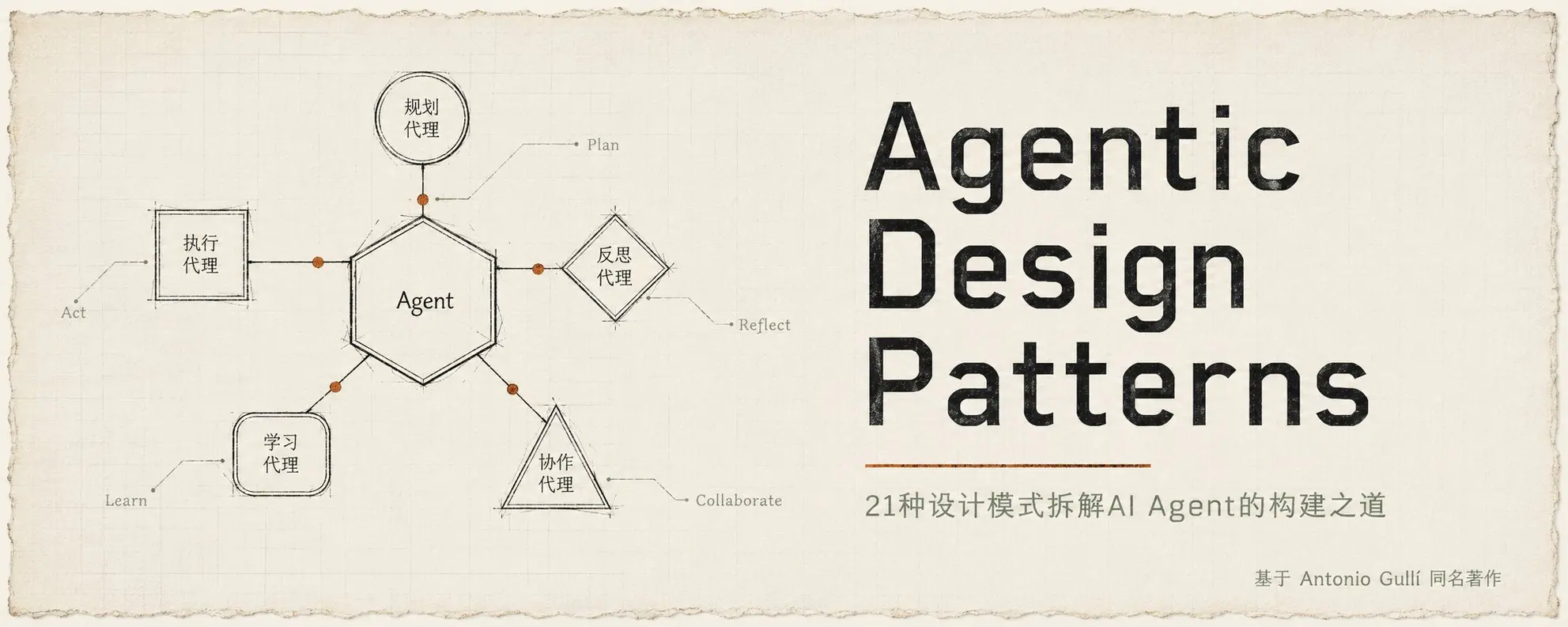
Agentic Design Patterns: A Book That Made Me Re-Understand "What Is an Agent, Really?"

"Agentic Design Patterns" is a 2025 book by Antonio Gullí, a Google engineering director, which offers a systematic framework for AI Agent development through 21 design patterns. A core contribution is the "Four Levels of Agency": Level 0 (bare LLMs) are not true agents. Level 1 agents actively decide when and how to use tools. Level 2 agents engage in strategic planning, context engineering (curating and filtering information), and self-reflection. Level 3 involves multi-agent collaboration with defined communication topologies. The book introduces **Context Engineering** as a superset of prompt engineering, managing four layers of information for the agent: system prompts, external data, implicit context (user history, environment), and feedback loops for automated optimization. A key pattern is **Reflection (Producer-Critic)**, where two distinct agents with different prompts collaborate iteratively—one produces output, the other critiques it—until quality is satisfactory or a max iteration limit is reached. For **Memory**, a three-layer model is proposed: Session (ephemeral conversation context), State (temporary task data), and Memory (persistent, long-term storage). Regarding **Multi-Agent Systems**, the book advises against unnecessary complexity, recommending simple topologies like Supervisor or Peer-to-Peer based on task needs. It emphasizes perfecting a single Level 2 agent before moving to multi-agent setups. The author concludes with three actionable takeaways: 1) Add a Critic agent to existing workflows, 2) Practice Context Engineering beyond simple prompts, and 3) Avoid premature multi-agent complexity; first master a robust single agent. The book provides a practical map, codifying common challenges like reflection, memory, and coordination into reusable patterns, saving developers from reinventing foundational solutions.

链捕手29m ago

Agentic Design Patterns: A Book That Made Me Re-Understand "What Is an Agent, Really?"

链捕手29m ago

An AI Read SpaceX's Prospectus and Wrote This Investment Memo in 12 Minutes

An AI agent autonomously analyzed SpaceX's 226MB S-1 filing, purchased real-time market data on-chain for $1.87, and generated a comprehensive investment memo in 12 minutes. The memo concludes a "Hold" recommendation. Bull Thesis: SpaceX holds a near-monopoly in commercial launch (80% of global orbital mass since 2023), operates the profitable Starlink business (10.3M subscribers, $7.2B adj. EBITDA), and is vertically integrated from rockets to AI via the xAI acquisition. Starlink alone is a standout, high-margin business. Bear Thesis: The AI division is a massive cash burn ($6.4B operating loss on $3.2B revenue in 2025). True debt obligations approach ~$42B, not the headline $29B, due to bridge loans and X-related debt. Significant contingent liabilities exist, including a potential $10B fee from a Cursor option agreement. The company faces concentrated counterparty risk (e.g., a $45B Anthropic contract), slowing revenue growth, and complex governance as a controlled company with four share classes. Valuation anchors Starlink's standalone value at ~$84B (applying Iridium's 7.4x sales multiple), suggesting the current ~$500B+ IPO target prices in immense future execution risk for Starship and AI. Key risks include Starship delays, accelerating AI losses, and underwriter conflicts (the IPO's lead banks are also lenders on the $20B bridge loan it aims to refinance). Investment triggers: upgrade to "Overweight" if priced ≤$350B and Starship meets milestones; downgrade to "Pass" if priced >$510B or key risks materialize.

marsbit49m ago

An AI Read SpaceX's Prospectus and Wrote This Investment Memo in 12 Minutes

marsbit49m ago

Trading

Spot
Futures

Hot Articles

What is $BITCOIN

DIGITAL GOLD ($BITCOIN): A Comprehensive Analysis Introduction to DIGITAL GOLD ($BITCOIN) DIGITAL GOLD ($BITCOIN) is a blockchain-based project operating on the Solana network, which aims to combine the characteristics of traditional precious metals with the innovation of decentralized technologies. While it shares a name with Bitcoin, often referred to as “digital gold” due to its perception as a store of value, DIGITAL GOLD is a separate token designed to create a unique ecosystem within the Web3 landscape. Its goal is to position itself as a viable alternative digital asset, although specifics regarding its applications and functionalities are still developing. What is DIGITAL GOLD ($BITCOIN)? DIGITAL GOLD ($BITCOIN) is a cryptocurrency token explicitly designed for use on the Solana blockchain. In contrast to Bitcoin, which provides a widely recognized value storage role, this token appears to focus on broader applications and characteristics. Notable aspects include: Blockchain Infrastructure: The token is built on the Solana blockchain, known for its capacity to handle high-speed and low-cost transactions. Supply Dynamics: DIGITAL GOLD has a maximum supply capped at 100 quadrillion tokens (100P $BITCOIN), although details regarding its circulating supply are currently undisclosed. Utility: While precise functionalities are not explicitly outlined, there are indications that the token could be utilized for various applications, potentially involving decentralized applications (dApps) or asset tokenization strategies. Who is the Creator of DIGITAL GOLD ($BITCOIN)? At present, the identity of the creators and development team behind DIGITAL GOLD ($BITCOIN) remains unknown. This situation is typical among many innovative projects within the blockchain space, particularly those aligning with decentralized finance and meme coin phenomena. While such anonymity may foster a community-driven culture, it intensifies concerns about governance and accountability. Who are the Investors of DIGITAL GOLD ($BITCOIN)? The available information indicates that DIGITAL GOLD ($BITCOIN) does not have any known institutional backers or prominent venture capital investments. The project seems to operate on a peer-to-peer model focused on community support and adoption rather than traditional funding routes. Its activity and liquidity are primarily situated on decentralized exchanges (DEXs), such as PumpSwap, rather than established centralized trading platforms, further highlighting its grassroots approach. How DIGITAL GOLD ($BITCOIN) Works The operational mechanics of DIGITAL GOLD ($BITCOIN) can be elaborated on based on its blockchain design and network attributes: Consensus Mechanism: By leveraging Solana’s unique proof-of-history (PoH) combined with a proof-of-stake (PoS) model, the project ensures efficient transaction validation contributing to the network's high performance. Tokenomics: While specific deflationary mechanisms have not been extensively detailed, the vast maximum token supply implies that it may cater to microtransactions or niche use cases that are still to be defined. Interoperability: There exists the potential for integration with Solana’s broader ecosystem, including various decentralized finance (DeFi) platforms. However, the details regarding specific integrations remain unspecified. Timeline of Key Events Here is a timeline that highlights significant milestones concerning DIGITAL GOLD ($BITCOIN): 2023: The initial deployment of the token occurs on the Solana blockchain, marked by its contract address. 2024: DIGITAL GOLD gains visibility as it becomes available for trading on decentralized exchanges like PumpSwap, allowing users to trade it against SOL. 2025: The project witnesses sporadic trading activity and potential interest in community-led engagements, although no noteworthy partnerships or technical advancements have been documented as of yet. Critical Analysis Strengths Scalability: The underlying Solana infrastructure supports high transaction volumes, which could enhance the utility of $BITCOIN in various transaction scenarios. Accessibility: The potential low trading price per token could attract retail investors, facilitating wider participation due to fractional ownership opportunities. Risks Lack of Transparency: The absence of publicly known backers, developers, or an audit process may yield skepticism regarding the project's sustainability and trustworthiness. Market Volatility: The trading activity is heavily reliant on speculative behavior, which can result in significant price volatility and uncertainty for investors. Conclusion DIGITAL GOLD ($BITCOIN) emerges as an intriguing yet ambiguous project within the rapidly evolving Solana ecosystem. While it attempts to leverage the “digital gold” narrative, its departure from Bitcoin's established role as a store of value underscores the need for a clearer differentiation of its intended utility and governance structure. Future acceptance and adoption will likely depend on addressing the current opacity and defining its operational and economic strategies more explicitly. Note: This report encompasses synthesised information available as of October 2023, and developments may have transpired beyond the research period.

363 Total ViewsPublished 2025.05.13Updated 2025.05.13

What is $BITCOIN

Discussions

Welcome to the HTX Community. Here, you can stay informed about the latest platform developments and gain access to professional market insights. Users' opinions on the price of BTC (BTC) are presented below.

活动图片