Opinion: Most Tokenized Assets Are Still Traditional Finance Wrapped On-Chain

marsbitPublished on 2026-05-25Last updated on 2026-05-25

Abstract

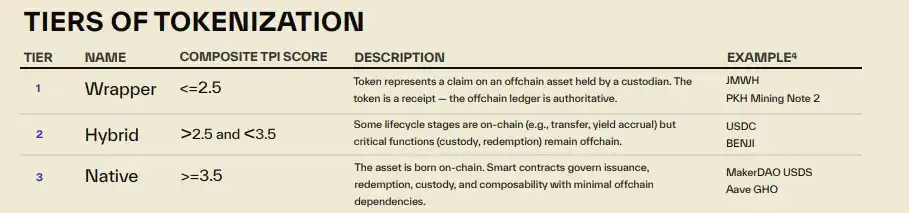
**Summary:** A market analysis reveals that the vast majority of tokenized assets remain mere "wrappers" for traditional finance on-chain. Of 593 surveyed assets, 77.6% are "Wrapped" assets where the token exists on-chain but key lifecycle functions (issuance, redemption, custody, access) remain off-chain. Only 11.1% are "Hybrid" assets, where some operational logic (transfers, settlement, yield accrual) is migrating on-chain, representing the true beginning of transformation. A mere 2.7% are "Native" assets built with a fully on-chain operational model. This explains why stablecoins feel structurally advanced compared to other RWA—they are true on-chain financial primitives, not just digitized traditional processes. The key future distinction won't be between tokenized and non-tokenized assets, but between those that are merely distributed on-chain and those that begin to *operate* on-chain.

Author: Yaroslav Writtle

Compiled by: Deep Tide TechFlow

Deep Tide Guide: The RWA sector has been discussed for so long, yet 77.6% of tokenized assets are still just "on-chain wrapping paper" — the token is on-chain, but issuance, redemption, and custody are entirely off-chain. What's truly worth attention are the 11.1% of "hybrid" assets, which are moving part of their lifecycle on-chain. This explains why stablecoins feel far ahead of other RWAs: they are genuine on-chain financial primitives, not just digital shells for traditional processes.

Market Size Growing Faster Than Market Maturity

An effective way to understand this market is not to look at whether it's tokenized or not.

Instead, look at:

  • Wrapped
  • Hybrid
  • Native

A 2026 market survey covering 593 tokenized assets showed that 460 assets, or 77.6%, were still classified as wrapped. Only 66 assets, or 11.1%, were hybrid, and a mere 16 assets, or 2.7%, had reached a native state.

This is the true shape of the market.

Wrapped Remains the Default Form
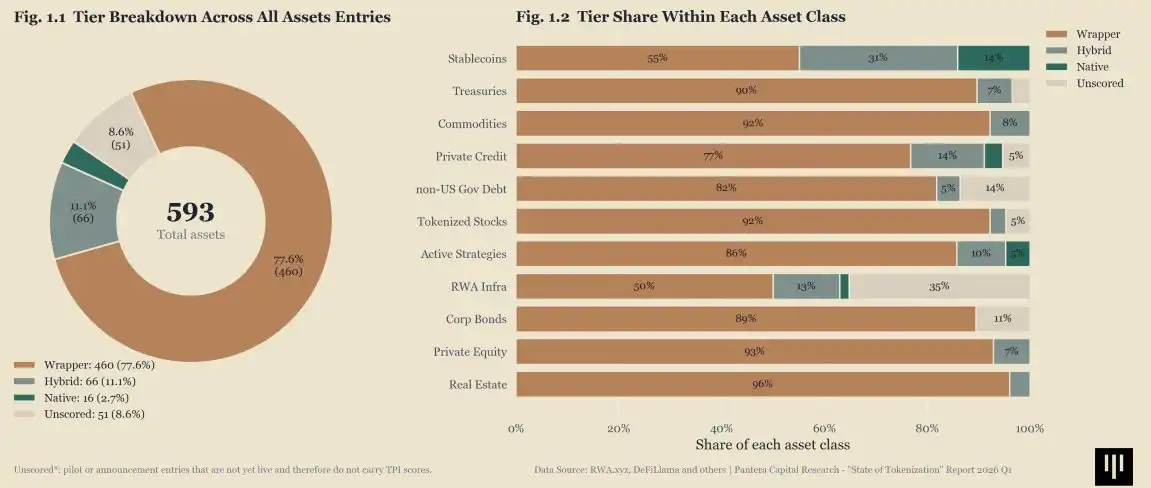
Most tokenized assets improve distribution, not infrastructure.

The token exists on-chain.

Most of its lifecycle does not.

Issuance, redemption, custody, transfer permissions, pricing, and investor access still heavily rely on off-chain systems.

So surface growth may be real, but on-chain autonomy remains low.

Hybrid Is Where Real Transformation Begins

Hybrid is the part of the market worth watching.

This is where certain parts of the lifecycle begin migrating on-chain:

  • Transfer logic
  • Settlement processes
  • Yield accrual
  • Partial compliance or access controls

Not fully native.

But no longer just wrapping paper.

This middle category is still small, which is why the market feels like it's moving faster than it actually is.

Native Is Rare for a Reason

Native assets are rare because the bar is high.

To reach that level, it's not just about the token being on-chain.

The operating model must also be on-chain.

This includes:

  • Issuance and redemption
  • Transfer execution
  • Custody assumptions
  • Composability with other systems

Very few assets truly meet this standard today.

Stablecoins Still Feel Ahead of Other Assets

This also helps explain why stablecoins still feel structurally ahead of most RWAs.
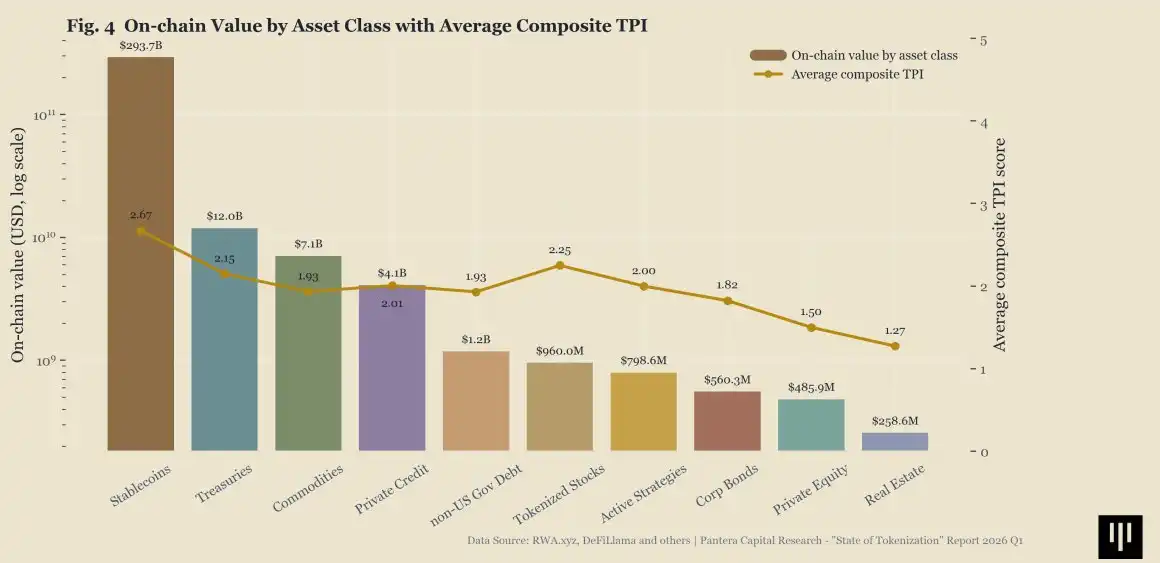
They are closer to being true on-chain financial primitives.

Many other tokenized assets still resemble digital wrapping paper for traditional processes, rather than assets that genuinely operate within an on-chain financial system.

What Matters Next

The market doesn't need more proof that assets can be tokenized.

A more useful question now is: which parts of the lifecycle have truly migrated along with it?

This is where the next round of differentiation will occur.

Not between tokenized and non-tokenized.

But between assets that are still distributed on-chain, and assets that are beginning to operate on-chain.


Related Questions

QAccording to the article, what percentage of tokenized assets are considered 'wrapped' and what does this category mean?

A77.6% of tokenized assets are considered 'wrapped'. This means the token exists on-chain, but key lifecycle functions like issuance, redemption, custody, transfer permissions, pricing, and investor access remain heavily dependent on off-chain systems.

QWhat is the 'hybrid' category of tokenized assets, and why does the article suggest it's the important one to watch?

AThe 'hybrid' category refers to assets where some parts of their lifecycle, like transfer logic, settlement, yield accrual, or compliance controls, are beginning to move on-chain. The article suggests this is the important category because it represents the real start of infrastructure transformation, moving beyond just being a digital wrapper for traditional processes.

QWhy are truly 'native' on-chain assets still so rare according to the analysis?

ATruly 'native' on-chain assets are rare because the bar is very high. It requires not just the token to be on-chain, but the entire operational model—including issuance, redemption, transfer execution, custody assumptions, and composability with other systems—to be fundamentally built on-chain.

QHow does the article explain the perceived structural lead of stablecoins over most other Real World Assets (RWAs)?

AThe article explains that stablecoins feel structurally ahead because they are closer to being genuine on-chain financial primitives. In contrast, many other tokenized RWAs still resemble digital wrappers for traditional financial processes, not assets operating within an on-chain financial system.

QWhat does the article propose as the key question for the next phase of development in tokenized assets?

AThe article proposes that the key question is no longer whether assets can be put on-chain, but which parts of their lifecycle are genuinely migrating on-chain. The next phase of differentiation will occur between assets that are merely distributed on-chain and those that are beginning to operate on-chain.

Related Reads

France Cracks Down Hard on Polymarket, 30 Countries Follow, Forcing EU to Redefine Prediction Markets

French gambling regulator ANJ has ordered nationwide ISP blocking of Polymarket, a crypto-based prediction market platform, escalating a four-year regulatory battle. ANJ classified it as illegal gambling rather than an unlicensed crypto exchange, focusing on consumer harm instead of financial market risks. This distinction carries significant legal implications and may influence other EU regulators. Despite a 2024 ban on financial transactions, Similarweb data showed over 205,000 unique French visitors in June 2026, prompting the site-blocking order. Investigations cite alleged weather data manipulation affecting contracts and a trader ("Fredi9999") suspected of manipulating odds for the 2024 US election. ANJ justifies the ban by highlighting the platform's lack of mandatory consumer protection features like betting limits and self-exclusion tools. Over 30 countries have restricted Polymarket. As the largest EU economy, France's move sets a potential precedent. Its classification conflicts with the EU's MiCA framework, which treats such markets as crypto assets. If adopted EU-wide, this could lead to blanket bans under gambling laws, diverging from the financial regulatory path taken by compliant platforms like US-based Kalshi. The effectiveness of France's block and the outcome of related legal cases will be closely watched by other EU members.

Foresight NewsJust now

France Cracks Down Hard on Polymarket, 30 Countries Follow, Forcing EU to Redefine Prediction Markets

Foresight NewsJust now

New Fire Research Institute: Inflation May Become a Stubborn Problem, Can Cryptocurrencies Achieve Independent Performance in the Short Term?

New Fire Research Institute argues that despite the recent U.S. June CPI decline to 3.5% year-on-year—primarily driven by energy—core goods inflation remains persistent, with core PCE likely showing slight growth. Federal Reserve Chairman Wash has emphasized the Fed's independence and a "zero tolerance" stance on inflation, suggesting a continued hawkish posture that will pressure risk assets, especially if energy prices rise again. Concurrently, the semiconductor memory sector faces structural pressures, as seen in significant sell-offs for Micron and SK Hynix. High leverage in markets like South Korea is triggering deleveraging, amplifying volatility. Investors are also questioning the sustainability of AI-related capital expenditures. In contrast, the crypto market showed relative stability last week, with BTC and ETH gaining slightly. Positive developments include a shift to net inflows for U.S. Bitcoin spot ETFs, a narrowing Coinbase discount, and strong activity on the Robinhood Chain ecosystem. The potential advancement of the U.S. CLARITY Act provides a policy catalyst. Overall, the probability of an independent crypto bull run in the short term is low, given overarching macro pressures. However, fundamentals are improving with ETF inflows and robust on-chain activity, providing solid support. Technically, BTC and ETH show strong support at key moving averages. New Fire Research maintains that Bitcoin around $60,000 represents a high-value allocation zone, with limited downside risk near current levels. The true bull market catalyst awaits a confirmed market bottom combined with a macro policy shift and legislative progress.

marsbit29m ago

New Fire Research Institute: Inflation May Become a Stubborn Problem, Can Cryptocurrencies Achieve Independent Performance in the Short Term?

marsbit29m ago

Trading

Spot
活动图片