Bankless:比特币L2的最终归宿是ZK-Rollups

Odaily星球日报Published on 2024-05-17Last updated on 2024-05-17

Abstract

尽管ZK-Rollups是最理想方案,但现实是从技术上来讲,真正的比特币Rollups还不存在。

原文作者 | Bankless

编译 | Golem
Bankless:比特币L2的最终归宿是ZK-Rollups

比特币的发展迎来了爆炸性增长。Ordinals、Runes 和 BRC-20 等新概念正在成为焦点。这标志着比特币生态系统的重大转变,它正从专注于将 BTC 作为一种资产,演变为一个更具活力的生态系统,供人们使用、构建和投机。

在比特币生态系统内,L2 现在是新的热门话题。每个人都想从比特币 L2 中分一杯羹,但我们究竟在炒作些什么呢?在本篇文章中,我们将从全局视角审视比特币L2,并回答关于比特币L2的关键问题:比特币L2 的必要性、现状、未来前景及最终归宿。

为什么比特币需要L2

比特币网络设计的重点是安全性和去中心化,但在其网络的扩展性上做出了取舍。虽然这使得 BTC 成为了更有价值的资产,但也意味着比特币网络并不是构建金融应用的理想基础设施,以太坊的诞生已经证明了这一点。

近十年来,比特币社区一直在努力解决可扩展性问题,在链上交易高峰期,费用达到了数十美元。而如今,由于 Ordinals、Runes、BRC-20 等实验的推动,对比特币区块空间的需求又达到了新的高度:

  • Ordinals 导致比特币费用在 2023 年 12 月年内上涨了 280% ;

  • 自 Runes 推出以来,其交易量占比特币总交易量的 68% ;

  • BRC-20 导致比特币交易费用在过去一年中多次飙升,这些交易费用一度占到了区块奖励的 74% 。

比特币的愿景是成为普遍可访问和广泛应用的货币。要实现这一点,它必须扩展以处理更多的交易需求而且不至于使每笔交易都负担高昂的费用。对比特币区块空间的需求不断增长,凸显了扩展比特币的必要性,同时也反映了对比特币L2的内在需求。

比特币L2的现状

比特币社区多年来一直在积极提高交易的可扩展性。该领域的一个重要发展成果是闪电网络——一种支付通道协议,旨在通过在比特币主网之外处理交易来实现更快、更便宜的交易。尽管闪电网络长期以来一直是比特币可扩展性愿景的旗舰级解决方案,但社区越来越认识到它的局限性。人们逐渐形成共识,认为闪电网络可能不是比特币的最终扩展解决方案,比特币需要更好的L2。

Eric Wall 在最近一期 Bankless 节目中讨论了改进L2的必要性,暗示比特币的可扩展性未来可能超越目前闪电网络所能提供的。

BitVM 的信任最小化承诺

目前,焦点集中在 BitVM 上,这是一种在比特币上执行图灵完备合约的新模式,可能为比特币上的乐观汇总(optimistic rollups)铺平道路。

社区认为 BitVM 胜过其他可扩展性方案的主要原因在于它与 Taproot 升级的兼容性。这意味着 BitVM 可以在不对比特币网络进行进一步修改的情况下部署,能够保留了比特币网络的现有规则。对比特币社区中的各类人来说都是双赢的局面。

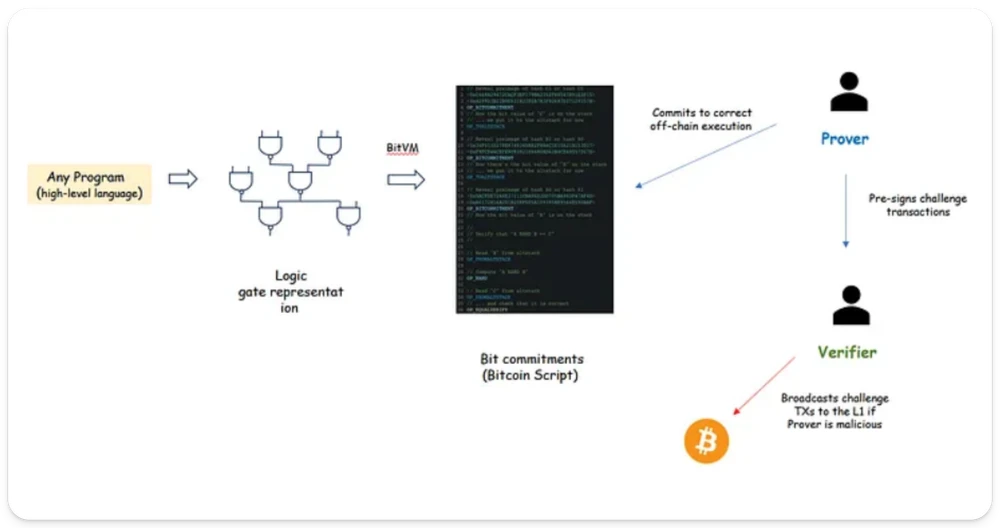
BitVM 的方法包括链下执行交易,并在挑战窗口期内通过欺诈证明在链上验证这些交易,这一机制类似于以太坊的 optimistic rollups。

这个系统即使只有一个验证者(Prover)也可以运行,但其信任假设是系统中必须始终至少有一个诚实的验证者能够检测并广播恶意交易。然而,这也意味着如果所有验证者都被妥协,比特币的完整性将受到威胁,因为攻击者可以在网络上发布欺诈性交易。
Bankless:比特币L2的最终归宿是ZK-Rollups

简化版 BitVM 操作图。来源:The Bitcoin L2 Opportunity

BitVM 仅允许创建信任最小化的比特币L2,如 optimistic rollups,而不是无信任的比特币L2,如 ZK-rollups。此外,类似于以太坊上的乐观汇总,BitVM 面临着诸如争议过长以及运营商必须锁定大量资本以确保提现挤兑时有足够的流动性提供。

因此,比特币社区对 BitVM 的实用性存在一定程度的怀疑。但值得注意的是,BitVM 仍处于早期开发阶段,虽然不是最理想的方案,但有望通过 optimistic rollups 来扩展比特币。

零知识(Zero-Knowledge)的梦想

那么,比特币L2 的最终归属究竟是什么呢?答案是 ZK-rollups。

但是,在比特币上构建 ZK-rollups 并不容易,甚至目前在技术上也不可能……这将需要通过软分叉来更改比特币网络,这是件说起来容易做起来难的事。软分叉将向比特币添加一个新操作码,使其能够本地识别和验证零知识证明,从而允许比特币和 rollup 之间进行无信任的交互。然而,如前所述,这是一个巨大的技术障碍,其可行性尚不确定。

既然如此,BitVM 仍处于早期阶段,optimistic rollups 和 ZK-rollups 目前都无法在比特币上实现,那为什么在比特币生态系统中已经有这么多比特币L2了呢?

现实是,从技术上来讲,真正的比特币 rollups 还不存在。但我们可以看到一些团队正专注的为未来的比特币L2 奠定基础。
Bankless:比特币L2的最终归宿是ZK-Rollups

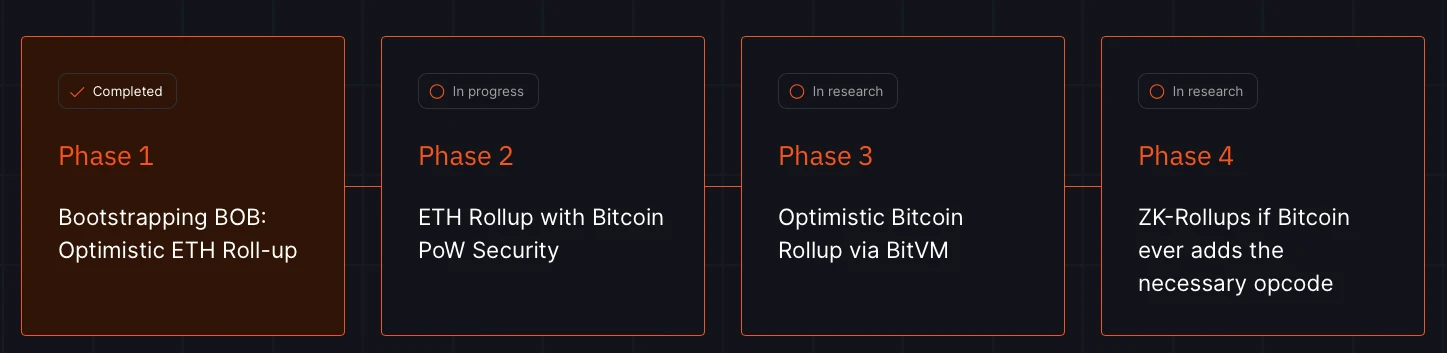
BOB 构建比特币 L2 的分阶段方法。来源:BOB 官网

例如,一些 rollup 团队(如 BOB)正在采取分阶段的方法。他们首先通过作为 EVM rollup 来启动生态系统,吸引用户、TVL 和 dApp;然后他们计划在 BitVM 技术成熟后过渡到 OP-rollups,最终如果比特币进行软分叉添加必要的操作码,他们将演变成 ZK-rollups。

结语

市场上的热点炒作总是会带来许多诈骗项目。在这股比特币L2 热潮中,许多项目谎称自己是比特币L2,因此投资者和用户都需要保持谨慎。对于那些自称是比特币L2的项目究竟是否是真的比特币L2,还是仅仅使用这个头衔来吸引风险投资和散户投资,目前尚无定论。

尽管现实情况如此,但对于比特币社区来说,现在仍然是激动人心的时刻。从标志着机构入场的比特币现货 ETF 推出,到 Ordinals、BRC-20 和 Runes 等新概念,比特币生态系统正在经历前所未有的增长和创新。

比特币L2 的前景为比特币的未来增添了更多的期待。

Trending Cryptos

Related Reads

a16z: In the AI Era, Company Competition for Talent Starts with Job Title Naming

The article discusses how companies in the AI era are competing for talent through strategic "title arbitrage," or the renaming of key roles to reflect and attract new, high-value capabilities. It uses Palantir's creation of the "Forward-Deployed Engineer" (FDE) as a prime example. This title reframed client-facing technical work from a peripheral "implementation" role into a core, high-status engineering function. The move was strategic, allowing Palantir to attract talent that blended technical skill with business acumen and to dominate the market's perception of this capability. The piece argues that job titles are an organizational language that signals the value and authority of certain work. Effective new titles, like "Data Scientist" or "Site Reliability Engineer," emerge when a role's strategic importance genuinely outgrows its old name. Conversely, mere title inflation without substantive change is ineffective. For AI companies, particularly in B2B, this is a crucial strategy. AI transformation creates new high-leverage roles (e.g., "Legal Engineer," "GTM Engineer") that combine domain expertise with technical automation. By naming these roles, a company can help clients internally legitimize these change-makers. This, in turn, builds market mindshare, associating the company with the new capability. In conclusion, as AI blurs the lines between product and service, the ability to accurately name and organize the critical, client-adjacent work that defines product learning will be a key competitive advantage. The first to define this new organizational language plants a flag in the market's mind.

marsbit46m ago

a16z: In the AI Era, Company Competition for Talent Starts with Job Title Naming

marsbit46m ago

Interview with Strategy CEO: Can STRC Recover After Selling Bitcoin?

Interview with Strategy CEO Phong Le on the recent sale of 32 Bitcoin and its impact. He clarifies the move was a small, strategic action to demonstrate liquidity to debt holders, test internal processes, and prove operational discipline—not a response to fears of a "death spiral" from DeFi protocols leveraging STRC (Strategy's preferred stock product), which he notes holds less than 10% of STRC. Le emphasizes Strategy’s long-term focus as the largest corporate Bitcoin holder, using the adage that markets are a "voting machine" short-term but a "weighing machine" long-term. Decision-making is data-driven, involving the board, complex modeling, and multiple stakeholder considerations, moving beyond a founder-centric model. He outlines various capital options but stresses the strategic importance of "doing nothing" as a valid choice, citing resilience built during the 2022 bear market. Le expresses unwavering belief in Bitcoin's foundational value for global sovereignty and its future role in an AI-driven economy with trillions of autonomous agents. Addressing STRC's current price below its $100 face value, Le explains recent pressure was due to using dollar reserves for bond buybacks. He expects STRC to return to par as reserves are replenished and its semi-monthly dividend payments begin, noting the product is heavily over-collateralized. Finally, Le confirms the company sold Bitcoin the week prior to May 31st, as disclosed in an 8-K filing, leaving prediction market interpretations to others. The overarching philosophy remains "Spread Bitcoin with love," embracing all methods of gaining Bitcoin exposure.

marsbit1h ago

Interview with Strategy CEO: Can STRC Recover After Selling Bitcoin?

marsbit1h ago

Trading

Spot
Futures

Hot Articles

What is $BITCOIN

DIGITAL GOLD ($BITCOIN): A Comprehensive Analysis Introduction to DIGITAL GOLD ($BITCOIN) DIGITAL GOLD ($BITCOIN) is a blockchain-based project operating on the Solana network, which aims to combine the characteristics of traditional precious metals with the innovation of decentralized technologies. While it shares a name with Bitcoin, often referred to as “digital gold” due to its perception as a store of value, DIGITAL GOLD is a separate token designed to create a unique ecosystem within the Web3 landscape. Its goal is to position itself as a viable alternative digital asset, although specifics regarding its applications and functionalities are still developing. What is DIGITAL GOLD ($BITCOIN)? DIGITAL GOLD ($BITCOIN) is a cryptocurrency token explicitly designed for use on the Solana blockchain. In contrast to Bitcoin, which provides a widely recognized value storage role, this token appears to focus on broader applications and characteristics. Notable aspects include: Blockchain Infrastructure: The token is built on the Solana blockchain, known for its capacity to handle high-speed and low-cost transactions. Supply Dynamics: DIGITAL GOLD has a maximum supply capped at 100 quadrillion tokens (100P $BITCOIN), although details regarding its circulating supply are currently undisclosed. Utility: While precise functionalities are not explicitly outlined, there are indications that the token could be utilized for various applications, potentially involving decentralized applications (dApps) or asset tokenization strategies. Who is the Creator of DIGITAL GOLD ($BITCOIN)? At present, the identity of the creators and development team behind DIGITAL GOLD ($BITCOIN) remains unknown. This situation is typical among many innovative projects within the blockchain space, particularly those aligning with decentralized finance and meme coin phenomena. While such anonymity may foster a community-driven culture, it intensifies concerns about governance and accountability. Who are the Investors of DIGITAL GOLD ($BITCOIN)? The available information indicates that DIGITAL GOLD ($BITCOIN) does not have any known institutional backers or prominent venture capital investments. The project seems to operate on a peer-to-peer model focused on community support and adoption rather than traditional funding routes. Its activity and liquidity are primarily situated on decentralized exchanges (DEXs), such as PumpSwap, rather than established centralized trading platforms, further highlighting its grassroots approach. How DIGITAL GOLD ($BITCOIN) Works The operational mechanics of DIGITAL GOLD ($BITCOIN) can be elaborated on based on its blockchain design and network attributes: Consensus Mechanism: By leveraging Solana’s unique proof-of-history (PoH) combined with a proof-of-stake (PoS) model, the project ensures efficient transaction validation contributing to the network's high performance. Tokenomics: While specific deflationary mechanisms have not been extensively detailed, the vast maximum token supply implies that it may cater to microtransactions or niche use cases that are still to be defined. Interoperability: There exists the potential for integration with Solana’s broader ecosystem, including various decentralized finance (DeFi) platforms. However, the details regarding specific integrations remain unspecified. Timeline of Key Events Here is a timeline that highlights significant milestones concerning DIGITAL GOLD ($BITCOIN): 2023: The initial deployment of the token occurs on the Solana blockchain, marked by its contract address. 2024: DIGITAL GOLD gains visibility as it becomes available for trading on decentralized exchanges like PumpSwap, allowing users to trade it against SOL. 2025: The project witnesses sporadic trading activity and potential interest in community-led engagements, although no noteworthy partnerships or technical advancements have been documented as of yet. Critical Analysis Strengths Scalability: The underlying Solana infrastructure supports high transaction volumes, which could enhance the utility of $BITCOIN in various transaction scenarios. Accessibility: The potential low trading price per token could attract retail investors, facilitating wider participation due to fractional ownership opportunities. Risks Lack of Transparency: The absence of publicly known backers, developers, or an audit process may yield skepticism regarding the project's sustainability and trustworthiness. Market Volatility: The trading activity is heavily reliant on speculative behavior, which can result in significant price volatility and uncertainty for investors. Conclusion DIGITAL GOLD ($BITCOIN) emerges as an intriguing yet ambiguous project within the rapidly evolving Solana ecosystem. While it attempts to leverage the “digital gold” narrative, its departure from Bitcoin's established role as a store of value underscores the need for a clearer differentiation of its intended utility and governance structure. Future acceptance and adoption will likely depend on addressing the current opacity and defining its operational and economic strategies more explicitly. Note: This report encompasses synthesised information available as of October 2023, and developments may have transpired beyond the research period.

440 Total ViewsPublished 2025.05.13Updated 2025.05.13

What is $BITCOIN

Discussions

Welcome to the HTX Community. Here, you can stay informed about the latest platform developments and gain access to professional market insights. Users' opinions on the price of BTC (BTC) are presented below.

活动图片