# Hedging Related Articles

HTX News Center provides the latest articles and in-depth analysis on "Hedging", covering market trends, project updates, tech developments, and regulatory policies in the crypto industry.

How to View the Divergence Between Gold and Oil Prices?

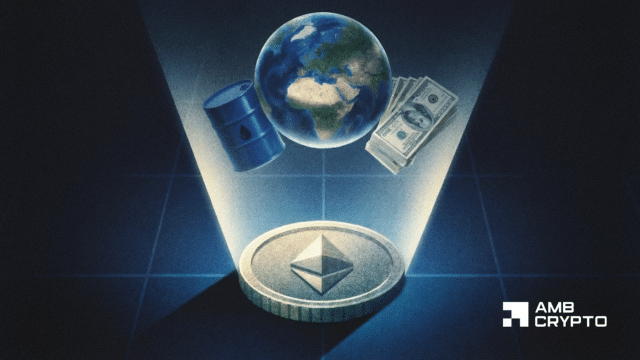
The article analyzes the divergence between gold and oil prices following the outbreak of the U.S.-Iran war. While oil prices surged significantly, gold experienced a decline, contrary to expectations given its traditional role as a safe-haven asset during geopolitical crises. Gold serves three primary hedging functions: against geopolitical risk, inflation risk, and U.S. dollar risk. Since late 2023, gold had been in a strong bull market, rising from $1,800 to over $5,000, driven by simultaneous geopolitical tensions (e.g., Russia-Ukraine war, Middle East conflicts), inflationary pressures, and a weakening dollar due to the Fed's premature rate cuts. However, after the U.S. "decapitation" strike on Iran, gold prices fell sharply. This was attributed to two main factors: a shift of capital from gold to oil, as investors repositioned portfolios to capitalize on rising oil prices, and a liquidity crisis in U.S. financial markets that forced large-scale sell-offs of gold—a highly liquid asset—to meet redemption demands. More critically, growing pessimism about a prolonged U.S.-Iran conflict raised fears of sustained high oil prices, potential global economic disruption, and a possible reversal of Fed monetary policy (delayed cuts or even renewed hikes). This expectation of tighter policy caused gold’s dollar-related hedging function to reverse, overwhelming its geopolitical and inflation hedging roles and leading to a severe correction. Oil prices also experienced volatility. They initially spiked to nearly $120 per barrel post-strike, then fell by 30% on Trump’s hints of a quick resolution, but rebounded as market expectations corrected when the conflict persisted and the Strait of Hormuz remained threatened. The outlook for both commodities depends on the evolution of the U.S.-Iran conflict. If it becomes a prolonged war like Ukraine, gold may lack short-term value as monetary fears prevail, while oil and energy assets may benefit. A critical factor will be whether the Strait of Hormuz is reopened, which hinges on geopolitical decisions ahead.

marsbit10h ago

How to View the Divergence Between Gold and Oil Prices?

marsbit10h ago

If You Bought One Deep OTM Bitcoin Put Option Every Month Since 2018, Could You Make Money in the Long Run?

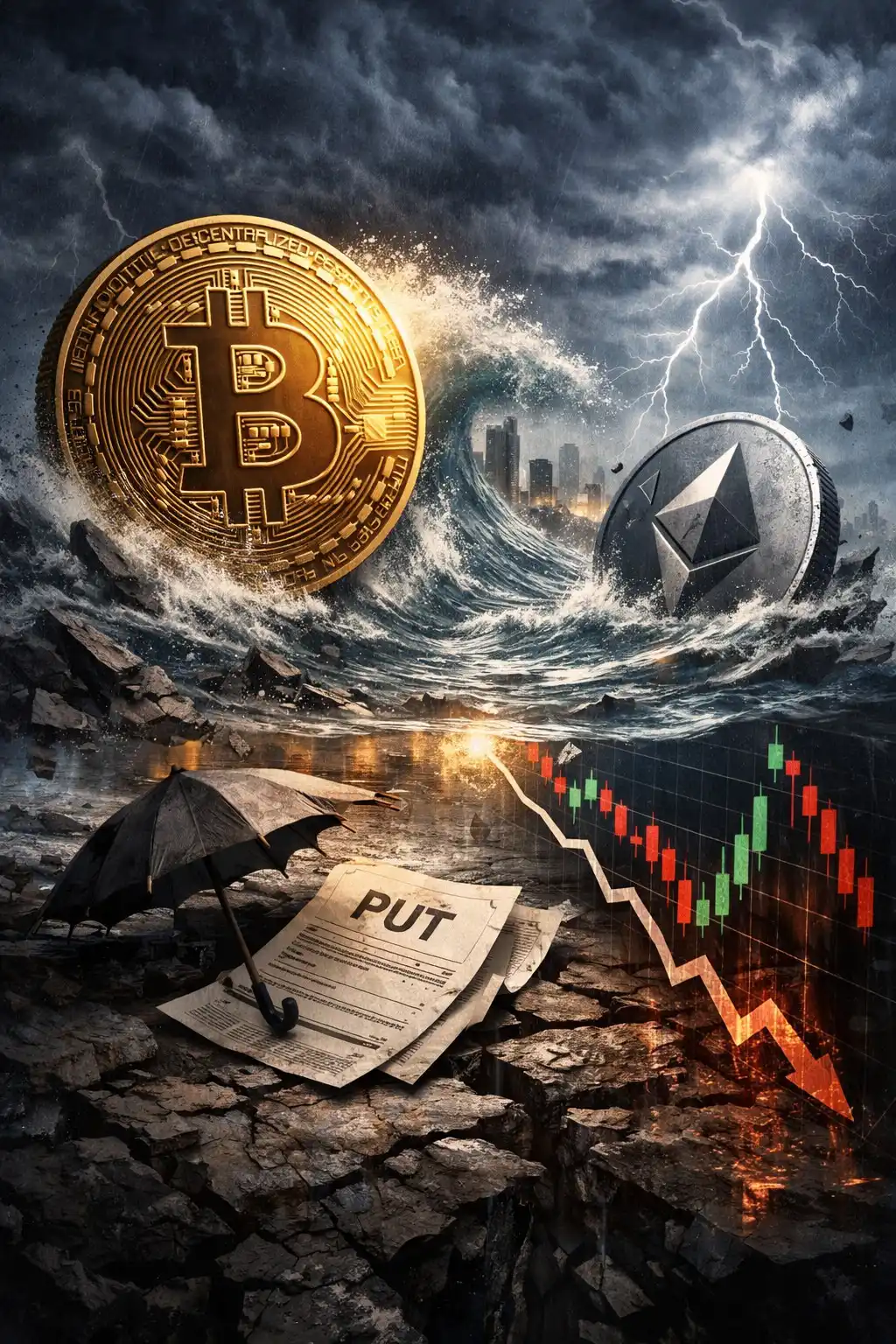
Based on a systematic backtest from 2018 to 2026, this study examines the long-term profitability of a monthly strategy of buying one deep out-of-the-money (OTM) put option on Bitcoin (BTC) and Ethereum (ETH), with a target delta of 0.01 and a 30-day expiration. The results are highly divergent. The strategy is not a stable source of profit but a classic, path-dependent tail insurance tool characterized by extreme right skew, very low win rates, and severe drawdowns. For BTC, the strategy yielded a final total return of 97.62% (CAGR: 8.66%), while for ETH, it resulted in a -73.07% loss (CAGR: -14.78%). The performance difference is attributed to BTC's extreme payouts being sufficient to cover the long-term cost of premiums, whereas ETH's were not. Key characteristics of the strategy include: * Extremely low win rates (BTC: 2.04%, ETH: 1.02%). * Catastrophic maximum drawdowns (BTC: -97.24%, ETH: -93.82%). * The median trade return was -100% for both assets. * Profits are driven entirely by a few extreme winning trades, with the top 5 trades contributing over 10x the net profit for BTC. * Notably, not all major market crashes (e.g., March 2020, LUNA, FTX) resulted in profitable positions due to timing and strike price placement. Parameter sensitivity analysis showed that a delta of 0.02 offered a more balanced risk-return profile across metrics. The strategy is best suited for investors who can tolerate years of continuous losses, view it as portfolio insurance rather than a primary alpha generator, and seek convexity against extreme downside events. It is not suitable for those seeking stable returns or with low risk tolerance.

marsbit03/16 11:11

If You Bought One Deep OTM Bitcoin Put Option Every Month Since 2018, Could You Make Money in the Long Run?

marsbit03/16 11:11

On the Eve of the Explosion of On-Chain Options

On-Chain Options on the Brink of Breakout The cryptocurrency options market is larger than most realize, with CME's crypto derivatives volume up 46% year-over-year. Institutional investors require defined-risk tools like options for hedging large positions. A pivotal shift occurred in mid-2025 when Bitcoin options open interest reached $65 billion, surpassing futures for the first time, indicating a move from pure leverage to risk-defined instruments. Growth is concentrated on Deribit (now backed by Coinbase after its acquisition) and traditional finance capital via IBIT options. While decentralized derivatives have grown from 2% to over 10% market share in two years, on-chain options remain nascent. @DeriveXYZ leads with over $700 million in notional options volume over 30 days. It has evolved from an AMM to a gas-free central limit order book on its own L2, featuring portfolio margin and cross-margin. @KyanExchange is approaching similarly with on-chain portfolio margining and partial liquidation mechanics. Structured products and asset managers urgently need options for their defined risk/return profiles. Institutional demand is clear, with IBIT options OI surpassing the gold ETF GLD and CME handling $3 trillion in crypto derivatives notional volume in 2025. Regulatory clarity is improving. A joint statement from the SEC and CFTC in 2025 allows regulated exchanges to trade spot crypto assets, and the CLARITY Act has passed the House. This improved environment, alongside CME's planned 24/7 crypto options launch, suggests the timing is finally ripe for on-chain options to flourish.

marsbit03/12 10:29

On the Eve of the Explosion of On-Chain Options

marsbit03/12 10:29

活动图片