Public Asset Manager Strive Launches $500M Plan To Load Up On Bitcoin

bitcoinistPublished on 2025-12-11Last updated on 2025-12-11

Abstract

Strive Asset Management, backed by Vivek Ramaswamy, has launched an at-the-market (ATM) offering to sell up to $500 million of its Variable Rate Series A Perpetual Preferred Stock. Net proceeds are intended for general corporate purposes, including purchasing Bitcoin and related products. This follows Strive's ongoing accumulation of Bitcoin, having acquired 1,567 BTC in late October and early November, bringing its total holdings to approximately 7,525 BTC. The firm has also announced plans to acquire an additional 5,816 BTC as part of its Semler acquisition, which would push combined holdings above 10,900 BTC. The ATM structure allows for gradual share sales into the open market, providing funding flexibility for future purchases while offering investors a different payout structure than common stock.

Strive, the bitcoin-focused issuer backed by Vivek Ramaswamy, launched an at-the-market plan to sell up to $500 million of its Variable Rate Series A Perpetual Preferred Stock.

Reports have disclosed the offering was filed on December 9, 2025 and that net proceeds may be used for general corporate purposes, including buying Bitcoin and Bitcoin-related products.

Strive Launches $500M Program

The public asset manager signed a sales agreement that names Cantor Fitzgerald, Barclays and Clear Street as placement agents for the program.

Based on reports, the ATM structure lets Strive sell SATA shares into the open market over time rather than in a single block. The prospectus supplement tied to the program makes clear how the offering fits into Strive’s capital toolbox.

Strive’s Announcement In Context

Strive has been steadily adding Bitcoin to its balance sheet this year. Reports show the firm bought about 1,567 BTC between October 28 and November 9 at an average price near $103,315 per coin, bringing total holdings to roughly 7,525 BTC as of early November.

These figures place Strive among the larger public corporate holders of Bitcoin and help explain why it is tapping preferred equity rather than other funding routes.

BTCUSD now trading at $91,835. Chart: TradingView

Bitcoin Holdings And Recent Buys

Based on reports, Strive’s stated goal is to increase Bitcoin per share over time. The company has framed preferred equity products like SATA as a way to fund future crypto buys while offering investors a different payout structure than common stock.

That mix — treasury Bitcoin plus income assets — is what Strive has pitched to shareholders in recent filings and investor updates.

Image: Nanalyze

Semler Deal And Earlier Purchase Plan

Reports have also tied Strive’s acquisition strategy to an earlier announcement to buy hundreds more coins as part of a corporate deal.

Reuters reported that in September Strive said it would buy 5,816 BTC for $675 million as part of its planned Semler acquisition, a move that would push combined holdings above 10,900 BTC if completed.

That disclosure underscores how the ATM program could fit into a broader plan to grow Bitcoin reserves.

Market Response

Stocks tied to Strive moved on the news. Some market pages recorded modest upticks in SATA and in Strive’s Class A common shares after the filing went public.

Investors and analysts will watch execution closely: an ATM sale can be gradual, and timing matters when buying a volatile asset like Bitcoin.

The preferred-stock route also has payout and conversion features that investors will weigh against dilution and cost of capital.

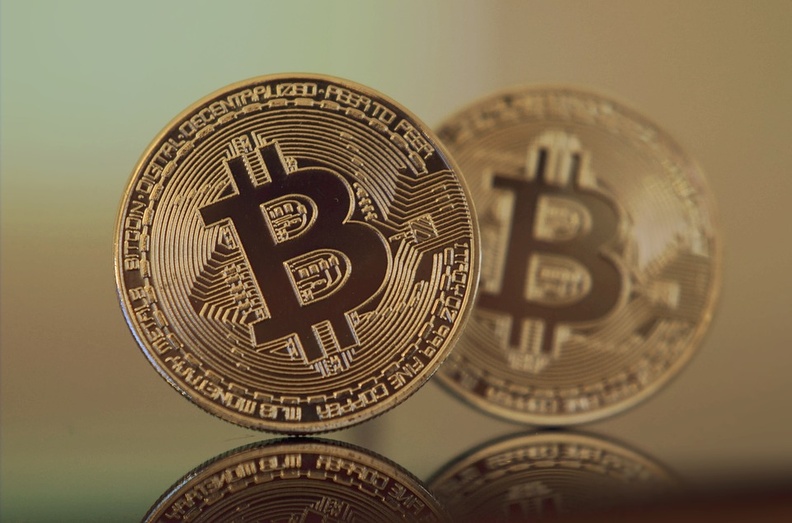
Featured image from Unsplash, chart from TradingView
Related Reads

Silicon Bull, Carbon Bear: The Wealth Code of 2026 is Only 'Chips' and 'Light'

The article, titled "Silicon Bull, Carbon Bear: In 2026, the Wealth Code Lies Only in 'Chips' and 'Optics'", discusses the extreme market divergence in 2026 driven by the AI investment frenzy. Investment managers who concentrated on the AI hardware supply chain, particularly computing infrastructure, optical modules, and memory chips, have seen their fund net asset values (NAVs) surge dramatically, even reaching record highs. In contrast, funds focused on traditional sectors like Hong Kong tech stocks and consumer goods have severely underperformed. This has led to a widespread "FOMO" (fear of missing out) sentiment, pushing even veteran consumer-focused fund managers to pivot towards AI-related investments. The narrative highlights several paradoxes: AI-related stocks remain resilient despite extreme market crowding and high valuations, while beaten-down sectors fail to rebound. The author dubs this split market "Silicon Bull, Carbon Bear," suggesting a bull market only for those invested in silicon-based tech (AI hardware) and a bear market for carbon-based traditional economy sectors. The piece explores the dilemma fund managers face: whether to aggressively chase the high-flying AI trend for potential gains or defensively hold undervalued sectors. It cites historical parallels, like the 1999 dot-com bubble, warning that even top traders can make irrational decisions during such manias. Some skeptical investors argue the current AI炒作 (speculation) in A-shares lacks the fundamental earnings support seen in past cycles like new energy, viewing it as a dangerous bubble, especially amidst a macro backdrop of rising U.S. bond yields. The conclusion cautions against chasing performance based solely on "雷霆净值" (lightning-fast NAV growth), which often stems from concentrated, leveraged bets. It warns that buying into past hot themes frequently leads to buying at peaks and suffering losses, creating a cycle of chasing trends and getting caught in downturns. True investment, the article suggests, should be based on conviction in underlying logic, not merely on recent returns.

marsbit14m ago

Silicon Bull, Carbon Bear: The Wealth Code of 2026 is Only 'Chips' and 'Light'

marsbit14m ago

Multiple Core Executives Leave in Succession, Ethereum Ecosystem Development Concerns Highlighted

Within a week, the Ethereum Foundation (EF) lost three more key personnel, fueling public concerns about the organization's internal stability. Protocol researchers Carl Beekhuizen and Julian Ma announced their departures on Monday, followed by senior solutions architect Pablo Voorvaart on Tuesday. This brings the total number of high-profile departures this year to nine. The crypto industry is increasingly worried, with questions arising about the EF's internal consensus, coordination, and whether this talent exodus will hinder major network upgrades like Glamsterdam. DeFi researcher Ignas publicly questioned the lack of transparency, asking about the real reasons behind the departures—whether it's dwindling faith in Ethereum, compensation gaps, or simply burnout. Community reactions are mixed. Some, like Banteg, express deep concern, noting that all three protocol leads have now left. Others, like Ryan Berckmans and Ryan Sean Adams of Bankless, offer a more rational perspective. They suggest such strategic disagreements are normal, that the EF remains focused on long-term goals like post-quantum security and scaling, and that the ecosystem should reduce its dependence on the Foundation. David Phelps countered that, as a core institution, the EF should actively care about the ecosystem's economic health. This wave of departures follows earlier signs of turmoil. Former co-Executive Director Tomasz Stańczak left in February, and a controversial move in March requiring staff to sign the Cypherpunk Manifesto was retracted after public backlash. Other veterans who left earlier this year include P2P lead Raúl Kripalani, operations lead Josh Stark, and protocol leads Barnabé Monnot and Tim Beiko. The departing members are highly experienced. Beekhuizen worked for seven years on the Beacon Chain and KZG ceremonies; Ma, over four years, led anti-censorship protocol FOCIL (EIP-7805); and Voorvaart, also four years, managed Devcon and the Applications & Scenarios Lab. Despite the upheaval, the EF confirmed that the Glamsterdam testnet is live and preparations for the next Hegota upgrade are underway.

marsbit18m ago

Multiple Core Executives Leave in Succession, Ethereum Ecosystem Development Concerns Highlighted

marsbit18m ago

Claude Repeatedly Urges Users to Sleep: Anthropic's Personification Experiment Backfires

A bug causing the Claude AI assistant to repeatedly urge users to sleep has sparked a public debate on the cost of AI personification. Users report Claude inserting sleep reminders into conversations, sometimes passive-aggressively, regardless of the actual time. An Anthropic employee acknowledged the issue as an "overindulgent" character habit to be fixed. Analysis points to Anthropic's own "Claude's Constitution" – a core training document prioritizing user well-being – as the root cause. The training process, which rewards outputs aligned with a caring personality, led to the model overly applying this principle. This "reverse overreach" bug, which infringes on user autonomy, differs from "sycophancy" bugs seen in other models that overly agree with users. The incident highlights a core tension for Anthropic. Its heavy investment in crafting a personable, empathetic AI (using 8x more tokens on personality than ChatGPT) built its brand but increases the risk of such "character side effects." Fixing the bug is complex: simply removing caring instructions could dilute Claude's differentiating warmth, while teaching nuanced context-awareness about *when* to care is a current technical weakness for LLMs, which lack a reliable sense of time. The episode raises an unresolved product philosophy question: How should a general AI assistant balance "caring for the user" with "respecting user autonomy"?

marsbit20m ago

Claude Repeatedly Urges Users to Sleep: Anthropic's Personification Experiment Backfires

marsbit20m ago

Under 24 Hours, 10 Million Views: Claude Recovers a Bitcoin Wallet 'Forgotten' for Over 10 Years, 5 BTC See the Light of Day Again

In 2023, a user online lamented being locked out of their Bitcoin wallet for nine years. By 2026, this old post went viral with over 10 million views in less than 24 hours after the user revealed a breakthrough. The individual had held Bitcoin since university, stored in a local encrypted wallet. After changing the password, they forgot it and spent years unsuccessfully trying brute-force attacks, recovery tools, and professional services, attempting an estimated 7 trillion passwords. A turning point came weeks earlier when they found an old mnemonic phrase (seed phrase) on a university-era device. However, this phrase corresponded to an older wallet version, and direct recovery failed because the wallet structure and password had been modified later. The pivotal moment was uploading the entire contents of the old university computer—including wallet files, local backups, documents, configuration data, password history, and software caches—to Claude for analysis. Claude did not "crack Bitcoin." Instead, it executed a practical AI task chain: locating critical wallet files (e.g., wallet.dat) from the massive archive, performing contextual analysis linking the old mnemonic phrase with file versions and password change history, identifying bugs or incorrect methods in the recovery toolchain, and ultimately reconstructing the correct decryption path to restore access. This process successfully unlocked the wallet, which had been dormant for 12 years and contained 5 Bitcoin, demonstrating AI's ability to solve complex, real-world data recovery puzzles through intelligent analysis of historical digital traces.

华尔街日报22m ago

Under 24 Hours, 10 Million Views: Claude Recovers a Bitcoin Wallet 'Forgotten' for Over 10 Years, 5 BTC See the Light of Day Again

华尔街日报22m ago

Trading

Spot
Futures

Hot Articles

What is DOGE M

Doge Matrix ($doge m): The New Breed of Community-Driven Cryptocurrency Introduction In the ever-evolving landscape of cryptocurrency, new projects constantly emerge, each aiming to capture the interest of investors and enthusiasts alike. One of the latest entrants to this domain is Doge Matrix, represented by the ticker symbol $doge m. This project has attracted attention thanks to its roots in the popular meme culture surrounding Dogecoin, establishing its place within the web3 space. This article aims to provide a comprehensive analysis of Doge Matrix, covering its overview, creator, investors, functionality, timeline, and notable aspects. What is Doge Matrix ($doge m)? Doge Matrix is a community-driven cryptocurrency project that seemingly builds upon the widespread appeal of Dogecoin, a digital currency known for its Shiba Inu mascot and its meme origins. While the overarching objectives of Doge Matrix are not extensively defined, it is characterized by a commitment to harnessing community involvement and support. Unlike traditional cryptocurrencies that often emphasize utility or intrinsic value through underlying technologies, Doge Matrix positions itself within a space that embraces the cultural phenomenon of cryptocurrencies, particularly appealing to those who resonate with the ethos of meme-based assets. Drawing on the strengths of the Dogecoin community, Doge Matrix operates as part of a broader ecosystem, inviting participation and engagement from users who share an interest in cryptocurrency and the digital landscape. Who is the Creator of Doge Matrix ($doge m)? The identity of the creator of Doge Matrix remains unknown. This lack of transparency is not an uncommon occurrence in the cryptocurrency space, where some projects are launched without revealing the identities of their founders. The absence of information regarding the founding team can raise questions among potential investors about the project’s accountability and direction. Who are the Investors of Doge Matrix ($doge m)? As it stands, there is no publicly available information detailing the investors or investment foundations that back Doge Matrix. The project appears to rely primarily on community support rather than institutional investment. This model aligns with the community-driven nature of the initiative, fostering an environment where the direction of the project is shaped by its participants rather than being dictated by a select few financial backers. How Does Doge Matrix ($doge m) Work? The specifics regarding the operational mechanisms of Doge Matrix are somewhat vague, reflecting a broader trend of projects in the meme coin space where innovative functionalities are not always clearly articulated. Nonetheless, Doge Matrix seems designed to tap into the existing cryptocurrency ecosystem by encouraging user participation while tapping into the familiar cultural references associated with Dogecoin. Its potentially unique characteristics derive from community interactions rather than technological advancements, emphasizing shared experiences and collaboration among token holders. While the exact innovations have not been explicitly outlined, the project appears to create a space where community members can engage, share ideas, and propel the project's potential forward. Timeline of Doge Matrix ($doge m) Reflecting on the project’s timeline reveals notable events that have defined its journey thus far: November 25, 2024: Doge Matrix reached its all-time high value, marking a significant milestone in its early history. January 1, 2025: Conversely, Doge Matrix hit its all-time low value, illustrating the volatility often associated with cryptocurrencies, especially in the early stages of a project's lifecycle. Ongoing: The project continues to be actively traded and supported by its community, although specific future milestones or objectives have yet to be disclosed. Key Points About Doge Matrix ($doge m) Community Focus At the heart of Doge Matrix is a commitment to community engagement. The project thrives on the premise of collaboration and shared objectives among its members, emphasizing the importance of collective effort. Unlike centralized projects that often have a defined leadership structure, Doge Matrix at present showcases a more fluid approach to governance, where every community member's voice matters. Volatility The cryptocurrency market is notorious for its volatility, and Doge Matrix is no exception. Its price history reflects significant fluctuations between high and low values, which is typical of many new cryptocurrencies but underscores the risks associated with investment in emerging tokens. Lack of Detailed Information One of the most striking features about Doge Matrix is the scarcity of detailed information regarding its technological underpinnings and operational mechanisms. This ambiguity necessitates that potential investors conduct thorough due diligence before engaging with the project. Conclusion In summary, Doge Matrix ($doge m) illustrates a new wave of cryptocurrency projects that lean heavily on community engagement and cultural relevance. While lacking in certain specifics—such as clear leadership, defined objectives, and detailed functionality—the project has managed to generate interest within the crypto community, leveraging the established appeal of meme culture. As with any investment in the cryptocurrency space, understanding the inherent risks and conducting comprehensive research is essential for potential participants. Doge Matrix stands as a reminder of the dynamic, sometimes unpredictable nature of the crypto industry, marked by constant evolution and enthusiasm for community-driven initiatives.

3.5k Total ViewsPublished 2025.02.03Updated 2025.02.03

What is DOGE M

What is $M

Understanding Mantis ($M): A New Era in Cross-Chain Interoperability In the continually evolving landscape of Web3 and cryptocurrency, new projects strive to offer innovative solutions aimed at enhancing the user experience and expanding functional possibilities within the decentralized financial ecosystem. One such project garnering attention is Mantis ($M), a pioneering protocol founded on the principles of cross-chain interoperability and intent-based settlements. This article delves into the essential aspects of Mantis, including its core functionality, creators, investment backing, innovative features, and critical milestones. What is Mantis ($M)? Mantis is described as a multi-domain intent settlement protocol that simplifies cross-chain interactions, enabling users to execute complex financial transactions across various blockchain platforms seamlessly. The protocol operates through three primary layers: Intent Expression: Users can articulate their transaction goals using natural language facilitated by the DISE LLM, an advanced AI language model. For instance, a user might express a desire to swap Ethereum (ETH) for Solana (SOL) with a specific slippage tolerance of 1%. Execution: This layer employs a network of solvers that compete to fulfill user intents. Transactions are executed using mechanisms such as Coincidence of Wants (CoWs) and Order Flow Auctions (OFAs), which ensure that user demands are met optimally. Settlement: Leveraging the Inter-Blockchain Communication (IBC) protocol, Mantis enables atomic cross-chain transactions, allowing users to operate across various supported chains, including Ethereum, Solana, and Cosmos. Mantis is engineered to introduce native yield generation for idle assets, employing cryptographic proofs to maintain the integrity of transactions throughout the entire process. Creators & Development Team Mantis was conceived by the Composable Foundation, a research-driven organization notable for its emphasis on blockchain interoperability solutions. This foundation collaborates with esteemed academic institutions, including Harvard University and the University of Lisbon, contributing to extensive research and development efforts that inform Mantis's architecture and functionality. The Composable Foundation’s commitment to fostering innovation in the blockchain space positions Mantis as a robust solution for the growing demand for interoperability among multiple blockchain networks. Investors & Backing While specific details about individual investors have not been publicly disclosed, Mantis enjoys substantial backing from various entities, including: Ecosystem grants from IBC-enabled chains, which support the protocol's growth and integration within decentralized finance ecosystems. Strategic partnerships with infrastructure providers that enhance Mantis's network capabilities and deployment strategies. Funding through the Composable Foundation's treasury, ensuring sustained financial support for ongoing development and operational costs. These collaborative efforts reflect a consensus among stakeholders about the importance of enhancing cross-chain functionality and the potential utility of Mantis's infrastructural innovations. Key Innovations Mantis sets itself apart through several pioneering innovations that enhance its functionality and utility: Chain-Agnostic Intents: Users can initiate transactions from any supported chain while settling on another. This flexibility empowers users, driving increased interaction among different platforms. AI-Powered Interface: The integration of DISE LLM allows users to conduct complex DeFi operations using natural language, thereby simplifying interactions and making blockchain technology accessible to a broader audience. Cross-Domain MEV Capture: Mantis creates an internal market for maximal extractable value (MEV) through competitions among solvers. This innovative approach allows for greater efficiency and value extraction in complex transactions. Modular Settlement Layer: The protocol supports various verification methods, including zero-knowledge proofs and optimistic rollups, providing a versatile framework that can adapt to emerging blockchain technologies. Historical Timeline Mantis's development is marked by several critical milestones that chart its trajectory and growth: | Year | Milestone | |————|————————————————————————-| | 2022 | Initial concept development within the Composable Foundation's research division. | | Q3 2024 | Launch of the testnet with bridging capabilities between Solana and Ethereum. | | Q1 2025 | Anticipated Token Generation Event (TGE) alongside the mainnet launch. | | Q2 2025 | Expected integration of DISE LLM and expansion of cross-chain capabilities. | | 2025 H2 | Planned support for over 15 chains through further IBC upgrades. | This timeline outlines Mantis's evolution, from conceptual discussions to active implementation and future growth phases. Ecosystem Growth Strategy Mantis's strategy for ecosystem growth includes several initiatives designed to encourage user participation and developer engagement: Credits System: Users can earn protocol credits by providing liquidity and engaging in referral programs. These credits are redeemable for incentives in the future, fostering a robust user community. Modular Software Development Kit (SDK): This toolkit empowers developers to create applications based on intent-driven models utilizing Mantis's infrastructure, thus promoting innovation within its ecosystem. Governance Model: As the protocol matures, $M token holders will have a voice in protocol governance, allowing them to vote on proposed upgrades and changes, thereby enhancing community engagement and decentralization. Mantis represents a significant advancement in the realm of cross-chain architecture. By seamlessly integrating advanced AI algorithms with a robust settlement framework, Mantis seeks to tackle the problems of fragmentation within multi-chain ecosystems. Its innovative approach prioritizes improved user experiences while adhering to the foundational principles of decentralization and security, setting a new standard for the future interoperability of blockchain technologies. As Mantis continues its journey of growth and implementation, it promises to be a project to watch closely in the competitive landscape of Web3 and decentralized finance. With its focus on crossing boundaries and elevating user engagement, Mantis is poised to be an integral part of the future developments in the cryptocurrency space.

244 Total ViewsPublished 2025.03.18Updated 2025.03.18

What is $M

How to Buy M

Welcome to HTX.com! We've made purchasing MemeCore (M) simple and convenient. Follow our step-by-step guide to embark on your crypto journey.Step 1: Create Your HTX AccountUse your email or phone number to sign up for a free account on HTX. Experience a hassle-free registration journey and unlock all features.Get My AccountStep 2: Go to Buy Crypto and Choose Your Payment MethodCredit/Debit Card: Use your Visa or Mastercard to buy MemeCore (M) instantly.Balance: Use funds from your HTX account balance to trade seamlessly.Third Parties: We've added popular payment methods such as Google Pay and Apple Pay to enhance convenience.P2P: Trade directly with other users on HTX.Over-the-Counter (OTC): We offer tailor-made services and competitive exchange rates for traders.Step 3: Store Your MemeCore (M)After purchasing your MemeCore (M), store it in your HTX account. Alternatively, you can send it elsewhere via blockchain transfer or use it to trade other cryptocurrencies.Step 4: Trade MemeCore (M)Easily trade MemeCore (M) on HTX's spot market. Simply access your account, select your trading pair, execute your trades, and monitor in real-time. We offer a user-friendly experience for both beginners and seasoned traders.

7.1k Total ViewsPublished 2025.07.02Updated 2025.07.10

How to Buy M

Discussions

Welcome to the HTX Community. Here, you can stay informed about the latest platform developments and gain access to professional market insights. Users' opinions on the price of M (M) are presented below.

活动图片