# Artikel Terkait Signature

Pusat Berita HTX menyediakan artikel terbaru dan analisis mendalam mengenai "Signature", mencakup tren pasar, pembaruan proyek, perkembangan teknologi, dan kebijakan regulasi di industri kripto.

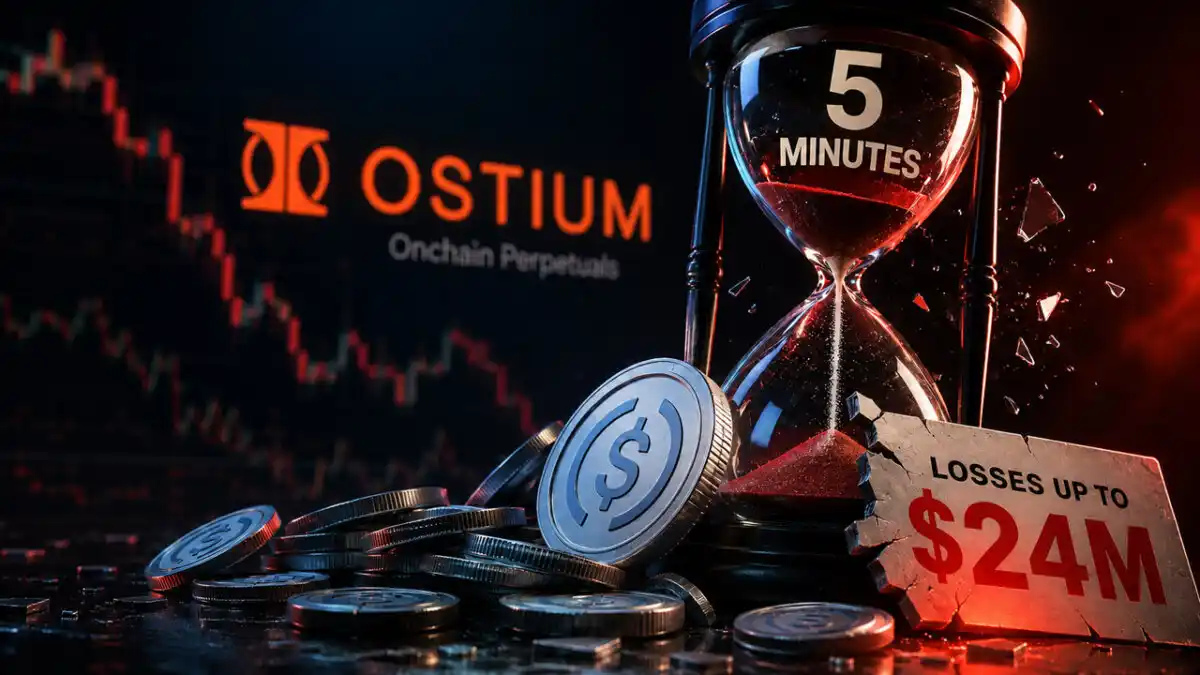
Prices From the Future Fool the Oracle, Ostium Drained of $24 Million in Five Minutes

Ostium, a perpetual trading platform, suffered a security incident on July 15, resulting in significant losses from its public liquidity vault. Initial analyses from Blockaid, Cyvers, and PeckShield estimate losses of up to $24 million. The exploit occurred over a five-minute window. According to security firms, the core issue was not a missing signature, but a data integrity failure: a registered price oracle (PriceUpKeep) submitted authorized price reports with manipulated future timestamps, creating false trading profits. The protocol’s verification process confirmed the signatures as authorized but did not enforce price sanity checks or timestamp boundaries, allowing the manipulated data to be accepted for settlement. This caused the liquidity vault to pay out on these fraudulent profits. Ostium’s co-founder confirmed the team paused trading within an hour and is collaborating with law enforcement and security experts. The extracted funds were reportedly swapped for ETH, with a portion moved to Tornado Cash. The incident highlights risks in DeFi oracle designs where cryptographic signature verification is insufficient without additional safeguards for data validity, timestamp freshness, and price reasonableness. Ostium's response and planned fixes—including stricter timestamp validation, independent price checks, and circuit breakers—will be critical to preventing similar exploits.

marsbit07/17 05:33

Prices From the Future Fool the Oracle, Ostium Drained of $24 Million in Five Minutes

marsbit07/17 05:33

BNB Chain Releases Research Report, Exploring Post-Quantum Cryptography Migration Path for BSC

BNB Chain, a leading Layer-1 blockchain ecosystem, has released a research report exploring the potential migration path for BNB Smart Chain (BSC) to post-quantum cryptography. The study evaluates replacing traditional cryptographic systems with quantum-resistant alternatives, specifically examining the use of ML-DSA-44 for transaction signing and pqSTARK for aggregating validator consensus signatures. While quantum computers are not currently a practical threat to existing blockchain cryptography, the research represents a proactive effort to ensure long-term network security and infrastructure resilience. The report assessed several core areas of the BSC tech stack, including post-quantum transaction signing, validator signature aggregation, transaction validation, public key storage, and network performance under increased data loads. A key finding is that achieving post-quantum readiness is technically feasible today but requires significant trade-offs in scalability. Test data indicates: • Transaction size would increase from ~110 bytes to ~2.5 kilobytes. • Block size would grow from ~110 kilobytes to ~2 megabytes. • Native transfer TPS would decrease from 4,973 to 2,997. The primary performance bottleneck is not signature verification itself, but the increased network transmission overhead caused by larger transaction and block sizes. Conversely, the pqSTARK aggregation technology proved highly efficient, compressing validator signatures by an approximately 43:1 ratio, which helps manage consensus-layer overhead. The report notes that post-quantum alternatives for areas like P2P handshakes and KZG commitments were not within the scope of this evaluation and require further research and broader ecosystem coordination. BNB Chain emphasizes this work is a research-oriented exploration and not a response to any imminent security threat.

marsbit05/18 13:51

BNB Chain Releases Research Report, Exploring Post-Quantum Cryptography Migration Path for BSC

marsbit05/18 13:51

活动图片