# Artikel Terkait Market Expansion

Pusat Berita HTX menyediakan artikel terbaru dan analisis mendalam mengenai "Market Expansion", mencakup tren pasar, pembaruan proyek, perkembangan teknologi, dan kebijakan regulasi di industri kripto.

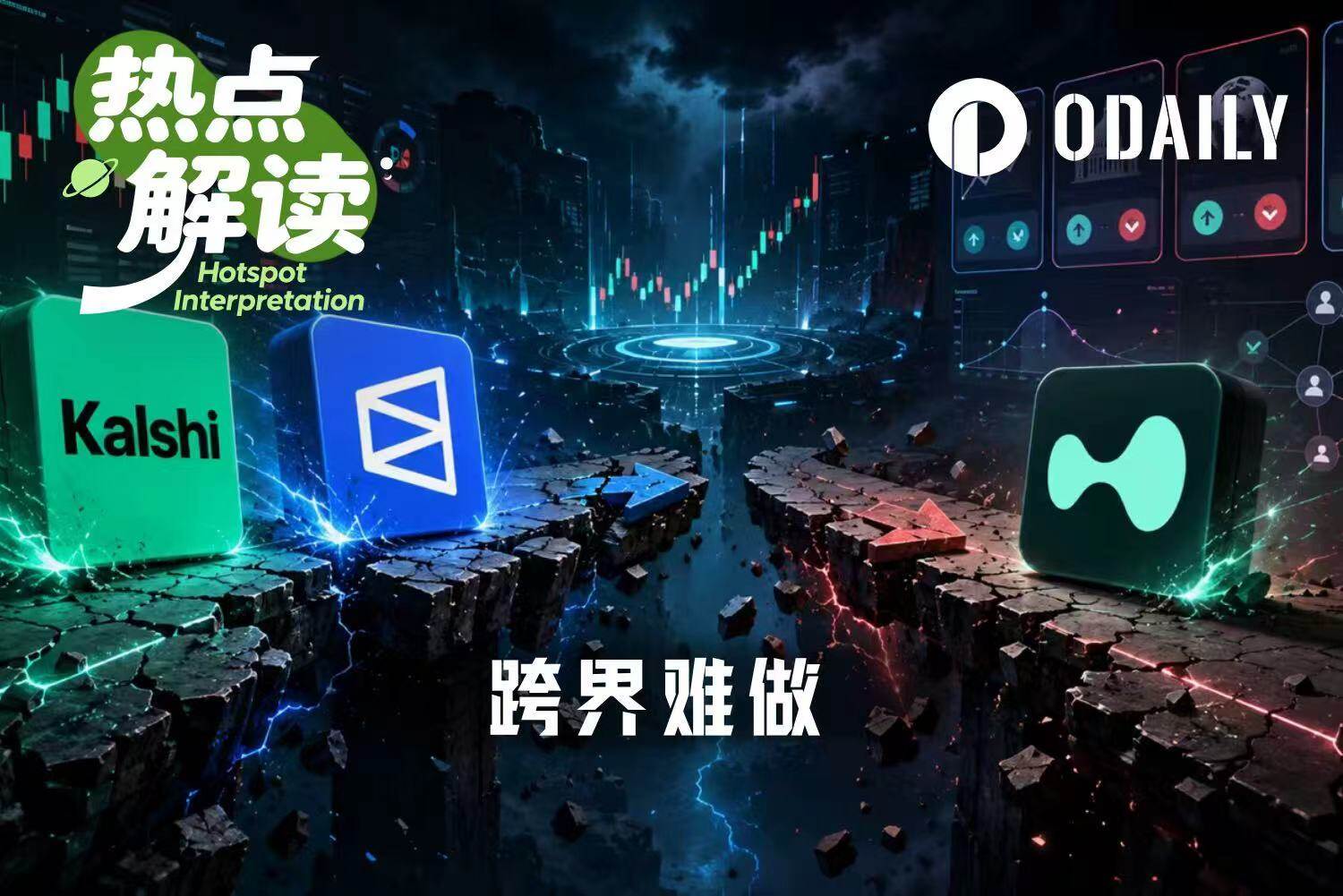
Crossing Boundaries Is Hard: Neither Prediction Market Nor Perp DEX Leader Has Replicated Their Own Success

Over the past six months, two of the hottest trading sectors—prediction markets and Perpetual DEXs (Perp DEXs)—have been attempting to cross into each other's territories. In April, prediction market platform Polymarket announced plans to launch perpetual contracts (Perps) for crypto, stocks, and commodities. In late May, the regulated platform Kalshi launched CFTC-regulated crypto Perps. Meanwhile, leading Perp DEX Hyperliquid moved in the opposite direction, launching its HIP-4 outcome markets for event-based trading in May. Initial results from these crossovers have been mixed, showing that established user habits and liquidity do not easily transfer to new product categories. Hyperliquid's HIP-4 platform saw strong initial demand, with daily volume reaching nearly $30 million during the World Cup, but active markets have since collapsed from over 120 to under 20, with daily volume often falling below $1 million. This highlights the inherent challenge: perpetual contracts maintain liquidity around core assets, while event contracts expire and require constant renewal of interest and liquidity. Similarly, Polymarket's Perps, still in an invite-only phase, saw daily volume drop from an initial ~$48 million to around $18 million by late July, with open interest (OI) at only ~$26.4 million—a fraction of Hyperliquid's ~$7.7 billion OI. Kalshi's Perps had a faster start, accumulating $16.1 billion in volume over six weeks, but recent daily volume has plummeted over 80% to around $80 million, with OI remaining in the millions, far below major Perp DEXs. The article concludes that replicating the deep liquidity and entrenched user behavior of a core market is exceptionally difficult. For these platforms, deepening their dominance in their original "home" sectors—whether Perp DEXs or prediction markets—may be a more viable strategy than pursuing a broad "everything exchange" model through跨界 expansion. Success ultimately depends on sustained accumulation of users, liquidity, and market depth in a core niche.

Odaily星球日报07/27 12:20

Crossing Boundaries Is Hard: Neither Prediction Market Nor Perp DEX Leader Has Replicated Their Own Success

Odaily星球日报07/27 12:20

The Truth About Global Payments, Exposed by Airwallex

Airwallex's founder, Jack Zhang, outlines the three primary paths in the global payments industry and explains why the company chooses the most demanding one: building its own global financial infrastructure. The article begins by highlighting a common industry problem: payment platforms appear homogenized on the surface, offering similar features like global acquiring and multi-currency accounts. However, their underlying capabilities differ vastly. Customers truly care about payment stability, compliance robustness, and reliable market entry support. Zhang identifies three strategic paths: 1. **Bypassing Traditional Systems (Web3/Crypto):** This path promises efficiency via stablecoins and blockchain settlement but struggles with mainstream adoption, significant regulatory friction, and a lack of competitive edge against established players, often leaving it with niche or non-compliant markets. 2. **Packaging Existing Infrastructure:** The most common route, where companies layer a modern interface over legacy banking and partner networks. While enabling fast expansion, it fails to solve core issues like dependency on correspondent banks and intermediary risk, merely postponing the need for solid foundations. 3. **Building Own Global Infrastructure:** The path chosen by Airwallex, Ant International, and others. It involves obtaining local licenses, establishing direct regulatory relationships, building local teams, and controlling the full technology stack. This "heavy" approach is slow and capital-intensive but aims to internalize complexity, providing customers with a "lighter" experience. The core argument is that for business clients, the highest cost isn't transaction fees but hidden risks like frozen accounts, payment delays, and regulatory shocks. By investing heavily in its own infrastructure, Airwallex seeks to absorb these complexities, offering customers greater stability, cost savings (beyond fees), and long-term certainty. This foundational investment, though initially slow, enables compound growth, as evidenced by Airwallex's accelerated revenue scaling. In conclusion, while shortcuts enable faster growth, mastering the most difficult aspects—owning the underlying infrastructure—creates durable value for customers and sustainable advantage for the payment provider.

marsbit05/28 16:10
The Truth About Global Payments, Exposed by Airwallex

marsbit05/28 16:10

活动图片