Investing $5 Billion: Cerebras Uses a 'Redemption Bond' to Enter Sam Altman's Hall of Gods

marsbitDipublikasikan tanggal 2026-05-14Terakhir diperbarui pada 2026-05-14

Abstrak

Cerebras Systems, the chipmaker known for its massive wafer-scale WSE-3 processor, is making a dramatic IPO push with a $48 billion valuation. This move follows a crucial deal with OpenAI, where Cerebras will provide 750 megawatts of computing power over three years. In exchange, OpenAI receives warrants for a 10% stake in Cerebras, valued at around $5 billion. This agreement, termed a "computing ransom note," secures Cerebras a place within Sam Altman's influential network while sacrificing a significant portion of its potential profits from the deal. The partnership has supercharged Cerebras's market prospects, granting it a premium valuation and positioning it as a core OpenAI partner. The article frames this as part of "Altman Economics," where OpenAI leverages its model sovereignty to extract concessions from hardware suppliers, reshaping the AI hardware landscape into a hierarchy of sovereigns and vassals.

On Wall Street's monitors, the flames of the digital oracle burn ever brighter.

This week, the chip industry's 'maverick', Cerebras Systems, charged towards an IPO with a valuation of $48 billion

This is the largest listing of 2026, a commercial ritual imbued with both sanctity and brutality.
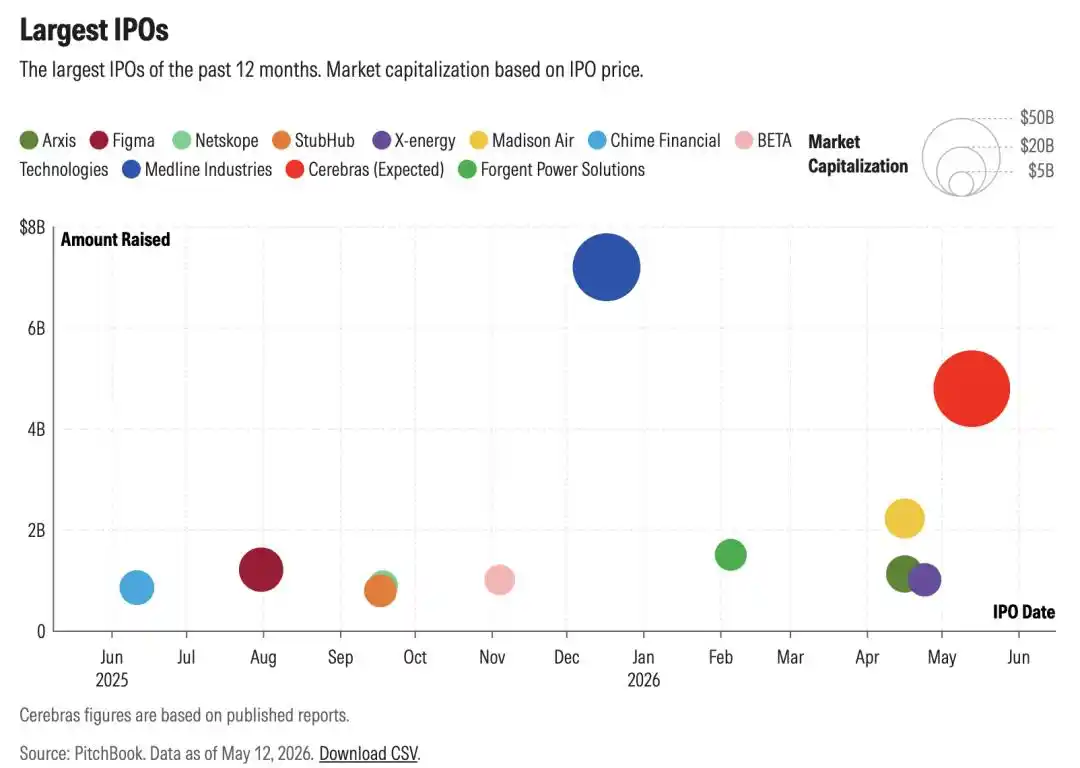
To squeeze into Sam Altman's 'Hall of Gods', Cerebras personally cut away 10% of its own 'flesh and blood'—stock warrants worth approximately $5 billion.

This is no longer a simple IPO. It is a tribute from underlying hardware to model sovereignty, paid in the twilight of an era.

And standing behind all this prosperity is the man known as the 'new lord of Silicon Valley'.

The Return of Brutalist Aesthetics

It Forged a 'Silicon-based Leviathan'

If Nvidia proudly calls its B200 chip an exquisite postage stamp, then Cerebras's flagship product, WSE-3, is a massive dinner plate.
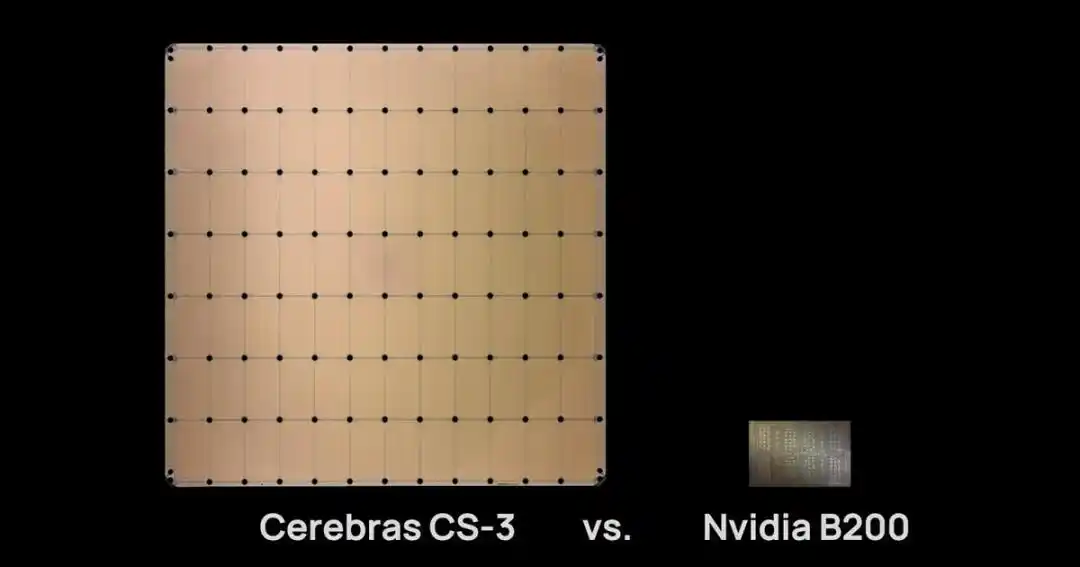
For the past three decades, the semiconductor industry's creed has been 'miniaturization'—dancing on a pinhead, stacking transistors at the nanoscale.

But Cerebras took a counterintuitive path: Since memory bandwidth is the Achilles' heel of AI inference, why not just make the entire wafer into a single chip.

This 'silicon-based leviathan' is nearly half a square foot in size, featuring over 4 trillion transistors (19 times that of Nvidia's B200), 900,000 AI-optimized cores, and 125 petaflops of AI compute—making its total computing power 28 times that of the B200.

Its design is fundamentally about 'trading space for time': etching cores directly onto a single 12-inch wafer, flattening the 'memory wall' where data shuttles between the chip and external storage.

This brutalist aesthetic shows terrifying dominance in the 'Age of Inference':

When running top-tier models from OpenAI, Cognition, Meta, etc., it can achieve a throughput speed of up to 3000 tokens per second, outpacing traditional GPUs by 70 times.
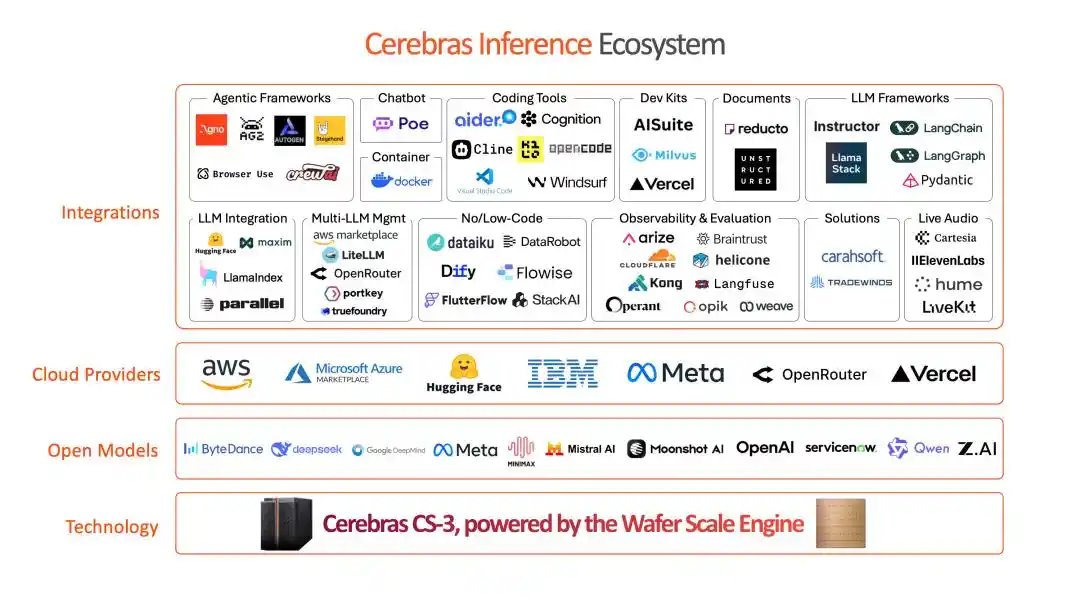
However, in 2026, the hardest technology, if it can't be converted into the fastest Tokens, is just expensive sand.

Eighteen months ago, Cerebras was a forlorn geek.

In 2025, its revenue was only $510 million, almost entirely from a single customer, the UAE's G42. It operated at a loss of $145.9 million, forcing the postponement of its IPO plans.
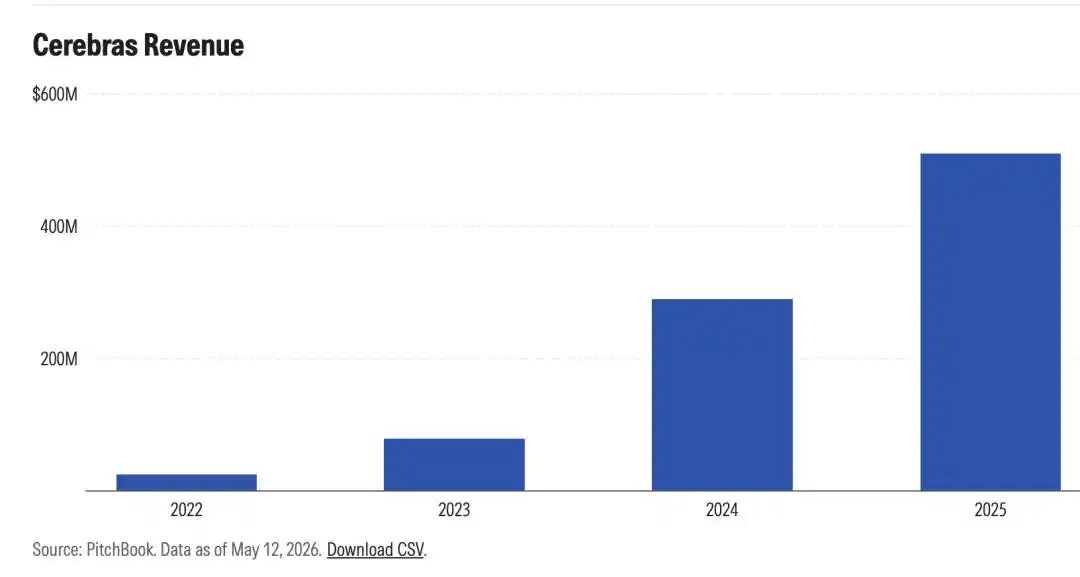
Despite possessing performance surpassing Nvidia's, its fate hung on the checkbook of a single client, like an orphan at constant risk of drowning.

Until it knocked on the door leading to Sam Altman's inner circle.

The $5 Billion 'Redemption Bond'

The Golden Ticket to the Future

In the world of AI, Moore's Law is giving way to the 'Law of the Circle'.

In exchange for survival and explosive growth, Cerebras signed an agreement that left outsiders dumbfounded: providing OpenAI with 750 megawatts of computing capacity over the next three years.

Calculated at current market prices (750 MW is roughly worth $9 billion annually), this deal could bring about $27 billion in revenue and $10 billion in gross profit.

For a company still in the red last year, this was a lifeline.

More tellingly, these 750 megawatts constitute just one-fortieth of the total computing power OpenAI believes it will need by 2030. This leftover order is enough to catapult Cerebras from a 'marginal player' to a market focal point.

But there is no free lunch, only expensive endorsements.

In exchange, Cerebras must gradually grant stock warrants to OpenAI. Upon exercise, OpenAI would hold 10% of Cerebras's shares—worth about $5 billion at the offering price midpoint of $155.

This means Cerebras generously offered up half the potential future profits from this mega-deal as a 'tribute' directly to OpenAI.

This is not an equal exchange. This is the AI era's 'computing power redemption bond'.

OpenAI is the 'lord' holding the power to allocate traffic and demand, while Cerebras is a heavily armored knight providing advanced tools of production—to enter the lord's domain, the knight must pay homage and share half his spoils.
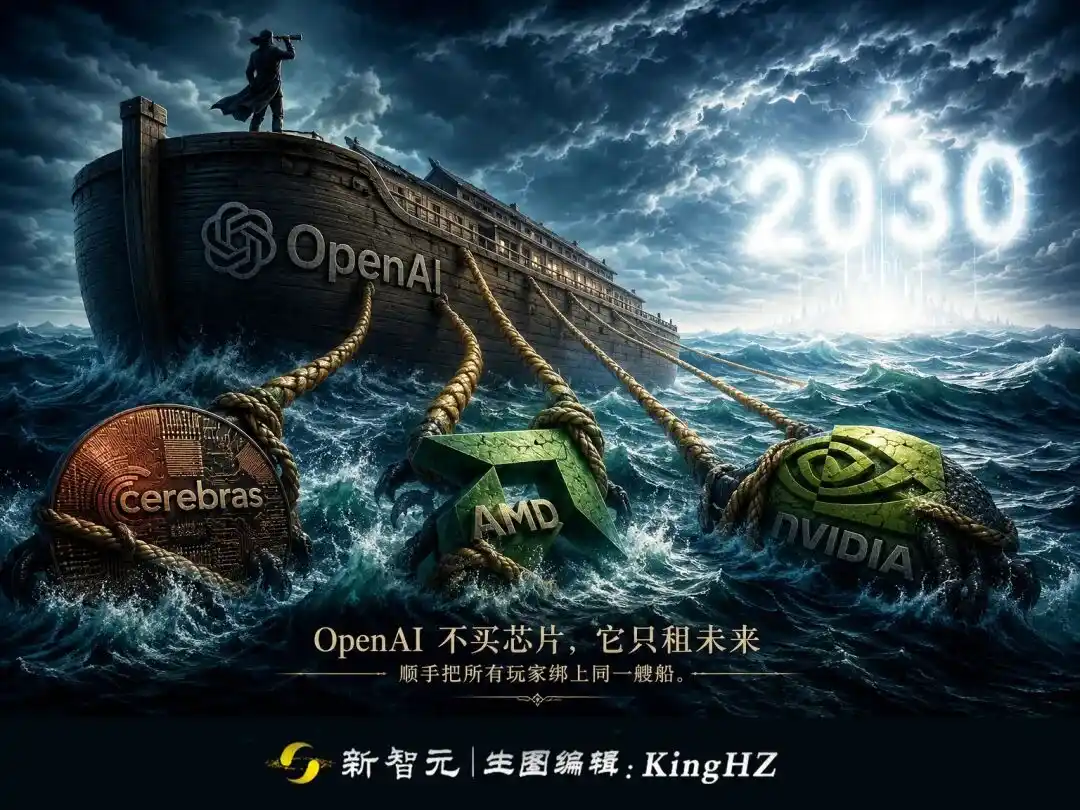
Once branded as OpenAI's core blood ally, Cerebras's price-to-sales (P/S) ratio instantly skyrocketed to 15 times, a level even Nvidia must respectfully acknowledge.

'Altmanomics'

He Is Cashing Out the Hardware Giants

Cerebras is not the only computing power enterprise bowing to Sam Altman.

Last October, AMD's stock doubled after reaching a similar agreement with OpenAI; earlier, Nvidia was rumored to have deepened its ties with OpenAI through a $30 billion financing round.

A clear map of power is emerging: OpenAI is evolving from a software company into a global 'tax authority' over the AI hardware landscape.

Sam Altman's true ambition is not merely to acquire data centers for training and running its models, but to quietly expand the group of companies and investors who have a 'vested interest in OpenAI's success.'

He is weaving a vast web of an 'interest community'.
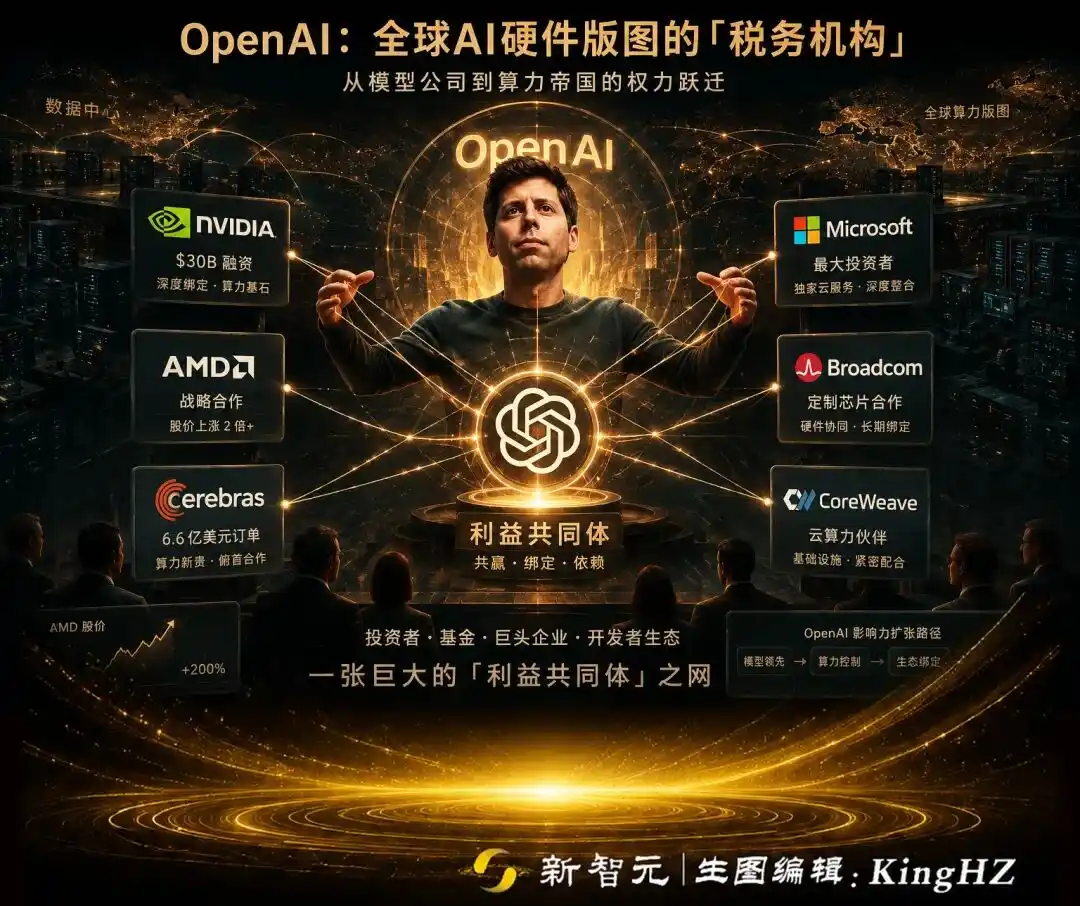
OpenAI doesn't buy chips; it only rents the future—and in the process, binds all players to the same ship.

For hardware vendors: Even with profits halved, obtaining the 'OpenAI certification' and a 15x P/S valuation is a worthwhile deal.

For Sam Altman: He not only secures the computational foundation for the next decade but also becomes a shareholder in all potential competitors.
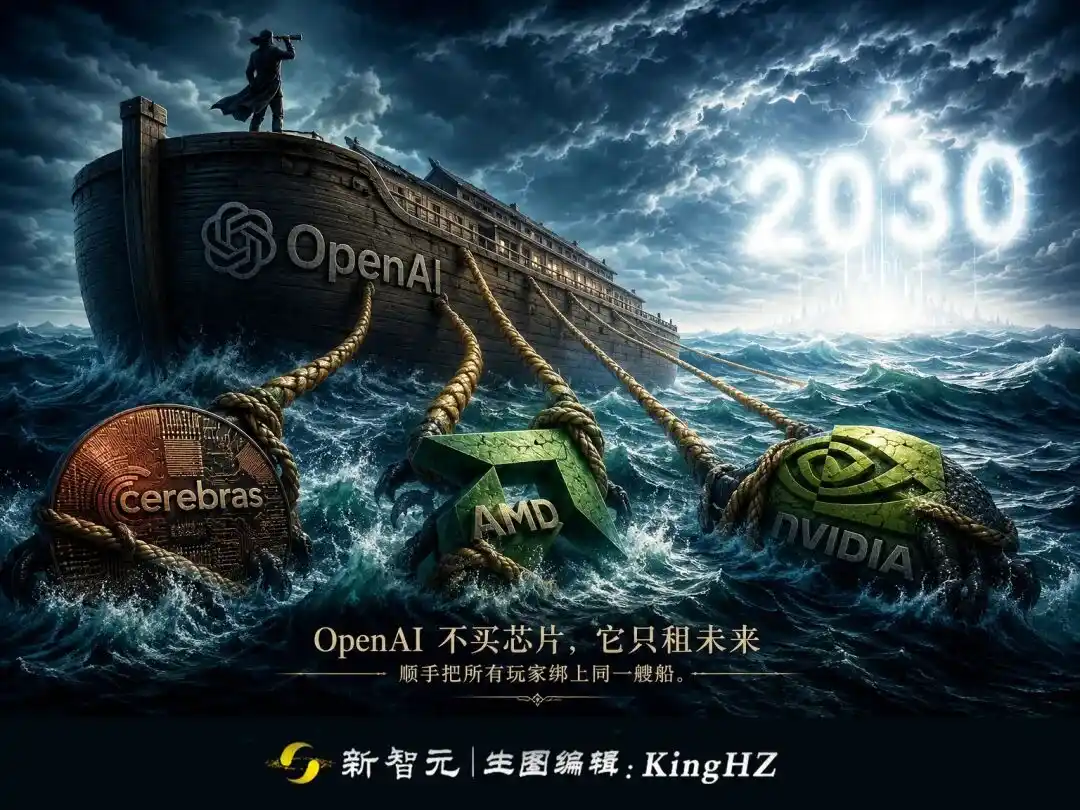
This is the essence of 'Altmanomics': In the second half of the AI race, whoever defines the demand for models holds the 'power to tax' the underlying supply chain.

Can $48 Billion Buy a Seat at the Power Table?

This Thursday, Cerebras's IPO received 20 times oversubscription. The pricing range was raised to $150-$160 per share, implying a valuation of $48 billion, coinciding with semiconductor stocks rising 53% cumulatively from their March lows.
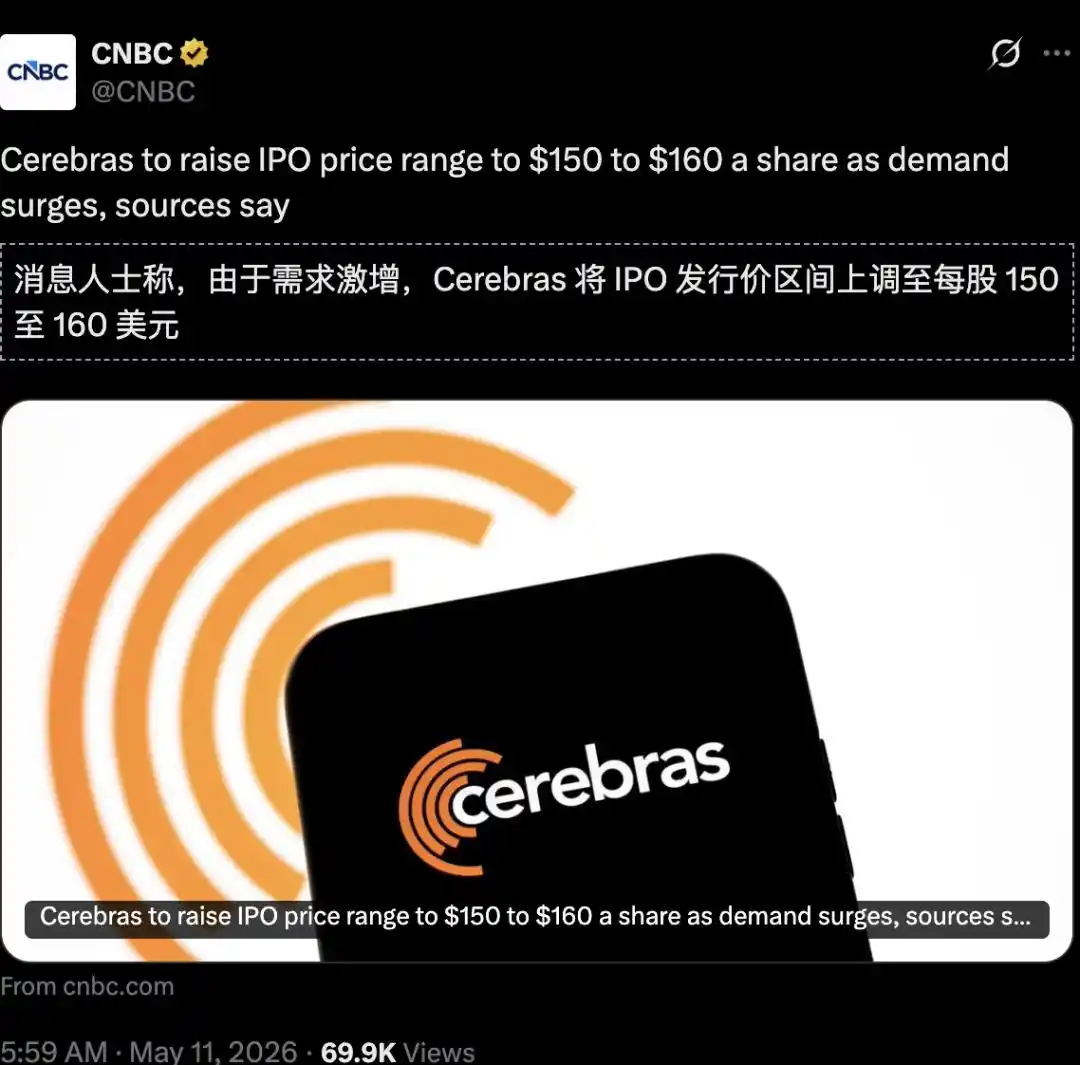
The capital market's frenzy is almost blind. They no longer care whether Cerebras lost $140 million last year or if its P/S ratio has already surpassed Nvidia's.

They are buying a kind of 'certainty'.

In the uncertain landscape of 2026, what identity tag is more certain than being a 'Core Partner of OpenAI'?

This is precisely the most intriguing aspect of this IPO. Cerebras's high valuation is essentially a market premium for the 'Altman endorsement'.

Conclusion: Sovereignty or Vassalage?

This 2026 listing marks the semiconductor industry's entry into a brutal era of stratification.

Future chip companies have only two paths:

Either, like Nvidia, rely on first-mover advantage to build their own ecological empire and become the rule-maker; or, like Cerebras, offer up half their soul in a high-stakes gamble for a ticket into the core circle.

If you cannot become a god, then become the most expensive offering.

This is not just a technological battle; it's a battle for sovereignty.

In every megawatt of electricity flows the 'tribute' from chipmakers to Silicon Valley's new overlord.

References:

https://x.com/FT/status/2054141078710768006

https://www.ft.com/content/3f77f8ad-16b8-4f97-ae55-0bd2e31122fa?syn-25a6b1a6=1

https://www.theinformation.com/newsletters/ai-agenda/startup-helping-openai-optimize-ai-cerebras-chips

https://www.morningstar.com/stocks/why-ai-chip-designer-cerebras-is-2026s-hottest-ipo-yet

This article is from the WeChat public account "Xin Zhi Yuan," author: Xin Zhi Yuan, editor: KingHZ

Kripto yang Sedang Tren

Pertanyaan Terkait

QWhat is the core technology and design philosophy behind Cerebras Systems' WSE-3 chip, and how does it differ from traditional chip designs?

ACerebras Systems' WSE-3 chip employs a radical design philosophy that contrasts with the traditional industry focus on miniaturization. Instead of shrinking components, it uses an entire 12-inch silicon wafer to create a single, massive chip. This 'brute-force' approach, described as 'trading space for time,' is aimed at eliminating the 'memory wall' bottleneck by providing immense on-chip memory bandwidth. It contains over 4 trillion transistors (19x more than NVIDIA's B200), 900,000 AI-optimized cores, and delivers 125 petaflops of AI computing power. Its key difference is its monolithic wafer-scale design versus the traditional multi-chiplet or discrete GPU designs, prioritizing high-speed data access for AI inference.

QWhat was the crucial strategic deal Cerebras made with OpenAI to enable its 2026 IPO, and what were the key terms?

AThe crucial deal was a multi-year agreement where Cerebras committed to supply 750 megawatts of computing capacity to OpenAI. In exchange for this massive, revenue-guaranteeing contract—valued at approximately $27 billion in revenue and $10 billion in gross profit over three years—Cerebras granted OpenAI warrants. Upon exercise, these warrants would give OpenAI a 10% equity stake in Cerebras, valued at around $5 billion based on the IPO's mid-range share price. This deal, framed as a 'ransom note' or 'tribute,' provided Cerebras with the financial credibility and market validation needed for a successful high-valuation IPO.

QHow does the article characterize the evolving power dynamic in the AI industry, particularly regarding OpenAI's role?

AThe article characterizes the power dynamic as a shift where OpenAI is evolving from a software company into a dominant 'tax authority' or 'feudal lord' over the global AI hardware landscape. By securing large, long-term compute capacity deals from hardware makers like Cerebras, AMD, and NVIDIA—often in exchange for equity or favorable terms—OpenAI is locking in its future compute foundation. More importantly, it is weaving a vast 'community of interest,' binding these suppliers to its success. This grants OpenAI 'taxation rights' over the hardware supply chain, as it defines model demand and controls access to the most lucrative market segments.

QWhat does the term 'Altmanomics' (Altman Economics) refer to in the context of this article?

AIn this article, 'Altmanomics' refers to the strategic and economic model pioneered by OpenAI's Sam Altman. Its essence is that in the later stages of the AI race, the entity that defines the demand for AI models gains the power to 'tax' the underlying hardware supply chain. Instead of merely purchasing chips, OpenAI 'rents the future' by making long-term capacity deals that often include equity stakes. This strategy allows OpenAI to secure its computational base at favorable rates while simultaneously making shareholders and partners out of potential hardware competitors, thereby consolidating its ecosystem power and ensuring alignment of interests.

QAccording to the article's conclusion, what two paths are available for semiconductor companies in the new AI era, as exemplified by NVIDIA and Cerebras?

AThe article concludes that semiconductor companies now face two distinct paths: 1) Become a rule-maker like NVIDIA, which uses first-mover advantage and ecosystem strength to establish its own empire and dictate distribution rules. 2) Become a vassal or 'high-value offering' like Cerebras, which trades a significant portion of its potential sovereignty and profits (through equity and deals) to a dominant AI platform (OpenAI) in exchange for a guaranteed, high-value ticket into the core industry circle. The choice is between maintaining sovereign control or becoming a strategically important, yet subordinate, partner to the new 'lords' of silicon.

Bacaan Terkait

Kisah Seorang Trader Senior: Bagaimana Cara Memanfaatkan Ekspektasi Pasar yang Salah?

**Ringkasan: Bagaimana Mendapatkan Keuntungan dari Ekspektasi Pasar yang Salah?** Artikel ini berbagi pengalaman seorang trader senior dalam mengambil keuntungan dari kesalahan ekspektasi pasar, dengan studi kasus transaksi short Nasdaq (NQ) yang sukses. Kasus terjadi setelah data CPI AS yang lebih lemah dari ekspektasi. Pasar bereaksi dengan euforia, mendorong Nasdaq (NQ) naik ke 30060, karena mengira suku bunga akan turun secara luas. Namun, trader ini mengamati bahwa meskipun suku bunga jangka pendek (short-end) rileks, **suku bunga riil 30 tahun justru mencapai level tertinggi baru dalam 20 tahun**. Ini menunjukkan mekanisme transmisi pasar telah berubah: data lemah tidak lagi serta-merta menurunkan biaya modal jangka panjang. Narasi pasar yang salah adalah: **CPI lemah → kebijakan moneter melonggar → penurunan biaya modal jangka panjang → ekspansi valuasi saham teknologi (NQ).** Rantai ini patah di antara "kebijakan" dan "biaya modal jangka panjang". Suku bunga panjang yang tinggi menjadi variabel veto yang menolak konfirmasi optimisme pasar. Trader merumuskan metodologi sistematis untuk mengeksploitasi kesalahan ekspektasi semacam ini: 1. **Identifikasi Rantai Sebab-Akibat Tersirat** pasar. 2. **Temukan Variabel Veto** yang dapat membatalkan narasi tersebut. 3. **Amati Penolakan Konfirmasi** dari variabel veto tersebut. 4. **Tunggu Harga Tetap Bergerak** sesuai skenario lama meski fondasi sudah berubah. 5. **Pilih Ekspresi Aset** yang paling sensitif terhadap kesalahan tersebut (dalam kasus ini: short NQ, bukan S&P 500). 6. **Definisikan Syarat Keluar** untuk kondisi "terbukti salah" dan "logika sudah terealisasi". Kesimpulan kunci: Peluang alpha tidak selalu berasal dari perbedaan informasi, tetapi sering dari **perbedaan fungsi reaksi**. Ketika kondisi makro berubah tetapi pasar terus bereaksi dengan pola lama berdasarkan kebiasaan, disitulah peluang muncul. Pertanyaan paling penting adalah: **Rantai sebab-akibat apa yang menjadi sandaran reaksi pertama pasar hari ini, dan apakah rantai itu masih valid?**

marsbit17m yang lalu

Kisah Seorang Trader Senior: Bagaimana Cara Memanfaatkan Ekspektasi Pasar yang Salah?

marsbit17m yang lalu

Opini: Hubungan Hedging Antara Obligasi AS dan Pasar Saham Telah Gagal, BTC Sebagai Aset Berisiko Menghadapi Tekanan Ganda

**Ringkasan:** Selama 20 tahun terakhir, hubungan lindung nilai tradisional antara saham AS dan obligasi pemerintah AS (treasury) telah runtuh. Biasanya, ketika saham turun, obligasi naik, dan sebaliknya. Namun, sejak sekitar 2020, keduanya bergerak turun secara bersamaan, menghilangkan "peredam kejut" dalam portofolio investasi. Bitcoin, sebagai aset berisiko tinggi, kini menanggung tekanan ganda dari dinamika ini. Analisis menunjukkan bahwa pergeseran ini didorong oleh volatilitas inflasi yang menjadi faktor dominan di pasar, berbeda dengan periode sebelumnya di mana risiko pertumbuhan ekonomi yang lebih menonjol. Investor kini menghindari risiko durasi (sensitif terhadap suku bunga) dengan menjual obligasi jangka panjang dan beralih ke uang tunai, surat utang jangka pendek, atau dolar AS yang kuat. Ini menjelaskan mengapa Bitcoin, emas, dan obligasi jangka panjang bisa jatuh bersamaan. Bitcoin sangat sensitif terhadap kondisi makro: ia cenderung naik ketika imbal hasil riil turun, dolar melemah, dan kondisi keuangan mengendur. Ketika imbal hasil obligasi tanpa risiko (seperti treasury) naik, biaya peluang untuk memegang aset seperti Bitcoin yang tidak memberikan bunga menjadi lebih tinggi. Selain itu, penurunan saham mengurangi selera risiko investor secara keseluruhan. Logika jangka panjang Bitcoin sebagai aset dengan pasokan tetap justru diperkuat oleh kondisi fiskal yang menciptakan imbal hasil tinggi pada obligasi (seperti defisit yang membesar). Namun, dalam jangka pendek, kondisi yang sama ini justru membebani harganya. Pemulihan hubungan lindung nilai tradisional memerlukan meredanya volatilitas inflasi, sehingga risiko pertumbuhan kembali menjadi pendorong utama pasar dan Fed memiliki ruang untuk melonggarkan kebijakan. Sampai saat itu, Bitcoin dan aset berisiko lainnya beroperasi tanpa "lantai" pelindung yang biasanya disediakan oleh obligasi.

marsbit19m yang lalu

Opini: Hubungan Hedging Antara Obligasi AS dan Pasar Saham Telah Gagal, BTC Sebagai Aset Berisiko Menghadapi Tekanan Ganda

marsbit19m yang lalu

Bear Market Paling Lembut? Pelaku Jual BTC Mundur, ARK dan Bitwise Sama-sama Optimis

Artikel ini membahas kondisi pasar Bitcoin (BTC) yang saat ini berfluktuasi di sekitar $75.000, dengan indeks ketakutan berada di level 35. Laporan dari berbagai analis dan lembaga memberikan pandangan beragam: ARK Invest mencatat penurunan BTC sekitar 14% di Q2 2026, dengan indikator teknis masih bearish. Namun, peningkatan persediaan dari pemegang jangka panjang dianggap sebagai sinyal potensial habisnya tekanan jual. Bitwise menyebut penurunan saat ini sebagai "bear market paling moderat" secara struktural, dengan para investor institusi melihatnya sebagai peluang akumulasi. Mereka mencatat bahwa dasar setiap siklus Bitcoin terus naik, mencerminkan matangnya aset ini. Data dari Polymarket menunjukkan probabilitas BTC jatuh di bawah $50.000 tahun ini adalah 33%. Analisis teknis dari Bit menunjukkan bahwa titik terendah gelombang C mungkin telah terbentuk, dengan area support kunci antara $59.000 dan $70.000. Namun, analis glassnode memperingatkan risiko pembentukan puncak jangka pendek jika BTC gagal menembus $66.000 secara efektif. Di sisi lain, trader Doctor Profit melaporkan telah menutup semua posisi short crypto-nya dan mulai membeli BTC spot lagi di level $64.000, menjadikannya alokasi jangka panjang pertama sejak September 2025. Ia berpendapat bahwa perilaku kawanan (herd behavior) di pasar, di mana banyak investor menunggu harga turun lebih dalam, justru bisa membuat dasar pasar terbentuk lebih awal dari perkiraan umum. Secara keseluruhan, nada dari banyak lembaga mulai berubah menjadi lebih optimis jangka panjang, meskipun ketidakpastian makro dan risiko penurunan lebih lanjut masih diakui.

Foresight News2j yang lalu

Bear Market Paling Lembut? Pelaku Jual BTC Mundur, ARK dan Bitwise Sama-sama Optimis

Foresight News2j yang lalu

Trading

Spot

Artikel Populer

Cara Membeli GODS

Selamat datang di HTX.com! Kami telah membuat pembelian Gods Unchained (GODS) menjadi mudah dan nyaman. Ikuti panduan langkah demi langkah kami untuk memulai perjalanan kripto Anda.Langkah 1: Buat Akun HTX AndaGunakan alamat email atau nomor ponsel Anda untuk mendaftar akun gratis di HTX. Rasakan perjalanan pendaftaran yang mudah dan buka semua fitur.Dapatkan Akun SayaLangkah 2: Buka Beli Kripto, lalu Pilih Metode Pembayaran AndaKartu Kredit/Debit: Gunakan Visa atau Mastercard Anda untuk membeli Gods Unchained (GODS) secara instan.Saldo: Gunakan dana dari saldo akun HTX Anda untuk melakukan trading dengan lancar.Pihak Ketiga: Kami telah menambahkan metode pembayaran populer seperti Google Pay dan Apple Pay untuk meningkatkan kenyamanan.P2P: Lakukan trading langsung dengan pengguna lain di HTX.Over-the-Counter (OTC): Kami menawarkan layanan yang dibuat khusus dan kurs yang kompetitif bagi para trader.Langkah 3: Simpan Gods Unchained (GODS) AndaSetelah melakukan pembelian, simpan Gods Unchained (GODS) di akun HTX Anda. Selain itu, Anda dapat mengirimkannya ke tempat lain melalui transfer blockchain atau menggunakannya untuk memperdagangkan mata uang kripto lainnya.Langkah 4: Lakukan trading Gods Unchained (GODS)Lakukan trading Gods Unchained (GODS) dengan mudah di pasar spot HTX. Cukup akses akun Anda, pilih pasangan perdagangan, jalankan trading, lalu pantau secara real-time. Kami menawarkan pengalaman yang ramah pengguna baik untuk pemula maupun trader berpengalaman.

224 Total TayanganDipublikasikan pada 2024.12.13Diperbarui pada 2026.06.02

Cara Membeli GODS

Diskusi

Selamat datang di Komunitas HTX. Di sini, Anda bisa terus mendapatkan informasi terbaru tentang perkembangan platform terkini dan mendapatkan akses ke wawasan pasar profesional. Pendapat pengguna mengenai harga GODS (GODS) disajikan di bawah ini.

活动图片